GRID-REF 37°47′N 122°25′W
DISPATCH 02/26 · 9 Jun 2026
BATTLEPOLICY
Startup to front line. Strategy to consequence.
Lexicon · Russia

AGS-30

The AGS-30 "Atlant" is Russia's lightweight, crew-served automatic grenade launcher, a 30×29mm belt-fed successor to the AGS-17 that weighs only 16 kg on its tripod and sustains ~400 rpm for mobile infantry fire support.
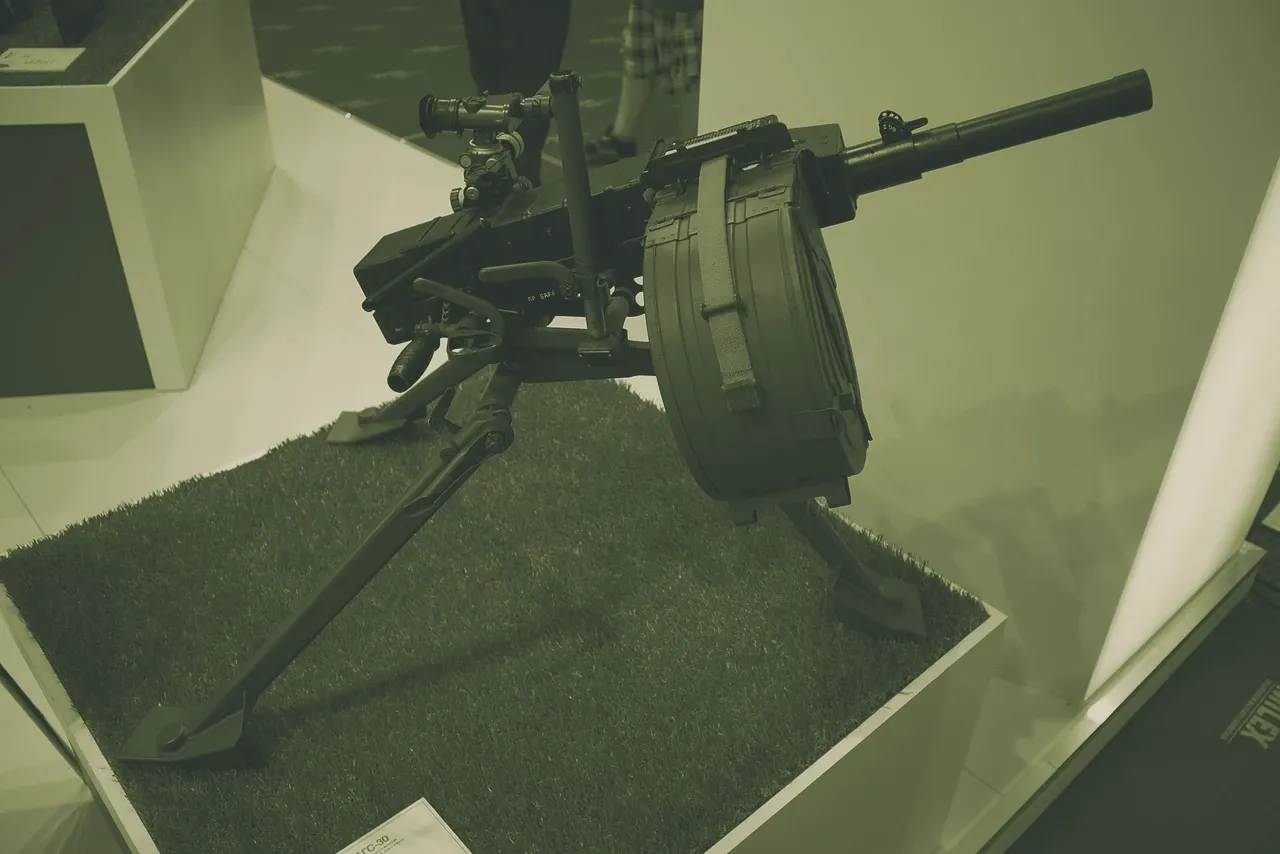
AGS-30
FIG.01 · Russia Image - AGS-30. Photo by Homoatrox, CC BY-SA 3.0, via Wikimedia Commons.jpg).
Russia's lightweight automatic grenade launcher — the modern 30×29mm belt-fed crew-served successor to the AGS-17, cutting weight nearly in half for greater infantry mobility.

Overview

The AGS-30 (GRAU 6S9 system / 6G19 launcher), commonly called “Atlant,” is the Russian Federation’s standard lightweight automatic grenade launcher. Developed to replace the heavier AGS-17 Plamya, the AGS-30 fires the same 30×29 mm grenade family from a 29-round belt drum at roughly 400 rounds per minute, yet the entire system — gun, tripod, and sight — weighs only about 16 kg, compared with more than 31 kg for its predecessor. Over 500 units had been produced by 2013, according to Military Factory, and the weapon remains in Russian Army service.

Development

The AGS-30 was designed by the KBP Instrument Design Bureau in Tula during the early 1990s, explicitly to give Russian motor-rifle and special-forces units a more portable grenade-support weapon. It was fielded on an initial basis around 1995 and adopted officially by the Russian Army in 2002, as documented by Wikipedia. The design traded the heavy tripod and receiver of the AGS-17 for a lighter frame, simplified blowback mechanism, and a compact drum feed while retaining full ammunition commonality — a straightforward evolutionary step rather than a clean-sheet system.

Design & capabilities

The AGS-30 is a blowback-operated, open-bolt, belt-fed automatic grenade launcher mounted on a lightweight tripod. The weapon itself weighs approximately 16 kg with its tripod and sight, a figure confirmed by Military Factory, making it man-portable by a two-man crew over broken ground. The 29-round linked belt is housed in a circular drum, and a standard fire unit comprises 120 rounds spread across multiple drums.

The launcher fires the 30×29 mm cased grenade family developed for the AGS-17, including the high-explosive fragmentation VOG-17M, VOG-30, and the extended-range GPD-30, as noted by Army Recognition. The GPD-30 round pushes the effective range to roughly 2,100 m, while the standard VOG-17M/VOG-30 reach about 1,700 m. A typical HE-SD (self-destruct) round such as the IO-30 delivers a fragmentation casualty radius of approximately 6–7 m, according to Arcon Consult. The cyclic rate of fire is approximately 400 rounds per minute, with sustained practice closer to 60–80 rounds per minute depending on barrel heating. Sighting is typically provided by a PAG-17 optical sight, and the weapon can also be fitted to light vehicle mounts and helicopters.

Combat record / operational use

The AGS-30 has been combat-proven in multiple theaters. It entered service in time for the Second Chechen War and was used extensively in the 2008 Russo-Georgian conflict, then seen again during Russian operations in Syria and, from 2022, in the full-scale war in Ukraine, as recorded by Wikipedia. In these conflicts, the weapon has provided mobile, high-volume 30 mm grenade fire at the squad and platoon level, often engaging enemy infantry in defilade, behind walls, or in wooded terrain where direct-fire weapons have limited effect.

Advantages

  • Halves the all-up weight of the previous AGS-17 (16 kg vs 31 kg), greatly improving man-portability.
  • Fires the same 30×29 mm ammunition family as the older AGS-17, avoiding a separate logistics chain.
  • Belt-fed drum provides rapid, sustained suppressive fire at ~400 rpm cyclic.
  • Compact tripod and low profile make it easy to emplace and conceal.
  • Reliable blowback operation proven in harsh environments from Chechnya to Ukraine.

Drawbacks / limitations

  • The 30×29 mm round has a smaller payload and generally shorter maximum range than Western 40×53 mm high-velocity grenades.
  • Lack of a programmable airburst fuze limits its effectiveness against defilade targets compared to the latest NATO 40 mm systems.
  • As a crew-served weapon, it requires two soldiers to carry and operate effectively.
  • Limited sustained fire before the barrel must cool, restricting prolonged suppressive missions.

Counterparts

Outlook

The AGS-30 remains the Russian ground forces’ standard light automatic grenade launcher, complementing the heavier AGS-17 and the vehicle-mounted variants. No disclosure of a direct replacement has emerged, though the trend toward programmable airburst munitions in Western AGLs may eventually push Russia toward a 40 mm or enhanced 30 mm solution. For now, the AGS-30’s low weight, ammunition compatibility with the existing 30×29 mm stockpile, and proven combat record ensure it will stay in frontline service.

Key specifications

Spec Value
Crew 2 (gunner + assistant)
Combat weight ~16 kg (incl. tripod & optical sight)
Length / width / height ~1.17 m (gun only) × ~0.2 m × ~0.3 m (gun only, est.)
Main armament 30×29mm automatic grenade launcher
Secondary armament not applicable
Armor & protection none
Engine & power not applicable (manually operated blowback)
Power-to-weight not applicable
Road / cross-country speed not applicable (carried by crew)
Operational range ~1,700 m (VOG-17M/VOG-30); up to ~2,100 m (GPD-30 extended-range)

Sources

  1. Wikipedia — AGS-30. https://en.wikipedia.org/wiki/AGS-30
  2. Military Factory — KBP AGS-30 AGL 30mm Automatic Grenade Launcher. https://www.militaryfactory.com/smallarms/detail.php?smallarms_id=768
  3. Army Recognition — AGS-30. https://armyrecognition.com/military-products/army/weapons/grenade-launchers/ags-30-russia-uk
  4. Arcon Consult — 30mm IO-30 HE-SD round for AGS-17/AGS-30. https://arconconsult.net/rounds-for-grenade-launchers/30-mm-io-30-high-explosive-fragmentation-grenade-with-self-destruction-he-sd-for-30-mm-automatic-grenade-launchers-ags-17-ag-17a-ags-30-rag-30-and-arcus-17-agl/
FIELD DISPATCH · WEEKLY

BattlePolicy Weekly — free.

Defense tech, startups, and security — weekly. No paywall.

Related
Ukraine · Russia · Policy · Chornobyl · Energoatom · shahed

Russia strikes Ukraine's central spent-fuel store at Chornobyl with a Shahed

A Russian drone hit the receiving building of the Holtec-built dry-cask site that freed Ukraine from shipping its nuclear waste to Russia, metres from where spent fuel sits.

Ukraine · Russia · Policy · Chornobyl · Energoatom · shahed