AH-1Z Viper
The Bell AH-1Z Viper ("Zulu Cobra") is the US Marine Corps' marinized attack helicopter — a twin-engine, tandem-seat platform built for close air support, armed escort, and anti-armor missions from amphibious shipping and expeditionary airfields.
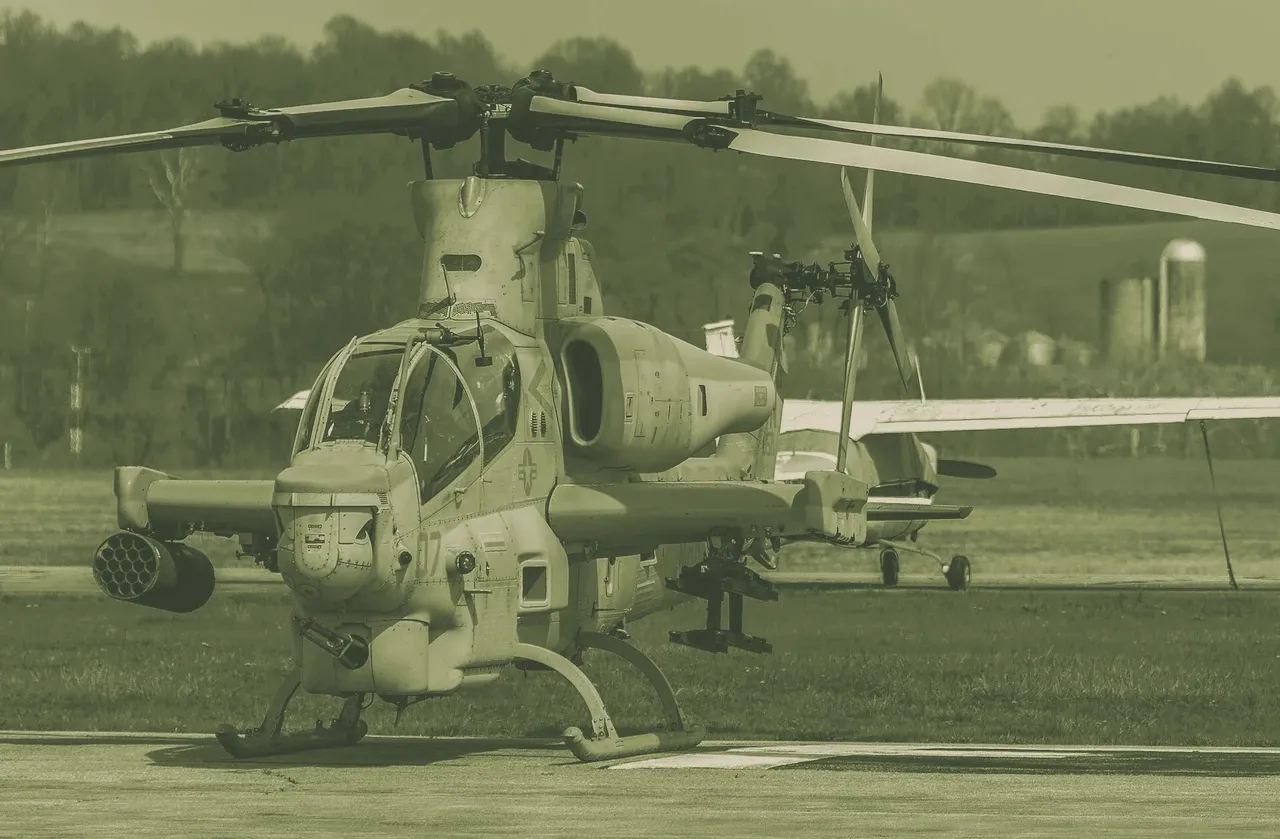
The US Marine Corps’ marinized attack helicopter — a twin-engine, tandem-seat “Zulu Cobra” that delivers heavy fires from the sea and forms the rotary-wing backbone of Marine Air-Ground Task Force expeditionary operations.
Overview
The Bell AH-1Z Viper is the current attack helicopter of the United States Marine Corps. Developed as part of the H-1 upgrade program alongside the UH-1Y Venom utility helicopter, the AH-1Z replaced the legacy AH-1W SuperCobra with a modernised, 84-percent-common airframe that simplifies shipboard logistics and sustainment. Fielded entirely by USMC light-attack helicopter squadrons and a small number of foreign operators, the Viper provides close air support, armed escort, anti-armor fires, and armed reconnaissance for expeditionary forces operating from amphibious ships or austere forward bases.
Development
Bell launched the AH-1Z as the attack half of the Department of the Navy’s H-1 Upgrade Program, which aimed to field a marinized attack/utility pair with high-commonality airframes and drive-trains. The Viper first flew in 2000, according to Wikipedia, and achieved initial operational capability with the USMC in 2010–2011. Production ran for the USMC until November 2022, with the final USMC airframe delivered that month. The National Interest notes that the Viper retained the SuperCobra’s 20-mm cannon and marinised construction while adding a four-blade composite rotor, glass cockpit, modern sensors, and dramatically improved speed and range. Export orders from Bahrain and the Czech Republic followed the USMC fleet completion.
Design & capabilities
The AH-1Z carries a crew of two in a tandem-seat cockpit and is powered by two General Electric T700-GE-401C turboshafts delivering approximately 1,800 shp each, giving it a never-exceed speed of about 411 km/h and a ferry range of roughly 690 km. The marinised airframe and corrosion protection are essential for sustained shipboard operations. The primary sensor is the Lockheed Martin Target Sight System (TSS), a third-generation FLIR/EO turret that integrates laser designation, rangefinding, and tracking. A glass cockpit and helmet-mounted display feed the crew a unified tactical picture. Survivability is enhanced by an APR-39 radar warning receiver and missile-warning system, though the helicopter lacks a mast-mounted fire-control radar.
Armament is concentrated on six underwing stations and two wing-tip rails. A turreted M197 three-barrel 20 mm cannon with 750 rounds serves as the main gun. The wing stations can carry up to 16 AGM-114 Hellfire missiles, while Hydra 70 or laser-guided APKWS rockets can be mounted on rocket pods. Two AIM-9 Sidewinder missiles on the wing-tips give the Viper a self-defence air-to-air capability. The Bell Flight product page confirms these weapon options and the four-blade composite main-rotor system that enables the helicopter’s speed and agility in the maritime environment.
Combat record / operational use
The Viper deployed aboard US Navy amphibious ships for the first time in 2011 with the 11th Marine Expeditionary Unit, as documented in Wikipedia operational-history notes. Since then it has participated in operations across the Middle East and Indo-Pacific, providing close air support, armed reconnaissance, and escort for tilt-rotor and conventional assault forces. Its ability to fly off LHDs and LHAs has made it the USMC’s default attack helicopter for every Marine Expeditionary Unit afloat. No combat losses have been publicly reported that are intrinsically related to the AH-1Z’s design or performance.
Advantages
- Heavy weapons load — up to 16 Hellfire missiles plus a 20 mm cannon and rockets — in a marinised airframe.
- 84 percent airframe commonality with the UH-1Y Venom reduces the onboard logistics footprint and simplifies training.
- Glass cockpit and helmet-mounted display cut pilot workload and enable rapid target hand-offs.
- High speed (411 km/h never-exceed) and good range (690 km) for an attack helicopter.
- Ships readily with Marine Expeditionary Units, providing “ready-to-fight” organic fires from the sea.
Drawbacks / limitations
- Combat radius of only about 241 km limits stand-off and deep-strike options compared to larger attack helicopters such as the AH-64E.
- Lacks a mast-mounted radar; relies solely on the nose-turret TSS for targeting, which can reduce cover in high-threat environments.
- The APR-39 suite and countermeasure fit, while effective, is lighter than the Apache’s integrated survivability suite.
- Fleet size is small (~189 airframes total) and USMC production is complete, limiting spares and future expansion.
- Does not carry troops — purely a gunship, unlike the Mi-24/35 hybrid class.
Counterparts
- Mi-28N Havoc (Russia)
- Z-10 (China)
Outlook
With the USMC final delivery already complete, the AH-1Z fleet will remain the service’s sole attack helicopter for the foreseeable future, operating alongside the UH-1Y Venom and funded through incremental upgrades rather than a new-build programme. Export interest from Bahrain and the Czech Republic may extend the production line for foreign customers, but any large-scale procurement is unlikely. The helicopter’s future relevance hinges on sensor and weapon modernisation — particularly the integration of longer-range missiles and advanced electronics — to keep pace with peer threats in the Indo-Pacific.
Key specifications
| Spec | Value |
|---|---|
| Crew | 2 (pilot, co-pilot/gunner) |
| Length / wingspan | ~17.75 m / main-rotor ~15 m (4-blade) |
| Max speed | ~411 km/h never-exceed; cruise ~300 km/h |
| Service ceiling | ~6,100 m |
| Combat radius / range | combat radius ~241 km; ferry range ~690 km |
| Payload | No troop capacity |
| Hardpoints | 6 underwing + 2 wingtip |
| Radar / sensors | TSS FLIR/EO, glass cockpit, helmet-mounted display, APR-39 RWR/missile warning |
| Powerplant | 2 × GE T700-GE-401C turboshaft (~1,800 shp each) |
| Armament | 20 mm M197 cannon, up to 16 AGM-114 Hellfire, Hydra 70/APKWS rockets, 2 × AIM-9 Sidewinder |
Sources
- Wikipedia — Bell AH-1Z Viper. https://en.wikipedia.org/wiki/Bell_AH-1Z_Viper
- Bell Flight — H-1 Platform (AH-1Z / UH-1Y). https://www.bellflight.com/products/h1
- The National Interest — How the US Marine Corps’ “Viper” Improved on the Bell SuperCobra. https://nationalinterest.org/blog/buzz/how-us-marine-corps-viper-helicopter-improved-on-bell-supercobra-hk-02125