Anduril and General Atomics win the Air Force's first robot-fighter production deals
The Air Force put its Collaborative Combat Aircraft into production four months early, handing a defense-tech challenger a marquee program that Boeing, Lockheed Martin and Northrop Grumman bid for and lost.
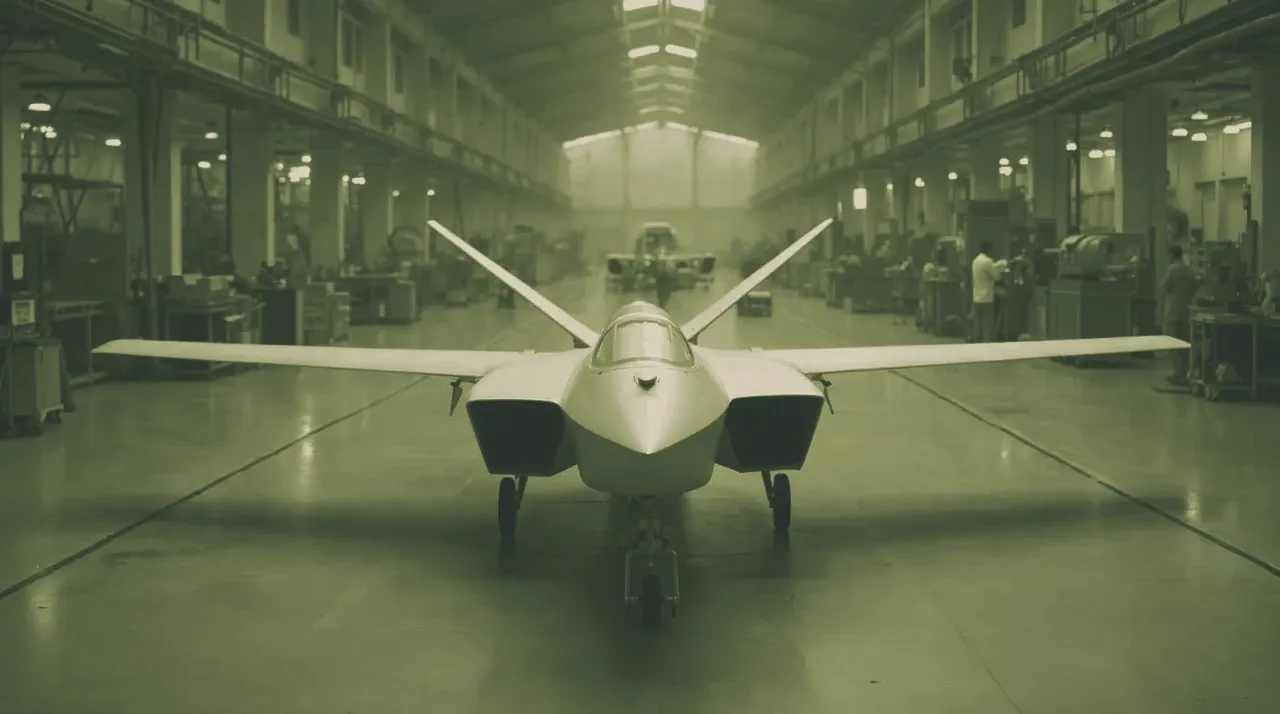
The Air Force put its Collaborative Combat Aircraft into production four months early, handing a defense-tech challenger a marquee program that Boeing, Lockheed Martin and Northrop Grumman bid for and lost.
The U.S. Air Force awarded production contracts for the first increment of its Collaborative Combat Aircraft to General Atomics and Anduril Industries on June 17, DefenseScoop reported, moving the uncrewed wingman program from prototype to full-scale manufacturing four months ahead of schedule.
Both jets drop the prototype "Y" prefix. General Atomics builds the FQ-42A, derived from its XQ-67A and known as Dark Merlin. Anduril builds the FQ-44A, called Fury. The deal covers the first three production lots and at least 150 aircraft by the end of the decade, program acquisition executive Col. Timothy Helfrich told reporters. The service eventually wants a fleet of about 1,000.
The CCAs fly alongside the F-35, F-22 and future F-47, carrying strike, reconnaissance or jamming payloads with a combat radius of at least 700 nautical miles, Air & Space Forces Magazine reported. The Air Force is targeting roughly $30 million per tail, a third of an F-35, and says it is beating that. Contract values are classified. It requested $996.5 million in fiscal 2027 to begin procurement.
The Air Force resolicited all five original CCA bidders for production. Boeing, Lockheed Martin and Northrop Grumman bid and lost. General Atomics and Anduril, the two that won the 2024 development round, won again. General Atomics took the deal despite an April prototype crash that Helfrich attributed to an autopilot weight miscalculation, and said did not affect the award.
The software is sold separately. The Air Force narrowed the contest to fly the CCAs to Anduril, Shield AI and Collins Aerospace, drawn from a six-vendor pool, with a single mission-autonomy provider due by summer 2027.
The battlefield and the startup story — free in your inbox every week. No paywall.
Subscribe Free →The split reads as a market verdict. Anduril, a defense-tech challenger, and the autonomy firm Shield AI now sit inside the Air Force's marquee airpower program, while three legacy primes are shut out of Increment 1. The jets are the low-cost mass meant to extend the reach and survivability of crewed fighters. The first lot is ordered once the 2027 budget clears.
Frequently Asked Questions
What did the Air Force actually award?
Engineering-and-manufacturing development and production contracts for the first increment of the Collaborative Combat Aircraft, given to General Atomics and Anduril on June 17, per DefenseScoop. The deal covers the first three production lots.
How many CCAs is the Air Force buying, and at what cost?
At least 150 by the end of the decade for Increment 1, with an eventual fleet of about 1,000 aircraft of various types, program executive Col. Timothy Helfrich told reporters. The target is roughly $30 million per tail, a third of an F-35; contract values are classified.
What are the FQ-42A and FQ-44A?
The two production CCAs. General Atomics' FQ-42A is derived from its XQ-67A and known as Dark Merlin; Anduril's FQ-44A is called Fury. Both drop the prototype "Y" prefix on entering production, per Air & Space Forces Magazine.
Which companies lost out?
The Air Force resolicited all five original CCA bidders. Boeing, Lockheed Martin and Northrop Grumman bid for production and did not win, leaving the program with the two firms that won the 2024 development round, per DefenseScoop.
Who writes the autonomy software?
The Air Force narrowed the mission-autonomy contest to Anduril, Shield AI and Collins Aerospace, drawn from a six-vendor pool, and will pick a single provider by summer 2027 under a "software sold separately" strategy, per Air & Space Forces Magazine.
AI-generated summary, reviewed by an editor. More on our AI guidelines.

Marcus Schuler
Marcus Schuler edits BattlePolicy, a daily defense-technology brief connecting the companies and capabilities behind modern war to the contest among Europe, the US, Russia, and China.