GRID-REF 37°47′N 122°25′W
DISPATCH 02/26 · 9 Jun 2026
BATTLEPOLICY
Startup to front line. Strategy to consequence.
Lexicon · Russia

BM-30 Smerch

Russia’s 300 mm heavy multiple-launch rocket system — the BM-30 Smerch and its modernised GLONASS-guided Tornado-S successor — delivering area saturation and precision deep fires out to 120 km.
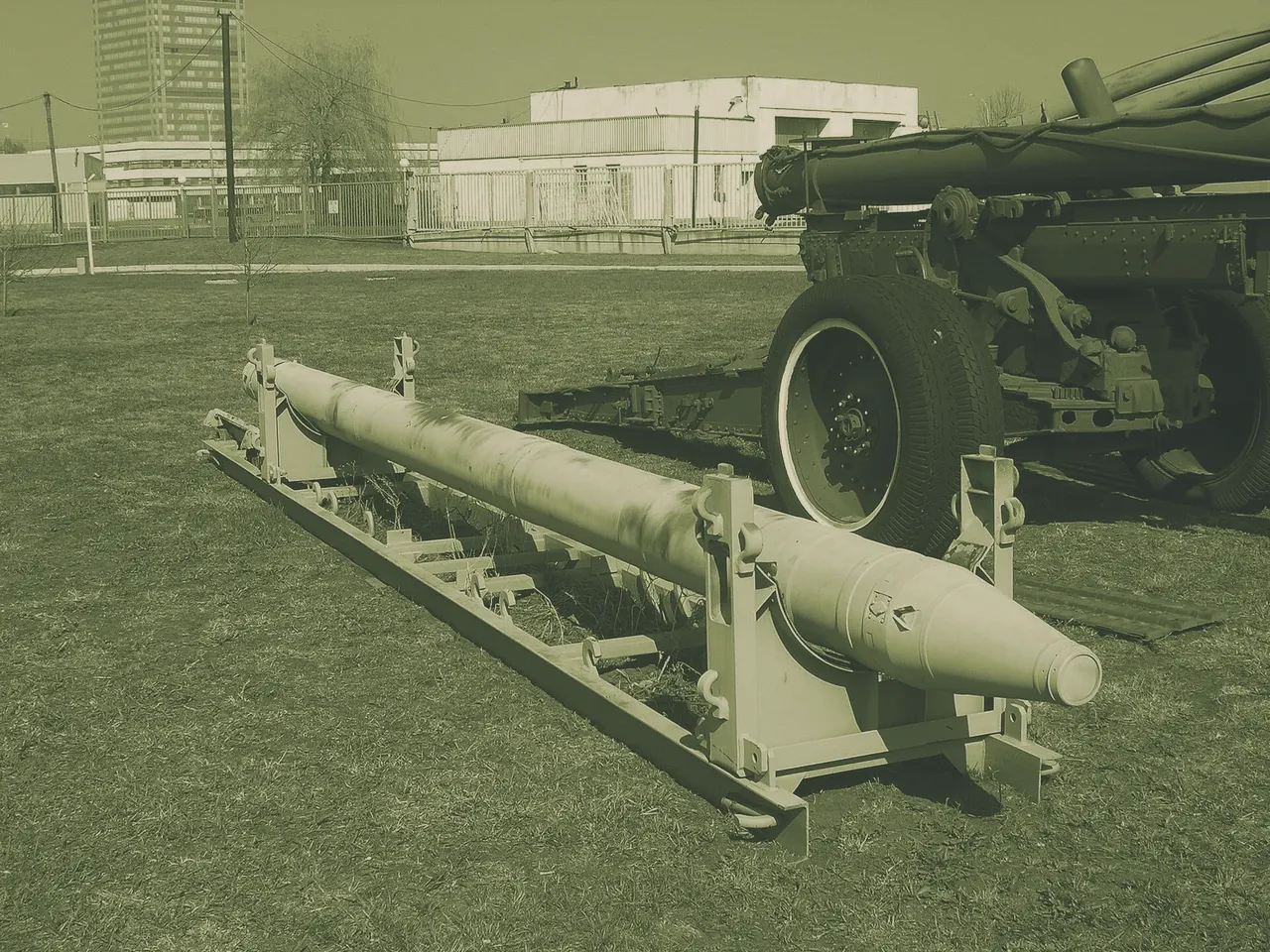
BM-30 Smerch
FIG.01 · Russia Image - BM-30 Smerch. Photo by ShinePhantom, CC BY-SA 3.0, via Wikimedia Commons.
Russia’s heaviest multiple-launch rocket system — a 300 mm, 12-tube launcher that evolved from Cold-War area saturation into the GLONASS-guided Tornado-S, used extensively on both sides of the Ukraine war.

Overview

The BM-30 Smerch (9K58) and its modernised derivative, the 9K515 Tornado-S, are Russian 300 mm wheeled multiple-launch rocket systems. Designed for deep-fire area saturation, the Smerch entered service in 1987 and has been widely exported; the Tornado-S upgrade, fielded in the 2010s, adds a digital fire-control suite and guided rockets with satellite navigation. A single 12-tube launcher can ripple a full salvo in under 40 seconds, delivering high-explosive, submunition or precision-guided warheads to ranges of up to 120 km, making the system a mainstay of Russia’s rocket-artillery brigades and a prominent combat weapon in the war in Ukraine.

Development

The 9K58 Smerch was developed by NPO Splav (rockets) and Motovilikha (launcher) in the 1970s–80s as a heavier counterpart to the BM-27 Uragan, achieving initial operational capability in 1987, according to Army Recognition. The system mounted 12 launch tubes on an 8×8 MAZ-543M truck chassis; several hundred launchers were built. In the 2010s Russia initiated the Tornado-S programme — a deep modernisation that replaced the analogue fire-control system with a digital computer, satellite-navigation receiver and automated laying, while introducing the guided 9M544/9M549 rocket, as detailed by Janes. The Tornado-S retains the 300 mm calibre and tube count but fires only the improved guided rocket family, allowing the same launcher to engage point targets with a claimed circular-error-probable of 5–10 metres.

Design & capabilities

The BM-30/Tornado-S is built around a 12-tube launcher on an 8×8 MAZ-543M or MZKT chassis. It fires 300 mm rockets from disposable, man-portable reload tubes; a full 12-round salvo can be fired in approximately 38 seconds, as reported by Army Recognition. The legacy Smerch arsenal includes high-explosive fragmentation, fuel-air explosive, and anti-personnel/anti-tank submunition warheads with a maximum range of 70–90 km. The Tornado-S adds the 9M544 and 9M549 guided rockets, which use GLONASS-aided inertial navigation to achieve a 5–10 m CEP at up to 120 km, according to Janes. The modernised fire-control computer automatically receives target data, calculates firing solutions and lays the launcher, reducing the crew’s workload and the time spent in the firing position. A compact 6-tube variant, the 9A52-4, uses a modular tubed-pod approach that can accept 122 mm, 220 mm or 300 mm rounds, offering greater tactical flexibility while retaining the ability to fire the guided 300 mm rockets.

Variants

  • 9K58 Smerch (BM-30): baseline 12-tube system firing unguided 300 mm rockets to 70–90 km.
  • 9K515 Tornado-S: modernised digital fire-control suite, satellite guidance, and exclusively guided 9M544/9M549 rockets to 120 km.
  • 9A52-4: compact 6-tube modular launcher capable of firing 122 mm, 220 mm or 300 mm rocket pods.

Combat record / operational use

The Smerch has been employed by both Russian and Ukrainian forces since the full-scale invasion of 2022. Russian units have operated Smerch batteries from the Belgorod region to strike targets around Kharkiv, while Ukrainian forces have used their pre-war Smerch stocks for counter-battery and area-suppression missions. The most significant operational debut was that of the Tornado-S guided rocket: in 2022, Russia became the first force to employ GLONASS-guided 300 mm rockets in combat, using the 9M544/9M549 to hit high-value point targets with improved accuracy, as documented by Janes. Both sides have suffered launcher losses, although the exact numbers remain difficult to verify independently.

Advantages

  • Heavy 300 mm warheads deliver large destructive area-effect and can saturate grid squares.
  • Tornado-S guided rockets achieve a 5–10 m CEP at 120 km, enabling precision deep-strike with an MLRS.
  • Rapid salvo (38 seconds) and fast reload with pre-loaded tubes/minimum crew.
  • Wheeled mobility on an 8×8 chassis provides good road speed and off-road capability.
  • Proven in high-intensity combat, with guided rounds demonstrating a step-change in Russian rocket-artillery accuracy.

Drawbacks / limitations

  • Unguided Smerch rockets have low accuracy at long range, limiting utility against point targets.
  • Tornado-S guided rockets are expensive and available in finite quantities.
  • Large radar and visual signature makes the launcher a priority target for counter-battery fires.
  • Soft-skinned vehicle with no meaningful armour protection.
  • Reliance on GLONASS signals introduces potential jamming vulnerabilities.

Counterparts

  • M142 HIMARS (USA) — wheeled precision-rocket launcher, proven in Ukraine, firing 227 mm GMLRS/ATACMS/PrSM.
  • PHL-191 (China) — modular long-range MLRS firing 300 mm, 370 mm and 750 mm rockets, explicitly designed to range Taiwan.

Outlook

The Smerch remains in Russian and export service, but the Tornado-S upgrade is the priority for the Russian Ground Forces. Guided-rocket production is being scaled amid wartime demands, although sanctions constrain advanced electronic components. The system’s continued use in Ukraine and its export footprint guarantee it will remain a prominent heavy rocket-artillery platform for the next decade, even as the next-generation 9K721 “Hurricane-1” programme slowly advances.

Key specifications

Spec Value
Crew 4
Combat weight ~43 700 kg
Length / width / height 12.4 m / 2.97 m / 3.05 m
Main armament 12 × 300 mm rocket tubes
Secondary armament none (soft-skinned)
Armor & protection none
Engine & power D12A-525A diesel, 525 hp
Power-to-weight ~12 hp/t
Road / cross-country speed 60 km/h / ~25–30 km/h
Operational range ~850 km

Sources

  1. Army Recognition — BM-30 Smerch 9K58 MLRS profile. https://armyrecognition.com/military-products/army/artillery-vehicles-and-weapons/multiple-launch-rocket-systems/bm30-smerch-russia-uk
  2. Army Recognition — Tornado-S 9K515 MLRS profile. https://www.armyrecognition.com/military-products/army/artillery-vehicles-and-weapons/multiple-launch-rocket-systems/tornado-s-9k515-mlrs
  3. Janes — Ukraine conflict: Russian forces employ guided rockets. https://www.janes.com/osint-insights/defence-news/weapons/ukraine-conflict-russian-forces-employ-guided-rockets
  4. Wikipedia — Tornado (multiple rocket launcher). https://en.wikipedia.org/wiki/Tornado_(multiple_rocket_launcher)
FIELD DISPATCH · WEEKLY

BattlePolicy Weekly — free.

Defense tech, startups, and security — weekly. No paywall.

Related
Ukraine · Russia · Policy · Chornobyl · Energoatom · shahed

Russia strikes Ukraine's central spent-fuel store at Chornobyl with a Shahed

A Russian drone hit the receiving building of the Holtec-built dry-cask site that freed Ukraine from shipping its nuclear waste to Russia, metres from where spent fuel sits.

Ukraine · Russia · Policy · Chornobyl · Energoatom · shahed