BMD-4M
Russia's air-droppable infantry fighting vehicle — a lightweight, amphibious tracked IFV armed with a 100 mm gun-launcher and 30 mm autocannon, fielded by the VDV airborne forces.
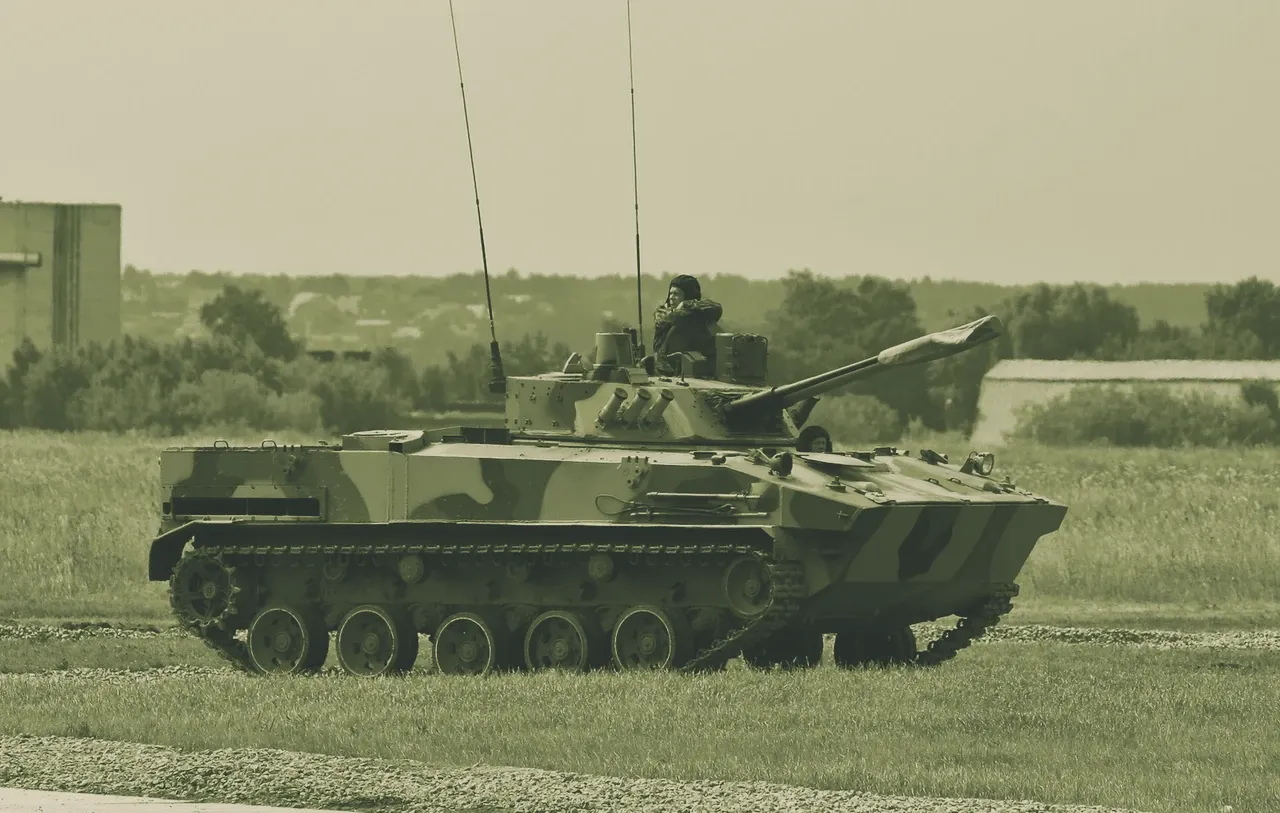
Russia's air-droppable amphibious infantry fighting vehicle, fielded by the VDV and armed with a 100 mm gun-launcher and 30 mm autocannon.
Overview
The BMD-4M is a tracked, air-droppable infantry fighting vehicle purpose-built for Russia’s Airborne Forces (VDV). It delivers a main-battle-tank-like gun-launcher capability in a package light enough to be parachuted onto the battlefield, swims across inland water obstacles, and gives VDV dismounts direct fire support from a vehicle that can keep pace with a fast-moving air-assault operation.
Development
The BMD-4M is an upgraded member of the BMD-4 family, designed to unify the airborne fleet with the BMP-3’s powerpack. The Russian Defence Ministry adopted the vehicle in December 2012, and series production ramped up from about 2016, according to Army Recognition. The turret is supplied by KBP Tula, while Kurganmashzavod builds the hull and integrates the UTD-29 engine shared with the BMP-3 — a deliberate move to simplify logistics between the VDV and the ground forces.
Design & capabilities
The BMD-4M weighs approximately 13.5 tonnes — light enough for airdrop by Il-76 transports yet still carrying the same 100 mm 2A70 gun-launcher and 30 mm 2A72 coaxial autocannon found on the much heavier BMP-3, as detailed by Army Recognition. The 100 mm barrel can fire high-explosive fragmentation rounds and the laser-guided 9M117M1 Arkan anti-tank missile to a range of about 5,500 metres through the tube, giving the thin-skinned vehicle a significant anti-armour reach. An adjustable hydropneumatic suspension allows the hull to be lowered for airdrop or raised for better ground clearance. The all-welded aluminum hull provides frontal protection against 30 mm cannon fire, while the sides resist 7.62 mm ball ammunition — a necessary trade-off to keep the vehicle light enough for airborne operations, as Army Recognition notes. The vehicle is fully amphibious, propelled by water-jets to about 10 km/h in the water, and carries two crew members plus up to six dismounted airborne troops.
Variants
- BMD-4 — earlier production model with a less powerful engine and older fire-control system; limited numbers built before the M-upgrade was adopted.
- BMD-4M — current standard with the BMP-3-common UTD-29 500 hp engine and updated sights.
Combat record / operational use
The BMD-4M has been fielded with VDV units since the upgrade reached operational status, and it saw its first combat deployment in Ukraine from 2022. The vehicle was often paired with BMP-3s and T-90 tanks in combined-arms assaults to compensate for its light armor, but the VDV’s airborne-assault tasks repeatedly placed the vehicle in situations where it faced anti-tank guided missiles, top-attack munitions and FPV drones. Army Recognition reports that Russian airborne forces and their BMD-series vehicles took heavy losses, especially in the first year of the full-scale war. The scale of IFV attrition across the Russian fleet is staggering: by early 2026 the visually-confirmed loss floor stood at over 6 400 infantry fighting vehicles of all types, according to open-source tracking compiled by The Insider, and the BMD-4M has contributed to that toll.
Advantages
- Packs the BMP-3’s 100 mm gun-launcher and 30 mm autocannon into an air-droppable chassis, giving VDV units organic anti-armour and direct-fire support immediately after landing.
- Shares the UTD-29 engine with the BMP-3, simplifying sustainment for units that operate both types.
- Amphibious and highly mobile, with adjustable hydropneumatic suspension that aids airdrop and cross-country travel.
- Gun-launched Arkan ATGM provides a credible stand-off anti-tank capability out to ~5 500 m, rare among lightweight IFVs.
Drawbacks / limitations
- Aluminum armor is extremely light — frontal protection only against 30 mm rounds, sides against 7.62 mm — leaving the vehicle acutely vulnerable to anti-tank weapons, top-attack munitions and even first-generation FPV drones.
- The small internal volume, dictated by the airdrop weight limit, trades troop comfort and survival space for firepower.
- No active protection system; relies entirely on passive armor that modern battlefield threats easily defeat.
- Airborne-assault doctrine exposes the BMD-4M to high-risk spearhead roles where losses have been severe; the VDV’s vehicle fleet has been attrited far faster than the production line can replace it.
Counterparts
- M2 Bradley (USA)
- ZBD-04A (China)
Outlook
The BMD-4M will remain the VDV’s principal air-droppable IFV for the foreseeable future, but the heavy losses suffered in Ukraine raise hard questions about the viability of a lightly armored airdrop vehicle on a modern, drone-saturated battlefield. Russia continues to rebuild VDV units with new-production BMD-4Ms, yet the pace of attrition means the fleet is unlikely to return to its pre-2022 strength quickly. Any future improvement would likely centre on passive and active protection upgrades, though the weight penalty of meaningful armor risks eroding the platform’s airdrop raison d’être.
Key specifications
| Spec | Value |
|---|---|
| Crew | 2–3 + 6 dismounts |
| Combat weight | ~13.5 t |
| Length / width / height | not publicly established |
| Main armament | 100 mm 2A70 gun-launcher (HE + 9M117M1 Arkan ATGM) + 30 mm 2A72 coaxial autocannon |
| Secondary armament | 7.62 mm PKT coaxial |
| Armor & protection | All-welded aluminum hull: frontal vs 30 mm, sides vs 7.62 mm |
| Engine & power | UTD-29, 500 hp |
| Power-to-weight | ~37 hp/t (est.) |
| Road / cross-country speed | 70 km/h road / not publicly established |
| Operational range | ~500 km |
Sources
- Army Recognition — BMD-4M Airborne Infantry Fighting Vehicle profile. https://armyrecognition.com/military-products/army/infantry-fighting-vehicles/airborne-vehicles/bmd-4m-russia-uk
- The Insider — “Russia’s confirmed losses: 4 390 tanks and 6 429 IFVs.” https://theins.press/en/news/292986