BMP-2
The BMP-2 is the world’s most widely proliferated tracked infantry fighting vehicle — a lightweight, amphibious Soviet-legacy design that marries a 30 mm autocannon with anti-tank missiles and has been a fixture of every major ground conflict since the 1980s.
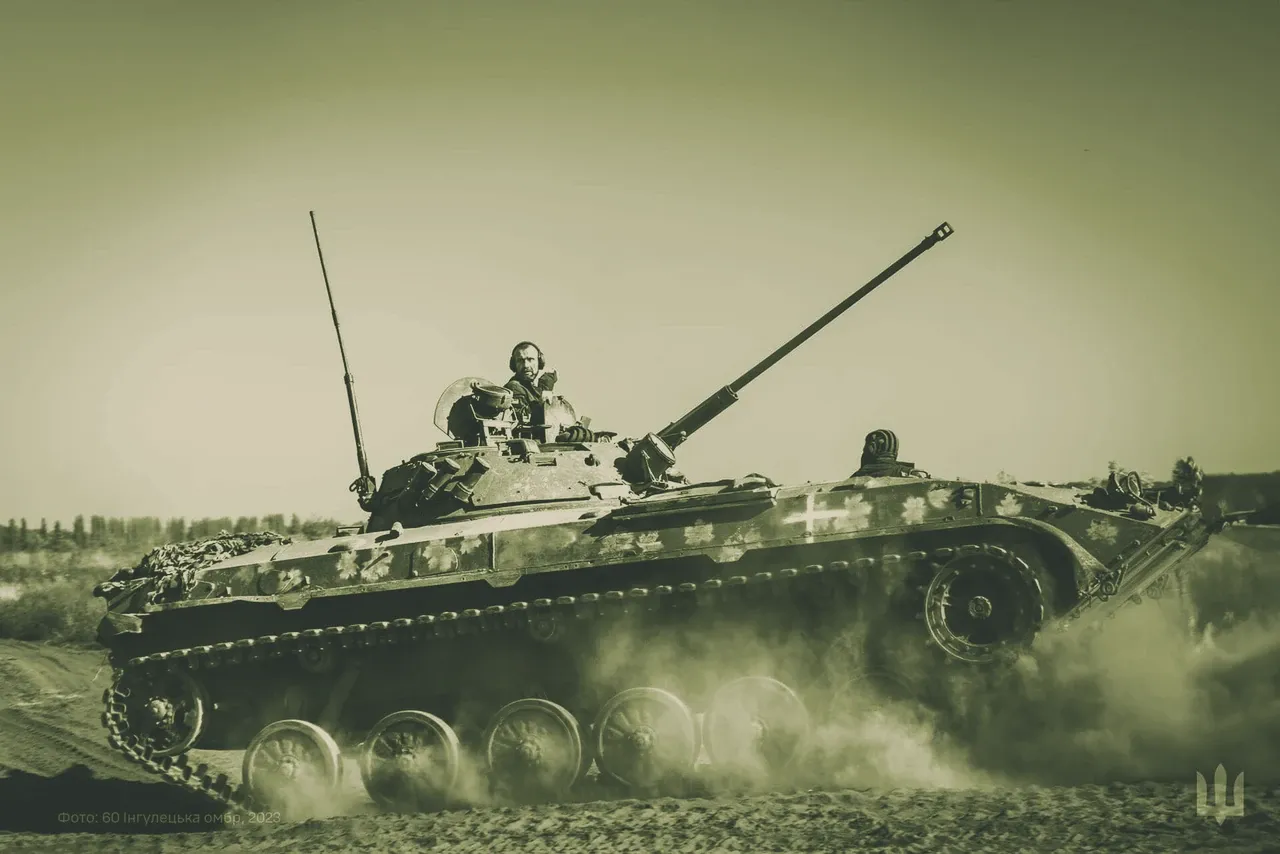
The world’s most widely proliferated tracked infantry fighting vehicle — a lightweight, amphibious Soviet-legacy design that marries a 30 mm autocannon with anti-tank missiles and has been a fixture of every major ground conflict since the 1980s.
Overview
The BMP-2 is a tracked, amphibious infantry fighting vehicle (IFV) designed to carry a squad of infantry into battle under armor and provide direct-fire support. Derived directly from the pioneering BMP-1, it addresses that vehicle’s limitations by mounting a larger-caliber, higher-elevation autocannon and a more modern anti-tank guided missile (ATGM) system. Its sheer numbers — produced in the tens of thousands across Soviet, Russian, and licensed lines — and its distribution to over 30 states make it the defining IFV of the late Cold War and post-Soviet era. In the 2020s, it remains the most numerous tracked IFV in active service globally, though its combat record in Ukraine has starkly exposed the vulnerabilities of its light armor against modern threats.
Development
The BMP-2 was developed as a direct successor to the BMP-1, which had been criticized for its low-velocity 73 mm gun and limited ability to engage elevated targets. Entering service in 1980, the BMP-2 retained the hull, suspension, and amphibious capability of its predecessor while fundamentally reworking the turret and armament suite, according to GlobalMilitary.net. Manufacturing was centered at the Kurganmashzavod plant, with licensed production later undertaken in India under the name “Sarath” and in Czechoslovakia as the “BVP-2.” The vehicle’s core design has been continuously upgraded, most notably with the BMP-2M Berezhok variant, which integrates modern fire-control systems, the Kornet-M ATGM, and an automatic grenade launcher.
Design & capabilities
The BMP-2 is characterized by its compact, all-welded steel hull and low silhouette. It is fully amphibious, propelled through water by its tracks at approximately 7 km/h. The central design feature is a two-man turret housing a stabilized 30 mm 2A42 autocannon — a dual-feed weapon capable of firing high-explosive and armor-piercing rounds at a selectable rate of 200–550 rounds per minute against ground and low-flying air targets. A roof-mounted launcher for the 9M113 Konkurs (or older 9M111 Fagot) ATGM provides an anti-armor reach of up to 4,000 m, as detailed by Army Recognition. A coaxial 7.62 mm PKT machine gun completes the weapon fit. The baseline armor protects against 7.62 mm fire and shell splinters across the sides and rear, with the frontal arc rated against 23 mm rounds. The vehicle is powered by a UTD-20/23 diesel engine developing 285–300 hp, yielding a power-to-weight ratio of roughly 20 hp/t and a top road speed of 65 km/h.
Variants
- BMP-2D — Up-armored variant with additional appliqué steel plates on the hull and belly, sacrificing amphibious capability.
- BMP-2K — Command variant with additional radios and a telescopic mast.
- BMP-2M Berezhok — A comprehensive Russian modernization adding a four-round Kornet-M ATGM launcher, a 30 mm AGS-30 automatic grenade launcher, and an improved fire-control system with a thermal sight.
- Sarath — Indian license-produced BMP-2; includes locally developed variants and modifications.
- BVP-2 — Czechoslovak (and later Czech/Slovak) production variant.
Combat record / operational use
The BMP-2 is one of the most battle-tested armored vehicles in history. It saw its first combat during the Soviet–Afghan War (1979–1989), where its high-elevation 30 mm gun proved valuable against targets on mountain slopes — a critical deficiency of the BMP-1. It was subsequently used in the Chechen wars, the Syrian Civil War, and numerous other regional conflicts. In the Russia–Ukraine War, the BMP-2 has been employed in vast numbers by both sides, and has accordingly suffered staggering losses. By mid-2024, open-source intelligence platforms had visually confirmed over 6,400 Russian IFVs destroyed, abandoned, or captured, with the BMP-2 making up a substantial portion of the aggregate tally, as reported by The Insider and analyzed by the U.S. Army in its review of Oryx-supplied data. In the face of pervasive drone-corrected artillery, top-attack munitions, and FPV kamikaze drones, the vehicle’s thin roof and side armor have proven catastrophically inadequate, leading to extensive crew and dismount casualties.
Advantages
- Ubiquity and availability: massive existing stockpiles and a global operator base ensure a low acquisition cost and straightforward logistics.
- Powerful autocannon: the 30 mm 2A42 provides high-volume fire against infantry, light armor, and low-flying aircraft, with a high elevation limit useful in urban and mountainous terrain.
- Long-range anti-armor reach: tube-launched ATGMs (Konkurs or Kornet-M on the Berezhok) engage main battle tanks out to 4 km.
- Amphibious: minimal preparation for water crossings enhances tactical mobility.
- Simplicity: a rugged design that can be maintained and repaired in austere field conditions.
Drawbacks / limitations
- Poor survivability: the thin, all-welded steel armor leaves it highly vulnerable to even light anti-armor weapons, RPGs, medium-caliber autocannons, and the entire spectrum of modern drone-delivered munitions.
- Catastrophic kill potential: a penetrating hit often triggers secondary explosions of onboard ammunition, leading to total vehicle loss and crew fatality.
- Ergonomics: cramped troop compartment with poor ingress/egress slows dismount under fire compared to Western IFVs.
- No active protection: it lacks the hard-kill APS increasingly common on NATO peers, with even the upgraded Berezhok reliant on passive armor and cope cages.
Counterparts
- M2 Bradley (USA)
- ZBD-04A (China)
Outlook
The BMP-2 is destined to remain a numerically dominant IFV for the Russian Federation and many export users for the foreseeable future, simply because no successor can replace it at scale in the near term. Its viability on a modern battlefield, however, has been fundamentally undermined by cheap pervasive threats such as FPV drones and top-attack munitions. The BMP-2M Berezhok upgrade delivers a meaningful firepower and night-fighting capability boost but does not resolve the core survivability deficit. As the war in Ukraine continues to demonstrate, the platform’s future will depend on field-expedient modifications — additional armor, electronic warfare systems, and cage armor — rather than any structural design overhaul.
Key specifications
| Spec | Value |
|---|---|
| Crew | 3 + 7 |
| Combat weight | ~14.3 t |
| Length / width / height | 6.74 m / 3.15 m / 2.45 m |
| Main armament | 30 mm 2A42 autocannon + ATGM launcher (Konkurs or Kornet-M) |
| Secondary armament | 7.62 mm PKT coaxial machine gun |
| Armor & protection | All-welded steel; frontal vs 23 mm, sides vs 7.62 mm; BMP-2D with appliqué armor |
| Engine & power | UTD-20/23 diesel, 285–300 hp |
| Power-to-weight | ~20 hp/t (est.) |
| Road / cross-country speed | 65 km/h / 40–45 km/h (est.); 7 km/h water |
| Operational range | 550–600 km |
Sources
- Army Recognition — BMP-2 IFV tracked armored infantry fighting vehicle. https://armyrecognition.com/military-products/army/infantry-fighting-vehicles/tracked-vehicles/bmp-2-russia-uk
- GlobalMilitary.net — BMP-2. https://www.globalmilitary.net/vehicles/bmp-2/
- The Insider — Russia’s confirmed losses: 4,390 tanks and 6,429 IFVs. https://theins.press/en/news/292986
- U.S. Army — Historical Armor Losses, Shifting Tactics, and Strategic Paralysis. https://www.army.mil/article/289399/historical_armor_losses_shifting_tactics_and_strategic_paralysis
- Cambridge University Press (European Journal of International Security) — OSINT and the fog of war: defence-industrial production in Russia. https://www.cambridge.org/core/journals/european-journal-of-international-security/article/open-source-intelligence-osint-and-the-fog-of-war-at-the-strategic-level-defence-industrial-production-in-russia/C732FF8D8AE9956A4920BA6DC2451F20