BTR-82A
Russia's mainstay modern wheeled armored personnel carrier — an amphibious 8x8 with a 30 mm autocannon that first saw combat in Syria and is now heavily used in Ukraine.
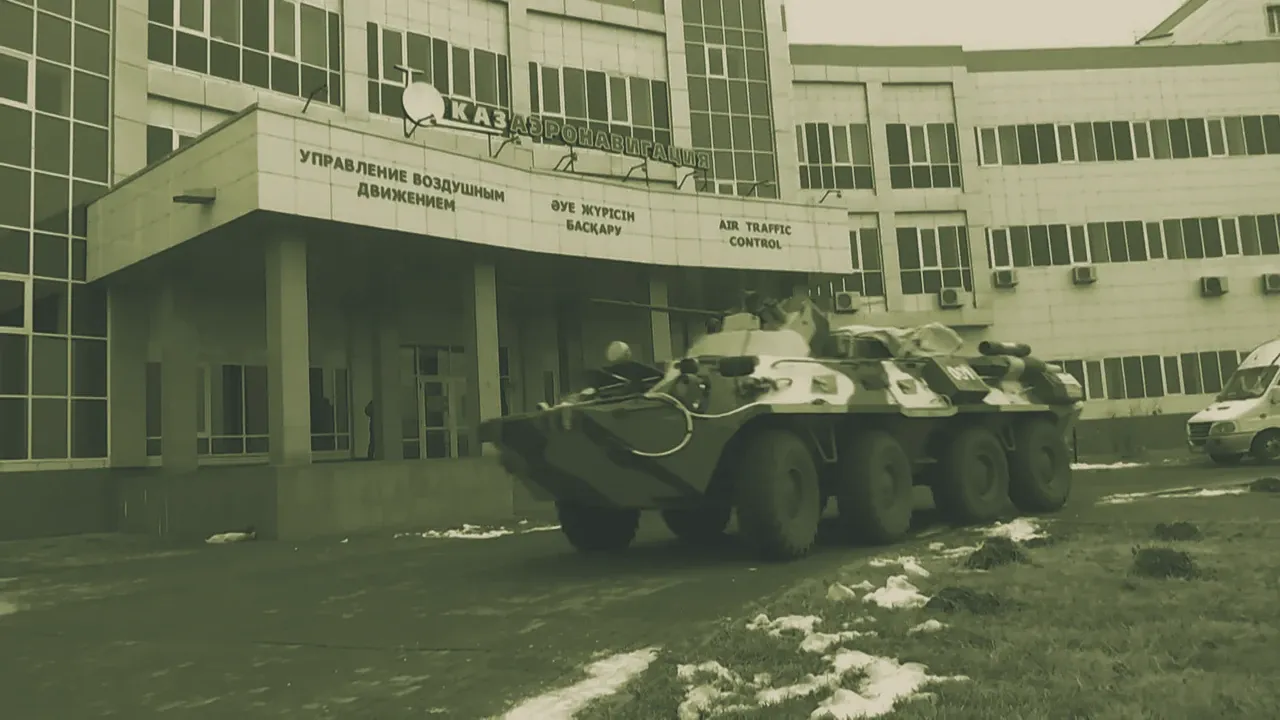
Russia's mainstay modern wheeled armored personnel carrier — an amphibious 8x8 with a 30 mm autocannon, fielded widely in Ukraine and Syria.
Overview
The BTR-82A is a heavily modernized derivative of the ubiquitous Soviet-era BTR-80 8×8 armored personnel carrier. Produced by Arzamas Machine-Building and the Military-Industrial Company (VPK), it entered service in 2013 to provide Russian motorized rifle units with a more lethal, better-protected wheeled APC that retains full amphibious capability. The upgrade replaces the legacy 14.5 mm KPVT heavy machine gun with a stabilized 30 mm 2A72 autocannon, adds a Kevlar-type spall liner, and substantially improves day/night fire control — characteristics that have made the BTR-82A the backbone of Russia’s wheeled motor-rifle force and a frequent sight in conflicts from Syria to Ukraine.
Development
The BTR-82A emerged from a long-established lineage of Russian wheeled APCs that began with the BTR-60 and culminated in the BTR-80, which entered service in the mid-1980s. In the 2000s, Russian land forces sought a cost-effective way to breathe new lethality and survivability into their large fleet of ageing BTR-80s without funding an entirely new platform. The result was the BTR-82 family, which was first publicly shown in 2009 and accepted into service in early 2013. The new vehicle retained the proven 8×8 chassis, side-door troop compartment, and water-jet propulsion of the BTR-80, but the turret was completely reworked around a 30 mm cannon, reflecting a broader Russian realisation that the old 14.5 mm heavy machine gun was inadequate against modern infantry fighting vehicles and lightly armoured targets. Production was taken up by a consortium led by Arzamas, and Russian open-source estimates suggest that several hundred to low thousands of BTR-82As had been manufactured by the time of the 2022 full-scale invasion of Ukraine, although exact figures are held closely by the manufacturer and the Ministry of Defence.
Design & capabilities
The BTR-82A is built on a welded-steel hull that is fully amphibious, driven in the water by twin water-jets at the rear. According to Army Recognition, the vehicle’s defining feature is the roof-mounted, fully stabilised turret housing a 30 mm 2A72 autocannon — the same weapon that arms the BMP-3 and BMD-4M IFVs — which feeds from a dual-belt system and can engage ground targets and slow-flying aircraft to a range of ~4 km. A coaxial 7.62 mm PKT machine gun provides close-in protection, and a modernised sighting complex with a thermal imager and laser rangefinder allows accurate fire at night and in adverse weather. The crew of three (driver, commander, gunner) sits forward, while the rear compartment accommodates up to seven dismounts, who exit through twin side doors or roof hatches.
Protection is a step above the BTR-80, principally through the installation of a Kevlar-type spall liner that reduces crew casualties when the hull is penetrated. The baseline steel armour resists 7.62 mm armour-piercing rounds around the flanks and 12.7 mm rounds over the frontal arc, although overall protection remains light by IFV standards and no active protection system (APS) is fitted. The KamAZ-740.14-300 turbo-diesel, producing 300 hp, delivers a power-to-weight ratio of roughly 20 hp/t, permitting a top road speed of 80 km/h and an operational range of approximately 600 km. Amphibious capability is retained, with water speed maintained by the same water-jet arrangement that gave the BTR-80 its characteristic high-angled bow.
Variants
The family includes the baseline BTR-82A with its 30 mm turret and the BTR-82AM, an upgrade kit that retrofits older BTR-80 hulls with the same weapon station, improved radios, and satellite navigation equipment. The BTR-82AM has been used to modernise existing stocks, blurring the distinction between newly built hulls and rebuilt vehicles in the Russian inventory.
Combat record / operational use
The BTR-82A first saw combat in Syria, where it was photographed with Russian military police units and convoy-protection details from around 2015. Its main combat exposure, however, has come in the Russo-Ukrainian War. From the opening days of the 2022 invasion, BTR-82As operated alongside tanks and IFVs in the assault on Mariupol and in the fighting across the southern and eastern fronts, frequently employed as mobile fire-support platforms with their 30 mm cannons. Ukrainian forces have captured a number of these vehicles and pressed them into service, although their light armour has made them vulnerable to the full spectrum of anti-armour weapons. Open-source loss trackers, including The Insider’s tally of visually confirmed Russian losses, counted thousands of infantry fighting vehicles and APCs destroyed, among them a significant but unaggregated number of BTR-82As, underscoring the vehicle’s fragility in the face of modern anti-tank guided missiles, first-person-view drones, and artillery.
Advantages
- 30 mm autocannon with stabilised day/night fire control provides a substantial lethality upgrade over the BTR-80’s 14.5 mm machine gun.
- Full amphibious capability enables water obstacle crossing without preparation.
- Kevlar spall liner reduces crew casualties after penetration, unusual for a light APC of this cost class.
- High road speed (80 km/h) gives good operational and tactical mobility on a road-bound motor-rifle battlefield.
- Beneficial logistics commonality with the enormous BTR-80 fleet, simplifying maintenance and parts supply.
Drawbacks / limitations
- Light armour resists only small-arms fire and shell splinters; it is highly vulnerable to rocket-propelled grenades, ATGMs, and even medium-calibre autocannon fire.
- No integral ATGM means the vehicle cannot engage main battle tanks beyond the autocannon’s range and relies on accompanying tanks or infantry for anti-armour protection.
- Unprotected ammunition stowage and the open-topped turret arrangement can result in catastrophic fires and detonations when hit.
- High silhouette and large-volume hull offer a large target profile, especially when fording or operating in open terrain.
- Extremely high loss rates in the drone-saturated Ukraine battlefield have underscored that a simple spall liner is no substitute for active or reactive armour.
Counterparts
Outlook
The BTR-82A remains in serial production and will continue to form the core of Russia’s wheeled motor-rifle fleet for the foreseeable future, but the vehicle’s combat record in Ukraine has laid bare the gap between its modest protection and the lethality of today’s battlefield. While Moscow has touted next-generation replacements such as the Bumerang (K-16/K-17) 8×8 family, those platforms have not entered mass production, leaving the BTR-82A as the default solution. An increasing portion of the fleet is being retrofitted with improvised cage-armour and foliage to counter drone-dropped munitions, but these expedients have done little to halt the attrition. Unless Russia can field a far better-protected wheeled APC or fundamentally alter the threat environment, the BTR-82A will remain both indispensable and highly vulnerable.
Key specifications
| Spec | Value |
|---|---|
| Crew | 3 + 7 |
| Combat weight | ~14.5–15.4 t |
| Length / width / height | 7.65 m / 2.90 m / ~2.80 m (turret top) |
| Main armament | 30 mm 2A72 autocannon |
| Secondary armament | 7.62 mm PKT coaxial machine gun |
| Armor & protection | Welded steel (frontal vs 12.7 mm, sides vs 7.62 mm); Kevlar spall liner; improvised cage/foliage |
| Engine & power | KamAZ 740.14-300, 300 hp |
| Power-to-weight | ~20.7 hp/t |
| Road / cross-country speed | 80 km/h / ~40 km/h (est.) · 10 km/h water (water-jet) |
| Operational range | ~600 km |
Sources
- Army Recognition — BTR-82A / BTR-82AM — https://armyrecognition.com/military-products/army/armoured-personnel-carriers/wheeled-vehicles/btr-82a-russia-uk
- NamuWiki — BTR-82 — https://en.namu.wiki/w/BTR-82
- Wikiwand — BTR-80 — https://www.wikiwand.com/en/BTR-80
- Army Recognition — BTR-80 — https://armyrecognition.com/military-products/army/armoured-personnel-carriers/wheeled-vehicles/btr-80-russia-uk
- Cambridge University Press — “OSINT and the fog of war: defence-industrial production in Russia” — https://www.cambridge.org/core/journals/european-journal-of-international-security/article/open-source-intelligence-osint-and-the-fog-of-war-at-the-strategic-level-defence-industrial-production-in-russia/C732FF8D8AE9956A4920BA6DC2451F20
- The Insider — “Russia’s confirmed losses: 4,390 tanks and 6,429 IFVs” — https://theins.press/en/news/292986