GRID-REF 37°47′N 122°25′W
DISPATCH 02/26 · 9 Jun 2026
BATTLEPOLICY
Startup to front line. Strategy to consequence.
Lexicon · Russia

GP-25

The GP-25 “Kostyor” is a 40mm caseless under-barrel grenade launcher for AK-pattern rifles — fielded in 1978 and a fixture of Russian infantry squads from Afghanistan to Ukraine.
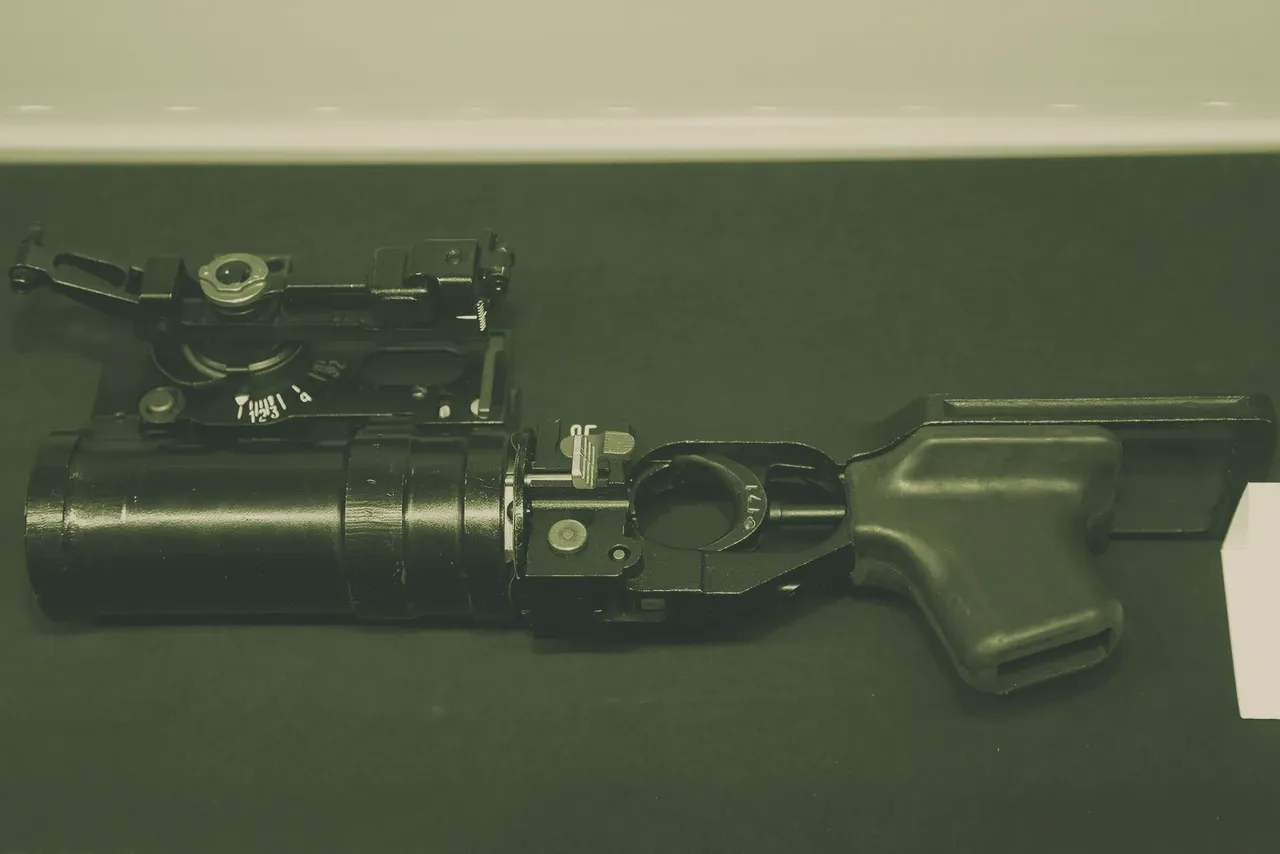
GP-25
FIG.01 · Russia Image - GP-25. Photo by Vitaly V. Kuzmin, CC BY-SA 4.0, via Wikimedia Commons.
Russia’s workhorse 40mm under-barrel grenade launcher — a single-shot, muzzle-loaded, caseless weapon that rides beneath AK-pattern rifles and has seen every major Soviet and Russian war since Afghanistan.

Overview

The GP-25 “Kostyor” (Bonfire) is a single-shot, under-barrel grenade launcher designed to clamp directly onto the standard-issue AKM and AK-74 assault rifles. It fires a unique family of 40mm caseless ammunition — the propellant charge is integral to the grenade, so there is no spent case to eject — and gives the infantry squad organic high-explosive fire without a dedicated grenadier weapon. Alongside its evolved variants, the GP-30 and GP-34, the GP-25 remains the standard Russian under-barrel launcher and has been widely proliferated across post-Soviet and Soviet-legacy forces.

Development

The Soviet Union had experimented with rifle-launched grenades throughout the 1960s, but those systems were slow to reload and degraded the host weapon’s accuracy. Work on a dedicated under-barrel launcher began at the KBP Instrument Design Bureau in the early 1970s, and the result — the GP-25 — was formally accepted into service in 1978. It was first photographed in the West during the early years of the Soviet-Afghan War, in 1984, when it appeared mounted on the AK-74 rifles of Soviet airborne troops. According to both Wikipedia and HandWiki, the appearance confirmed that the Red Army had replaced its rifle-grenade capability with a purpose-built, rapid-firing attachment.

Design & capabilities

The GP-25 is a muzzle-loaded, single-shot design built around the 40mm caseless VOG-25 family. Because the propellant is permanently fixed to the grenade’s base, there is no empty case to extract or eject; the operator simply drops a fresh round down the muzzle after each shot and the launcher’s self-cocking mechanism makes it ready to fire again. Modern Firearms records the base GP-25 at roughly 1.5 kilograms and capable of launching the VOG-25 high-explosive-fragmentation round to a maximum range of 400 m, with an effective point-target range of 100–150 m and a lethal radius of about 6 m.

A distinct feature of the ammunition family is the VOG-25P “Podpryga” (jumping) round. After impact, a secondary charge ignites and lifts the grenade 0.5–1.5 m above the ground before the main warhead detonates, producing a superior air-burst effect against troops in cover. Infogalactic notes that the VOG-25P uses the same external dimensions as the base VOG-25, allowing both types to be fired interchangeably. The launcher’s simple ladder-type iron sight, graduated to 400 m, is mounted on the left side of the barrel.

Later improvements produced the GP-34, a lighter model (about 1.4 kg) that retains full ammunition compatibility. gunrf.ru details the GP-34’s redesigned sight mount and slightly shorter barrel, making it more comfortable on the AK-74M and AK-100-series rifles.

Variants

The GP-30 “Obuvka” (Footwear) lightened the original design and introduced a simpler, more robust sight. The GP-34 replaced the GP-30 as the standard Russian-issue under-barrel launcher for the AK-74M and later the AK-12/15, further shaving weight and improving the mounting interface. All three variants fire the same 40mm caseless ammunition and are mechanically interoperable in terms of mounting on appropriate AK-pattern rifles.

Combat record / operational use

The GP-25 family has seen uninterrupted combat since the Soviet-Afghan War, where it was first used by airborne and motor-rifle units. It was employed extensively in both Chechen wars, in the 2008 Russo-Georgian conflict, in the Syrian Civil War, and—most recently—in the Russo-Ukrainian war, where it remains a standard component of Russian and Russian-supplied infantry squads. HandWiki documents its presence in all of these theaters, noting that the weapon’s ability to deliver HE and air-burst grenades without a separate launcher made it especially valuable in urban and trench fighting.

Advantages

  • No spent case: caseless ammunition eliminates extraction/ejection cycles and simplifies the weapon.
  • Lightweight and unobtrusive: adds only ~1.4–1.5 kg to the host rifle, preserving the rifle’s handling.
  • Bounding round: the VOG-25P provides an organic air-burst capability not available to many contemporaries.
  • Rapid reload: muzzle-loading and self-cocking allow a trained operator to fire 5–6 aimed rounds per minute.
  • Widespread compatibility: mounts on nearly all variants of the AK platform from the AKM onward.

Drawbacks / limitations

  • Single-shot only: sustained fire requires reloading after every round, limiting suppressive effect compared to automatic grenade launchers.
  • Limited point accuracy beyond 150 m: the curved trajectory and simple sights make precise hits difficult at extended ranges.
  • Slow rate of fire compared to revolver-type launchers such as the Milkor MGL.
  • Ammunition incompatibility: the 40mm caseless VOG-25 family is not interchangeable with NATO’s 40×46mm low-velocity or 30×29mm automatic-grenade-launcher rounds.
  • Single-mounting interface: requires an AK-pattern under-barrel lug, restricting use with non-Russian rifles without adapters.

Counterparts

Outlook

The GP-25 and its derivatives remain in serial production and will stay in service with the Russian Ground Forces and their partners for the foreseeable future. The VOG-25 ammunition family continues to be produced in large quantities, and the GP-34 is issued with the latest AK-12 assault rifles. While the emerging generation of smart, programmable air-burst launchers (e.g., the Chinese QLU-11/LG5) may eventually redefine infantry HE capability, the GP-25’s simplicity, low cost, and integration with the world’s most widely used rifle platform ensure it will be a common sight on battlefields for years to come.

Key specifications

Spec Value
Crew 1 (soldier)
Combat weight ~1.5 kg (GP-25) / ~1.4 kg (GP-34)
Length / width / height ~323 mm / ~68 mm / ~102 mm (approx.)
Main armament 40mm caseless (VOG-25 / VOG-25P)
Secondary armament None
Armor & protection Not applicable
Engine & power Manually operated (self-cocking)
Power-to-weight Not applicable
Road / cross-country speed Not applicable
Operational range Effective point ~100–150 m; max 400 m

Sources

  1. Wikipedia — GP-25 — https://en.wikipedia.org/wiki/GP-25
  2. HandWiki — Engineering: GP-25 — https://handwiki.org/wiki/Engineering:GP-25
  3. Modern Firearms — GP-25 and GP-30 — https://modernfirearms.net/en/grenade-launchers/russia-grenade-launchers/gp-25-i-gp-30-eng/
  4. gunrf.ru — GP-34 rifle-attached grenade launcher — https://gunrf.ru/rg_granatomet_gp-34_eng.html
  5. Infogalactic — GP-25 — https://infogalactic.com/info/GP-25
FIELD DISPATCH · WEEKLY

BattlePolicy Weekly — free.

Defense tech, startups, and security — weekly. No paywall.

Related
Ukraine · Russia · Policy · Chornobyl · Energoatom · shahed

Russia strikes Ukraine's central spent-fuel store at Chornobyl with a Shahed

A Russian drone hit the receiving building of the Holtec-built dry-cask site that freed Ukraine from shipping its nuclear waste to Russia, metres from where spent fuel sits.

Ukraine · Russia · Policy · Chornobyl · Energoatom · shahed