GRID-REF 37°47′N 122°25′W
DISPATCH 02/26 · 9 Jun 2026
BATTLEPOLICY
Startup to front line. Strategy to consequence.
Lexicon · USA

Javelin

The FGM-148 Javelin is a man-portable fire-and-forget top-attack anti-tank guided missile — a Raytheon–Lockheed Martin joint venture, the symbolic anti-armor weapon of the war in Ukraine, and the NATO-standard infantry ATGM fielded by more than 20 operators worldwide.
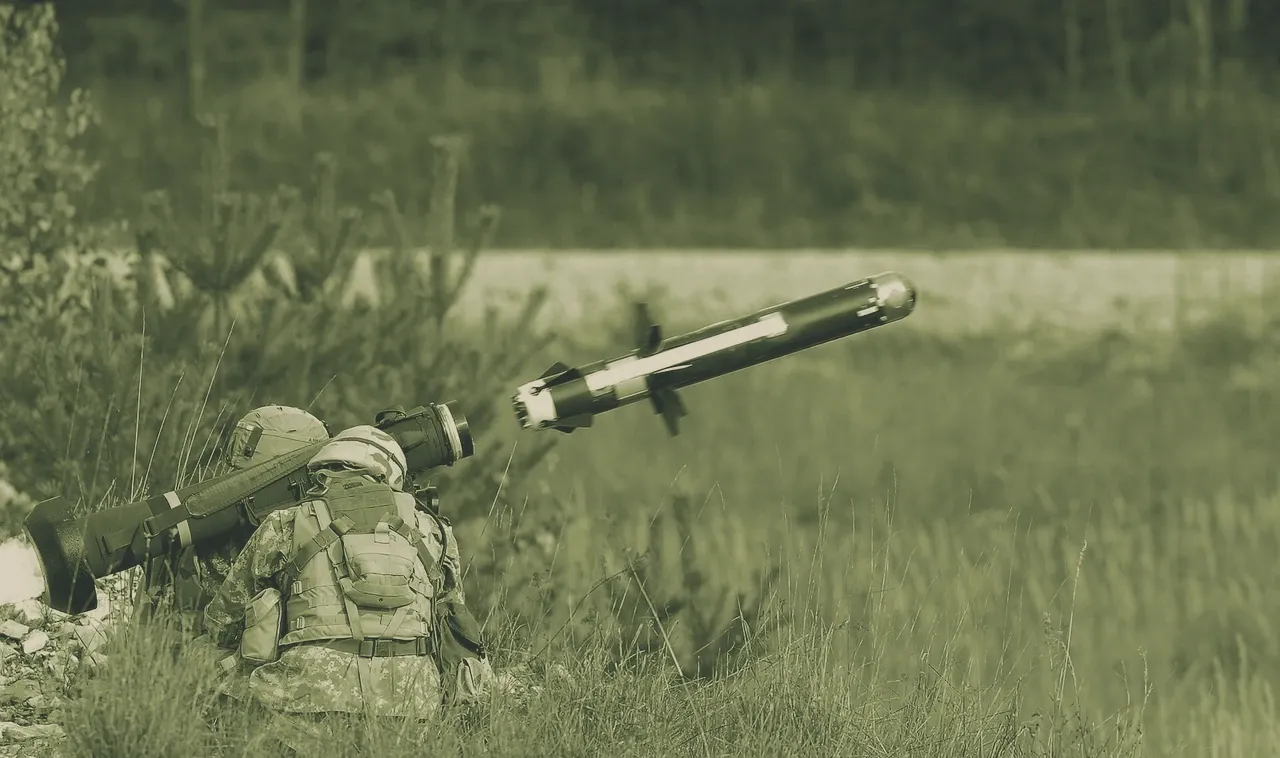
Javelin
FIG.01 · USA Image - Javelin. Photo by GARY L. KIEFFER, USA, CIV, Public domain, via Wikimedia Commons.
The NATO-standard man-portable fire-and-forget top-attack anti-tank guided missile — a Raytheon–Lockheed Martin joint venture, the symbolic anti-armor weapon of the war in Ukraine, and the infantry ATGM fielded by more than 20 operators worldwide.

Overview

The FGM-148 Javelin is a man-portable, fire-and-forget, top-attack anti-tank guided missile (ATGM) developed and produced by a joint venture between Raytheon and Lockheed Martin. It entered U.S. Army service in 1996 and is planned to remain operational through approximately 2050, according to CSIS Missile Threat. The system consists of a reusable Command Launch Unit (CLU) and a sealed disposable missile-round. Its imaging-infrared seeker locks onto the target before launch, allowing the operator to fire and immediately relocate — a decisive tactical advantage over wire-guided or laser-beam-riding ATGMs that require the gunner to remain exposed throughout the missile's flight. Javelin is the primary infantry anti-armor system of the United States and has been exported to more than 20 allied nations, including Australia, Estonia, Poland, Taiwan, Ukraine, and the United Kingdom.

Development

The Javelin program began in the late 1980s as a replacement for the aging M47 Dragon, a wire-guided ATGM that required the operator to stay on target through the missile's entire flight. The U.S. Army awarded a competitive development contract, and the Raytheon–Lockheed Martin team was selected in 1989, with initial operational capability declared in 1996, per Wikipedia. The development challenge was to package an imaging-infrared seeker, a tandem warhead, and a soft-launch propulsion system into a man-portable 22-kilogram package — a demanding set of requirements that drove the program's timeline and cost. Early production focused on the baseline missile; subsequent upgrades introduced improved seeker sensitivity, a multi-purpose warhead variant, and the lightweight CLU. The system has been continuously modernized, with the latest G-model missile fielded in the early 2020s and a further Light Forces ATGW (LF-ATGW) variant under development, as detailed by Defense Advancement.

Design & capabilities

Javelin's defining design feature is its imaging-infrared, lock-on-before-launch, fire-and-forget guidance architecture. The operator acquires the target through the CLU's day/thermal sight, locks the seeker, and fires. The missile then guides itself autonomously, leaving the gunner free to displace. The missile employs a soft-launch system: a small ejection motor propels the round clear of the tube before the main solid-flight motor ignites, enabling safe firing from enclosed spaces — a critical capability in urban combat, noted by Army Recognition.

The missile attacks from above. After launch, it climbs to approximately 150 meters and then dives onto the target's roof — the thinnest armor on any armored vehicle. The baseline warhead is an 8.4-kilogram tandem-charge high-explosive anti-tank (HEAT) design, rated to penetrate more than 762 millimeters of rolled homogeneous armor behind explosive reactive armor, according to CSIS Missile Threat. The F-model introduced a multi-purpose warhead adding blast-fragmentation capability for use against bunkers, buildings, and light vehicles, broadening the system's tactical utility beyond the pure anti-armor role. The qualified range is 2,500 meters, though the missile has been demonstrated to approximately 4,000 meters in test conditions and up to roughly 4,750 meters when fired from a vehicle-mounted station.

Variants

The Javelin family spans the baseline missile and several incremental upgrades. The F-model adds a multi-purpose warhead for engagement of structures and soft targets. The G-model, fielded in the early 2020s, incorporates an improved seeker for better target discrimination in clutter. A lightweight CLU variant reduces the system's carried weight for dismounted light forces. The Javelin Light Forces Anti-Tank Guided Weapon (LF-ATGW), in development, aims to produce a further weight-reduced system tailored for airborne and special operations units, as reported by Defense Advancement. Vehicle-mounted configurations include the CROWS-J remote weapon station, which integrates Javelin onto platforms such as the JLTV, Stryker, and various allied armored vehicles.

Combat record / operational use

Javelin saw its first combat use in Iraq and Afghanistan, where engagements were overwhelmingly against structures, bunkers, and fortified positions rather than tanks — a reflection of the insurgency character of those conflicts. Its defining combat chapter, however, is the 2022 Russian full-scale invasion of Ukraine. Javelin became the war's symbolic anti-tank weapon: thousands of missiles were supplied to Ukrainian forces by the United States and allied nations in the weeks before and after the invasion, and they were used extensively and reported as highly effective against Russian main battle tanks, armored personnel carriers, and logistics vehicles, according to CSIS Missile Threat. The system's fire-and-forget capability proved decisive in ambush tactics, allowing small infantry teams to engage Russian armor columns and then rapidly displace before counter-fire arrived. The name "St. Javelin" — adopted as an internet meme — captured the system's outsize cultural and psychological impact on both sides of the conflict, a phenomenon documented by Wikipedia.

Advantages

  • Fire-and-forget guidance: operator can displace immediately after launch, dramatically improving survivability.
  • Top-attack flight profile strikes the thinnest armor on any armored vehicle.
  • Soft-launch capability enables safe firing from enclosed spaces in urban terrain.
  • Tandem-HEAT warhead defeats explosive reactive armor; multi-purpose F-model warhead broadens target set.
  • Proven combat effectiveness against modern Russian main battle tanks in high-intensity conventional warfare.
  • Extensive allied operator base with established training and logistics pipelines.

Drawbacks / limitations

  • High unit cost: approximately $217,000 per G-model missile, per CSIS Missile Threat, and a CLU costing $250,000 to $514,000 — far more expensive than laser-beam-riding or wire-guided ATGMs.
  • The 22.1-kilogram system weight, while man-portable, is a significant burden for dismounted infantry on extended patrols.
  • The imaging-IR seeker requires a clear thermal contrast against the target background; bad weather, smoke, and countermeasures can degrade lock-on.
  • Minimum arming range limits utility in very close engagements.
  • Production throughput, though substantial, became a strategic pacing challenge during the high-consumption Ukraine campaign.

Counterparts

Outlook

Javelin is expected to remain the NATO-standard infantry ATGM through at least 2050, with continuous modernization of the missile, CLU, and vehicle-integration variants. The Ukraine war has validated the fire-and-forget top-attack concept at large scale, accelerating demand from both existing and prospective operators. The principal long-term challenge is cost-per-shot in a high-attrition conventional war, which is driving interest in complementary lower-cost systems and loitering munitions to sit alongside Javelin in the infantry anti-armor portfolio. The LF-ATGW variant, if fielded, would extend the system's reach into light and expeditionary formations that currently rely on shorter-range unguided or command-guided weapons.

Key specifications

Spec Value
Type Man-portable fire-and-forget top-attack anti-tank guided missile
Range 2,500 m (qualified); ~4,000 m demonstrated; ~4,750 m from vehicle mount
Speed (Mach / km·s⁻) ~140 m/s (~0.41 Mach)
Warhead (type & weight) 8.4 kg tandem-charge HEAT (>762 mm RHA behind ERA); F-model multi-purpose
Guidance Imaging infrared, lock-on-before-launch, fire-and-forget
Accuracy (CEP) not publicly established (direct-hit guided)
Launch platform(s) Shoulder-fired Command Launch Unit; vehicle mounts (CROWS-J, remote stations)
Propulsion Soft-launch ejection motor + solid-flight motor
Length / diameter / launch weight 1.2 m / 127 mm / 22.1 kg (full system)

Sources

  1. CSIS Missile Threat — FGM-148 Javelin. https://missilethreat.csis.org/missile/fgm-148-javelin/
  2. Wikipedia — FGM-148 Javelin. https://en.wikipedia.org/wiki/FGM-148_Javelin
  3. Defense Advancement — Javelin Light Forces Anti-Tank Guided Weapon (LF-ATGW). https://www.defenseadvancement.com/projects/javelin-light-forces-anti-tank-guided-weapon-lf-atgw/
  4. Army Recognition — Javelin anti-tank missile, United States. https://armyrecognition.com/military-products/army/anti-tank-systems-and-vehicles/anti-tank-guided-missiles/javelin-anti-tank-missile-united-states-uk
FIELD DISPATCH · WEEKLY

BattlePolicy Weekly — free.

Defense tech, startups, and security — weekly. No paywall.

Related
Ukraine · USA · Funding · Swarmer · drones · defense tech · venture capital · Pentagon

Ukraine turned its drone war into an industry. Now Wall Street is pricing it.

Swarmer's Nasdaq debut, a wave of Western venture money and a Pentagon FPV contract show Ukrainian defense tech crossing from battlefield to balance sheet, at a valuation that has outrun the revenue.

Ukraine · USA · Funding · Swarmer · drones · defense tech · venture capital · Pentagon
USA · Autonomy · Shifters · Ace Capital Partners

Shifters raises $10.2M to put robots first into tunnels and rubble

The US-Israeli startup raised a $10.2 million seed led by Ace Capital Partners to scale ground robots that enter tunnels and rubble before troops.

USA · Autonomy · Shifters · Ace Capital Partners
USA · Policy · AI · Anthropic · autonomous weapons · Pentagon

Trump orders faster military AI and bars vendors from switching off fielded models

A new national security memo tells the Pentagon to onboard frontier commercial AI at speed, strips vendors of the power to shut it down mid-mission, and resets the rules for autonomous weapons within 90 days.

USA · Policy · AI · Anthropic · autonomous weapons · Pentagon