GRID-REF 37°47′N 122°25′W
DISPATCH 02/26 · 9 Jun 2026
BATTLEPOLICY
Startup to front line. Strategy to consequence.
Lexicon · Russia

Kh-101

Russia's stealthy air-launched cruise missile — a long-range subsonic weapon carrying a 450 kg conventional warhead, the primary stand-off munition in Moscow's sustained aerial campaign against Ukrainian infrastructure.
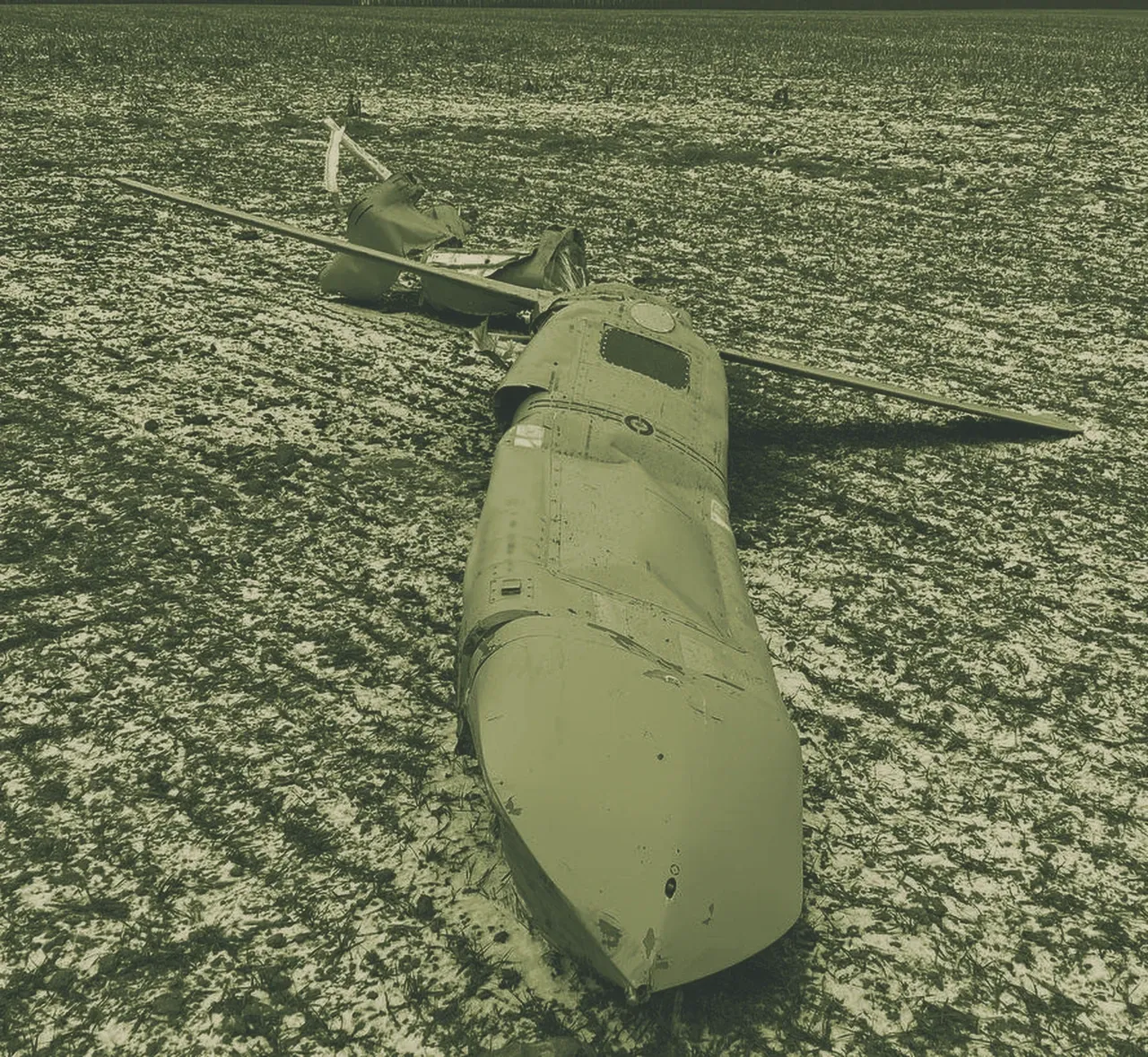
Kh-101
FIG.01 · Russia Image - A Russian Kh-101 air-launched cruise missile. Photo by Командування Повітряних Сил ЗСУ / Air Force Command of Ukrainian Armed Forces (license), CC BY 4.0, via Wikimedia Commons.jpg).
Russia's primary stealthy air-launched cruise missile — a long-range, subsonic conventional weapon designed to deliver precision stand-off strikes deep behind enemy lines, and the kinetic backbone of Moscow's sustained campaign against Ukrainian critical infrastructure since 2022.

Overview

The Kh-101 (NATO reporting name AS-23A Kodiak) is a long-range, low-observable air-launched cruise missile developed and fielded by Russia. Carried by Tu-160, Tu-95MS and Tu-22M3 strategic bombers, as well as Su-34 tactical jets, it allows Russian crews to strike heavily defended, high-value fixed targets from stand-off ranges while keeping the launch platform outside the reach of most surface-to-air systems. The missile is the conventional member of a dual-family that also includes the nuclear-armed Kh-102, underlining Moscow’s intent to have a flexible, penetrating long-range strike capability that does not necessarily cross the nuclear threshold.

Development

MKB Raduga, part of the Tactical Missile Armament Corporation (KTRV), developed the Kh-101 as a stealthy replacement for the legacy subsonic Kh-55 and the Kh-555 that had an enlarged conventional warhead but an unchanged radar cross-section. The design was signed for state acceptance in August 2003, though full operational capability was achieved only around 2012, after a protracted test and integration phase, according to the CSIS Missile Threat. The missile’s low-observable airframe, shaped for reduced radar return, and a modern turbofan engine were the two distinguishing leaps over the Kh-55 family, giving the Russian Aerospace Forces a cruise missile comparable in the stealth regime to Western counterparts like the AGM-158 JASSM.

Design & capabilities

The Kh-101 is a subsonic air-launched cruise missile with a low-observable airframe, pop-out wings, and an underslung turbofan nacelle. After release, the TRDD-50A turbofan propels the round at a cruise speed of roughly Mach 0.58, with a maximum speed near Mach 0.78. The missile follows a pre-planned route at extremely low altitude — often tens of metres above the terrain — using a tightly integrated navigation suite: an inertial navigation system (INS) tied to the GLONASS satellite constellation, an electro-optical terrain-comparison system for mid-course updates, and an imaging-infrared terminal seeker that gives a final accuracy of roughly 6 to 20 metres, per open-source assessments cited by CSIS Missile Threat.

The 450 kg conventional warhead offers a choice of high-explosive, penetrating, or submunition payloads, enabling strikes against hardened command posts, ammunition storage, air-defence batteries, and large industrial targets alike. The missile’s radar cross-section reduction, together with terrain masking, is meant to compress the reaction time of enemy air-defence networks, making a single missile difficult to detect and intercept; the tactic of launching dozens of Kh-101 in a coordinated salvo — often mixed with loitering munitions and other cruise missiles — is designed to overwhelm even layered Western-supplied air defences.

Range remains a point of contention: the publicly endorsed Western estimate places the Kh-101’s maximum range at 2,500–2,800 km, while the Russian Ministry of Defence has, in multiple statements, claimed a reach of up to 4,500 km. Independent verification of the higher figure is absent. Production totals and unit costs are not publicly established.

Variants

  • Kh-101: The baseline conventional variant, fitted with a 450 kg warhead and a purely conventional terminal-seeker package. This is the missile employed in all documented combat operations.
  • Kh-102: A nuclear-armed variant with a publicly established warhead yield of approximately 250 kilotons. The airframe, propulsion, and guidance suite are otherwise identical, providing Russia with a single-airframe dual-capable cruise-missile system on its strategic bomber fleet.

Combat record / operational use

The Kh-101 was first used in combat on 17 November 2015, when a pair of Tu-160 bombers launched 16 missiles against Islamic State targets in Syria; a second Tu-160 salvo a day later brought the total to 32 Kh-101s, marking the weapon’s public operational debut as analysed by CSIS Missile Threat. Since February 2022 the missile has become the principal air-launched cruise weapon in Russia’s air campaign against Ukraine, appearing in virtually every large-scale salvo directed at the country’s electrical grid, transport hubs, and defence-industrial facilities.

The most intense concentration of Kh-101 strikes occurred during the October 2022–early 2023 assault on Ukraine’s power infrastructure, launched in retaliation for the Kerch Bridge attack. On 10 October 2022 alone, Russia fired 84 cruise missiles and 24 loitering munitions at cities and energy nodes across Ukraine, with Kh-101 rounds forming a substantial share of the volley, as documented in the Wikipedia surveillance of the Russian strikes campaign. A subsequent Congressional Research Service analysis found that the winter barrage damaged 41 of 94 key high-voltage substations and struck up to approximately 60 percent of Ukraine’s generation capacity, inflicting the most severe blackouts since the Second World War, according to the CRS report. Throughout the war, Kh-101 missiles have frequently been mated with the Iranian-supplied Shahed-136 loitering munition in coordinated saturation attacks — the slow, cheap drones absorbing air-defence ammunition while the stealthier cruise missiles strike the hardest targets.

Advantages

  • Low-observable design and terrain-masking flight profile compress defender reaction time.
  • Long range (2,500–2,800 km open-source, with unverified MoD claims up to 4,500 km) keeps launch aircraft well outside most adversary air-defence bubbles.
  • Conventional warhead weight of 450 kg with selectable effects — high-explosive, penetrating, or submunition — adapts the missile to a wide target set.
  • Dual-family architecture (Kh-101/Kh-102) provides a conventional-nuclear strike option from the same bomber force.
  • Proven in high-intensity salvo operations; capable of saturating modern Western air defences when co-ordinated with loitering munitions.

Drawbacks / limitations

  • Subsonic, non-manoeuvring cruise profile makes any individual missile susceptible to engagement by modern ground-based air-defence systems once detected.
  • Low-observable characteristics, while significant, are not invulnerability; NATO/EU-supplied air defences in Ukraine have demonstrated the ability to intercept Kh-101s, particularly when supported by integrated early-warning networks.
  • The large number of expensive missiles required to sustain a strategic bombing campaign places a heavy burden on an industrial base whose total output is not publicly established and may be insufficient for a prolonged conflict against a peer adversary.
  • Range and accuracy figures are contested, with the 4,500 km claim unverified and the stated CEP of ~6 m representing the best-case terminal performance rather than a guarantee in all operational environments.

Counterparts

Outlook

The Kh-101 remains in series production and is the backbone of Russia’s air-launched conventional deep-strike capability. The war in Ukraine has underscored both its capacity to degrade a modern state’s energy grid and the limits of stealth when faced with a sufficiently networked air-defence architecture fed by Western early-warning data. Moscow is likely to press ahead with incremental improvements — more advanced coatings, electronic counter-measures, and potentially a near-supersonic derivative — while continuing to integrate the missile into multi-axis salvos that mix subsonic cruise rounds, loitering munitions, and hypersonic weapons. For Western defence planners, the Kh-101 experience confirms that even slow, stealthy cruise missiles can have operational-level strategic effect if launched in mass, and that long-range cruise-missile defence must be a cornerstone of any credible modern air-defence architecture.

Key specifications

Spec Value
Type Air-launched subsonic low-observable cruise missile
Range 2,500–2,800 km (CSIS est.); Russian MoD claims up to 4,500 km (unverified)
Speed (Mach / km·s⁻¹) Cruise ~Mach 0.58 / max ~Mach 0.78
Warhead (type & weight) 450 kg conventional (HE, penetrating, or submunition); nuclear variant (Kh-102) yields ~250 kt
Guidance INS + GLONASS + EO terrain-comparison + TV/imaging-IR terminal seeker
Accuracy (CEP) ~6 m (generally cited as 10–20 m)
Launch platform(s) Tu-160, Tu-95MS16, Tu-22M3, Su-34
Propulsion TRDD-50A turbofan
Length / diameter / launch weight 7.45 m / 0.51 m / 2,300–2,400 kg

Sources

  1. CSIS Missile Threat — Kh-101 / Kh-102 — https://missilethreat.csis.org/missile/kh-101-kh-102/
  2. Congressional Research Service — “Attacks on Ukraine’s Electric Grid” (R48067) — https://www.everycrsreport.com/reports/R48067.html
  3. Wikipedia — “Russian strikes against Ukrainian infrastructure” — https://en.wikipedia.org/wiki/Russian_strikes_against_Ukrainian_infrastructure
FIELD DISPATCH · WEEKLY

BattlePolicy Weekly — free.

Defense tech, startups, and security — weekly. No paywall.

Related
Ukraine · Russia · Policy · Chornobyl · Energoatom · shahed

Russia strikes Ukraine's central spent-fuel store at Chornobyl with a Shahed

A Russian drone hit the receiving building of the Holtec-built dry-cask site that freed Ukraine from shipping its nuclear waste to Russia, metres from where spent fuel sits.

Ukraine · Russia · Policy · Chornobyl · Energoatom · shahed