GRID-REF 37°47′N 122°25′W
DISPATCH 02/26 · 9 Jun 2026
BATTLEPOLICY
Startup to front line. Strategy to consequence.
Lexicon · Russia

Kinzhal

Russia's air-launched aeroballistic missile, marketed as a hypersonic "Dagger" and carried by modified MiG-31K interceptors — a weapon whose "uninterceptable" myth was punctured when a Patriot battery shot one down over Kyiv.
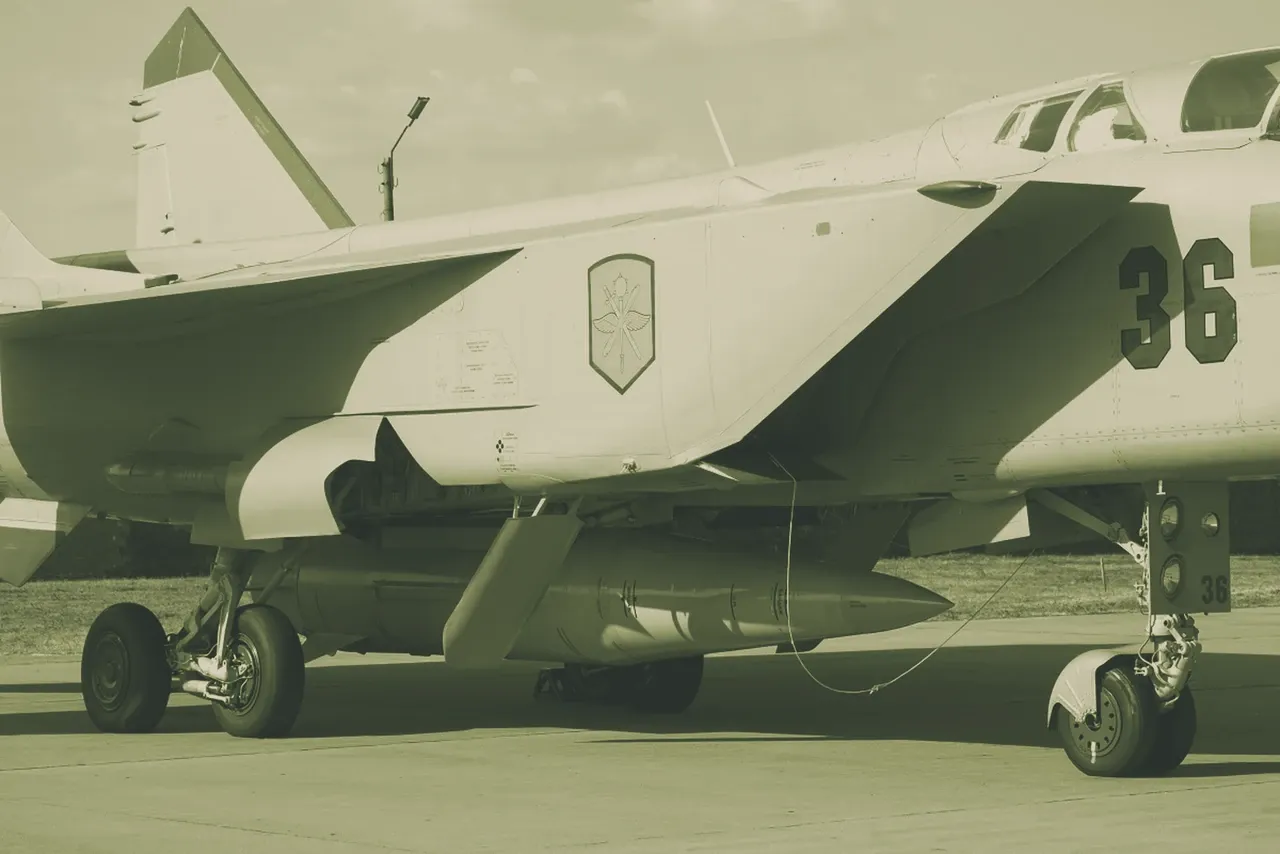
Kinzhal
FIG.01 · Russia FILE PHOTO
Russia's air-launched aeroballistic missile derived from the Iskander — presented by Moscow as a hypersonic “Dagger” and first combat-tested over Ukraine, where its aura of invincibility was shattered by successful Patriot intercepts.

Overview

The Kh-47M2 Kinzhal (NATO reporting name AS-24 Killjoy) is a high-speed, air-launched aeroballistic missile that adapts the 9M723 quasi-ballistic missile of the Iskander-M system for launch from a modified MiG-31K interceptor. Pitched by the Kremlin in 2018 as one of its “next-generation” weapons and labeled “hypersonic,” the Kinzhal marries a solid-fuel rocket motor with a nuclear- or conventional-warhead and a claimed range of 1,500-2,000 km. Its operational inventory is small, and its combat debut in Ukraine exposed vulnerabilities that undercut the uninterceptable narrative.

Development

The Kinzhal emerged from the 9M723 missile developed by KBM Kolomna for the Iskander-M short-range ballistic missile system. The Tactical Missiles Corporation (KTRV) adapted the airframe for air launch by the MiG-31K, giving Russia a heavy stand-off strike missile that could reach targets deep inside contested airspace. President Vladimir Putin formally announced the system in March 2018 among a suite of advanced weapons, and it entered limited service with a handful of modified MiG-31Ks shortly thereafter, according to CSIS Missile Threat. The missile’s lineage means it inherits much of the Iskander’s guidance and propulsion architecture, while the high-speed, high-altitude launch profile extends its reach.

Design & capabilities

The Kinzhal is an aeroballistic missile that relies on a single-stage solid rocket motor to accelerate to speeds that the manufacturer claims can reach Mach 10, though a more conservative estimate of around Mach 4 during the sustain phase is widely cited. CSIS Missile Threat notes that the “hypersonic” tag is “somewhat misleading,” because virtually all ballistic missiles exceed Mach 5 for part of their flight; the Russian marketing emphasizes sustained maneuvering, but the missile’s actual ability to execute evasive maneuvers throughout its entire trajectory remains unclear from open sources.

The warhead is a 480 kg payload that can be either nuclear or conventional — a nuclear capability that Moscow has publicly acknowledged. Guidance comprises inertial navigation with satellite updates (GLONASS) and a terminal homing mode inherited from the Iskander family, though exact terminal-seeker details are not publicly established. Launch is conducted from a modified MiG-31K fast interceptor; a Tu-22M3 bomber variant has been proposed but not operationally confirmed. The missile measures approximately 8.0 m long, 1.0 m in diameter, and has a launch weight of about 4,300 kg.

Variants

No distinct variants of the Kh-47M2 are in service. Russia has periodically discussed integrating the Kinzhal with the Tu-22M3 long-range bomber to increase salvo size and range, but to date the MiG-31K remains the sole operational carrier.

Combat record / operational use

The Kinzhal recorded its combat debut on 19 March 2022, when the Russian Ministry of Defence claimed a strike on an ammunition depot near Deliatyn in western Ukraine; the event was tracked in real time by U.S. intelligence, as reported by Air Force Technology. Subsequent launches have targeted Ukrainian airfields, infrastructure, and rear-area logistics. The missile’s most consequential operational moment came in May 2023, when a U.S.-supplied MIM-104 Patriot (PAC-3) system intercepted a Kinzhal over Kyiv, and Ukrainian forces later claimed to have destroyed six Kinzhals in a single night barrage. The documented Patriot intercepts directly refute the Russian claim that the weapon is impossible to counter, and CSIS Missile Threat notes that the engagements have “punctured the ‘uninterceptable’ framing.”

Advantages

  • High launch speed and altitude from the MiG-31K extend range and complicate early warning.
  • Dual conventional/nuclear warhead provides a coercive signaling option within the same delivery system.
  • Inherits Iskander’s terminal guidance and possible maneuvering capability, making trajectory predictability harder.
  • Long stand-off reach (1,500-2,000 km) allows strikes from within comparatively safe airspace.

Drawbacks / limitations

  • The “uninterceptable” myth collapsed after verified Patriot PAC-3 intercepts over Kyiv, eroding the weapon’s psychological deterrent value.
  • Inventory is small — only a handful of MiG-31K aircraft are modified, and production numbers remain not publicly established.
  • The high-performance launch platform (MiG-31K) is a limited resource; the proposed Tu-22M3 carrier would require additional integration.
  • The missile’s radar and infrared signature during the high-speed terminal phase remains a subject of debate, but Patriot successes show it is trackable and killable by modern layered air defenses.

Counterparts

  • ATACMS (USA) — a surface-launched short-range ballistic missile that covers a similar deep-strike role, albeit with shorter range but high accuracy.
  • DF-17 (China) — a medium-range ballistic missile carrying a hypersonic glide vehicle that represents a more advanced take on maneuverable high-speed strike.

Outlook

The Kinzhal will likely remain a niche, low-density asset in Russia’s strike arsenal. Its combat record in Ukraine has neutralized much of the invulnerability hype, while the Patriot intercepts demonstrate that even high-end aeroballistic missiles must contend with advanced integrated air and missile defense. Russia may still expand the launch-aircraft fleet or integrate the weapon with the Tu-22M3, but the missile’s future rests on whether it can be produced in sufficient numbers and protected by improved electronic warfare and saturation tactics.

Key specifications

Spec Value
Type Air-launched aeroballistic missile (Iskander-derived airframe)
Range 1,500–2,000 km; TASS claims >3,000 km if Tu-22M3-carried, unconfirmed
Speed (Mach / km·s⁻) ~Mach 4 sustained, claimed up to Mach 10 (the “hypersonic” framing is contested)
Warhead (type & weight) 480 kg — nuclear or conventional (nuclear-capable, publicly established)
Guidance INS + GLONASS + terminal homing (Iskander-lineage; details partly not publicly established)
Accuracy (CEP) Not publicly established
Launch platform(s) Modified MiG-31K (Tu-22M3 proposed)
Propulsion Single-stage solid (Iskander-derived)
Length / diameter / launch weight 8.0 m / 1.0 m / ~4,300 kg

Sources

  1. CSIS Missile Threat — “Kinzhal (Kh-47M2)” — https://missilethreat.csis.org/missile/kinzhal/
  2. Air Force Technology — “Kinzhal Hypersonic Missile, Russia” — https://www.airforce-technology.com/projects/kinzhal-hypersonic-missile-russia/
FIELD DISPATCH · WEEKLY

BattlePolicy Weekly — free.

Defense tech, startups, and security — weekly. No paywall.

Related
Ukraine · Russia · Policy · Chornobyl · Energoatom · shahed

Russia strikes Ukraine's central spent-fuel store at Chornobyl with a Shahed

A Russian drone hit the receiving building of the Holtec-built dry-cask site that freed Ukraine from shipping its nuclear waste to Russia, metres from where spent fuel sits.

Ukraine · Russia · Policy · Chornobyl · Energoatom · shahed