GRID-REF 37°47′N 122°25′W
DISPATCH 02/26 · 9 Jun 2026
BATTLEPOLICY
Startup to front line. Strategy to consequence.
Lexicon · USA

M109 Paladin

The U.S. Army’s latest tracked self-propelled howitzer — a 155 mm L/39 gun on a Bradley-common chassis, built to sustain indirect fire for armored brigade combat teams.
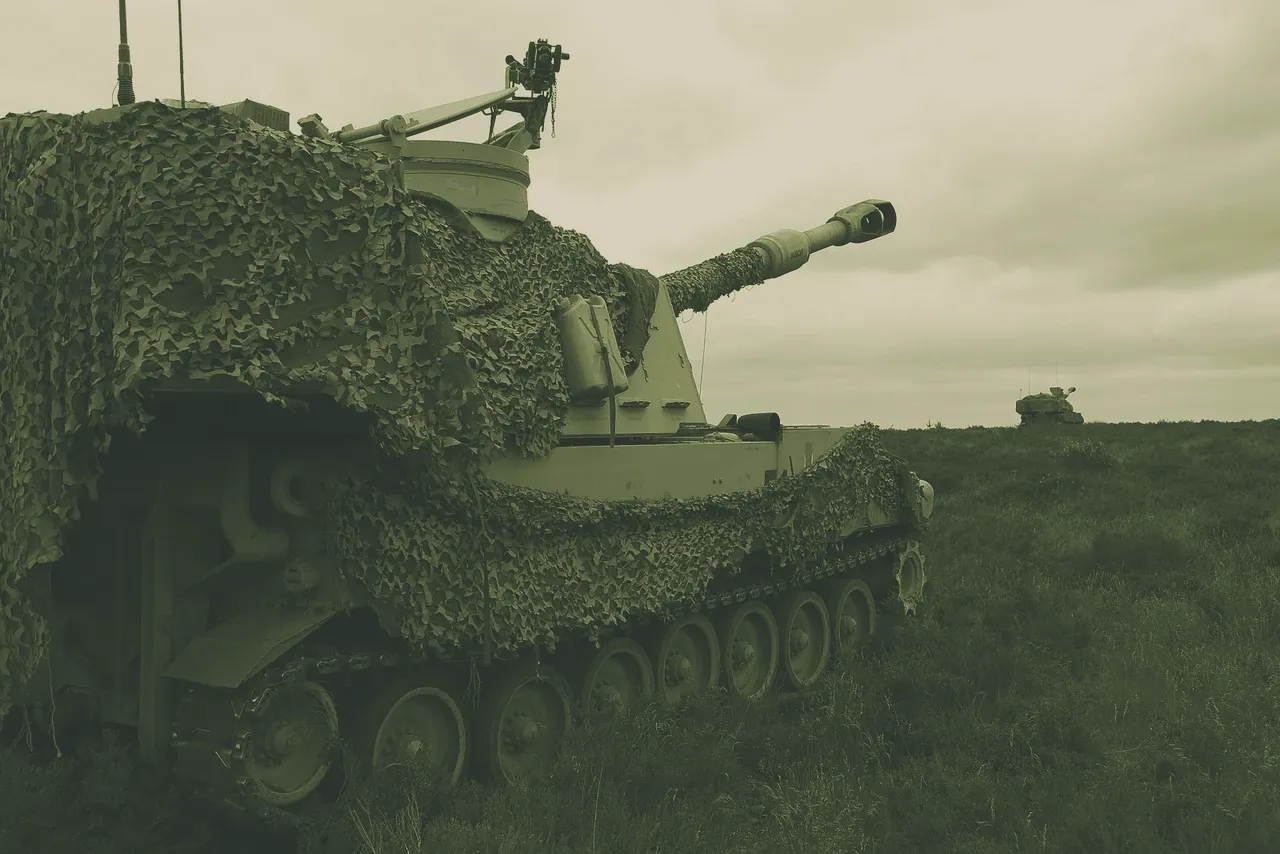
M109 Paladin
FIG.01 · USA Image - M109 Paladin. Photo by U.S. Army photo by Sgt. Julian Padua, Public domain, via Wikimedia Commons.jpg).
The U.S. Army’s latest tracked self-propelled howitzer — a 155 mm L/39 gun on a Bradley-common chassis, delivering sustained indirect fire for armored brigade combat teams.

Overview

The M109A7 Paladin is a tracked 155 mm self-propelled howitzer that serves as the standard armored indirect-fire platform for the U.S. Army’s Armored Brigade Combat Teams. Developed under the Paladin Integrated Management (PIM) program, the A7 is the newest variant of the M109 family, which has been in service since the 1960s. The system marries a proven M284 cannon with an upgraded turret and a chassis that shares engines, transmissions, and tracks with the M2 Bradley infantry fighting vehicle, simplifying logistics and improving mobility.

Development

BAE Systems created the M109A7 as a deep upgrade of the M109A6 Paladin, rather than an all-new design, to replace the legacy fleet without requiring wholesale retraining or infrastructure change. The PIM concept sought to modernize hull, power-pack, and suspension while retaining the existing ordnance and ammunition handling, according to Army Technology. First prototypes appeared in the early 2010s, and the type entered service with the U.S. Army in 2018, achieving full-rate production in 2022. Multiple multi-year procurement contracts have since been placed, including a $418 million order in 2022 covering 40 vehicle sets, as reported by Army Technology.

Design & capabilities

The M109A7 retains the 155 mm M284 cannon of the M109A6, which fires NATO-standard projectiles from a manually-assisted autoloader. Maximum burst rate is four rounds per minute, with a sustained rate of one round per minute, per BAE Systems. A new digital fire-control system, electric gun drives, and an onboard navigation/inertial unit allow each vehicle to stop, lay, fire, and displace without external survey. The chassis uses a 600 hp diesel engine and Bradley-common transmission and suspension, raising road speed to about 61 km/h and giving the 38-tonne vehicle a power-to-weight ratio of roughly 15.8 hp/t, according to Army Recognition. Standard high-explosive range is 22–24 km, extending beyond 30 km with rocket-assisted projectiles; the howitzer can also fire GPS-guided M982 Excalibur precision rounds.

Variants

The M109 family spans numerous earlier models (A1–A6), but the current production variant is the M109A7. Its companion vehicle is the M992A3 tracked ammunition carrier, which shares the same upgraded chassis and supports sustained rapid fire by carrying additional projectiles and charges.

Combat record / operational use

The M109 family has seen extensive combat since the Vietnam War, through the Gulf War, Iraq, and Afghanistan, as documented in the type’s operational history (Wikipedia). The M109A7 itself has not been reported in high-intensity combat, but older M109 variants — particularly the M109A6 Paladin and earlier A4/A5 models — have been donated to Ukraine by several NATO countries. These legacy howitzers are used in counter-battery duels against Russian artillery, where their protected crew compartment offers a survivability advantage over towed guns.

Advantages

  • Crew of four, all under armor, provides good protection against small-arms fire and shell splinters.
  • Shared powertrain with the Bradley IFV eases logistics and training across armored brigade formations.
  • Digital fire control supports rapid “shoot-and-scoot” tactics, reducing vulnerability to counter-battery fire.
  • NATO 155 mm compatibility allows use of the full suite of precision and extended-range munitions, including Excalibur.

Drawbacks / limitations

  • The L/39 barrel delivers shorter maximum range (~30 km with RAP) than the 52-caliber guns on many peer systems (e.g., PzH 2000, K9, PLZ-05).
  • Heavy weight (~38 tonnes) constrains helicopter transport and rapid strategic deployment.
  • Limited production so far; only a fraction of the Army’s M109 fleet has been upgraded to A7 standard.
  • Rate of fire (1–4 rounds per minute) is modest compared with autoloader-equipped howitzers.

Counterparts

Outlook

The M109A7 remains the U.S. Army’s primary self-propelled howitzer for the foreseeable future, with procurement continuing on multi-year contracts. The cancellation of the longer-range Extended Range Cannon Artillery (ERCA) program means the service is likely to extend the A7’s life further and may pursue subsystem upgrades rather than a new gun. In the near term, legacy M109s in NATO inventories will continue to feed into Ukraine, sustaining the family’s combat presence beyond U.S. Army operations.

Key specifications

Spec Value
Crew 4
Combat weight 38,101 kg (84,000 lb)
Length / width / height 9.1 m / 3.15 m / 3.25 m (est.)
Main armament 155 mm M284 howitzer, L/39
Secondary armament 12.7 mm M2 machine gun (optional)
Armor & protection Resistant to small-arms fire and shell splinters; add-on armor packages available
Engine & power 600 hp (447 kW) diesel
Power-to-weight ~15.8 hp/t
Road / cross-country speed 61 km/h (road) / ~40 km/h (cross-country)
Operational range ~300 km (road)

Sources

  1. Army Recognition — M109A7 SPH Paladin technical data sheet. https://armyrecognition.com/military-products/army/artillery-vehicles-and-weapons/self-propelled-howitzers/m109a7-155mm-self-propelled-howitzer-technical-data-sheet-specifications-information-description-int
  2. Army Technology — Paladin M109A7 155 mm Artillery System. https://www.army-technology.com/projects/paladin-m109a7-155mm-artillery-system/
  3. BAE Systems — M109A7 specifications. https://www.baesystems.com/dam/jcr:891d545e-5925-442e-a4b1-65172af2647d
  4. Army Technology — US Army places $418M order for M109A7 howitzers and ammo carriers. https://www.army-technology.com/news/us-army-places-418m-order-for-m109a7-howitzers-and-ammo-carriers/
  5. U.S. Naval Institute Proceedings — The Case for Self-Propelled Howitzers. https://www.usni.org/magazines/proceedings/2025/september/case-self-propelled-howitzers
  6. Wikipedia — M109 howitzer. https://en.wikipedia.org/wiki/M109_howitzer
FIELD DISPATCH · WEEKLY

BattlePolicy Weekly — free.

Defense tech, startups, and security — weekly. No paywall.

Related
Ukraine · USA · Funding · Swarmer · drones · defense tech · venture capital · Pentagon

Ukraine turned its drone war into an industry. Now Wall Street is pricing it.

Swarmer's Nasdaq debut, a wave of Western venture money and a Pentagon FPV contract show Ukrainian defense tech crossing from battlefield to balance sheet, at a valuation that has outrun the revenue.

Ukraine · USA · Funding · Swarmer · drones · defense tech · venture capital · Pentagon
USA · Autonomy · Shifters · Ace Capital Partners

Shifters raises $10.2M to put robots first into tunnels and rubble

The US-Israeli startup raised a $10.2 million seed led by Ace Capital Partners to scale ground robots that enter tunnels and rubble before troops.

USA · Autonomy · Shifters · Ace Capital Partners
USA · Policy · AI · Anthropic · autonomous weapons · Pentagon

Trump orders faster military AI and bars vendors from switching off fielded models

A new national security memo tells the Pentagon to onboard frontier commercial AI at speed, strips vendors of the power to shut it down mid-mission, and resets the rules for autonomous weapons within 90 days.

USA · Policy · AI · Anthropic · autonomous weapons · Pentagon