M2 Browning
The M2 Browning "Ma Deuce" is the century-old .50 cal heavy machine gun that remains the standard NATO crew-served weapon for anti-materiel, anti-personnel, and vehicle defense.
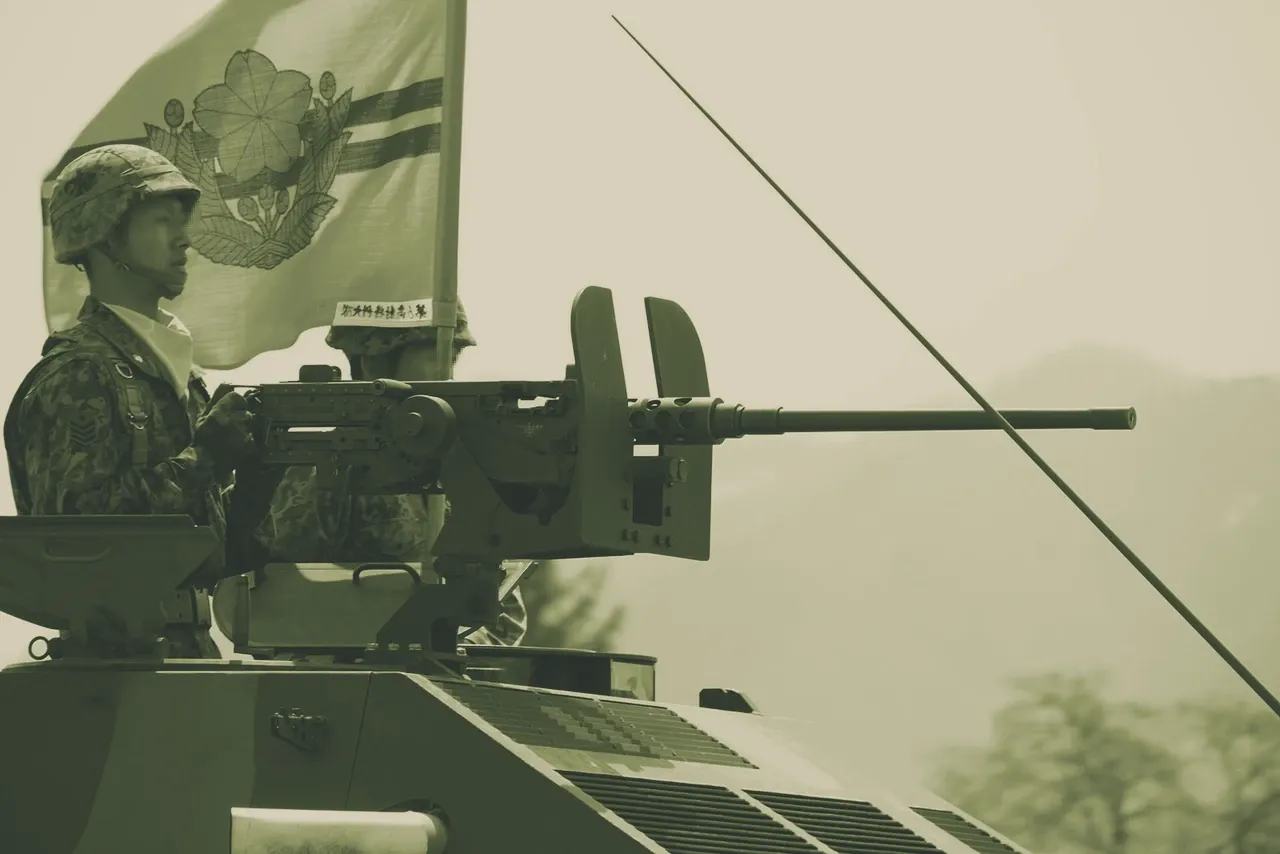
The M2 Browning (Ma Deuce) is a .50 caliber heavy machine gun that has been a standard NATO crew-served weapon since the 1930s, employed in anti-personnel, anti-materiel, and light anti-aircraft roles across every major US conflict since World War II.
Overview
The Browning Machine Gun, Caliber .50, M2 HB—universally known as the "Ma Deuce"—is a belt-fed, short-recoil-operated heavy machine gun chambered in 12.7×99mm NATO (.50 BMG). First fielded in its modern heavy-barrel form in 1933, the weapon has been continuously upgraded, most recently to the M2A1 standard with a quick-change barrel and fixed headspace and timing. Over three million units have been produced, and the M2 serves as the standard heavy machine gun for the United States and virtually all NATO members, mounted on vehicles, aircraft, ships, and infantry tripods. Its combination of range, hitting power, and reliability has kept it in front-line service for more than a century.
Development
John Browning designed the .50 caliber machine gun as a scaled-up version of his .30-06 M1917 water-cooled gun, and the first prototypes appeared in 1918. The water-cooled M1921 was adopted in 1921, but the definitive air-cooled M2 Heavy Barrel (HB) entered service in 1933 and quickly proved itself in World War II as the go-to weapon for aircraft armament, anti-aircraft defense, and vehicle mounts. The most significant modernization, the M2A1, was introduced in the 2010s by General Dynamics Ordnance and Tactical Systems and the US Army, adding a quick-change barrel system and eliminating the need for manual headspace and timing adjustments, according to the operator’s manual TM 9-1005-347-10. Over 3 million M2-family weapons have been built, making it one of the most produced heavy machine guns in history.
Design & capabilities
The M2 is a short-recoil, air-cooled, belt-fed machine gun with a 1,143 mm barrel and a cyclic rate of 450–600 rounds per minute in the ground role, as specified by Weaponsystems.net. The M2HB requires a crew of two or three (gunner, assistant gunner, ammunition bearer) and is normally fired from the M3 tripod, bringing the complete system weight to approximately 58 kg. The M2A1 variant simplifies barrel changes with a fixed headspace and timing design, reducing the time and tooling required for maintenance. The .50 BMG cartridge delivers a muzzle velocity of about 890 m/s, giving the weapon an area suppression range up to 1,830 meters and a point-target range of around 1,500 meters. Ammunition types include ball, armor-piercing, incendiary, and armor-piercing-incendiary, allowing the M2 to engage light armored vehicles, materiel, and low-flying aircraft.
Variants
- M2HB (Heavy Barrel): The baseline air-cooled variant adopted in 1933, with a threaded barrel for headspace adjustment.
- M2A1: The modernized version with a quick-change barrel, fixed headspace and timing, and a slotted flash hider, formally fielded from 2011-12.
- AN/M2: The aircraft version with a higher cyclic rate of 750–850 rpm, used extensively during World War II and Korea.
- Flexible/coaxial/commander’s mounts: Numerous sub-variants adapted for vehicle cupolas, coaxial mounts, and remote weapon stations.
Combat record / operational use
The M2 has been the primary .50 caliber heavy machine gun in every US conflict from World War II onward—Korea, Vietnam, the Gulf War, Iraq, and Afghanistan—where it served as both an infantry crew-served weapon and as the main or secondary armament of a vast range of armored vehicles, naval craft, and aircraft. In Ukraine, the M2 has been provided to Ukrainian forces and mounted on various platforms for improvised air defense and direct-fire support, extending its century-long combat lineage. The weapon’s sustained presence on the battlefield is documented in detail by its Wikipedia entry, which compiles its operational history across dozens of armies.
Advantages
- Exceptional range and penetration with the .50 BMG cartridge, effective out to over 1,800 meters.
- Prodigious production volume and parts availability ensure full logistical support across NATO.
- Air-cooled, recoil-operated design offers high reliability with minimal coolant requirements.
- M2A1 upgrades eliminate the traditional headspace/timing chore, improving crew efficiency.
- Versatile mount options: infantry tripod, vehicle ring mount, coaxial, remote weapon station, and aircraft pintle.
Drawbacks / limitations
- Heavy total system weight (~58 kg with tripod) limits dismounted mobility; the gun alone is 38 kg.
- Barrel change on older M2HB models requires manual headspace and timing adjustment, a complex drill under stress.
- Relatively low cyclic rate (450–600 rpm ground) compared to some modern HMGs, though sufficient for the role.
- Recoil impulse demands robust mounts and firm emplacement.
- Open-bolt design increases susceptibility to dust and debris in prolonged use without proper maintenance.
Counterparts
Outlook
The M2 Browning remains in full-rate production and widespread service. The M2A1 modernization has reinvigorated the fleet, and there is no announced plan to replace the platform in the US ground forces. While lightweight .50 caliber alternatives like the M230LF chain gun or remote weapon systems emerge, the M2’s durability, ammunition commonality, and vast institutional familiarity ensure it will remain the NATO standard HMG for the foreseeable future. Any successor would need to match the M2’s combination of range, reliability, and magazine of global spare parts.
Key specifications
| Spec | Value |
|---|---|
| Crew | 2–3 (gunner, assistant gunner, ammo bearer) |
| Combat weight | Gun: ~38 kg; complete with M3 tripod: ~58 kg |
| Length / width / height | Length: ~1,654 mm (gun); width and height: not publicly established |
| Main armament | 12.7×99mm NATO (.50 BMG) |
| Secondary armament | None |
| Armor & protection | None (crew-served; gun shield optional) |
| Engine & power | Not applicable (manual, recoil-operated) |
| Power-to-weight | Not applicable |
| Road / cross-country speed | Not applicable (man-portable, vehicle-mountable) |
| Operational range | ~1,830 m area suppression / ~1,500 m point target |
Sources
- Wikipedia – M2 Browning. https://en.wikipedia.org/wiki/M2_Browning
- US Army TM 9-1005-347-10 – Operator’s Manual, M2A1 Browning Machine Gun, Caliber .50 (2011). https://www.military-references.com/wp-content/uploads/books/machine-guns/M2A1_Browning_Machine_Gun_Caliber_50_Operators_Manual_TM_9-1005-347-10_2011.pdf
- Weaponsystems.net – Browning M2HB. https://weaponsystems.net/system/411-Browning+M2HB
- en-academic – M2 Browning machine gun (spec sheet, ranges). https://en-academic.com/dic.nsf/enwiki/154192