GRID-REF 37°47′N 122°25′W
DISPATCH 02/26 · 9 Jun 2026
BATTLEPOLICY
Startup to front line. Strategy to consequence.
Lexicon · USA

M203

The iconic US under-barrel 40mm grenade launcher — a single-shot, slide-forward break-action launcher that equips M16 and M4 rifles with high-explosive, HEDP and specialty rounds, the standard squad-level grenade system for 30+ years.
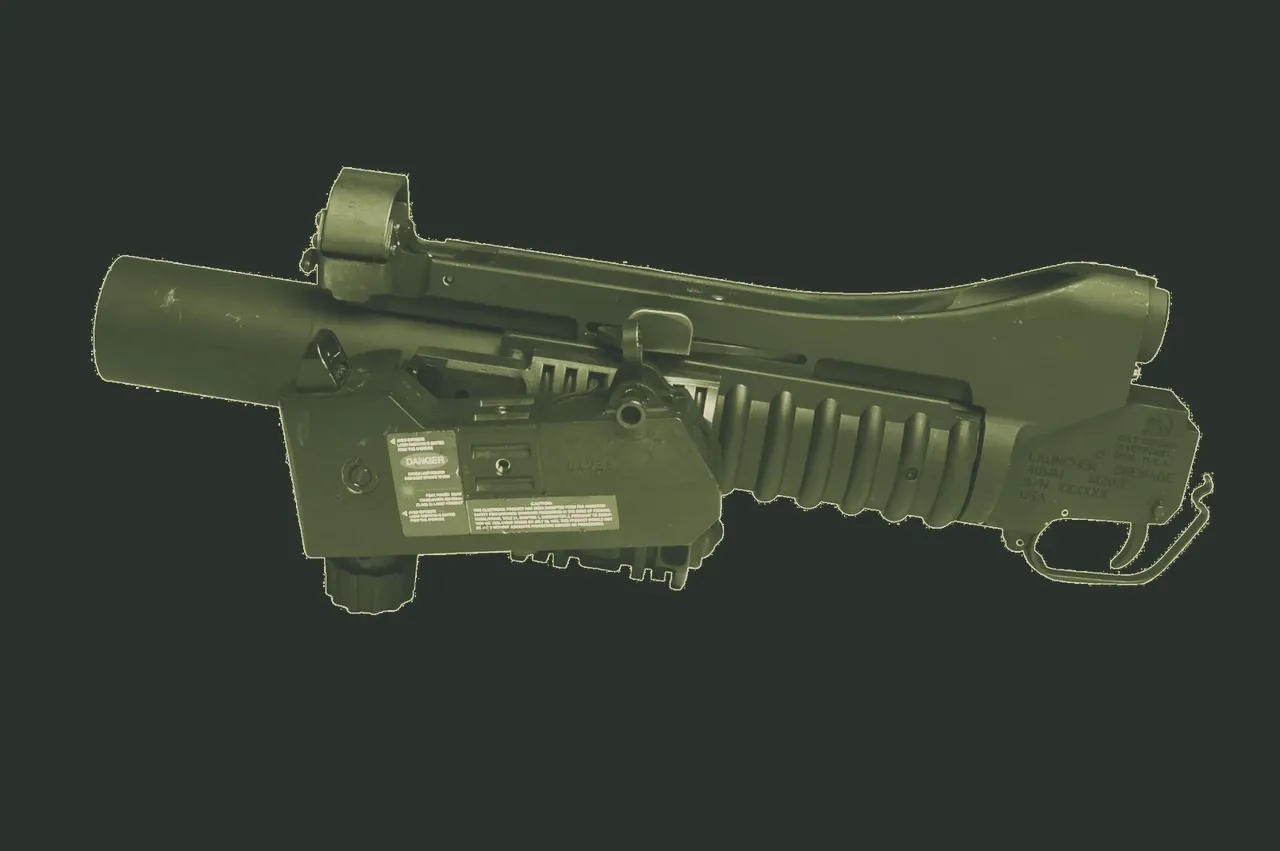
M203
FIG.01 · USA Image - M203. Photo by PEO Soldier, Public domain, via Wikimedia Commons.
The iconic US under-barrel 40mm grenade launcher — a single-shot, slide-forward break-action launcher that equips M16 and M4 rifles with high-explosive, HEDP and specialty rounds, and the standard squad-level grenade system for more than three decades.

Overview

The M203 is a single-shot, manual reloading under-barrel grenade launcher that attaches to the M16 and M4 families of assault rifles. It fires the NATO-standard 40×46mm low-velocity grenade using the high-low pressure principle, giving an infantry squad organic, close-range indirect-fire and light anti-armor capability without removing the rifle from the fight. Adopted in 1969, it replaced the standalone M79 “Thumper” and the problematic XM148, and remained the US standard until the fielding of the M320 starting in 2009. Despite its legacy status, the M203 remains in widespread service with US forces and dozens of allied nations.

Development

The M203 originated from the US Army’s Special Purpose Individual Weapon (SPIW) program of the 1960s, which sought to combine a high-velocity flechette rifle with an area-fire element. While the SPIW itself failed, its grenade-launcher component was pursued separately. The Colt-designed XM148, an earlier under-barrel launcher, was fielded in limited numbers in Vietnam but proved fragile and unsafe. In 1967 the Army launched a competition for a more robust launcher; prototypes from AAI, Colt and others were tested, and the AAI design was selected. The resulting weapon was type-classified as the M203 and adopted in 1969, according to War History Online and the Small Arms Survey. It entered combat in Vietnam within months and became the standard US under-barrel launcher for the next 40 years, with license and indigenous production by Lewis Machine & Tool and other manufacturers. The M320, a side-loading HK-designed replacement offering standalone capability and improved sighting, was adopted by the US Army in 2009 and the US Marine Corps in 2017; nevertheless, the M203 continues in first-line service alongside its successor.

Design & capabilities

The M203 is a slide-forward, break-action launcher built around the high-low pressure system: a small high-pressure chamber at the breech vents propellant gas into a larger low-pressure chamber behind the grenade, keeping the breech pressure manageable while achieving a muzzle velocity of approximately 75 m/s. It is loaded by sliding the barrel forward away from the receiver, inserting a single 40×46mm LV round into the breech, and pulling the barrel rearward to lock. A quadrant sight and a leaf sight are fitted to the host rifle’s handguard and carry handle; later units added an Meprolight reflex sight for faster target acquisition.

The launcher itself weighs approximately 1.36 kg and adds negligible length beyond the rifle handguard. The standard effective point range against a vehicle or aperture is about 150 m, while area targets can be engaged out to roughly 350 m, and the maximum flight range is approximately 400 m, as documented in US Army field manual FM 3-22.31. The ammunition suite includes the M406 high-explosive fragmentation grenade, the M433 high-explosive dual-purpose (HEDP) round capable of penetrating approximately 50 mm of steel, M576 multiple-projectile rounds, smoke, illumination, CS riot-control and training rounds, as catalogued by the Small Arms Survey.

Variants

  • M203: the original receiver, designed to mount beneath the M16A1 and later M16A2 handguards.
  • M203A1: modified to attach directly to the M4 carbine’s barrel profile and the M16A4’s Modular Weapon System (MWS) Rail Adapter System.
  • M203A2: a version adapted for use with the M16A4 MWS rail interface.
  • M203PI: a quick-detach, standalone kit that includes a stock, pistol grip and sight, converting the launcher into an independent weapon.

Combat record / operational use

The M203 saw its first combat in the closing years of the Vietnam War and subsequently served in every major US ground operation from Grenada and Panama through the Gulf War, Somalia, the Balkans, and the long deployments to Iraq and Afghanistan, as detailed by War History Online. It became the quintessential rifle-mounted grenade system of Western infantry, firing millions of 40mm rounds in close support of small-unit tactics. In the 2000s, the introduction of the M320 Grenade Launcher Module began to displace the M203 from front-line Army and Marine Corps units, though thousands remain in armories, with Reserve and National Guard components, and in the inventories of allied states that continue to operate the M16 and M4 platforms.

Advantages

  • Provides an integral 40mm HE and HEDP capability to every rifleman without switching to a dedicated launcher.
  • Simple, robust mechanical design with few moving parts; requires minimal training beyond basic loading and sighting.
  • Wide variety of ammunition (HE, HEDP, buck/flechette, smoke, illumination, non-lethal) extends tactical flexibility.
  • Proven low-cost, high-reliability platform with extensive support infrastructure and user familiarity.

Drawbacks / limitations

  • Slide-forward loading limits the overall length of the round that can be chambered, excluding some longer, higher-performance 40mm grenades used in the M320.
  • Single-shot, manual reloading restricts rate of fire to about 5–7 aimed rounds per minute.
  • The barrel is not quickly removable; switching between a rifle configuration with launcher mounted and a completely clean rifle is cumbersome.
  • The leaf sight requires ranging and careful hold, and effectiveness drops substantially in low-light conditions without a reflex sight.

Counterparts

Outlook

The M203 is firmly in the legacy phase of its life cycle, superseded by the side-loading M320 across regular US combat units. However, the enormous production base and the ongoing service life of the M16/M4 family in security-force and allied contexts mean the M203 will remain a relevant battlefield tool for at least another decade. No further US procurement is planned, and the launcher’s enduring influence is now carried forward by the 40×46mm LV ammunition evolution — programmable air-burst, reduced-risk practice, and new payloads — which continues to be developed for the current-generation launcher.

Key specifications

Spec Value
Crew 1 (attached-rifle operator)
Combat weight ~1.36 kg (launcher)
Length / width / height Length ~380 mm; barrel ~305 mm
Main armament 40×46mm low-velocity grenade launcher
Secondary armament
Armor & protection
Engine & power
Power-to-weight
Road / cross-country speed
Operational range Point ~150 m; area ~350 m; max ~400 m

Sources

  1. Small Arms Survey — M203 Weapons Identification Sheet — https://www.smallarmssurvey.org/sites/default/files/SAS_weapons-grenade-launchers-M203.pdf
  2. US Army — FM 3-22.31: 40-MM Grenade Launcher M203 — https://www.bits.de/NRANEU/others/amd-us-archive/FM3-22.31(03).pdf
  3. War History Online — “The M203 Grenade Launcher’s Decades of Service” — https://www.warhistoryonline.com/guns/m203-grenade-launcher.html
  4. Wikipedia — M203 grenade launcher — https://en.wikipedia.org/wiki/M203_grenade_launcher
  5. Wikipedia — M320 Grenade Launcher Module — https://en.wikipedia.org/wiki/M320_Grenade_Launcher_Module
FIELD DISPATCH · WEEKLY

BattlePolicy Weekly — free.

Defense tech, startups, and security — weekly. No paywall.

Related
Ukraine · USA · Funding · Swarmer · drones · defense tech · venture capital · Pentagon

Ukraine turned its drone war into an industry. Now Wall Street is pricing it.

Swarmer's Nasdaq debut, a wave of Western venture money and a Pentagon FPV contract show Ukrainian defense tech crossing from battlefield to balance sheet, at a valuation that has outrun the revenue.

Ukraine · USA · Funding · Swarmer · drones · defense tech · venture capital · Pentagon
USA · Autonomy · Shifters · Ace Capital Partners

Shifters raises $10.2M to put robots first into tunnels and rubble

The US-Israeli startup raised a $10.2 million seed led by Ace Capital Partners to scale ground robots that enter tunnels and rubble before troops.

USA · Autonomy · Shifters · Ace Capital Partners
USA · Policy · AI · Anthropic · autonomous weapons · Pentagon

Trump orders faster military AI and bars vendors from switching off fielded models

A new national security memo tells the Pentagon to onboard frontier commercial AI at speed, strips vendors of the power to shut it down mid-mission, and resets the rules for autonomous weapons within 90 days.

USA · Policy · AI · Anthropic · autonomous weapons · Pentagon