GRID-REF 37°47′N 122°25′W
DISPATCH 02/26 · 9 Jun 2026
BATTLEPOLICY
Startup to front line. Strategy to consequence.
Lexicon · Russia

Mi-28N Havoc

Russia's dedicated tandem-seat attack helicopter — a heavily armored, night-capable anti-armor platform armed with the Ataka missile, now seeing modernized Mi-28NM variants with longer-range munitions in Ukraine.
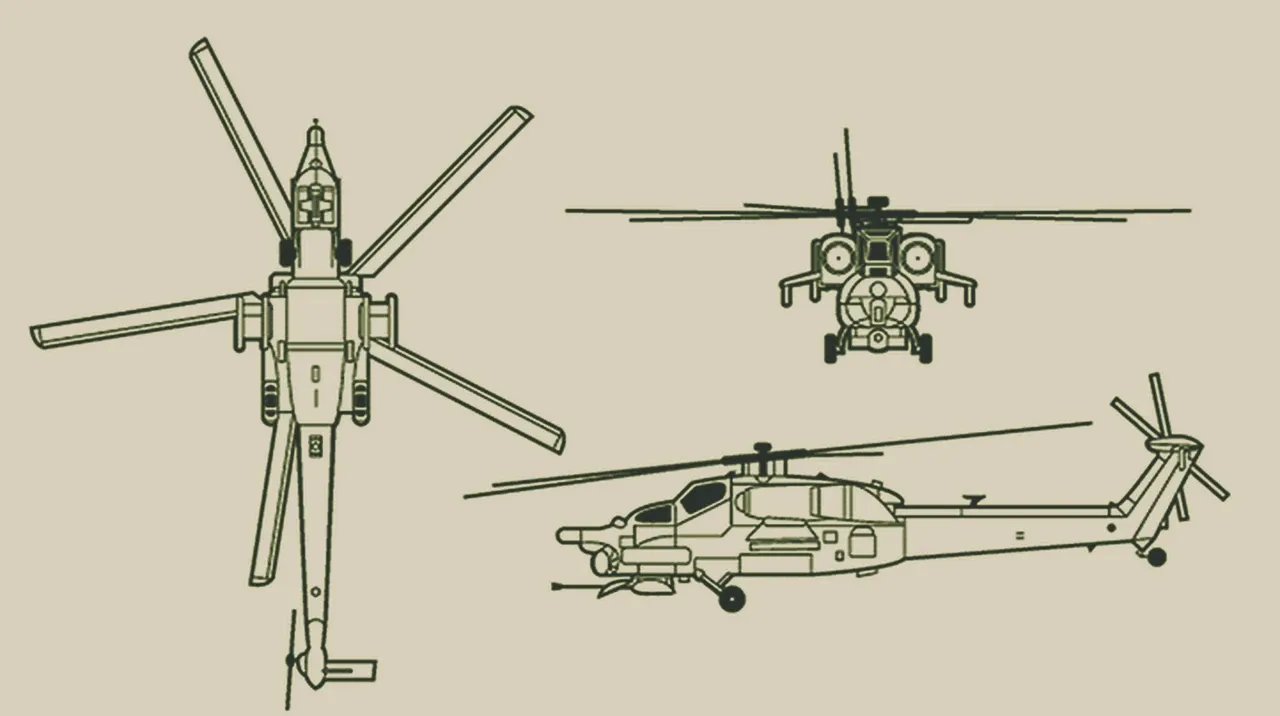
Mi-28N Havoc
FIG.01 · Russia Image - Mi-28N Havoc. Photo by Headquarters, Department Of the Army, Public domain, via Wikimedia Commons.
Russia's dedicated attack helicopter — a heavily armored, night-capable anti-armor platform armed with the Ataka missile, now upgraded with the Mi-28NM variant firing longer-range munitions in Ukraine.

Overview

The Mil Mi-28N “Havoc” is a twin-engine, tandem-seat attack helicopter designed to hunt armor and provide close air support in all-weather, day/night conditions. Unlike the Mi-24/35 family, it carries no troops; the entire airframe is dedicated to firepower, self-protection and battlefield survivability. Since entering service in 2009, the Havoc has become one of Russia’s primary rotary-wing tank-killers, actively employed in Syria and Ukraine.

Development

The Mi-28N first flew on 14 November 1996, emerging from a protracted Soviet/Russian heavy attack-helicopter program that had produced the earlier Mi-28A demonstrator. The N model introduced an integrated night-attack suite — hence the NATO designation “Night Havoc.” After a protracted test cycle, the first production Mi-28N was delivered in June 2006 and the type was declared operational in October 2009, according to Army Technology. Serial manufacturing is carried out by Rostvertol (Russian Helicopters / Rostec), and the baseline was later joined by the export Mi-28NE and the upgraded Mi-28NM “Super Hunter,” which first flew in October 2016.

Design & capabilities

The Havoc’s layout follows the classic dedicated-attack-helicopter template: a stepped tandem cockpit with the pilot in the rear and a weapon-systems officer in front, both in heavily armored “bathtub” compartments. Power comes from two Klimov VK-2500 turboshaft engines of ~2,500 shp each (earlier airframes used the TV3-117VMA-SB3). A nose-mounted electro-optical/FLIR turret with a laser rangefinder enables target acquisition, while the modernized Mi-28NM adds a mast-mounted N025 millimeter-wave radar, giving it a look-down/shoot-down capability. The helicopter’s four underwing hardpoints carry a mix of up to 16 9M120 Ataka anti-tank guided missiles, S-8/S-13 rockets and Igla-V air-to-air missiles, all serviced by a 30 mm 2A42 cannon in a chin barbette with ~250 rounds. The Mi-28NM has been observed in Ukraine firing the longer-range LMUR (izdeliye 305) anti-armor missile, as documented by The War Zone. A defensive-aids suite (laser-warning, missile-approach warners, chaff/flare dispensers) provides self-protection. Maximum take-off weight is approximately 12,000 kg, and the helicopter can reach ~320 km/h with a combat radius of roughly 435 km, according to GlobalMilitary.net.

Variants

  • Mi-28N: Baseline night-capable attack helicopter.
  • Mi-28NE: Export derivative, sold to Iraq, Algeria and Uganda.
  • Mi-28NM (Super Hunter): Modernized version with N025 mast-mounted radar, improved engines, a new long-range anti-armor missile (LMUR/izdeliye 305) and updated avionics.

Combat record / operational use

The Mi-28N first saw combat during the Russian intervention in Syria from 2015, performing anti-armor and close-support missions. It has been used heavily in the Russo-Ukrainian War since 2022, where roughly a dozen Havocs were lost by early 2023, as noted by open-source loss trackers and summarized in an AirVectors overview. The modernized Mi-28NM has been employed against Ukrainian armor using the new LMUR missile, significantly extending its stand-off range. Iran’s acquisition of Mi-28 helicopters became visible in late January 2026, when The Aviationist published the first imagery showing airframes in Iranian markings, though the exact delivery timeline remains unclear.

Advantages

  • Heavily armored cockpit and critical systems offer high resistance to ground fire and small arms.
  • Night-attack capability permits effective operations in all-weather, day/night conditions, an incremental leap over older Russian types.
  • Nimble, high-speed performance and a large weapons load for an attack helicopter.
  • The NM upgrade brings a mast-mounted radar and a new stand-off missile, enhancing survivability against high-threat air defenses.
  • Lower cost than equivalent Western helicopters and simpler maintenance for operators in the Russian arms-export orbit.

Drawbacks / limitations

  • Lacks the troop-transport capability of the Mi-24/35, limiting flexibility in contested air-assault scenarios.
  • Reliance on legacy Ataka missiles in the baseline version offers less range and precision than modern Western ATGMs.
  • The helicopter fleet has suffered meaningful attrition in Ukraine from man-portable air-defense systems and ground fire, underlining vulnerability when operating at low altitude.
  • Export availability is constrained by sanctions and Russian production capacity; non-Russian customers receive downgraded configurations.
  • The full performance of the N025 radar and LMUR missile remains difficult to verify from open sources.

Counterparts

Outlook

The Mi-28N continues to be produced alongside the upgraded Mi-28NM, which is steadily replacing earlier airframes in Russian Aerospace Forces units. Combat experience in Ukraine is driving iterative software and defensive-suite improvements, but attrition and the growing threat from loitering munitions challenge the type’s survivability. The Havoc will likely remain a staple of Russian army aviation for the next decade, with limited export orders among nations already within Moscow’s sphere.

Key specifications

Spec Value
Crew 2
Length / rotor diameter ~17.0 m / 17.2 m
Max speed ~320 km/h
Service ceiling ~5,700 m
Combat radius / range range ~435 km (combat radius not published)
Payload not publicly established
Hardpoints 4
Radar / sensors mast-mounted N025 mmW radar (NM) / nose EO/FLIR
Powerplant 2 × Klimov VK-2500 (~2,500 shp each)
Armament 30 mm 2A42 cannon; 16 × Ataka ATGM; S-8/S-13 rockets; Igla-V AAM; LMUR (NM)

Sources

  1. GlobalMilitary.net — Mi-28 Havoc: Military Helicopters Specs & Operators. https://www.globalmilitary.net/aircraft/mi-28-havoc/
  2. Army Technology — Mi-28A/N Havoc Attack Helicopter. https://www.army-technology.com/projects/mi28/
  3. Wikipedia — Mil Mi-28. https://en.wikipedia.org/wiki/Mil_Mi-28
  4. The War Zone — Russia’s Mi-28NM Attack Helicopter Seen Using New Anti-Armor Missile In Ukraine. https://www.twz.com/russias-mi-28nm-attack-helicopter-seen-using-new-anti-armor-missile-in-ukraine
  5. AirVectors — Hind In Foreign Service / Mi-28 Havoc. https://www.airvectors.net/avhind_2.html
  6. The Aviationist — Iran Might Have Received Mi-28 Havoc Attack Helicopters. https://theaviationist.com/2026/01/30/iran-mi-28-helicopters/
FIELD DISPATCH · WEEKLY

BattlePolicy Weekly — free.

Defense tech, startups, and security — weekly. No paywall.

Related
Ukraine · Russia · Policy · Chornobyl · Energoatom · shahed

Russia strikes Ukraine's central spent-fuel store at Chornobyl with a Shahed

A Russian drone hit the receiving building of the Holtec-built dry-cask site that freed Ukraine from shipping its nuclear waste to Russia, metres from where spent fuel sits.

Ukraine · Russia · Policy · Chornobyl · Energoatom · shahed