GRID-REF 37°47′N 122°25′W
DISPATCH 02/26 · 9 Jun 2026
BATTLEPOLICY
Startup to front line. Strategy to consequence.
Lexicon · Russia

MiG-35

Russia's heavily delayed attempt to modernize the MiG-29 into a 4++-generation multirole fighter, hampered by small production runs, missing AESA radar, and a near-absence from frontline operations.
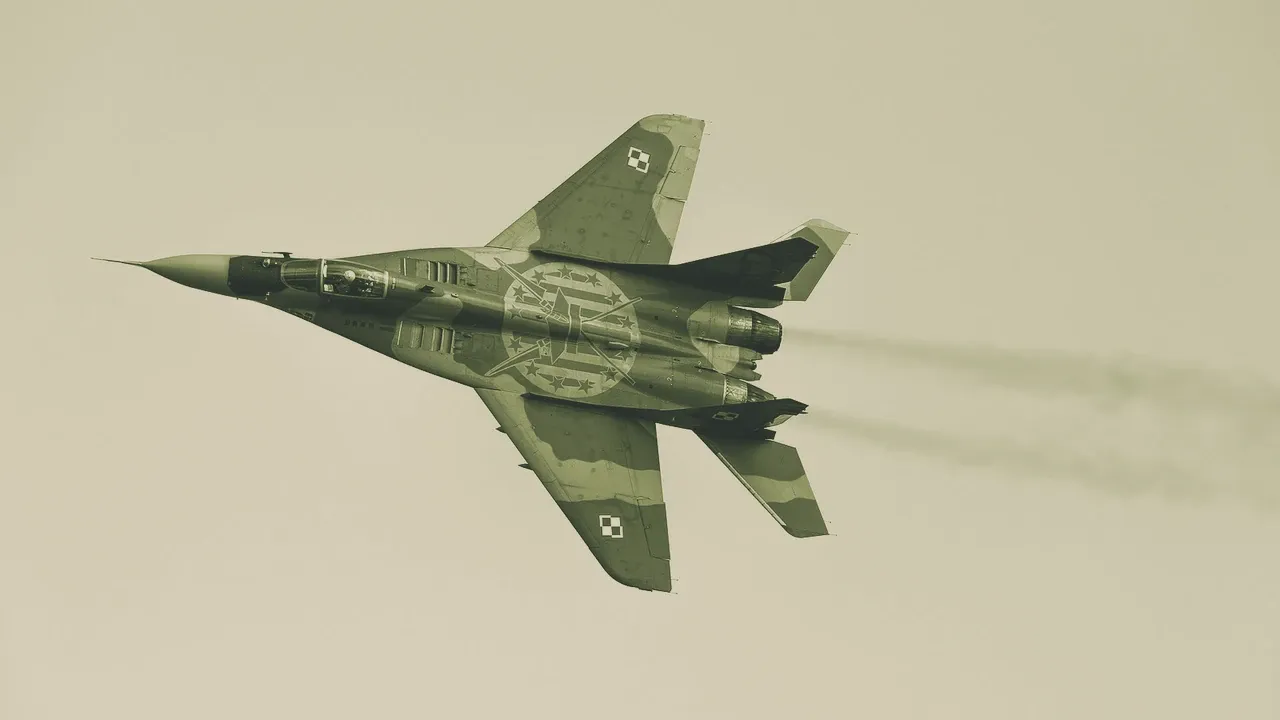
MiG-35
FIG.01 · Russia Image - MiG-35. Photo by Julian Herzog (Website), CC BY 4.0, via Wikimedia Commons.
A long-promised, repeatedly delayed modernization of the MiG-29 Fulcrum, the MiG-35 Fulcrum-F struggles to escape the shadow of its Flanker stablemates — fielded in token numbers, missing its intended AESA radar, and largely absent from Russia's expanding air wars.

Overview

The MiG-35, NATO reporting name Fulcrum-F, is a twin-engine, 4++-generation multirole fighter derived from the Soviet-era MiG-29. Designed as a light/medium complement to the heavier Su-35S and Su-57, it was intended to bring an active electronically scanned array (AESA) radar, improved engines, and modern avionics to the Fulcrum line. However, serial production never materialised: Russian Aerospace Forces (VKS) have accepted only a handful of airframes, and the aircraft has not been exported. The program is frequently described as a stalled bridge between the MiG-29 and the next-gen ambitions of the Russian air arm.

Development

Mikoyan (absorbed into UAC as MIGAVIA) publicised the MiG-35 as a deep redesign of the MiG-29, with a first flight around 2016 and a long road to limited induction from 2019 Defense Feeds. The Russian Ministry of Defence initially signalled interest in procuring 24 aircraft, but repeated delays and funding constraints shrank the order to single digits National Security Journal. Most of the airframes delivered to the VKS date from the early 2020s, and production has not moved beyond that tiny initial batch. The program was intended to secure export sales—showcased at MAKS airshows—but no foreign customer has signed a contract.

Design & capabilities

The MiG-35 airframe retains the familiar Fulcrum silhouette but with enlarged wing-root leading-edge extensions, a revised tail, and a strengthened structure for increased maximum take-off weight of around 24,500 kg. The cockpit features dual multifunction displays and a helmet-mounted sight, but the sensor suite falls short of the 2010s-era marketing: the intended Zhuk-AME AESA radar was not fitted to the handful of VKS jets, which instead carry the earlier Zhuk-ME passive electronically scanned array (PESA) radar Military Watch Magazine. Thrust comes from two Klimov RD-33MK afterburning turbofans, granting a top speed of Mach 2.25 and a combat radius of roughly 1,000 km (estimated). Nine hardpoints can carry up to about 6,500 kg of ordnance, including R-77 and R-73/R-74 air-to-air missiles, Kh-31 and Kh-29 air-to-ground weapons, and KAB-500 guided bombs.

Variants

  • MiG-35 (single-seat): the baseline combat aircraft.
  • MiG-35D (two-seat): tandem-seat variant for training and strike roles; shares the same airframe and systems.

Combat record / operational use

The MiG-35 has no publicly established combat record. With only an estimated 6–14 aircraft ever built, the type has been kept away from high-intensity operations in Syria and Ukraine, where the VKS relies instead on Su-34, Su-35S, and Su-30SM strike packages Defense Feeds. Its near-absence from the frontlines underscores the gap between the program’s promotional materials and its actual fielding.

Advantages

  • Offers a lower acquisition and operating cost than heavy Flanker-series fighters (est. $40–50M flyaway, likely much lower than a Su-35S).
  • Shares logistics commonality with the large global MiG-29 fleet, theoretically easing adoption.
  • The MiG-35D provides an optional two-seat capability without a separate airframe.
  • RD-33MK engines offer improved thrust and service life over earlier MiG-29 powerplants.

Drawbacks / limitations

  • Trivial fleet size — the VKS has only a handful of airframes, severely limiting its operational utility and test data.
  • The defining feature — a domestic AESA radar — was not delivered; the fitted Zhuk-ME PESA is a generation behind Western AESA sets.
  • Overshadowed by the Su-35S and the emerging Su-57; Moscow’s procurement budget prioritises the heavier Sukhoi types.
  • Export ambitions remain unfulfilled, undermining the production line’s viability.
  • Sanctions have constrained access to advanced microelectronics, complicating any future AESA integration.

Counterparts

Outlook

The MiG-35 programme faces an existential predicament. Russia’s combat-aircraft investment is overwhelmingly directed toward the Su-57, Su-35S, and the large-scale production of strike platforms such as the Su-34. Mikoyan’s design bureau continues to propose upgrades — including a putative AESA integration and an unmanned wingman concept — but without a domestic order of substance or a breakthrough export buyer, the MiG-35 is likely to remain a footnote in the Fulcrum legacy rather than a genuine operational capability Military Watch Magazine.

Key specifications

Spec Value
Crew 1 or 2 (MiG-35 / MiG-35D)
Length / wingspan 17.3 m / 12.0 m (height 4.7 m)
Max speed Mach 2.25 (~2,390 km/h at altitude)
Service ceiling ~17,500 m (est.)
Combat radius / range ~1,000 km (combat radius, est.); ferry range not publicly established
Payload ~6,500 kg
Hardpoints 9
Radar / sensors Zhuk-ME PESA (intended Zhuk-AME AESA not delivered); helmet-mounted sight
Powerplant 2 × Klimov RD-33MK afterburning turbofans
Armament 30 mm GSh-30-1 cannon; R-77, R-73/74 (air-to-air); Kh-31, Kh-29, KAB-500 guided bombs (air-to-ground)

Sources

  1. Defense Feeds — “Mikoyan MiG-35 Super Fulcrum.” https://defensefeeds.com/military-tech/air-force/fighters/mikoyan-mig-35/
  2. National Security Journal — “Russia’s ‘New’ MiG-35 Fighter Is In Trouble.” https://nationalsecurityjournal.org/russias-new-mig-35-fighter-is-in-trouble/
  3. Military Watch Magazine — “Nine New Technologies to Revive Russia’s MiG-35.” https://militarywatchmagazine.com/article/nine-technologies-revive-mig35-combat-potential
FIELD DISPATCH · WEEKLY

BattlePolicy Weekly — free.

Defense tech, startups, and security — weekly. No paywall.

Related
Ukraine · Russia · Policy · Chornobyl · Energoatom · shahed

Russia strikes Ukraine's central spent-fuel store at Chornobyl with a Shahed

A Russian drone hit the receiving building of the Holtec-built dry-cask site that freed Ukraine from shipping its nuclear waste to Russia, metres from where spent fuel sits.

Ukraine · Russia · Policy · Chornobyl · Energoatom · shahed