GRID-REF 37°47′N 122°25′W
DISPATCH 02/26 · 9 Jun 2026
BATTLEPOLICY
Startup to front line. Strategy to consequence.
Lexicon · USA

MQ-9 Reaper

The MQ-9 Reaper is the U.S. military's workhorse armed MALE UCAV—a long-endurance, remotely-piloted aircraft used for ISR and precision strike, fielded by the USAF and over a dozen allies, with a combat record spanning from the Black Sea to the Red Sea.
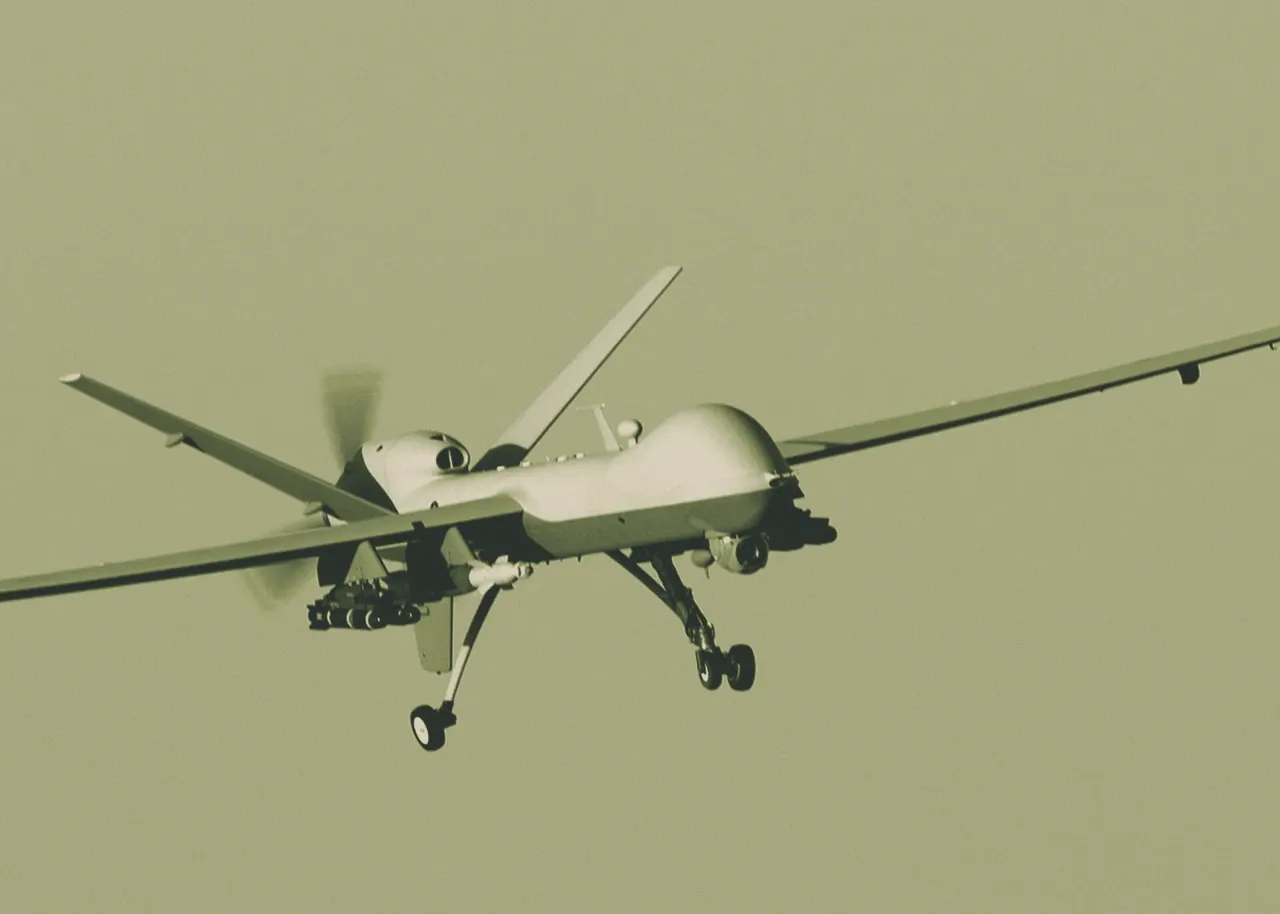
MQ-9 Reaper
FIG.01 · USA Image - An MQ-9 Reaper drone. Photo by U.S. Air Force photo/Staff Sgt. Brian Ferguson, Public domain, via Wikimedia Commons.jpg).
The U.S. military's workhorse armed MALE UCAV — a long-endurance, remotely-piloted aircraft used for ISR and precision strike, fielded by the USAF and over a dozen allies, with a combat record that now fuels a cost-exchange debate over the survivability of expensive drones in contested airspace.

Overview

The MQ-9 Reaper, originally designated Predator B, is a medium-altitude, long-endurance (MALE) remotely-piloted aircraft manufactured by General Atomics Aeronautical Systems. Designed as a larger, heavier-armed evolution of the MQ-1 Predator, it entered USAF service in 2007 and has since become the most widely operated armed UCAV in the Western alliance. The Reaper combines multi-sensor ISR with a substantial payload of precision-guided munitions — from Hellfire missiles to GBU-12 laser-guided bombs and, more recently, AIM-9X Sidewinders — and is controlled via line-of-sight or beyond-line-of-sight satellite datalink from ground stations often thousands of miles away.

Development

General Atomics developed the Reaper from the Predator family to meet a growing demand for a persistent hunter-killer drone. It entered USAF service in 2007 and production of the baseline MQ-9A continued for over a decade before the A-model line was ended in favour of the next-generation MQ-9B SkyGuardian/SeaGuardian, which adds all-weather capability, greater endurance and full NATO STANAG 4671 airworthiness compliance. The shift to the B-model reflected a USAF recognition that the original airframe’s survivability gap was widening, a problem documented in depth during the service’s subsequent search for a lower-cost, more attritable replacement, as reported by The War Zone.

Design & capabilities

The MQ-9 is a shoulder-wing, single-turboprop aircraft with a 20-metre wingspan and a maximum take-off weight of roughly 4,760 kg. It can stay aloft for more than 20 hours in a clean configuration and 12–14 hours when fully armed, cruising at about 313 km/h (max ~482 km/h). The airframe carries seven external hardpoints and an internal payload bay, delivering up to 1,700 kg of ordnance — a mix of AGM-114 Hellfire air-to-ground missiles, GBU-12 Paveway II and GBU-38 JDAM guided bombs, and, on some configurations, AIM-9X Sidewinder air-to-air missiles for self-defence. The onboard sensor suite integrates an MTS-B multi-spectral targeting system (electro-optical/infrared) and Lynx synthetic-aperture radar, enabling wide-area surveillance, target tracking and laser designation. Control is achieved through a combination of line-of-sight radio and SATCOM links, with the aircraft flown primarily by remote pilots and sensor operators but capable of autonomous waypoint navigation. The very architecture that makes the Reaper globally operable — the SATCOM link — has also become its key vulnerability, a factor that figures prominently in The War Zone analysis of why the USAF now wants a drone cheap enough to risk losing.

Variants

  • MQ-9A Reaper — the original production version; no longer produced for the USAF but still operated by several foreign partners.
  • MQ-9B SkyGuardian — the current production standard, certified to NATO airworthiness requirements, with de-icing, longer endurance and Detect-and-Avoid systems.
  • MQ-9B SeaGuardian — a maritime ISR variant of the MQ-9B optimised for anti-submarine and anti-surface warfare sensor packages.
  • Protector RG1 — the UK-specific MQ-9B configuration being acquired under the RAF’s Protector programme.

Combat record / operational use

The Reaper’s combat career has defined the modern armed-drone era but has also exposed the cost-exchange dilemma of operating a ~$30 million airframe in contested skies. On 14 March 2023, two Russian Su-27 fighters intercepted a USAF MQ-9 over the Black Sea, dumping fuel on the drone and ultimately colliding with its propeller, forcing the aircraft into the water — the first direct physical contact between U.S. and Russian military aircraft of the Russo-Ukrainian war, as reported by USNI News and Reuters. Less than a year later, during the 2024 Red Sea crisis, Iran-backed Houthi forces began systematically targeting American Reapers with surface-to-air missiles; by September 2024, at least eight had been shot down, according to Air Force Times and Business Insider, a loss rate that underscored the platform’s fragility in the face of even unsophisticated local air defences.

Advantages

  • Exceptional endurance — >20 hours unarmed, enabling persistent ISR or time-sensitive targeting.
  • Heavy payload — up to 1,700 kg across seven hardpoints, enough to carry Hellfire, JDAM and Sidewinder weapons simultaneously.
  • SATCOM control allows over-the-horizon operation from distant ground stations, reducing forward basing requirements.
  • Proven multi-sensor fusion — EO/IR, SAR, and laser designation in a single platform.
  • Interoperability — operated by over 12 U.S. allies and partners, with NATO-standard MQ-9B variants entering service.

Drawbacks / limitations

  • High unit cost (~$30M) makes each airframe a strategic risk; the Houthi and Black Sea losses have turned the Reaper into a cost-exchange lighting rod.
  • Not survivable against any integrated air defence system — lacks stealth, manoeuvrability and organic electronic warfare.
  • Reliant on vulnerable SATCOM links that can be jammed or degraded, limiting operations in the face of sophisticated electronic warfare.
  • Runway-dependent launch and recovery, restricting the types of airfields from which it can operate.
  • Sensor-to-shooter timelines are still governed by remote-pilot decision loops, though autonomy is limited to waypoint navigation.

Counterparts

Outlook

The MQ-9 remains the quantitative backbone of USAF armed ISR, but its future is being rethought. The service has publicly outlined requirements for a Reaper replacement that is cheap enough to risk losing in high-threat environments, a tacit admission that the ~$30M per-unit cost is incompatible with the attrition rates seen over the Black Sea and Yemen. The MQ-9B SkyGuardian/SeaGuardian will continue to enter service with allies, while the U.S. Air Force shifts its focus toward attritable and collaborative combat aircraft that can absorb losses without strategic embarrassment. The Reaper, for all its combat pedigree, is being overtaken by the same cost-exchange logic that rewrote the rules of uncrewed warfare in Ukraine.

Key specifications

Spec Value
Type Single-turboprop remotely-piloted UCAV
Endurance >20 h unarmed / >12–14 h armed
Range ~1,850 km ferry
Cruise / max speed ~313 km/h cruise / ~482 km/h max
Payload ~1,700 kg, 7 hardpoints
Datalink / control LOS + SATCOM
Autonomy level Remote-piloted / waypoint
Dimensions / MTOW Wingspan ~20 m / length ~11 m / ~4,760 kg MTOW
Launch & recovery Runway

Sources

  1. The War Zone — "MQ-9 Reaper Replacement Requirements Stress a Drone Cheap Enough to Risk Losing" — https://www.twz.com/air/mq-9-reaper-replacement-requirements-stress-a-drone-cheap-enough-to-risk-losing
  2. USNI News — "U.S. MQ-9 Drone Crashes in Black Sea After Encounter with Russian Fighter" — https://news.usni.org/2023/03/14/u-s-mq-9-drone-crashes-in-black-sea-after-encounter-with-russian-fighter
  3. Reuters — "US says Reaper drone crashes into Black Sea after Russian intercept" — https://www.reuters.com/world/europe/us-says-reaper-drone-crashes-into-black-sea-after-russian-intercept-2023-03-14/
  4. Air Force Times — "Houthi rebels claim shooting down another US MQ-9 Reaper drone" — https://www.airforcetimes.com/news/your-air-force/2024/05/20/houthi-rebels-claim-shooting-down-another-us-mq-9-reaper-drone/
  5. Business Insider — "Houthi Rebels Say They Downed an 8th $30M US Reaper" — https://www.businessinsider.com/houthi-rebels-say-downed-30m-reaper-drone-yemen-eighth-loss-2024-9
FIELD DISPATCH · WEEKLY

BattlePolicy Weekly — free.

Defense tech, startups, and security — weekly. No paywall.

Related
Ukraine · USA · Funding · Swarmer · drones · defense tech · venture capital · Pentagon

Ukraine turned its drone war into an industry. Now Wall Street is pricing it.

Swarmer's Nasdaq debut, a wave of Western venture money and a Pentagon FPV contract show Ukrainian defense tech crossing from battlefield to balance sheet, at a valuation that has outrun the revenue.

Ukraine · USA · Funding · Swarmer · drones · defense tech · venture capital · Pentagon
USA · Autonomy · Shifters · Ace Capital Partners

Shifters raises $10.2M to put robots first into tunnels and rubble

The US-Israeli startup raised a $10.2 million seed led by Ace Capital Partners to scale ground robots that enter tunnels and rubble before troops.

USA · Autonomy · Shifters · Ace Capital Partners
USA · Policy · AI · Anthropic · autonomous weapons · Pentagon

Trump orders faster military AI and bars vendors from switching off fielded models

A new national security memo tells the Pentagon to onboard frontier commercial AI at speed, strips vendors of the power to shut it down mid-mission, and resets the rules for autonomous weapons within 90 days.

USA · Policy · AI · Anthropic · autonomous weapons · Pentagon