GRID-REF 37°47′N 122°25′W
DISPATCH 02/26 · 9 Jun 2026
BATTLEPOLICY
Startup to front line. Strategy to consequence.
Lexicon · Russia

Msta-B

The 2A65 Msta-B is a Soviet-era 152 mm towed gun-howitzer that entered service in 1987 and remains the backbone of Russian divisional artillery — now heavily committed in Ukraine, where its towed configuration leaves it acutely exposed to drone-cued counter-battery.
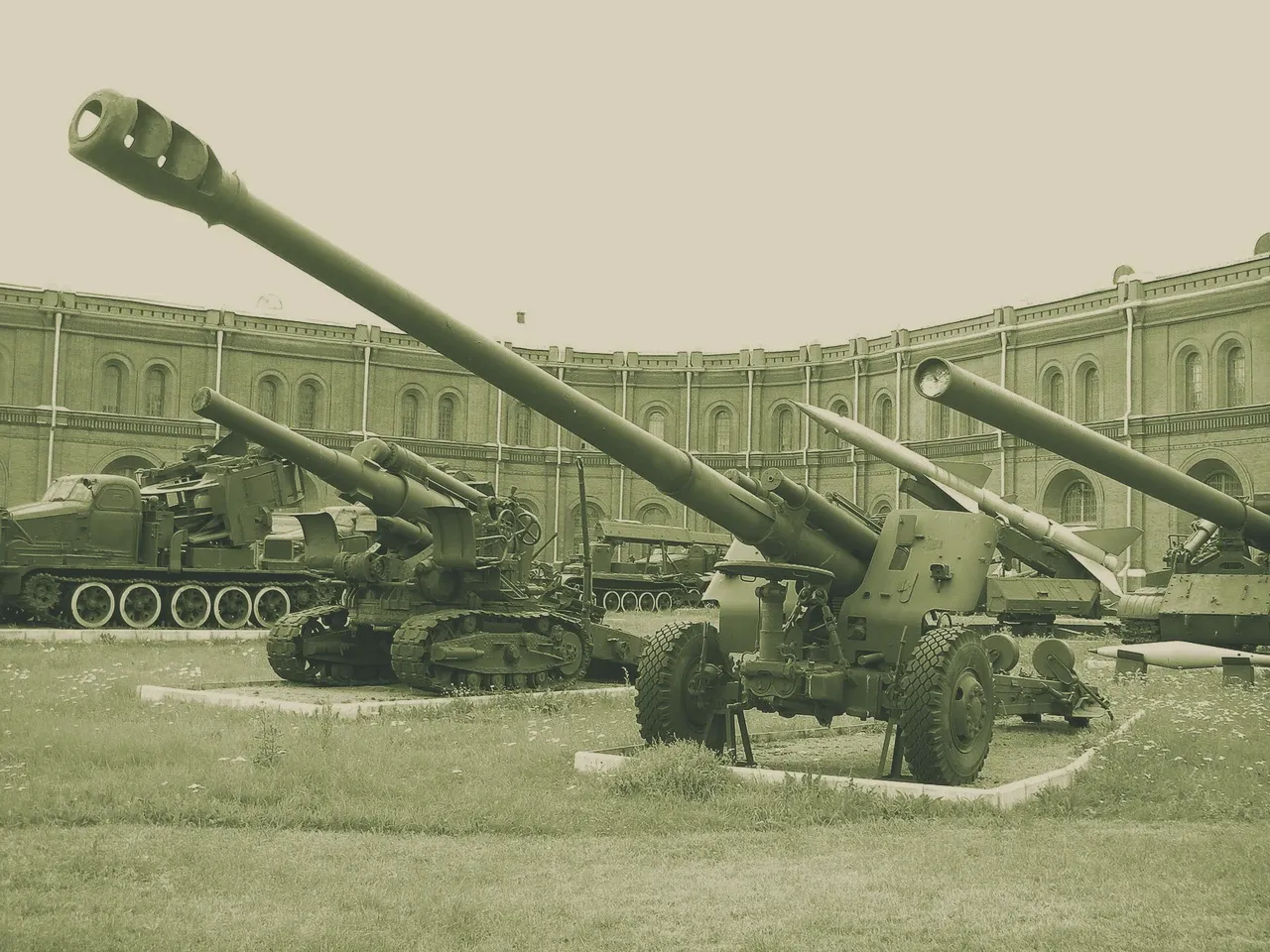
Msta-B
FIG.01 · Russia Image - Msta-B. Photo by One half 3544, Public domain, via Wikimedia Commons.
The 2A65 Msta-B is a Soviet-designed 152 mm towed gun-howitzer — the divisional workhorse of Russian artillery since 1987, now fighting a drone-saturated war in Ukraine that its manual, towed configuration was never built to survive.

Overview

The 2A65 Msta-B (GRAU index 2A65; "B" for Buksiruyemaya, towed) is a 152.4 mm towed gun-howitzer developed in the late Soviet period as the modern towed counterpart to the 2S19 Msta-S self-propelled system. It equips Russian motor-rifle and artillery brigades for general-support indirect fire and, alongside large numbers of older pieces drawn from storage, has formed the quantitative backbone of Russian tube artillery throughout the war in Ukraine. The type has no NATO reporting name, though some Western reference tables use the placeholder "M1987." As a towed system reliant on a six-to-ten-person crew and a manual firing cycle, the Msta-B embodies the vulnerability of unarmoured, slow-to-displace artillery in an environment saturated with reconnaissance drones and loitering munitions.

Development

The Msta-B was developed by the Barrikady ordnance bureau in Volgograd (with Titan as a co-manufacturer) and entered Soviet service in 1987, according to the US Army ODIN/WEG database. It shares the 2A64 152 mm ordnance with the tracked 2S19 Msta-S, creating ammunition and barrel commonality across the towed and self-propelled tiers of the divisional artillery. Serial production ran through the late Soviet period and into the Russian Federation era; the exact production total is not publicly established, but the type was built in large numbers and remains in active Russian service alongside substantial quantities drawn from long-term storage to replace combat losses in Ukraine.

Design & capabilities

The 2A65 fires standard Soviet/Russian 152 mm ammunition from a ~L/47 barrel on a conventional split-trail carriage. Its combat weight is approximately 6.8–7.0 tonnes, served by a nominal crew of six that can expand to eight or ten in sustained field handling, as detailed by Military Factory. According to Army Guide, the Msta-B achieves a burst rate of fire of roughly 7–8 rounds per minute — high for a manually served towed gun — and delivers standard OF-45 high-explosive projectiles to approximately 24.7 km, with base-bleed OF-61 rounds extending range to roughly 29 km. It is compatible with the Krasnopol 152 mm laser-guided projectile, which has an effective range of approximately 20 km and requires a forward observer to designate the target. The carriage incorporates a small auxiliary power unit for laying and traverse, but the firing cycle remains fundamentally manual: the gun must be emplaced, laid, and displaced by the crew, with no autoloader and no onboard automation beyond basic powered elevation and traverse controls. Protection for the crew is nil beyond the gun shield — the detachment operates in the open.

Combat record / operational use

The Msta-B has been committed in large numbers across the full span of Russia's war in Ukraine. As a towed piece, it is acutely exposed to the conflict's defining threat: first-person-view (FPV) attack drones and loitering munitions cued by ubiquitous battlefield reconnaissance. Open-source intelligence tracking by the Oryx project has visually confirmed a floor of roughly 1,500 Russian tube-artillery losses across all types as of early 2026, with towed guns disproportionately represented among the destroyed and abandoned pieces, according to analysis published by Resurgam Hub. The Msta-B's "shoot-and-scoot" cycle — emplace, fire a mission, limber, and displace — is substantially slower than that of any wheeled or tracked self-propelled howitzer, leaving the crew and gun vulnerable for minutes after rounds are fired and counter-battery radars have triangulated the firing position. Russia has offset losses by reactivating stored Msta-B guns and older Soviet-era pieces, but the attrition rate on towed artillery has driven a parallel effort to field wheeled self-propelled systems such as the 2S43 Malva as a more survivable alternative.

Advantages

  • High burst rate of fire for a towed gun (~7–8 rds/min), enabling rapid fire missions before displacement.
  • Ammunition and barrel commonality with the 2S19 Msta-S self-propelled howitzer simplifies the divisional logistics chain.
  • Compatible with the Krasnopol 152 mm laser-guided projectile for precision strikes at ~20 km.
  • Simpler and cheaper to produce and maintain than self-propelled artillery — an important factor given Russia's high artillery burn rate in Ukraine.
  • Large existing stockpile from Soviet-era production provides a deep reserve pool to draw on as attrition replacements.

Drawbacks / limitations

  • Towed configuration exposes the crew to direct observation, drone attack, and fragmentation; the gun shield offers no overhead protection.
  • Slow to emplace and displace relative to self-propelled systems, making it acutely vulnerable to drone-cued counter-battery fires.
  • Entirely manual firing cycle — no autoloader, no automated fire control — limits sustained rate of fire and crew endurance.
  • Dependent on a prime mover (typically a truck) for tactical mobility; the gun cannot self-extract under fire.
  • Aging 1980s-vintage design with no meaningful upgrade path short of replacement by self-propelled systems.

Counterparts

Outlook

The Msta-B remains in widespread Russian service and will continue to appear on the battlefield as long as Russia can draw on stored reserves, but the trajectory is clear: the drone-era battlefield punishes towed artillery with extreme prejudice, and Russia's own procurement is shifting toward wheeled and tracked self-propelled systems. The Msta-B's future is one of gradual, attritional decline — a late-Soviet design fighting a war that has rendered its core configuration obsolete.

Key specifications

Spec Value
Crew 6 (up to 8–10 in sustained field handling)
Combat weight ~6.8–7.0 t
Length / width / height ~11.4 / 2.5 / 2.3 m (travel configuration)
Main armament 152.4 mm L/47 howitzer (2A64 ordnance)
Secondary armament None
Armor & protection Gun shield only; no overhead or splinter protection
Engine & power N/A (towed by prime mover)
Power-to-weight N/A
Road / cross-country speed Dependent on prime mover (typically ~60–80 km/h road; ~20–30 km/h cross-country when towed)
Operational range Dependent on prime mover

Sources

  1. US Army ODIN/WEG — 2A65 Msta-B (M1976) Russian 152mm Towed Gun Howitzer. https://odin.t2com.army.mil/WEG/Asset/2A65_Msta-B_(M1976)_Russian_152mm_Towed_Gun_Howitzer
  2. Wikipedia — 152 mm howitzer 2A65 Msta-B. https://en.wikipedia.org/wiki/152_mm_howitzer_2A65_Msta-B
  3. Military Factory — 2A65 MSTA-B 152mm Towed Howitzer. https://www.militaryfactory.com/armor/detail.php?armor_id=694
  4. Army Guide — 2A65 MSTA-B (Towed howitzer). http://www.army-guide.com/eng/product2381.html
  5. Resurgam Hub — Soviet stockpiles won't last forever (Oryx artillery loss analysis). https://resurgamhub.org/opinion/defense-mezha/soviet-stockpiles-won-t-last-forever-will-the-russians-have-enough-artillery-for-new-major-offensive-campaigns-in-ukraine-
  6. Cambridge University Press — OSINT and the fog of war: defence-industrial production in Russia. https://www.cambridge.org/core/journals/european-journal-of-international-security/article/open-source-intelligence-osint-and-the-fog-of-war-at-the-strategic-level-defence-industrial-production-in-russia/C732FF8D8AE9956A4920BA6DC2451F20
FIELD DISPATCH · WEEKLY

BattlePolicy Weekly — free.

Defense tech, startups, and security — weekly. No paywall.

Related
Ukraine · Russia · Policy · Chornobyl · Energoatom · shahed

Russia strikes Ukraine's central spent-fuel store at Chornobyl with a Shahed

A Russian drone hit the receiving building of the Holtec-built dry-cask site that freed Ukraine from shipping its nuclear waste to Russia, metres from where spent fuel sits.

Ukraine · Russia · Policy · Chornobyl · Energoatom · shahed