GRID-REF 37°47′N 122°25′W
DISPATCH 02/26 · 9 Jun 2026
BATTLEPOLICY
Startup to front line. Strategy to consequence.
Lexicon · Russia

Orion (Inokhodets)

Russia's indigenous medium-altitude long-endurance combat drone — a reconnaissance-strike platform used in limited numbers over Ukraine and marketed for export.
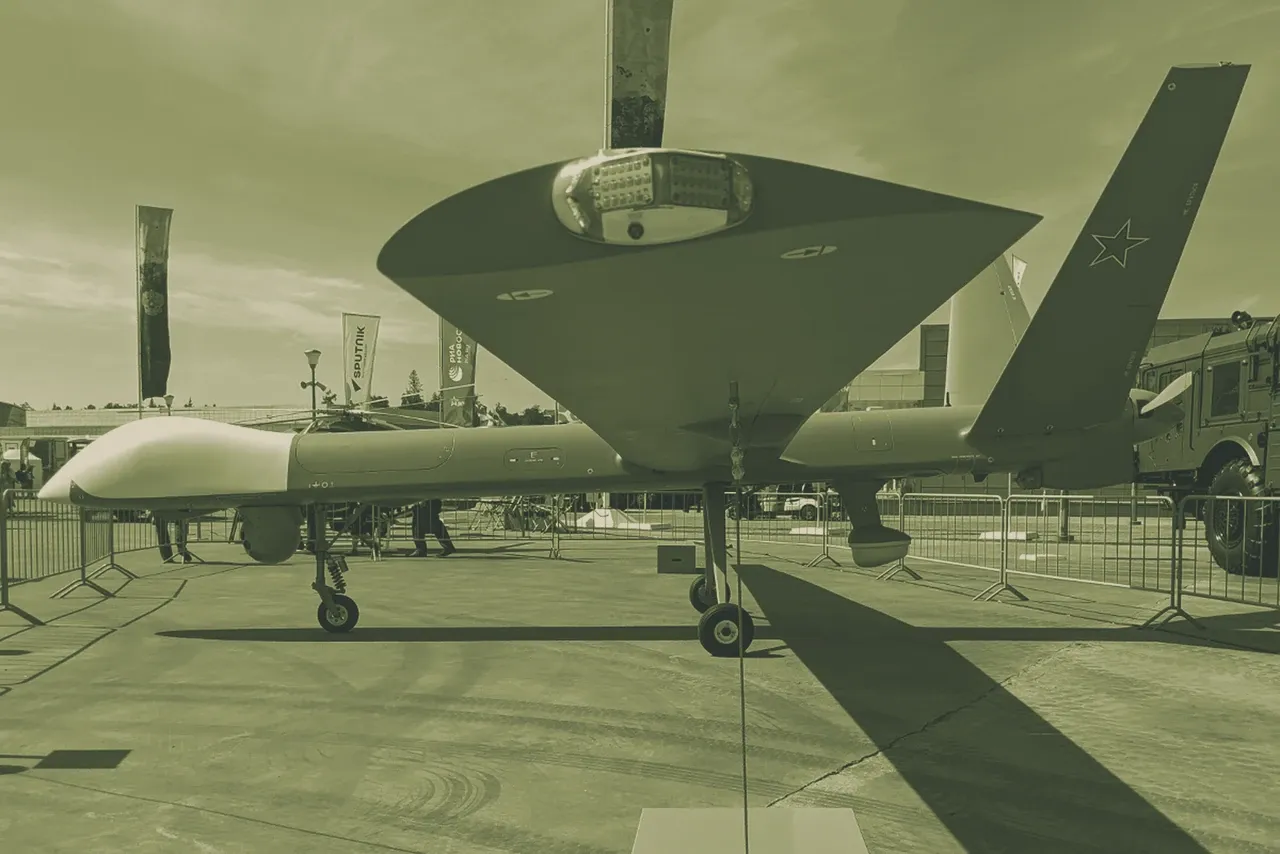
Orion (Inokhodets)
FIG.01 · Russia Image - Orion. Photo by Boevaya mashina, CC BY-SA 3.0, via Wikimedia Commons.
Russia's indigenous medium-altitude long-endurance combat drone — a reconnaissance-strike platform used in limited numbers over Ukraine and marketed for export.

Overview

The Orion, known in Russian service as Inokhodets (“Pacer”), is a medium-altitude long-endurance unmanned combat aerial vehicle developed by the Kronshtadt Group. It is Russia’s first domestically designed armed MALE drone, roughly analogous in class to the Turkish Bayraktar TB2 or the US MQ-1C Gray Eagle, and carries an electro-optical/infrared payload alongside guided munitions. The type has been deployed in modest numbers during the war in Ukraine, primarily for surveillance and artillery direction, while the export version Orion-E has been offered to several foreign customers.

Development

Kronshtadt began work on the Orion in the early 2010s as part of a broader push to close Russia’s long-standing gap in armed medium-endurance drones. The prototype first flew in 2016, with trials continuing into 2019 – 20 Wikipedia. A first batch of operational airframes was delivered to the Russian Ministry of Defence for acceptance trials in 2020, marking the system’s entry into service GlobalMilitary. Serial production has remained limited, with no total fleet size publicly established, and Kronshtadt continues to refine the platform while pursuing export customers.

Design & capabilities

The Orion is a single-engine pusher design with a V-tail, composite airframe, and a retractable tricycle landing gear for runway recovery. Power is provided by a Russian-developed piston engine, allowing an endurance of approximately 24 hours with a 60 kg sensor payload Wikipedia. Maximum payload is 200 kg on the domestic Inokhodets variant (250 kg for the export Orion-E), carried on four underwing hardpoints and a fuselage station. The standard sensor suite combines an EO/IR turret with a synthetic-aperture radar, offering day-night surveillance and target-cueing capability GlobalMilitary. Weapons integration includes the Vikhr-1V anti-tank guided missile, the KAB-20 and KAB-50 guided bombs, and the developmental S8000 “Banderol” mini-cruise missile — though much of the munitions portfolio remains at the claim or trial stage. Control is via a line-of-sight and satellite-communications datalink, giving an operational radius of roughly 1,440 km.

Variants

  • Inokhodets (“Pacer”) — domestic Russian armed MALE variant, payload up to 200 kg.
  • Orion-E — export configuration, payload increased to 250 kg, marketed with a broader weapon catalogue.

Combat record / operational use

The Orion has been employed in the Ukraine theatre since 2022, albeit at far lower sortie rates than Russia’s tactical ISR drones or Lancet loitering munitions. Its primary wartime function has been persistent surveillance and artillery fire-correction, relaying target coordinates to ground-based tube and rocket artillery CAPSS India. Strike missions have been documented rarely, and open-source evidence of guided-weapon employment remains sparse. Russia has also promoted the Orion-E for export, offering the system to India as recently as 2025 GlobalMilitary.

Advantages

  • Endurance of ~24 h allows persistent orbit over a contested area.
  • Payload of 200–250 kg enables carriage of guided munitions alongside a full sensor suite.
  • Runway-based operations simplify logistics compared to catapult-launched tactical drones.
  • SATCOM link provides beyond-line-of-sight control, extending the effective mission radius.
  • Represents an indigenous Russian capability, reducing reliance on foreign MALE platforms.

Drawbacks / limitations

  • Fleet size is very small, limiting strategic impact; exact numbers are not publicly established.
  • High-endurance strike missions remain unproven in high-threat airspace — survivability against modern air defences is uncertain.
  • The S8000 “Banderol” mini-cruise missile and several guided-bomb integrations exist largely as manufacturer claims, with little operational evidence.
  • Unit and programme cost data are not publicly established, clouding cost-effectiveness comparisons.
  • Production rate has been modest, and the Orion competes for resources with Russia’s mass-produced Lancet and Shahed families.

Counterparts

Outlook

The Orion will likely remain a niche asset within Russian forces, overshadowed by the cheap-mass Lancet and Shahed that have defined the drone war in Ukraine. Kronshtadt continues to develop the platform and seek export sales, but without a significant expansion of production numbers or a clear operational success story, the Orion’s future is that of a capability demonstrator rather than a game-changing combat system.

Key specifications

Spec Value
Type Single-pusher V-tail MALE UCAV
Endurance ~24 h (with 60 kg payload)
Range ~1,440 km
Cruise / max speed 120 / 200 km/h
Payload 200 kg (Inokhodets) / 250 kg (Orion-E)
Datalink / control LOS + SATCOM (variant-dependent)
Autonomy level Remote-piloted / waypoint
Dimensions / MTOW Wingspan 16 m, length 8 m / 1,150 kg
Launch & recovery Runway

Sources

  1. Kronshtadt Orion — Wikipedia — https://en.wikipedia.org/wiki/Kronshtadt_Orion
  2. Kronshtadt Orion — GlobalMilitary.net — https://www.globalmilitary.net/aircraft/kronshtadt-orion/
  3. Drone Warfare in Russia-Ukraine Conflict — CAPSS India — https://capssindia.org/wp-content/uploads/2026/05/03-Satyavir-and-Anu-Sharma.pdf
FIELD DISPATCH · WEEKLY

BattlePolicy Weekly — free.

Defense tech, startups, and security — weekly. No paywall.

Related
Ukraine · Russia · Policy · Chornobyl · Energoatom · shahed

Russia strikes Ukraine's central spent-fuel store at Chornobyl with a Shahed

A Russian drone hit the receiving building of the Holtec-built dry-cask site that freed Ukraine from shipping its nuclear waste to Russia, metres from where spent fuel sits.

Ukraine · Russia · Policy · Chornobyl · Energoatom · shahed