Palladyne runs an AI drone swarm inside the Army's command network at Ivy Mass
A single operator flew a mixed swarm of surveillance drones and a strike drone through the Army's prototype command system, in jammed comms with no cloud link, the company said.
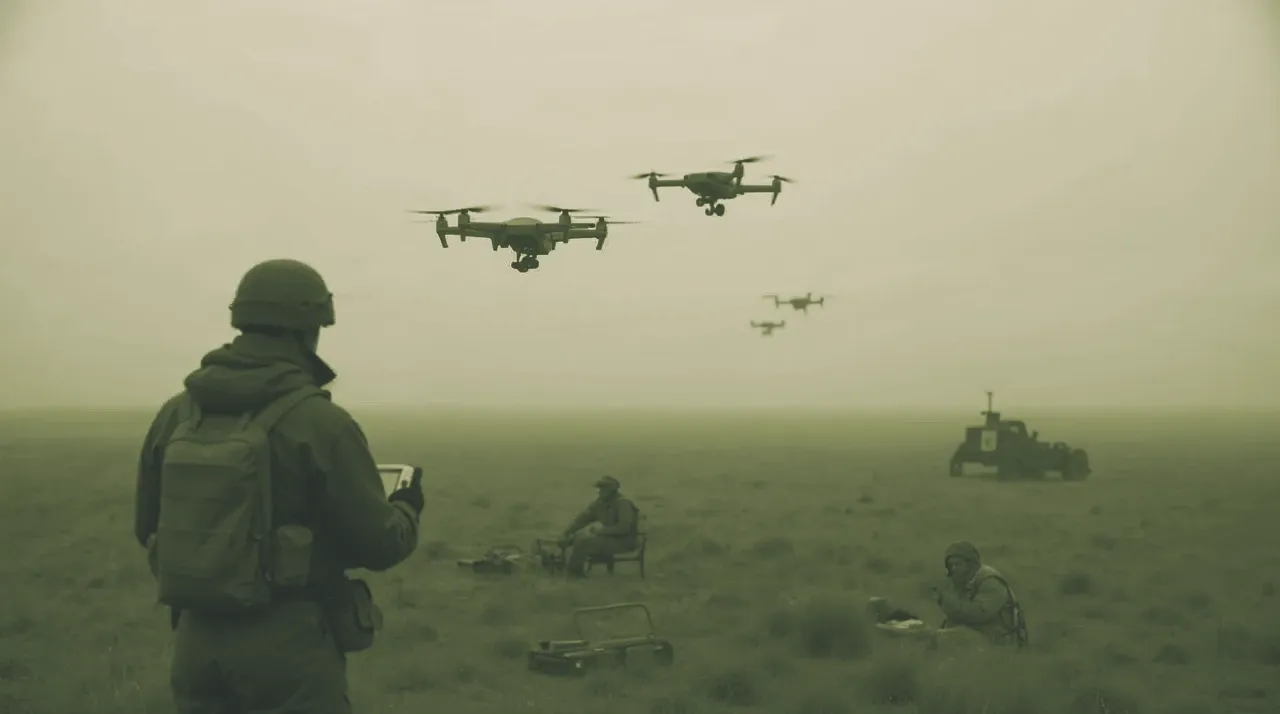
A single operator flew a mixed swarm of surveillance drones and a strike drone through the Army's prototype command system, in jammed comms with no cloud link, the company said.
Palladyne AI flew its SwarmOS autonomy software and a Gremlin-X reusable mini-bomber in the U.S. Army's Ivy Mass exercise last week, the company said. Ivy Mass is a 4th Infantry Division multi-domain fire-support and command drill that runs thousands of troops through the Army's modernized digital command systems.
A single soldier ran the mixed fleet. SwarmOS let one operator control several surveillance drones and the Gremlin-X at the same time and fed live target tracks into the service's Next-Generation Command and Control prototype, NGC2, according to Palladyne. NGC2 is the network the Army is building to connect its sensors to its shooters.
The software ran on the drones' own size-, weight- and power-limited computers, in communications-contested conditions, without a cloud link, StreetInsider reported. Decision-making stayed on the aircraft, so the swarm kept adapting when the network degraded. Chief technology officer Denis Garagić said the demonstration "cleared a fundamental technical threshold for battlefield autonomy."
Palladyne is a Salt Lake City company of about 160 people, listed on the Nasdaq as PDYN, that has staked its future on embodied-AI autonomy. The demonstration ran inside the Army's own NGC2 prototype, the architecture the service is using to define the autonomous teaming it plans to buy. StockTitan noted that integrating with that prototype now positions a vendor for the programs that follow.
Palladyne signed a June partnership with Israel's IAI for a U.S. loitering-munitions line and added retired general officers to a new defense advisory board. The company is selling single-operator swarm control, run on edge hardware and tied into Army command software, into a Pentagon that wants cheap, distributed forces, Doug Dynes, president of Palladyne Aerospace and Defense, said.
The battlefield and the startup story — free in your inbox every week. No paywall.
Subscribe Free →Palladyne called Ivy Mass a step toward "operational force inclusion" and follow-on Pentagon programs. It has not announced a production contract or a funded requirement for SwarmOS.
Frequently Asked Questions
What did Palladyne AI demonstrate at Ivy Mass?
Palladyne AI said it flew its SwarmOS autonomy software and a Gremlin-X reusable mini-bomber in the 4th Infantry Division's Ivy Mass exercise, letting a single operator command a mixed swarm of surveillance drones and the strike drone at once.
What is NGC2?
NGC2 is the Army's Next-Generation Command and Control prototype, the network the service is building to link sensors to shooters. Palladyne said SwarmOS integrated with that prototype and streamed live target tracks into it during the exercise.
How is this different from a remote-controlled drone?
According to Palladyne, SwarmOS ran on the drones' own size-, weight- and power-limited computers without a cloud link, and decision-making stayed on the aircraft, so the swarm kept adapting when communications were contested or degraded.
What is Palladyne AI?
Palladyne AI is a Salt Lake City defense and industrial technology company listed on the Nasdaq as PDYN, with about 160 employees, that develops embodied-AI collaborative autonomy software for drones and robots, per its company statement.
Why does the exercise matter for future contracts?
Palladyne said the run took place inside the Army's own NGC2 prototype, the architecture the service is using to define the autonomy it will buy, and framed it as a step toward operational force inclusion and follow-on Pentagon programs.
AI-generated summary, reviewed by an editor. More on our AI guidelines.

Marcus Schuler
Marcus Schuler edits BattlePolicy, a daily defense-technology brief connecting the companies and capabilities behind modern war to the contest among Europe, the US, Russia, and China.