GRID-REF 37°47′N 122°25′W
DISPATCH 02/26 · 9 Jun 2026
BATTLEPOLICY
Startup to front line. Strategy to consequence.
Lexicon · Russia

PKM

The PKM is the Soviet Union's workhorse 7.62mm general-purpose machine gun — a belt-fed, open-bolt design that has armed infantry squads, vehicle mounts, and tripod emplacements across more than five decades of continuous combat from Afghanistan to Ukraine.
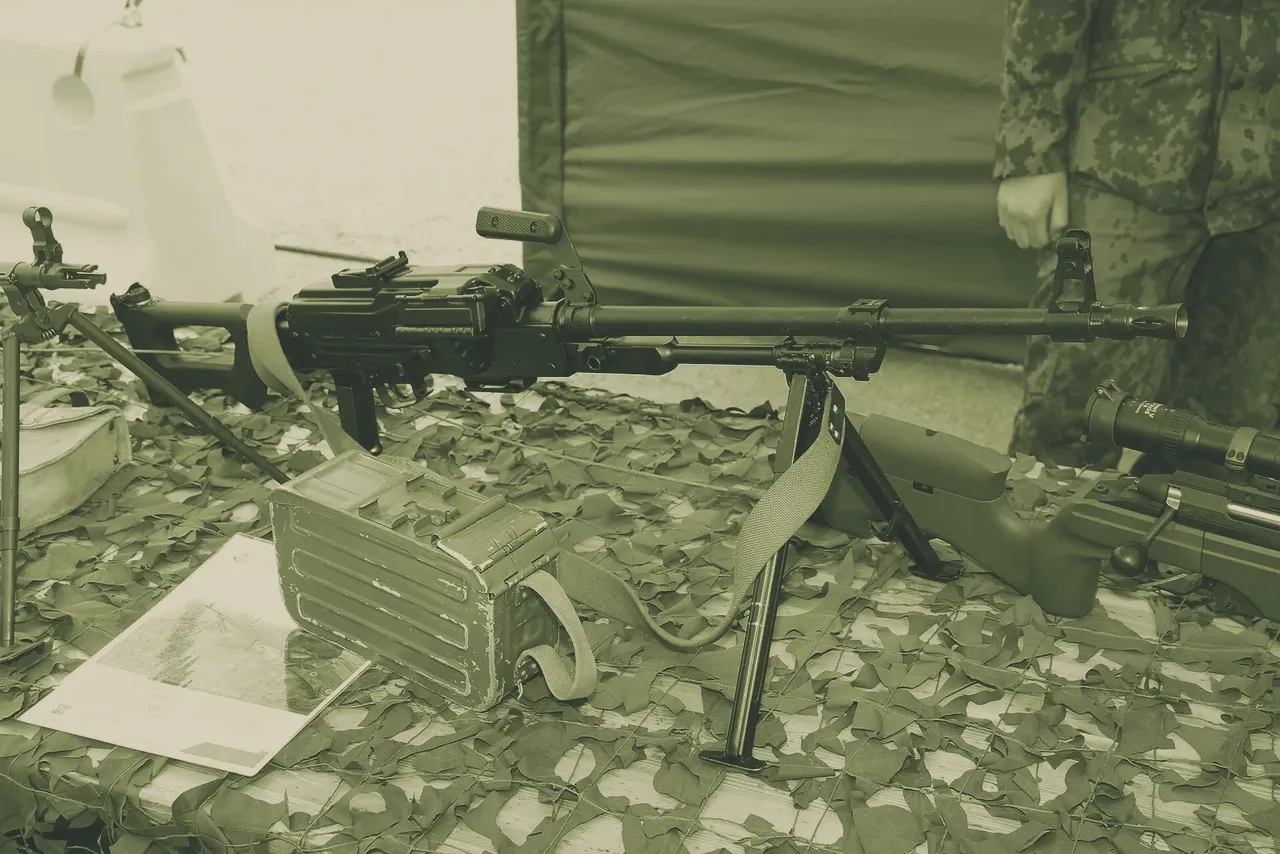
PKM
FIG.01 · Russia Image - PKM. Photo by MKFI, Public domain, via Wikimedia Commons.
The Soviet Union's workhorse 7.62mm general-purpose machine gun — a belt-fed, open-bolt design that has armed infantry squads, vehicle mounts, and tripod emplacements across more than five decades of continuous combat from Afghanistan to Ukraine.

Overview

The PKM (Pulemyot Kalashnikova Modernizirovanniy — Modernized Kalashnikov Machine Gun) is a 7.62×54mmR general-purpose machine gun that has served as the standard company- and battalion-level sustained-fire weapon of Soviet and Russian forces since 1969. Gas-operated, open-bolt, and belt-fed, it balances portability (~9 kg with bipod) with full-power rifle-caliber range and penetration. With well over one million PK-pattern guns produced across original Soviet manufacture, licensed copies, and foreign variants, the PKM is one of the most widely fielded GPMGs in history, according to Wikipedia, and its modernized successor the PKP Pecheneg — introduced in the late 1990s — remains in front-line Russian service today.

Development

The PK machine gun was designed by Mikhail Kalashnikov's team and entered Soviet service in 1961, drawing on the belt-feed mechanism of the earlier Goryunov SG-43 and the rotating-bolt locking system of the AK-47. The modernized PKM followed in 1969, distinguished by a lighter, fluted barrel, a smoother feed mechanism, and extensive use of stampings that reduced weight to roughly 9 kg — materially lighter than the 7.62mm NATO GPMGs it faced. After the dissolution of the USSR, production of the NSV heavy machine gun was stranded in newly independent Kazakhstan, prompting Russia's Degtyarev plant (ZID Kovrov) and TsNIITochMash to develop both the Kord HMG and, in parallel, an upgraded PKM. The result was the PKP Pecheneg (GRAU 6P41), accepted into service around 1999, which replaced the quick-change barrel with a fixed, forced-air-cooled heavy barrel designed to sustain long bursts without a barrel change, per GunRF.

Design & capabilities

The PKM is a gas-operated, long-stroke piston, rotating-bolt design that fires from the open bolt and feeds from the right side via non-disintegrating steel belts. According to Modern Firearms, the weapon weighs approximately 9 kg with its integral folding bipod attached, measures 1,203 mm overall with a 605 mm barrel, and delivers a cyclic rate of fire of roughly 650 rounds per minute (practical 250 rpm in sustained fire). The rimmed 7.62×54mmR cartridge — the same full-power rifle round used in the Dragunov SVD — yields a muzzle velocity of approximately 825 m/s and an effective range of about 1,000 meters for point targets and 1,500 meters for area suppression, with sights graduated to 1,500 meters and a maximum range of roughly 3,800 meters. Feed is from 100-, 200-, or 250-round belt boxes; the non-disintegrating belts can be reloaded and reused, a logistical simplification in prolonged operations.

The Pecheneg variant, detailed by Military Factory, retains the same cartridge, action, and rate of fire but incorporates a fixed heavy barrel with radial cooling fins enclosed in a steel jacket, creating a forced-air cooling effect that reportedly allows up to 600 rounds of continuous fire without a barrel change or accuracy degradation. At ~8.7 kg with bipod, the Pecheneg is slightly lighter than the PKM and marginally shorter at 1,155 mm, though its fixed barrel makes it less suited to sustained-fire roles where barrel swaps would otherwise be routine. Both weapons can be mounted on the Samozhenkov 6T2 tripod (PKM) or the 6T5 tripod (Pecheneg) for the sustained-fire role.

Variants

  • PK (1961): Original pattern with a heavier, non-fluted barrel and milled receiver components.
  • PKM (1969): Modernized lightweight version with stamped receiver, fluted quick-change barrel, and hinged shoulder rest; the definitive mass-produced variant.
  • PKT: Coaxial/tank version with solenoid trigger, heavier barrel, and no sights or stock — standard on Soviet/Russian armored vehicles.
  • PKB: Helicopter door-gun variant with spade grips and butterfly trigger.
  • PKP Pecheneg (6P41, ~1999): Fixed forced-air-cooled heavy barrel, no quick-change capability; designed for sustained-fire endurance from the bipod.
  • License-produced copies: Bulgarian MG-1M, Chinese Type 80, Polish UKM-2000 (7.62×51mm NATO export), Serbian Zastava M84, and others.

Combat record / operational use

The PKM has been in near-continuous combat since its adoption. Soviet forces carried it through the Afghan war (1979–1989), where its reliability in dust and its full-power cartridge's reach in mountainous terrain proved decisive. Russian forces employed both the PKM and the Pecheneg extensively in the Chechen wars, during the 2008 Russo-Georgian war, and throughout the Syrian intervention, where it appeared in infantry, vehicle-mounted, and technical configurations. In Ukraine, according to Military Factory, both Russian and Ukrainian forces field the PKM and Pecheneg in large numbers — the weapon's Soviet legacy means it arms both sides of the conflict, often drawn from the same pre-1991 stockpiles. Beyond the former Soviet sphere, PK-pattern guns have armed national armies, insurgent groups, and irregular forces across Africa, the Middle East, and Asia for decades, making it arguably the most combat-proven GPMG design currently in service worldwide.

Advantages

  • Proven reliability in extreme conditions — sand, mud, extreme cold — with minimal maintenance, a hallmark of the Kalashnikov gas system.
  • Full-power 7.62×54mmR cartridge delivers superior range and barrier penetration compared to intermediate-caliber squad automatics.
  • Lightweight for a full-power GPMG (~9 kg) — one of the lightest in its class, enabling sustained dismounted carriage.
  • Non-disintegrating reusable belts reduce logistical burden in prolonged operations.
  • Extremely broad proliferation ensures ammunition and spare-parts availability in virtually every conflict zone.
  • Pecheneg's fixed forced-cooled barrel eliminates barrel-change downtime during sustained fire, a distinctive tactical advantage.

Drawbacks / limitations

  • Non-disintegrating belts are heavier and bulkier than disintegrating-link alternatives (M13/NATO), and reloading spent belts is labor-intensive.
  • The rimmed 7.62×54mmR cartridge complicates belt design and can cause rimlock in poorly maintained belts.
  • The Pecheneg's fixed barrel — while enabling sustained fire — cannot be swapped if overheated or damaged, trading maintainability for burst endurance.
  • Sights are rudimentary compared to modern optics-railed GPMGs; the PKM lacks integrated mounting points for night-vision or thermal optics without aftermarket modification.
  • Heavier and longer than the 5.56mm SAW-class weapons it sometimes replaces at squad level, limiting close-quarters maneuverability.

Counterparts

  • M240 (USA) — the NATO-standard 7.62mm GPMG, heavier (~12.5 kg) but with quick-change barrel and disintegrating-link feed.
  • QJY-88 (China) — China's 5.8mm GPMG, lighter but criticized for lacking full-power cartridge range and penetration compared to the PKM.

Outlook

The PKM and Pecheneg remain in front-line Russian service with no announced replacement program, even as the Russian military pursues modernization across other small-arms categories (Udav pistol, RPK-16 trials, AK-12 rifle). The design's simplicity, the enormous global inventory of 7.62×54mmR ammunition, and the weapon's entrenched position in Russian motor-rifle doctrine make a wholesale replacement unlikely in the near term. The Pecheneg's fixed-barrel concept, while innovative, has not been widely emulated, and the PKM's quick-change barrel remains the preferred configuration in most export and license-built versions. As the Ukraine war consumes machine guns at scale, the PKM's global inventory — not any successor program — will define its staying power.

Key specifications

Spec Value
Cartridge 7.62×54mmR
Action Gas-operated, long-stroke piston, rotating bolt, open-bolt, belt-fed
Weight (gun with bipod) ~9 kg (PKM) / ~8.7 kg (Pecheneg)
Weight (gun with tripod) ~16.5 kg (PKM on 6T2) / ~12.7 kg (Pecheneg on 6T5)
Overall length 1,203 mm (PKM) / 1,155 mm (Pecheneg)
Barrel length 605 mm (PKM) / 658 mm (Pecheneg, fixed)
Effective range (point / area) ~1,000 m / ~1,500 m (PKM); ~1,500 m (Pecheneg)
Maximum range ~3,800 m
Rate of fire (cyclic) ~650 rpm (600–800)
Feed Non-disintegrating steel belts (100/200/250-rd boxes)
Muzzle velocity ~825 m/s

Sources

  1. Wikipedia — PK machine gun. https://en.wikipedia.org/wiki/PK_machine_gun
  2. Wikipedia — PKP Pecheneg. https://en.wikipedia.org/wiki/PKP_Pecheneg
  3. Modern Firearms (Maxim Popenker) — Pecheneg. https://modernfirearms.net/en/machineguns/russia-machineguns/pecheneg-eng/
  4. GunRF — "Pecheneg" Kalashnikov infantry machine gun. https://gunrf.ru/rg_pulemet_pecheneg_eng.html
  5. Military Factory — PKP Pecheneg (6P41) GPMG. https://www.militaryfactory.com/smallarms/detail.php?smallarms_id=837
FIELD DISPATCH · WEEKLY

BattlePolicy Weekly — free.

Defense tech, startups, and security — weekly. No paywall.

Related
Ukraine · Russia · Policy · Chornobyl · Energoatom · shahed

Russia strikes Ukraine's central spent-fuel store at Chornobyl with a Shahed

A Russian drone hit the receiving building of the Holtec-built dry-cask site that freed Ukraine from shipping its nuclear waste to Russia, metres from where spent fuel sits.

Ukraine · Russia · Policy · Chornobyl · Energoatom · shahed