Russia rebuilt its tank fleet on dead engines. Drones still own the ground they cross.
Russia revived "previously unrecoverable" Soviet engines to pull about 1,000 T-72As from storage, but the FPV drones that killed the originals still keep the restored armor off the front.
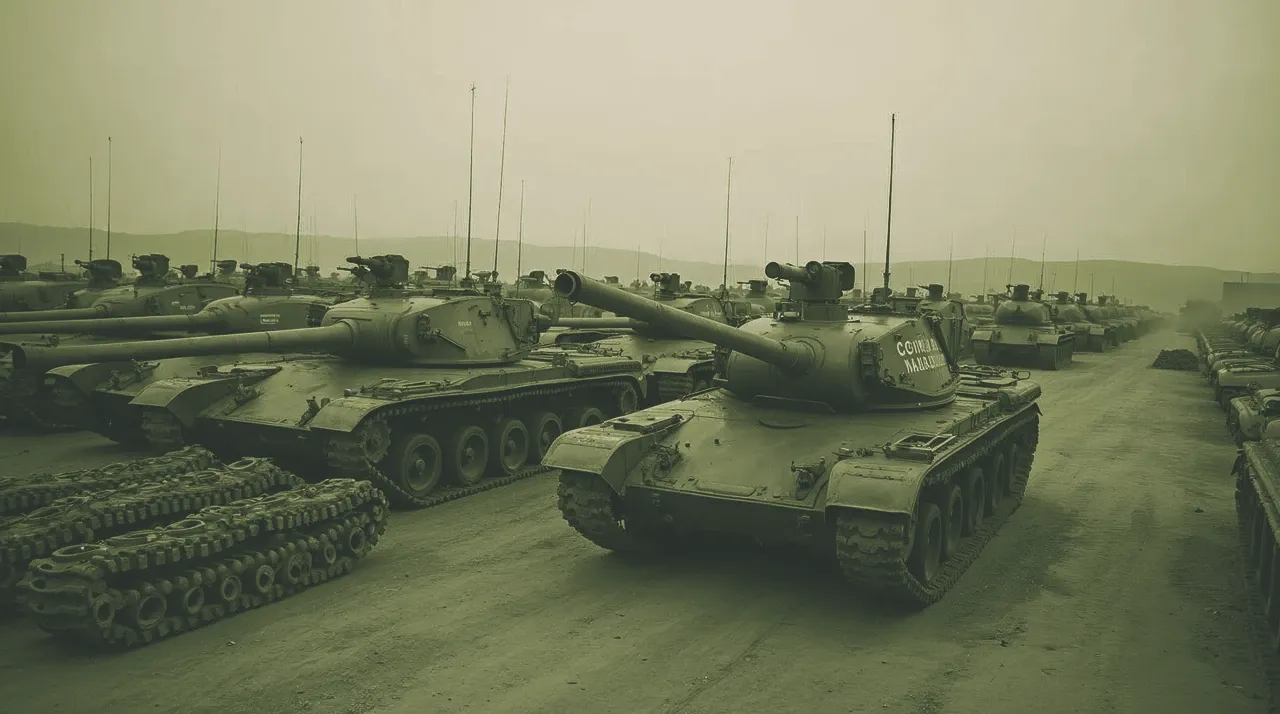
Russia revived "previously unrecoverable" Soviet engines to pull about 1,000 T-72As from storage, but the FPV drones that killed the originals still keep the restored armor off the front.
Russian industry regenerated diesel engines its own representatives had written off as "previously unrecoverable," returning roughly 1,000 1970s-vintage T-72As to the field and finishing a wider push that has restored or queued about 5,100 Soviet-era tanks, defense analyst David Axe wrote for Euromaidan Press on June 14. The work ran through two contracts: a September 2024 program to rebuild the 780-horsepower W-46 engine, then a December 2024 deal with the Kingisepp Machine Building Plant to refurbish the 840-horsepower W-84 that powers the rest of the stored fleet.
Russia opened the war with about 7,200 tanks in long-term storage, and the refit reaches the bottom of that pile. Open-source analyst Jompy, parsing satellite imagery of nine depots, counted 2,088 tanks left on June 9, defence-blog detailed. Strip out the 440 Ukrainian-pattern T-64s Moscow does not operate, the hulls cannibalized for parts, and the ones rotted in the open, and Jompy puts the realistically restorable remainder near 851. "So yeah, not a lot," he wrote. United24 Media framed it the same way: fewer than 900 deployable.
The paper total points the other way. Russia went to war with roughly 3,000 active tanks (IISS) and has since lost about 4,400 (Oryx); new T-90M output runs near 250 a year. Adding the refurbished hulls, Russia could soon field more armor than it had in February 2022, Axe wrote, having lost more tanks than its entire pre-war active force and still come out ahead on the count.
The armor cannot move. FPV and fiber-optic drones that burned those losses hold the contested gray zone, so Russian armies switched to infantry-led assaults through 2025 to shield their tanks, dropping losses from dozens a day to about one, Euromaidan Press reported. The restored fleet now sits as a single-use reserve, banked against a future the Kremlin hopes is post-drone, with no comparable Cold War stockpile behind it. Russia loses the ability to regenerate after high attrition, Jompy assessed, and "they'll have to change their approach to mechanized warfare."
The battlefield and the startup story — free in your inbox every week. No paywall.
Subscribe Free →The depots also run on a clock. At current rates, Omsktransmash burns through its stored T-80s within about 12 months, defence-blog noted, after which the plant either halts T-80 work or starts cutting new hulls from steel, a slower and costlier path than pulling an old one from a depot.
Frequently Asked Questions
What did Russia do to its old tank engines?
Russian industry launched a 2024 program to regenerate 780-horsepower W-46 diesel engines that an industry representative had publicly called "previously unrecoverable," then contracted the Kingisepp Machine Building Plant to refurbish the 840-horsepower W-84, according to David Axe writing for Euromaidan Press. The work returned about 1,000 1970s-vintage T-72As to service.
How much of Russia's Cold War tank reserve is left?
Open-source analyst Jompy, citing satellite imagery of nine storage bases, counts 2,088 tanks remaining against a pre-war total of 7,342, with only about 851 viable for restoration, as reported by defence-blog. United24 Media put the deployable remainder at fewer than 900.
Could Russia really field more tanks than before the invasion?
On paper, yes. Euromaidan Press notes pre-war active strength near 3,000 (per IISS), roughly 4,400 visually confirmed losses (per Oryx), and new T-90M production near 250 a year; adding about 5,100 refurbished hulls leaves Russia able to field more armor than in February 2022.
Why can't Russia use that restored armor?
FPV and fiber-optic drones still dominate the contested gray zone in Ukraine. Euromaidan Press reports that Russian armies shifted to infantry-led assaults through 2025 to protect their tanks, cutting daily tank losses from dozens to roughly one. Mass armored columns would likely be destroyed.
Why does the depletion matter strategically?
The Soviet stockpile that fed every Russian armor rebuild since 2023 is nearly exhausted. Jompy's assessment, cited by Euromaidan Press, is that Russia loses the ability to quickly regenerate after high-attrition warfare and "will have to change their approach to mechanized warfare." There is no second Cold War reserve to draw on.
Are these figures confirmed?
No. The tank counts come from open-source satellite analysis by Jompy and reporting by David Axe for Euromaidan Press, not official Russian disclosures. Analysts including Fronts and Frontelligence Insight flag uncertainty in some figures, and skeptics note Russian reserve depletion has been declared prematurely before.
AI-generated summary, reviewed by an editor. More on our AI guidelines.

Marcus Schuler
Marcus Schuler edits BattlePolicy, a daily defense-technology brief connecting the companies and capabilities behind modern war to the contest among Europe, the US, Russia, and China.