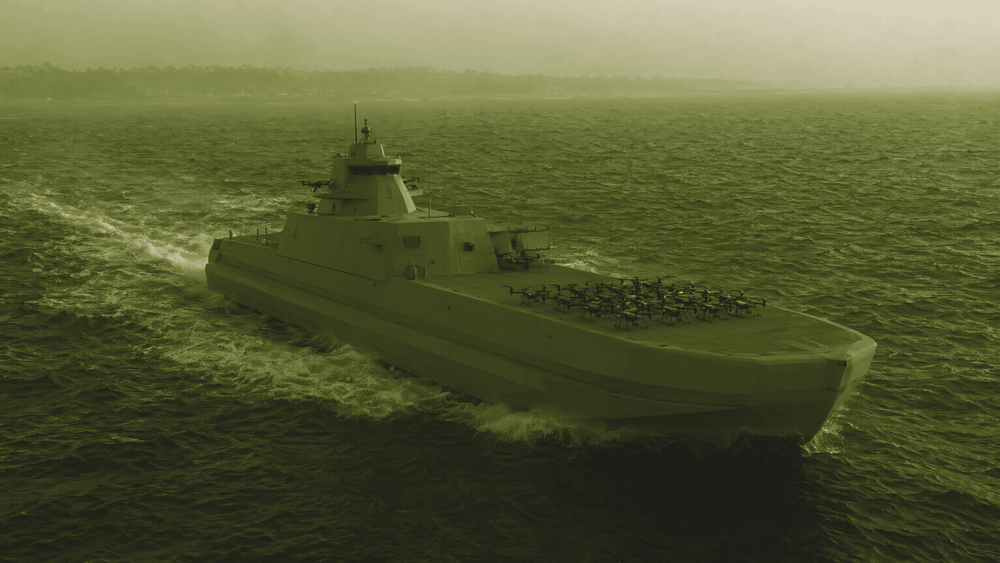
HUR's Black Sea detachment is ending five years of anonymity to offer NATO a sea-drone network that, by its account, keeps choosing targets when the link drops.
By the Air Force's count Ukraine stopped a smaller share of the jets than of the other drones, and the Energy Ministry says the strikes left more than 500,000 people without electricity.
Filin is a Russian ground-launched cruise missile developed by NPO Molniya. Ukrainian intelligence reports combat use from late summer 2026; its advertised speed and range remain unverified.
Russia's new Filin cruise missile pairs avionics from a Shahed-type drone supplier with a drone-class turbojet and US chips made as late as October 2025, and its claimed 800 km/h doubles the speed of Ukraine's multirotor interceptors.
Ukraine's new NSPA partnership gives its defence manufacturers a standing route to allied tenders. It does not settle Patriot supply, and Kyiv's own export costs still stand between eligibility and sales.
The overnight exchange hit air defense on both sides: Ukraine stopped most Russian drones but reported downing no ballistic missiles, and a reported strike near Moscow landed on a plant that has repaired Buk and S-300V systems.
Russia's first diesel tanker for the US sails Thursday with 40,000 tonnes. How many follow depends on refinery units and export terminals that Ukraine's drones keep hitting.
Jet-powered Gerans have outrun Ukraine's cheap interceptor drones, leaving fighter jets with half or more of the kills. Brave1's $20,000 missiles and seven fielded interceptors are the bid to bring the price back down.
Beijing's Nov. 18 licence list draws its motor lines above FPV hardware. The customs queries and spec declarations that come with it reach the third-country routes Ukrainian drone makers use to buy Chinese parts.
Ukraine's main defense against Russian ballistic missiles now waits on a Pentagon signature, with interceptors its allies already paid for held up in Washington.
Russia's ISDM Zemledeliye uses a truck-mounted rocket launcher to scatter mines remotely. Its role in Ukraine includes replacing obstacles after lanes have been cleared.
Ukraine's Air Force tally lists no ballistic interceptions, and Zelensky says partners again gave no warning, a day after he said U.S. intelligence sharing had resumed.
Kyiv says money, not factory space, caps its drone output, and EU loan money already pays for Ukrainian drones. The extra €70 billion it wants for 2027 has no source yet.
Brussels wants to clear the Airbus-Thales-Leonardo satellite merger fast after the Starshield cap hit Ukraine's drones. The merger combines factories; Ukraine's dependency sits in the network, the terminals and the rockets.
Drone strikes on merchant ships off Bulgaria and Romania now reach the Danube outlet that carries Ukraine's exports, and Bulgaria wants allied aircraft and air defenses to answer them.
On Newsmax, Trump said the U.S. is keeping its new munitions and will let allies buy again once it is "really stocked." Kyiv, out of Patriot interceptors, cannot wait that long.
A reported Patriot run-out, missing launch warnings and a 160 km/h cap on drone links arrived in the same week. The refinery campaign Kyiv resumed depends on none of them.
Model No. 13 forecasts where, when and with which drones Russia will strike near the front, Ukraine's defense ministry says, while a second NATO-Ukraine tool that ranks artillery plans is still in trials.
Ukrainian drone makers have replaced many Chinese parts with their own. Magnets, battery cells, chips and thermal sensors still come from China, and magnets are the first of those parts US sourcing rules police, from Jan. 1.
Ukraine's air defenses stopped 90% of the drones but four of 39 missiles, and 600,000 people lost power three days after Trump announced an energy ceasefire.
Dominion Dynamics and Ukraine's Tencore signed a memorandum on Oct. 13 to build the TerMIT ground robot in Canada for Ukraine's military. No value has been reported, and Dominion's chief executive is still seeking Canadian government funding.
Ukraine downs 57% of Russia's jet-powered drones, by President Zelensky's count. His former defense minister says a month-old interceptor has hit two and that AI will fly it next.
Ukraine's Air Force says it received no launch data and saw the Oct. 12 salvo only on radar, mid-flight. President Zelensky says no partner sent a warning.
Lockheed showed a Patriot successor due in 2031 on the day Poland said its own PAC-3 deliveries will slip. Ukraine's ballistic defense this winter rests on missiles allies already hold.
Ukraine says it left Russian refineries alone on the ceasefire's first night while Russia struck a Kharkiv power plant and a Kyiv power station, then launched 121 drones, 76 of them jet-powered.
Rheinmetall Defence Australia and startup Praetorian Aeronautics delivered AERIE, a container launcher for 20+ Arrow interceptors, on Oct. 7. Operator demonstrations follow in Q4; no customer, order or price is named.
Intelic's Nexus software links radars, cameras and interceptor drones from different makers on one screen in Ukraine, and the Netherlands is paying more than €30 million to build its own drone force on it.
The ADM-160 MALD is an expendable air-launched decoy that imitates aircraft radar signatures. The MALD-J variant adds radar jamming; Ukraine uses the baseline decoy alongside strike weapons.
The Stridsvagn 122 is Sweden's Leopard 2-derived main battle tank, combining additional armor with Swedish command systems. It serves in Sweden and Ukraine and is being modernized into the Strv 123A.
MICA is MBDA France's short-to-medium-range air-to-air missile family for Rafale and Mirage 2000, combining radar and infrared seeker versions with a surface-launched derivative.
The Saab 340 ASC 890 combines the PS-890 Erieye radar with onboard combat-control stations. Sweden donated its two aircraft to Ukraine, which confirmed combat operations beginning in March 2026.
Freya is a Ukrainian-led European ballistic-missile defence project combining Fire Point's FP-7.x interceptor with European sensors and command systems. It remains in development, without a demonstrated ballistic interception.
Stone Cloak is a British drone-mounted electronic-warfare device, described by the UK government as a jammer, supplied to Ukraine to hinder Russian air-defence tracking and targeting, with intellectual property shared for Ukrainian production.
Sky Fortress is a Ukrainian passive acoustic surveillance network that detects low-flying drones and missiles and supplies tracks to air-defense units.
FP-9 is Fire Point's developmental Ukrainian ground-launched ballistic missile, with a claimed range of up to 850 km and payload of up to 800 kg. No flight or combat use is publicly documented as of 10 October 2026.
A glide bomb killed 33 people at a Kramatorsk bus stop. Drones hit Kyiv's bridges seven times in four days. Putin's target is civilian life, and the defense comes down to interceptor engines.
The first confirmed strike on Russian data infrastructure took a Yandex Cloud zone offline, weeks after Russia began knocking out data centres in Kyiv.
The European Commission disbursed €1.24 billion for Ukrainian-made weapons the same morning Moscow claimed it struck Fire Point's missile and drone facilities.
Dealroom forecasts a record $10.5B for European defence startups in 2026, but mega-rounds are over 85% of it and US investors supply 47%. Russia's jet drones set the test.
Astra reports a fire at a Moscow-region dispatch station that feeds three airports, after a 650-drone raid and days after Kyiv claimed 51% of Russian refining was disabled.
An unmarked shoulder-fired missile in a Rostov air-defense team resembles China's QW series. Its origin is unconfirmed, but Ukraine's drone campaign explains why Russia wants it.
Berlin is paying Quantum Systems to scale interceptor production inside Ukraine before any interceptor drone has shown it can reliably kill Russia's jet-powered Gerans.
Russia's cheap jet-powered cruise missile hit a Kharkiv district twice in one evening, and Ukrainian intelligence estimates Russian plants can build up to 80 of them a month.
DEUTZ built the first GEREON ground robots for ARX Robotics at its Ulm plant, 12 weeks after the pair announced production. The batch is bound for Ukraine's Defense Forces. Neither firm disclosed volume or contract value.
The G7 will release up to 100 million barrels as Ukraine's drones keep hitting Russian refineries. Putin put the campaign's cost at 1% of GDP and said a strike pause would not return Russian diesel while sanctions stand.
Ukraine's ground robots can now cross the rivers and marshes that cut their supply runs, and the first one to do it on a mission was driven entirely by hand.
Russia's drone campaign has reached the bridges that join Kyiv's two banks, and ISW assesses that repeated, precise hits with shaped-charge warheads could eventually do serious damage.
Ukraine's first announced FP-7 combat launch gives Kyiv a domestic ballistic strike weapon. Fire Point's faster FP-7.x interceptor faces a harder test, and both depend on production Ukraine has not yet shown.
The Army's $4.15 billion Domestic Shield counter-drone vehicle fits the small drone over a U.S. base. Only $50 million is funded, and its one Ukraine-tested interceptor flies at about half the speed of Russia's Geran-4.
Occam's software keeps mass-produced FPVs tracking a target after jamming cuts the operator link, and the new money is meant to carry it from 12 Ukrainian units into European and NATO markets.
The Pentagon's up-to-$20.7 billion AMRAAM contract refills U.S. and allied magazines through 2033. Ukraine, where F-16s and NASAMS fire the missile at Russian cruise missiles and jet drones, is not a named buyer.
The Estonian-Ukrainian startup sells onboard autonomy as a layer for other makers' FPV, interceptor and fixed-wing drones, and it now has seed money and a drone-maker investor to scale it.
A roughly $4,000 conversion turns Soviet-era armor into driverless bombs with the speed and payload to breach fortified positions, and its maker expects demand to rise as winter mud stalls smaller ground robots.
Fire Point’s FP-7 tests and delayed Danish propellant plant show how technology access, procurement and factory output condition Kyiv’s negotiating leverage.
The likely PAC-2 route avoids PAC-3's seeker constraint, but offers weaker ballistic defense from a European production base Germany hosts and Poland wants.
The first competition under the UK-Ukraine AI Partnership gives British developers a scarce training asset while the underlying data stays inside Ukraine's secure perimeter.
Russian drones knocked out Kyiv data centers serving 100,000 households, and the same night a fire disabled a Starlink ground station in Poland that Warsaw says was set to cut the Ukrainian army's internet.
Fire Point can now damage Moscow's oil economy, but Russia brings more weapons, industrial capacity and societal slack to a winter campaign that is already spilling into NATO airspace.
OpenAI is giving Ukraine free access to Daybreak and GPT-5.6 Sol to defend the hospitals, power systems and telecom networks Russia attacks with both missiles and code.
Russia fired Zircons, ballistic missiles and 282 drones at Ukraine overnight. Kyiv stopped 60% of the ballistic missiles, and Zelensky says some nights this year the rate was zero.
Finland has signed and a US framework is ready. The Iran war showed why Ukrainian interceptors have to travel with Ukrainian components, software and operators.
The D-21-12R is a Ukrainian remotely operated armed ground robot combining FRDM Group's D-21 wheeled platform with a D-12 weapon module carrying a 12.7 mm machine gun.
Russia hit Kyiv with jet-powered drones hours after Zelensky met Trump, as the Patriot interceptors he asked for remain unpromised and he warns a larger strike is coming.
The first Geran-5 kills show that Ukrainian interceptors can catch Russia's fastest attack drones. The next six months turn on factories, financing and a Patriot stopgap.
Russia and Ukraine struck energy and industrial targets hours before Zelensky meets Trump, putting air defense and Kyiv's refinery campaign at the center of the talks.
Kyiv's strike ledger overstates the Russian refining capacity offline at one time. The harder metric is whether repeat strikes keep plants broken faster than Moscow can repair them, and that is the leverage Trump wants frozen.
Sichen is a Ukrainian long-range one-way attack drone with a stated 1,400 km range, 40 kg warhead and provisions for operation under active electronic warfare.
The RZ-100, widely identified as Morok, is a Ukrainian piston-engined one-way attack drone credited with carrying a 30 kg warhead to targets up to 800 km away.
A Ukrainian long-range one-way attack drone derived from the Chinese ZTK-150 civil airframe, operated exclusively by the SBU's Alpha unit and credited with strikes deep inside Russia.
Zelensky listed a weapon called Pelican in the largest strike on Moscow Oblast. It may be Fire Point's FP-7 ballistic missile or a fixed-wing drone, and the FP-7's published range rules out a direct hit on Moscow.
Russia's Geran-5 has reached Kyiv and drawn Iranian interest. Its marquee capabilities are unproven, its range is contested and its output depends on one Chinese turbojet.
The Gnom is a Ukrainian family of compact, remotely controlled unmanned ground vehicles developed by Temerland for reconnaissance, fire support, logistics, evacuation, remote mining and drone carriage.
A repurposed air-defense training missile made up more than half of Russia's confirmed ballistic strikes on Ukraine this summer, drawing on scarce Patriot interceptors while Moscow holds its Iskanders for winter.
Ukraine's gun-armed drone boat exposed a new Black Sea requirement: reusable unmanned interceptors that can defend ships and ports, then return for another engagement.
One overnight Ukrainian drone raid went after Russian airlift at a Rostov airbase and the fuel output of a top-five refinery in Yaroslavl. The aircraft losses remain Ukraine's claim.
CORVUS replaces Watchkeeper's 54-aircraft buy with up to 24 AR5s, a contract built for service-life updates and a Swindon line. Another 1,025 small drones hedge the question of whether the larger aircraft can survive.
The Pentagon inspector general made the munitions shortfall official and named industrial bottlenecks as the constraint. Ukraine's winter air defense now rests on allied stock swaps and its own cheap interceptors.
Fire Point makes 300 to 400 long-range attack drones a day. Washington is asking Kyiv to curb their refinery mission while the Gulf drives the larger diesel shock.
Palantin is a Russian truck-mounted electronic-warfare complex that detects and suppresses radio communications while coordinating multiple reconnaissance and jamming systems across an operational-tactical network.
Ukraine's T-80UD-derived main battle tank family, combining a high-output diesel engine, autoloaded 125 mm gun and Ukrainian protection systems in a fleet built principally for Thailand.
The Orlan-30 is a Russian fixed-wing reconnaissance UAV that adds laser target designation to the Orlan family, linking aerial surveillance directly to guided artillery and air-launched weapons.
The Kh-38 is a Russian modular, supersonic air-to-surface missile family combining a common airframe with laser, imaging-infrared, radar or satellite-guided configurations.
A Soviet tracked mine-clearing vehicle that launches explosive line charges to open lanes through minefields, with a secondary wartime role as a short-range demolition weapon.
Mistral is a French infrared-guided very-short-range air-defense missile family used from tripod, vehicle, naval and helicopter launchers against aircraft, helicopters, drones and cruise missiles.
The M113 is a lightweight American tracked armored personnel carrier whose simple construction, extensive variant family and large surviving inventory have sustained its use from Vietnam to Ukraine.