Fighter Jets Down Half of Russia's Jet Drones Over Ukraine. Brave1 Wants a $20,000 Missile to Take Over
Jet-powered Gerans have outrun Ukraine's cheap interceptor drones, leaving fighter jets with half or more of the kills. Brave1's $20,000 missiles and seven fielded interceptors are the bid to bring the price back down.
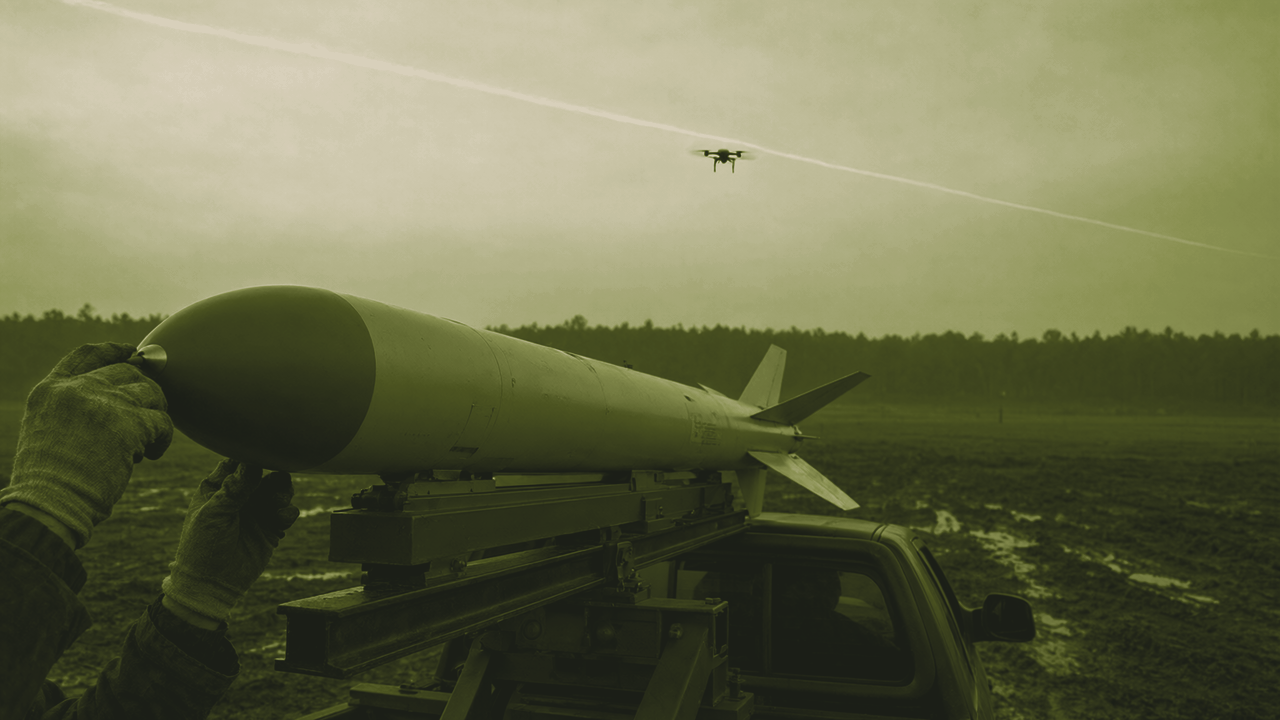
Jet-powered Gerans have outrun Ukraine's cheap interceptor drones, leaving fighter jets with half or more of the kills. Brave1's $20,000 missiles and seven fielded interceptors are the bid to bring the price back down.
Russia's jet-powered Gerans have pushed Ukraine's drone defense up the price ladder. Fighter jets now account for 50–60% of all shoot-downs of jet-powered Shaheds, LB.ua reported on Oct. 17, the day President Volodymyr Zelensky said Kyiv had secured additional contracts and partner commitments for 20 mm ammunition for its F-16s.
That is an expensive way to kill a cheap weapon. Ukrainian officials estimate a standard Geran-2 at about $70,000, with the jet versions tens of thousands of dollars more. An AIM-9X fired from an F-16 runs up to half a million dollars a shot.
The volume keeps coming. Overnight into Oct. 20, Russia launched 165 strike drones; Ukraine's Air Force said 115 were shot down or suppressed by 08:00, 73 of them jet-powered. Weapons struck 30 locations, and 20 drones were still in the air when the Air Force reported.
Brave1's two missile teams
Two Ukrainian teams are preparing domestically built surface-to-air missiles for combat against jet Gerans, Brave1 head Andrii Hrytseniuk told Ukrainska Pravda in an interview published Oct. 15. The program's hard ceiling is $20,000 a missile, and some projects have reached about $10,000; a third team may follow. "Even if you need two or three missiles, it is still several times cheaper than the cost of a Shahed," he said.
The missiles sit alongside a drone layer already in the fight. Hrytseniuk counts seven interceptor-drone types in combat, driven by miniature turbojets, electric propellers or battery-powered ducted fans. Twenty-two teams are building high-speed interceptors, 12 of them with Brave1 state funding, and government orders "have long surpassed 1,000," though production is still ramping up.
Ukraine has shown it can hit a jet Geran. The open question is whether it can do it at a price and a rate Russia cannot outspend.
Frequently Asked Questions
Why can't Ukraine's interceptor drones stop jet-powered Gerans?
The jet versions fly at 500 to 600 km/h and above 8,000 meters, according to Brave1 head Andrii Hrytseniuk, too fast and high for most small interceptor drones and gun crews that stopped about 90% of older propeller Shaheds.
How much of the work are Ukraine's fighter jets doing?
Fighter jets account for 50–60% of jet-Shahed shoot-downs, LB.ua reported on Oct. 17. Ukraine has about 50 F-16s, and Zelensky said about half are grounded for maintenance.
What is Brave1's $20,000 missile?
A program of cheap Ukrainian surface-to-air missiles with a hard $20,000 price cap. Hrytseniuk said two teams are preparing for combat use and some designs cost about $10,000, against up to $500,000 for an AIM-9X.
How many jet-interceptor drones does Ukraine have?
Seven types are in combat and orders have passed 1,000, per Hrytseniuk. Ukraine's Air Force does not expect delivery at the needed scale before the end of November.
How does the Starshield speed cap affect air defense?
Terminals lose connection above about 160 km/h, presidential adviser Serhii Beskrestnov said on Oct. 19, which disrupts both jet interceptor drones and the combat helicopters that shoot down many conventional Shaheds.
AI-generated summary, reviewed by an editor. More on our AI guidelines.
Read next — from the Lexicon
Below this point
- From quadcopters to $500,000 missiles
- Bars and the November delivery date
- The 160 km/h link cap
- Brave1 money and Quantum WIY's 15,000 interceptors
- What to watch through November
From quadcopters to $500,000 missiles
Speed broke a defense that worked. In February, interceptor drones accounted for more than 70% of Shahed downings over Kyiv, and Ukrainian interceptors stopped roughly 90% of the older propeller-driven drones, Defense News reported. Cheap aircraft had replaced scarce missiles.
The jets fly at 500 to 600 km/h and above 8,000 meters, out of reach for machine guns, anti-aircraft artillery and most small interceptors, Hrytseniuk said. Russia launched 3,177 jet drones in September; Zelensky said that month that 57% were shot down. The Air Force expects the jet share of Russian launches, about 40% now, to reach 80%. Its deputy commander, Col. Yurii Cherevashenko, told a parliamentary commission on Oct. 6 that the service projects speeds of 800 to 900 km/h, though none have been recorded yet.
Here is what each step up the ladder costs per shot:
- Interceptor quadcopters: the cheap layer that closed the sky to propeller Shaheds, now too slow for most jet targets.
- Brave1 missiles: a $20,000 ceiling, some near $10,000, not yet in combat.
- APKWS laser-guided rockets: about $30,000 to $35,000, converted from air-to-ground use.
- Stinger: roughly $100,000 to $120,000 per missile.
- AIM-9X: up to $500,000.
Ammunition is only part of the bill. Several cheap missiles may be needed per kill, and not every fighter engagement uses a Sidewinder: the ammunition Zelensky announced was 20 mm cannon rounds. The larger cost is airframes. Ukraine has about 50 F-16s, and Zelensky said this month that about half are grounded for maintenance elsewhere in Europe. Officials and experts say the jets fly so often they risk breaking down.
David Deptula, head of the Mitchell Institute for Aerospace Studies, said Ukraine is "forced to use a relatively small fighter fleet day after day as a substitute for an adequately resourced, layered air defense system," and is "consuming a finite resource faster than they should." AI-aimed gun turrets have added dozens of shoot-downs, a real layer but not yet a national one.
Bars and the November delivery date
Ukraine is repurposing jet weapons it already builds. Video shared by the Ukrainian military shows a ground-launched interceptor version of the Bars, a small turbojet strike drone Ukraine has flown against Russian refineries, destroying a Geran-5. Upgraded Bars strike versions reportedly reach 700 km/h, against roughly 600 km/h for the Geran-5. Germany and Ukraine signed an agreement on joint Bars production in July 2026, which gives the design a European production route.
Other types have scored. Wild Hornets' Sting S, SkyFall's P1-SUN JetKiller and a jet interceptor supplied by the Serhiy Prytula Charity Foundation have all been shown destroying Geran-5s since late September, and former defense minister Mykhailo Fedorov said on Oct. 12 that his team's interceptor downed two Geran-5s heading for Kyiv.
Cherevashenko set the limit on those kills. Fourteen companies are flight-testing jet interceptors with the Air Force, three have shown promising results, and the Air Force does not expect delivery at the scale Ukraine needs before the end of November at the earliest. Seven types in combat is not seven types in quantity.
Geometry adds to the problem. The Geran-5 flies 150 km/h faster than the Geran-4, an engineer at a Ukrainian defense contractor said, "so the goal is to intercept from the front rather than the rear." Top speed alone does not close that gap; the approach has to be planned from ahead of the target.
The 160 km/h link cap
The cheapest fast layers are also the ones that need a satellite link. Starshield terminals still lose connection above 160 km/h, presidential adviser Serhii Beskrestnov wrote on Oct. 19, and the cap now hits two parts of the defense. Jet interceptor drones lose their channel, and so do the combat helicopters that down "a significant share of ordinary Shaheds" while flying faster than the threshold. Zelensky said the same day that equipment drops off at about 130 to 161 km/h.
Responsibility is still disputed. Elon Musk says the US government owns and controls Starshield; the White House has attributed the disruption to a technical malfunction. Ukraine's Defense Ministry reported partial recovery on Oct. 15, but the speed limit has not been fully lifted.
Brave1 money and Quantum WIY's 15,000 interceptors
The constraint is now money, not engineering. Hrytseniuk names funding and budgets, rather than engine production, as the main obstacle to scale. "If Ukraine had significantly more money, scaling up production would be much easier," he said.
The component base has grown under the money Brave1 already spent. A turbojet funding program launched in 2025 has 11 companies developing engines and six already manufacturing and selling them. Ukraine had one state-owned maker of solid-propellant rocket motors in 2024 and has about 20 now. Brave1 began funding missiles in 2024, the first prototypes took two years, and about 10 designs are in development.
Russia sets the scale to match. Ukraine's military intelligence agency, HUR, estimates Russian output of up to 3,000 jet drones a month, about 2,400 of them in August. Hrytseniuk said the Geran-4 and Geran-5 run on a Chinese turbojet, with a Chinese modem, thermal camera, antenna and servos, and a flight controller on American microchips. Russia assembles; the supply chain is foreign.
German capital is betting on the same race. Quantum Systems says its battery-electric Apex Recordhunter flew at 777 km/h in a record attempt this week, with the return leg needed for an official record still to come. Co-CEO Sven Kruck tied the program to jet Gerans flying at 500 to 600 km/h: "Russia is accelerating the threat. We are engineering the response." The company says the demonstrator is not a weapon. Its interceptors come from Kyiv-based WIY Drones through the Quantum WIY Industries joint venture, and Quantum says it has an order for 15,000 WIY Strila interceptors for Ukraine's National Guard.
Quantum vice president Matthias Lehna said interception rates against the jets rose from very low to more than 30%, and above 50% on recent nights. The Air Force reported downing 77% of incoming jet drones on one night last week.
The market signal is plain. The winning product is the cheapest interceptor that can finish an engagement without the capped link and can be built in thousands a month. Brave1's missiles, the Bars co-production deal and Quantum WIY's order each answer part of that. Delivery numbers will decide the rest.
What to watch through November
- First combat results from the two Brave1 missile teams. Zelensky said early this month that results from Ukraine's "small missile program" would be clear "in the second half of this month."
- Jet-interceptor deliveries at scale, which the Air Force puts no earlier than the end of November.
- The fighter share of jet-Shahed kills. A fall below 50–60% is the cleanest sign that cheaper layers are taking over.
- Starshield's 160 km/h cap, and whether interceptor and helicopter crews get their channel back.
- Russian jet share and speed, against the Air Force's forecast of up to 80% of launches and 800 to 900 km/h.
The number to track is the fighters' 50–60%. Every point it falls is a kill bought at a drone price instead of a missile price.

Marcus Schuler
Marcus Schuler edits BattlePolicy, a daily defense-technology brief connecting the companies and capabilities behind modern war to the contest among Europe, the US, Russia, and China.