GRID-REF 37°47′N 122°25′W
DISPATCH 02/26 · 9 Jun 2026
BATTLEPOLICY
Startup to front line. Strategy to consequence.
Lexicon · USA

F-16 Fighting Falcon

The world's most widely operated fourth-generation multirole fighter, continuously upgraded for over four decades, now fielded in its latest Block 70/72 "Viper" configuration with active electronically scanned array radar and network-enabled avionics.
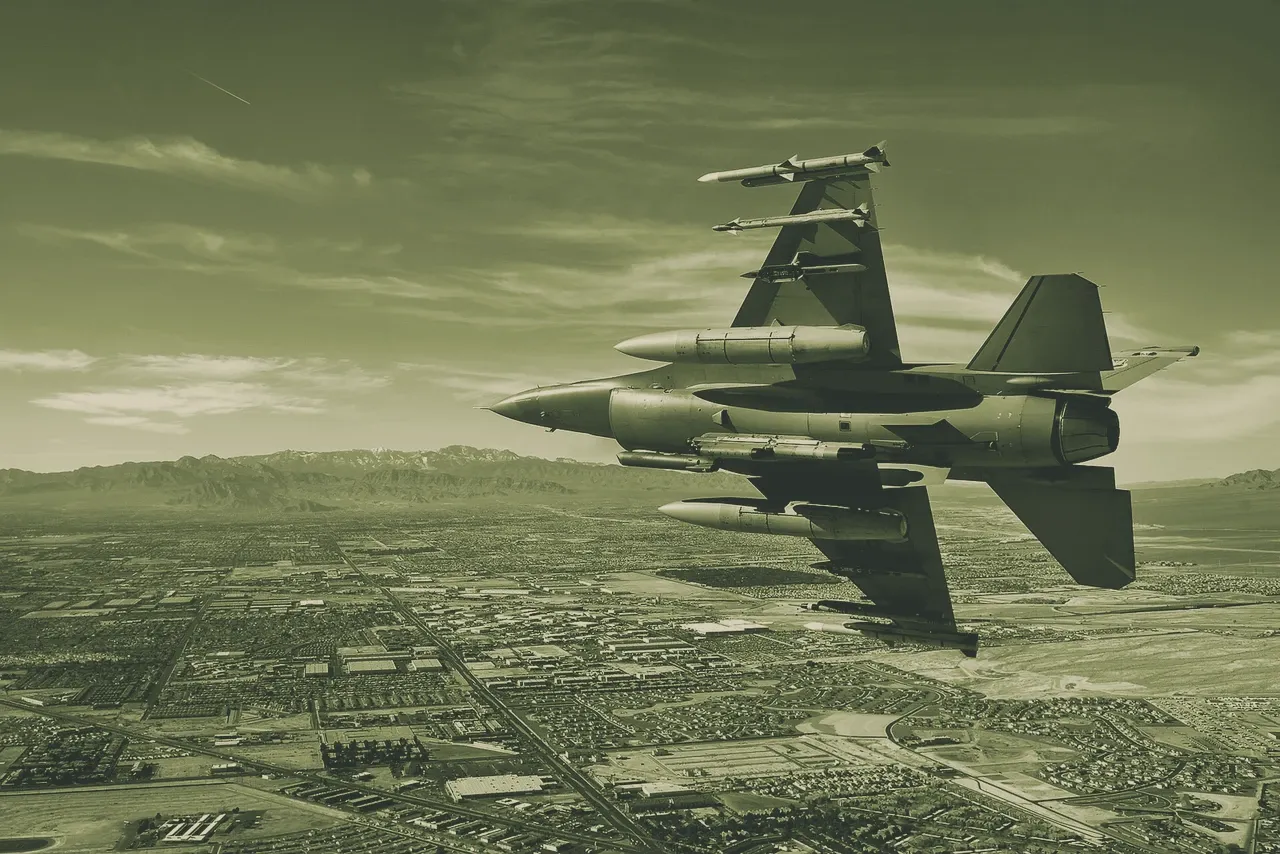
F-16 Fighting Falcon
FIG.01 · USA Image - F-16 Fighting Falcon. Photo by Master Sgt. Benjamin Bloker, Public domain, via Wikimedia Commons.
The world's most widely operated fourth-generation multirole fighter, continuously upgraded for over four decades, now fielded in its latest Block 70/72 "Viper" configuration with active electronically scanned array radar and network-enabled avionics.

Overview

The F-16 Fighting Falcon (universally known as the "Viper") is a single-engine, multirole tactical fighter that entered service with the United States Air Force in 1979 and has since been procured by over 25 nations. Originally designed as a lightweight daytime air-superiority fighter under the Lightweight Fighter program, the F-16 evolved into an all-weather multirole platform through successive block upgrades. The current new-build production standard, the Block 70/72 (branded F-16V), incorporates the Northrop Grumman AN/APG-83 Scalable Agile Beam Radar (SABR), an advanced mission computer, and a conformal fuel tank option, placing it firmly within the 4.5-generation category.

Development

The YF-16 prototype first flew in February 1974 as the winning entry in the Air Force's Lightweight Fighter competition. General Dynamics (later Lockheed Martin) delivered the first production F-16A in 1978, achieving initial operational capability in 1980. The airframe was progressively upgraded through the F-16C/D Block 25–52 series, introducing improved radar, multi-target engagement, and enhanced strike capabilities. In the 2010s, Lockheed Martin launched the F-16V configuration, integrating an AESA radar, a new center pedestal display, and other structural and avionics enhancements that could be retrofitted to older aircraft or built new as the Block 70/72. The first new-build Block 70 aircraft was delivered to Bahrain in 2023, according to Airforce Technology.

Design & capabilities

The F-16’s distinctive relaxed static stability, blended wing-body, and fly-by-wire flight control system provide exceptional agility and high-alpha maneuverability. A single afterburning turbofan—either the General Electric F110-GE-129 (Block 70) or the Pratt & Whitney F100-PW-229 (Block 72)—generates around 131 kN of thrust, enabling speeds above Mach 2. The aircraft can carry up to 7,700 kg of ordnance on 11 hardpoints, and an optional conformal fuel tank extends combat radius without sacrificing weapon stations.

The heart of the Viper upgrade is the AN/APG-83 SABR AESA radar, which offers simultaneous air-to-air and air-to-ground modes, synthetic aperture radar mapping, and interleaved tracking of up to 20 targets. The aircraft also features a modernized glass cockpit, a helmet-mounted cueing system, and the AN/ALQ-254 Viper Shield integrated electronic warfare suite. These systems push the F-16’s survivability and lethality closer to that of fifth-generation platforms, while maintaining the airframe’s proven 12,000-hour structural life, as detailed in the Lockheed Martin product card.

Variants

The F-16 family encompasses several major blocks: - F-16A/B (Blocks 1–15): Initial operational variants with the Westinghouse AN/APG-66 radar. - F-16C/D (Blocks 25–52): Upgraded with the AN/APG-68 radar, improved avionics, and additional weapon stations; the Block 50/52 introduced the ability to deliver GPS-guided munitions. - F-16V (Block 70/72): The current production standard, featuring AESA radar, new mission computer, Viper Shield EW, and structural enhancements. Available in single-seat (C) and twin-seat (D) configurations. - Specialized variants: Include the two-seat F-16D Brakeet for Israel, the F-16I Sufa (Israel), the F-16E/F Block 60 “Desert Falcon” for the UAE, and the F-16A/B MLU (Mid-Life Update) for European operators.

Combat record / operational use

The F-16 is the most combat-proven Western fighter, a legacy documented in the Wikipedia summary of the F-16V. Israeli F-16s secured the type’s first air-to-air kills in 1981 and famously destroyed Iraq’s Osirak nuclear reactor that same year. U.S. F-16s flew thousands of sorties during Operation Desert Storm and subsequent Middle Eastern conflicts, while NATO allies employed them in Bosnia, Kosovo, Afghanistan, and Libya. The type has also seen extensive service with Gulf and Asian air forces in regional operations.

In 2024, Ukraine received the first of several donated European legacy F-16s, marking the type’s introduction into the high-intensity Russo-Ukrainian war. The Netherlands completed its transfer of 24 jets, Belgium pledged up to 53 aircraft, and Norway joined the effort as the third donor, as reported by Reuters and Aerospace Global News. Ukrainian F-16s have been used to intercept Russian cruise missiles and drones, as well as for air-to-ground strikes; at least one airframe and its pilot were lost in August 2024, according to Aerotime.

Advantages

  • Proven combat record across nearly five decades and multiple theaters.
  • High agility and energy maneuverability; excellent dogfighter.
  • Large and diverse weapon integration: AIM-120, AIM-9X, JDAM, HARM, JASSM, and anti-ship missiles.
  • Low operating cost relative to twin-engine counterparts; high sortie generation rate.
  • Continuous upgrade path (Viper block) keeps the platform technologically relevant.
  • Large global fleet ensures robust sustainment, spare parts, and training infrastructure.
  • Compatibility with advanced AESA radar, data links, and fifth-generation networking.

Drawbacks / limitations

  • Single-engine configuration poses risk in contested and overwater environments.
  • Smaller internal fuel capacity limits unrefueled persistence; relies on external tanks or aerial refueling.
  • The Block 70/72 flyaway cost approaches US$70 million, narrowing the price gap with some fifth-generation options.
  • Legacy airframes reaching service-life limits may require costly structural upgrades.
  • RCS (radar cross-section) is higher than dedicated stealth platforms, limiting penetration capability against advanced integrated air defenses.

Counterparts

Outlook

The F-16 will remain a mainstay of global air power well into the 2030s. With the backlog of new-build Block 70/72 fighters and upgrade programs like the F-16V retrofit, Lockheed Martin expects the type to serve as a high-low complement to fifth-generation fleets. Ukraine’s operational employment will provide the first large-scale test of F-16s against a peer adversary, shaping future upgrades and tactics. Continued integration of advanced weapons and sensor packages will keep the Viper lethal.

Key specifications

Spec Value
Crew 1 (C) / 2 (D)
Length / wingspan 15.03 m / 9.45 m
Max speed Mach 2+ (~2,120 km/h at altitude)
Service ceiling >15,240 m
Combat radius / range ~550+ km (mission-dependent); ferry >3,200 km
Payload ~7,700 kg
Hardpoints 11
Radar / sensors AN/APG-83 SABR AESA; IRST; Viper Shield EW
Powerplant Block 70: 1 × GE F110-GE-129 (~131 kN); Block 72: 1 × P&W F100-PW-229 (~129 kN)
Armament 20 mm M61A1 Vulcan; AIM-120, AIM-9X; AGM-88 HARM, JDAM, JSOW, JASSM (integration-dependent)

Sources

  1. Lockheed Martin — F-16 Block 70/72 Product Card. https://www.lockheedmartin.com/content/dam/lockheed-martin/aero/documents/F-16/Jan20_Product%20Card%20F-16%20Block%207072%20media.pdf
  2. Airforce Technology — F-16V (Viper) Fighting Falcon Multi-Role Fighter. https://www.airforce-technology.com/projects/f-16v-viper-fighting-falcon-multi-role-fighter/
  3. Wikipedia — Lockheed Martin F-16V Viper. https://en.wikipedia.org/wiki/Lockheed_Martin_F-16V_Viper
  4. Aerotime — Netherlands completes transfer of 24 F-16 jets to Ukraine. https://www.aerotime.aero/articles/netherlands-completes-f-16-transfer-to-ukraine
  5. Aerospace Global News — Belgium to become largest F-16 donor to Ukraine with 53 aircraft. https://aerospaceglobalnews.com/news/belgium-boost-f16-deliveries-ukraine-53-aircraft/
  6. Reuters — Norway gives F-16 jets to Ukraine, joining Denmark, Netherlands. https://www.reuters.com/world/europe/norway-becomes-third-country-donate-f-16-jets-ukraine-broadcaster-tv2-2023-08-24/
FIELD DISPATCH · WEEKLY

BattlePolicy Weekly — free.

Defense tech, startups, and security — weekly. No paywall.

Related
Ukraine · USA · Funding · Swarmer · drones · defense tech · venture capital · Pentagon

Ukraine turned its drone war into an industry. Now Wall Street is pricing it.

Swarmer's Nasdaq debut, a wave of Western venture money and a Pentagon FPV contract show Ukrainian defense tech crossing from battlefield to balance sheet, at a valuation that has outrun the revenue.

Ukraine · USA · Funding · Swarmer · drones · defense tech · venture capital · Pentagon
USA · Autonomy · Shifters · Ace Capital Partners

Shifters raises $10.2M to put robots first into tunnels and rubble

The US-Israeli startup raised a $10.2 million seed led by Ace Capital Partners to scale ground robots that enter tunnels and rubble before troops.

USA · Autonomy · Shifters · Ace Capital Partners
USA · Policy · AI · Anthropic · autonomous weapons · Pentagon

Trump orders faster military AI and bars vendors from switching off fielded models

A new national security memo tells the Pentagon to onboard frontier commercial AI at speed, strips vendors of the power to shut it down mid-mission, and resets the rules for autonomous weapons within 90 days.

USA · Policy · AI · Anthropic · autonomous weapons · Pentagon