GRID-REF 37°47′N 122°25′W
DISPATCH 02/26 · 9 Jun 2026
BATTLEPOLICY
Startup to front line. Strategy to consequence.
Lexicon · USA

F-35A Lightning II

The U.S. Air Force's fifth-generation multirole stealth fighter — a single-engine CTOL aircraft with advanced sensor fusion, internal weapons carriage, and a global user base exceeding 1,300 airframes across 19+ nations.
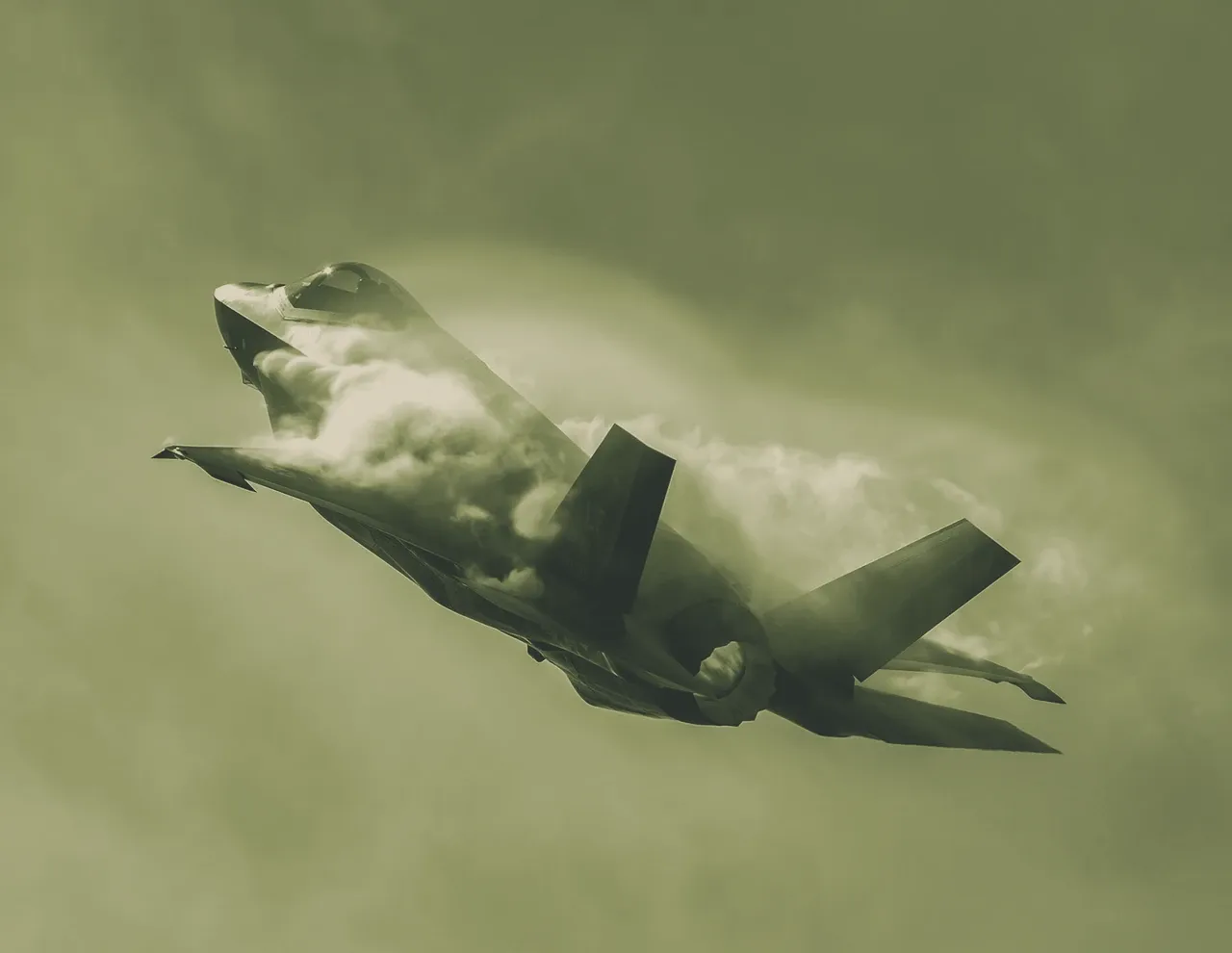
F-35A Lightning II
FIG.01 · USA Image - An F-35A Lightning II in flight. Photo by Airman 1st Class Alexander Cook, Public domain, via Wikimedia Commons.
The U.S. Air Force's fifth-generation multirole stealth fighter — combining low observability, sensor fusion, and internal weapons carriage in a single-engine CTOL design, operated by the U.S. and 18 partner nations.

Overview

The F-35A Lightning II is the conventional takeoff and landing (CTOL) variant of the Lockheed Martin F-35 family, the Pentagon’s largest weapons program. It is the principal 5th-generation fighter of the U.S. Air Force and the most numerous stealth combat aircraft in the world, with over 1,300 delivered to date across the broader F-35 program Army Recognition. The aircraft blends low-observable shaping, internal payload bays, and an advanced sensor-fusion architecture to operate as a networked sensor node in contested airspace. Mature production, despite recurring sustainment and upgrade challenges, continues to drive unit costs downward; a recent blocking buy for Lots 18–19 contracted 296 aircraft at about $24.3 billion Air & Space Forces Magazine.

Development

The F-35 traces its roots to the Joint Strike Fighter program, launched in the 1990s to replace several Cold War-era tactical fleets with a common family of multi-service fighters. Lockheed Martin’s X-35 demonstrator defeated the Boeing X-32 in 2001, and the F-35A prototype first flew in December 2006. Flight-test and development encountered substantial cost growth, software integration delays, and weight-growth issues, delaying initial operational capability (IOC) to August 2016 for the U.S. Air Force. By 2025, the program had delivered a record 191 aircraft in a single year Army Recognition. The F-35B short take-off and vertical landing (STOVL) and F-35C carrier variant (CV) followed, both sharing a common core with the A model.

Design & capabilities

The F-35A is a single-seat, single-engine airframe built around stealth, internal carriage, and sensor fusion. Its AN/APG-81 active electronically scanned array (AESA) radar, AN/AAQ-37 distributed aperture system (DAS), and AN/AAQ-40 electro-optical targeting system (EOTS) feed the aircraft’s central mission computer, creating a fused 360-degree picture that is shared with coalition platforms over Link-16 and Multifunction Advanced Data Link (MADL), according to the U.S. Air Force fact sheet U.S. Air Force. The aircraft carries up to about 2,600 kg of ordnance internally in its stealth configuration across four stations, and can add six external pylons for additional fuel and stores in permissive environments.

Power comes from a single Pratt & Whitney F135-PW-100 afterburning turbofan producing approximately 191 kN (43,000 lbf) of thrust Lockheed Martin. Maximum speed is Mach 1.6; the RAAF publishes a combat radius of approximately 1,093 km on internal fuel Royal Australian Air Force. The internal 25 mm GAU-22/A cannon (A-model only) provides a close-in strafing capability.

Internal weapons include the AIM-120 AMRAAM, AIM-9X Sidewinder, and the new AIM-260 Joint Advanced Tactical Missile (integrating). For air-to-surface missions, the F-35A can carry the GBU-12, GBU-31 JDAM, GBU-39 Small Diameter Bomb, the Joint Strike Missile (JSM), and the AGM-158 JASSM/JSOW family. Sensor-fusion and stealth are designed to allow the F-35A to find, fix, and engage threats long before they can detect the aircraft, operating as a quarterback in a network-centric kill web.

Variants

The Lightning II family also includes:

  • F-35B – STOVL variant for the U.S. Marine Corps, Royal Navy, Italian Navy, and Japan, featuring a lift-fan and a downward-swiveling engine nozzle.
  • F-35C – carrier-based variant for the U.S. Navy and Marine Corps, with a larger wing, strengthened landing gear, and tailhook.
  • F-35I “Adir” – Israeli-modified F-35A with indigenous electronic warfare and weapons-system integration.

Combat record / operational use

The F-35’s combat debut came in 2018 when the Israeli Air Force struck Iranian-linked targets in Syria with the F-35I Adir Wikipedia. That same year, USMC F-35Bs flew their first combat sorties in Afghanistan. Since then, Israeli F-35Is have been active in strikes against Iran-backed positions across the Middle East, and the aircraft has become a staple of NATO quick-reaction alert (QRA) and air-policing missions in Europe. In 2024–25, F-35Is were reportedly used in deep strikes against Iran-linked infrastructure. No air-to-air kills are publicly confirmed, but the type has proven itself in denied environments through its situational awareness and low observability.

Advantages

  • True stealth and sensor-fusion architecture deny the enemy detection and track.
  • Internal payload bay preserves low-observable signature for initial strikes.
  • DAS and EOTS provide 360° pilot awareness without relying on external sensors.
  • High-capacity data links and MADL allow the F-35 to function as a command-and-control node for 4th-generation fighters.
  • Economies of scale have driven the F-35A flyaway cost below $83 million (FY2024), making it competitive with advanced 4.5-generation aircraft.

Drawbacks / limitations

  • Sustainment cost per flying hour remains high; engine wear and stealth-coating upkeep strain maintenance budgets.
  • Internal carriage limits the number of weapons that can be carried in the pre-strike stealth loadout.
  • The Technology Refresh 3 (TR-3) upgrade, essential for future Block 4 capabilities, has faced lengthy delays and software instability.
  • Single-engine design gives less combat-redundancy margin than twin-engine counterparts.
  • Export customers must accept restricted software, and some integrations (e.g., Meteor, RBS-15) are limited or deferred.

Counterparts

Outlook

The F-35A is the backbone of the U.S. Air Force’s future fighter force and a core element of allied air power. Production is programmed to run through the 2040s, with the aircraft eventually replacing thousands of legacy F-16, F/A-18, and AV-8B platforms worldwide. Near-term success hinges on the resolution of the TR-3 and Block 4 software challenges, engine-modernization choices (such as Adaptive Engine Transition Program engines), and continued downward pressure on operating costs. As of 2026, the F-35A remains the benchmark for a production-scale stealth fighter with a global support footprint.

Key specifications

Spec Value
Crew 1
Length / wingspan 15.7 m / 10.7 m
Max speed Mach 1.6 (~1,976 km/h)
Service ceiling ~15,240 m (50,000 ft)
Combat radius / range combat radius ~1,093 km; ferry ~2,200 km
Payload ~8,160 kg
Hardpoints 4 internal + 6 external (10 total)
Radar / sensors AN/APG-81 AESA; AN/AAQ-37 DAS; AN/AAQ-40 EOTS; sensor fusion
Powerplant 1 × Pratt & Whitney F135-PW-100, ~191 kN (43,000 lbf)
Armament 25 mm GAU-22/A cannon; AIM-120, AIM-9X, AIM-260 (integrating); GBU-12/-31, GBU-39 SDB, JDAM, JSM, AGM-158 JASSM/JSOW

Sources

  1. Royal Australian Air Force — F-35A Lightning II. https://www.airforce.gov.au/aircraft/f-35a-lightning-ii
  2. Lockheed Martin — F-35 Lightning II. https://www.lockheedmartin.com/en-us/products/f-35.html
  3. U.S. Air Force — F-35A Lightning II Fact Sheet. https://www.af.mil/About-Us/Fact-Sheets/Display/Article/478441/f-35a-lightning-ii/
  4. Wikipedia — Lockheed Martin F-35 Lightning II. https://en.wikipedia.org/wiki/Lockheed_Martin_F-35_Lightning_II
  5. Air & Space Forces Magazine — F-35 Lightning II weapons-platform profile. https://www.airandspaceforces.com/weapons-platforms/f-35/
  6. Air & Space Forces Magazine — F-35 Lots 18 and 19 contract. https://www.airandspaceforces.com/f-35-lots-18-and-19-contract/
  7. Army Recognition — Lockheed Martin's F-35 program crosses 1,300 aircraft with record 2025 deliveries. https://www.armyrecognition.com/news/aerospace-news/2026/lockheed-martins-f-35-program-crosses-1-300-aircraft-with-record-2025-deliveries
FIELD DISPATCH · WEEKLY

BattlePolicy Weekly — free.

Defense tech, startups, and security — weekly. No paywall.

Related
Ukraine · USA · Funding · Swarmer · drones · defense tech · venture capital · Pentagon

Ukraine turned its drone war into an industry. Now Wall Street is pricing it.

Swarmer's Nasdaq debut, a wave of Western venture money and a Pentagon FPV contract show Ukrainian defense tech crossing from battlefield to balance sheet, at a valuation that has outrun the revenue.

Ukraine · USA · Funding · Swarmer · drones · defense tech · venture capital · Pentagon
USA · Autonomy · Shifters · Ace Capital Partners

Shifters raises $10.2M to put robots first into tunnels and rubble

The US-Israeli startup raised a $10.2 million seed led by Ace Capital Partners to scale ground robots that enter tunnels and rubble before troops.

USA · Autonomy · Shifters · Ace Capital Partners
USA · Policy · AI · Anthropic · autonomous weapons · Pentagon

Trump orders faster military AI and bars vendors from switching off fielded models

A new national security memo tells the Pentagon to onboard frontier commercial AI at speed, strips vendors of the power to shut it down mid-mission, and resets the rules for autonomous weapons within 90 days.

USA · Policy · AI · Anthropic · autonomous weapons · Pentagon