The Navy Just Certified an Engine to Run 30 Days With Nobody Aboard
Rolls-Royce won US Navy certification for two mtu engine families in autonomous vessels, clearing the unglamorous gate that decides how long a crewless warship can actually stay out.
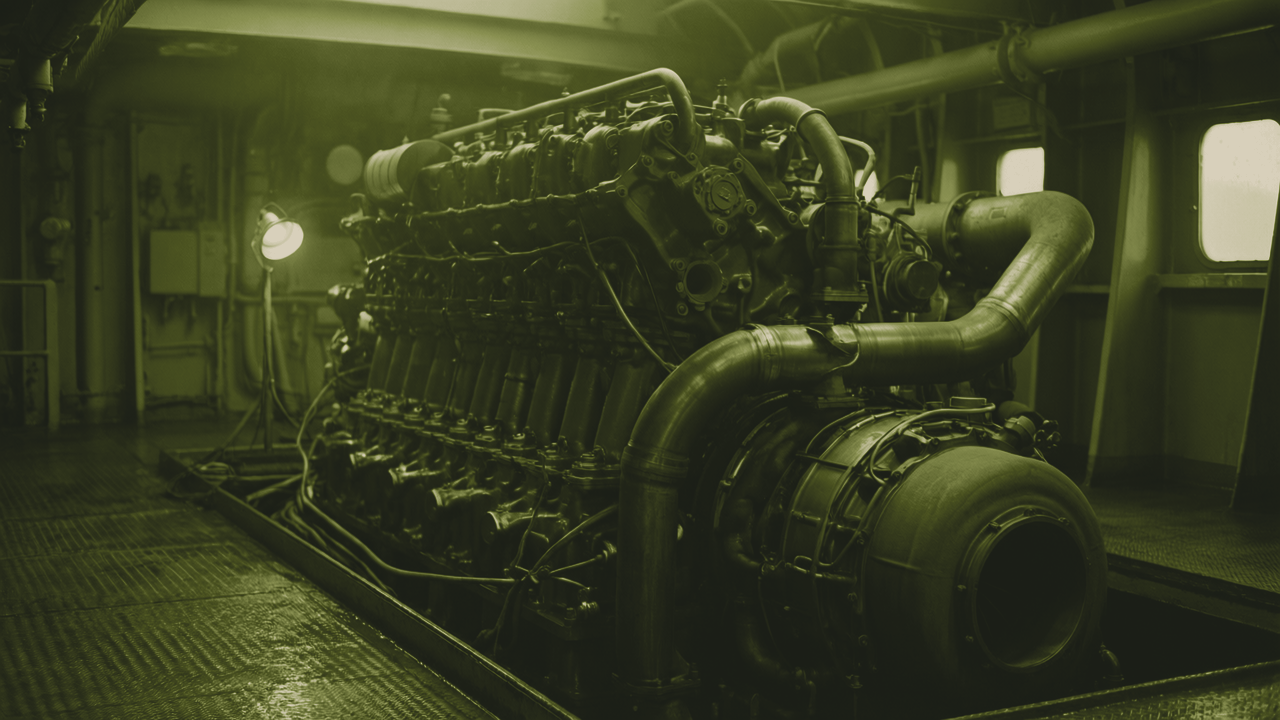
Rolls-Royce won US Navy certification for two mtu engine families in autonomous vessels, clearing the unglamorous gate that decides how long a crewless warship can actually stay out.
The US Navy has certified Rolls-Royce mtu Series 4000 and Series 2000 marine engines for use aboard autonomous naval vessels, the company announced. The Series 4000 cleared certification for autonomous applications up to 4,300 kW of propulsion and 3,000 kWe of generation after passing two 720-hour durability tests, UK Defence Journal noted. The Series 2000 was certified on component testing plus thousands of hours of field operation, covering propulsion to 1,939 kW in V10, V12 and V16 builds.
Frequently Asked Questions
What exactly did the US Navy certify?
Rolls-Royce mtu Series 4000 and Series 2000 marine engines for use aboard autonomous naval vessels. The Series 4000 covers up to 4,300 kW of propulsion and 3,000 kWe of generation; the Series 2000 covers propulsion up to 1,939 kW.
What does the 30-day figure mean?
National Defense Authorization Act requirements for unmanned systems oblige a propulsion package to support a 30-day deployment at sea with no human intervention and no preventive or corrective maintenance to main propulsion, fuel or oil systems.
How were the engines tested?
The Series 4000 passed two 720-hour durability tests. The Series 2000 was certified on the results of engine component testing plus thousands of hours of field operation, per Rolls-Royce.
Are these engines already in Navy service?
Yes. Sea Hunter is powered by two mtu 12V 2000 engines and has accumulated tens of thousands of operational hours since its 2016 christening. Sea Hunter and Seahawk deployed earlier this year with the Navy's first unmanned surface vessel division.
Is propulsion the last hurdle for autonomous warships?
No. Rolls-Royce said Navy requirements also emphasize control systems, cybersecurity and safety-critical functions before unmanned vessels can be routinely deployed.
What else is the Navy doing on unmanned endurance?
The Naval Air Warfare Center Weapons Division demonstrated at-sea refueling of an unmanned surface vessel using a Robotic Towed Connector, transferring roughly 400 gallons across about 100 connection cycles.
AI-generated summary, reviewed by an editor. More on our AI guidelines.
Below this point
5 more sections.
The bar is set by statute. National Defense Authorization Act requirements for unmanned systems oblige an engine to run through operational and reliability testing with no human intervention and no preventive or corrective maintenance to main propulsion, fuel or oil systems. Clearing it qualifies a propulsion package for a 30-day deployment at sea, unmanned, untouched.
That number sets the sortie. Autonomy software decides where a hull goes; the engine decides how long it stays before something breaks that no one is aboard to fix. Station-keeping and the size of the operating box fall out of the same 30 days.
The Navy already has the receipts on this hardware. Sea Hunter runs on two mtu 12V 2000 engines and has logged tens of thousands of operational hours since its 2016 christening, per Rolls-Royce. Sea Hunter and Seahawk deployed earlier this year with the Navy's first division of unmanned surface vessels.
Propulsion is one gate of several. Navy requirements also weigh control systems, cybersecurity and safety-critical functions before autonomous vessels deploy routinely, Rolls-Royce said.
Endurance work is arriving on the fuel side too. The Navy's NAWCWD demonstrated at-sea USV refueling with a Robotic Towed Connector, moving about 400 gallons across roughly 100 connection cycles. A certified 30-day engine plus refueling without a crewed port call is how a drone boat stops being a day-trip asset.

Marcus Schuler
Marcus Schuler edits BattlePolicy, a daily defense-technology brief connecting the companies and capabilities behind modern war to the contest among Europe, the US, Russia, and China.