USAPro
KF-21 Boramae
South Korea's indigenous 4.5-generation twin-engine fighter—a semi-stealth, AESA-equipped multirole platform designed to replace legacy ROKAF jets and compete for export orders among nations that cannot obtain the F-35.
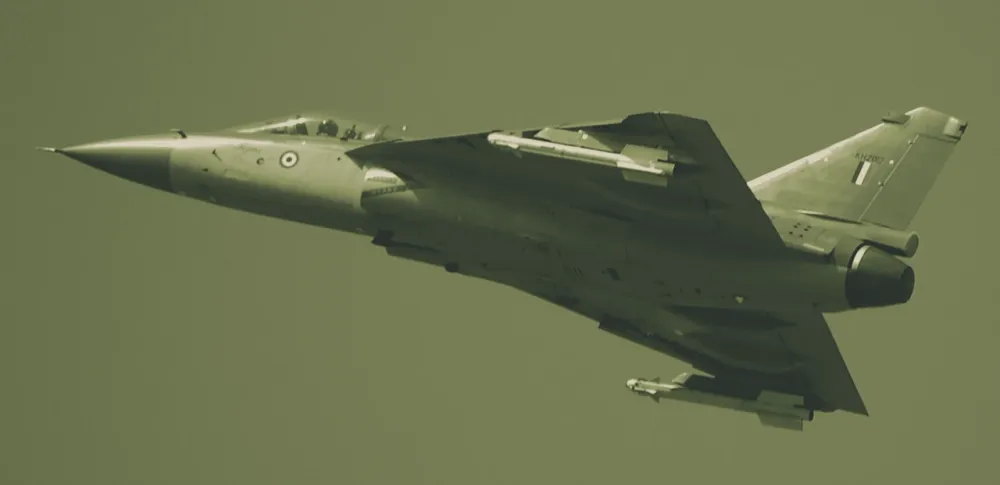
India's home-built fighter — four decades in the making — the Tejas is a light, agile single-engine delta jet that finally gave India an indigenous combat aircraft. The Mk1A adds AESA radar and beyond-visual-range missiles; the bigger Mk2 is coming. The flagship of India's defence self-reliance.
South Korea's indigenous 4.5-generation twin-engine fighter—a semi-stealth, AESA-equipped multirole platform designed to replace legacy ROKAF jets and compete for export orders among nations that cannot obtain the F-35.
Israel's uniquely modified F-35A Adir — the world's most combat-tested fifth-generation fighter, spearheading long-range strikes against Iran with sovereign C4/EW capabilities and zero airframe losses.
France's delta-wing, fly-by-wire multirole fighter — 601 built, flown by nine air forces, and now intercepting Russian cruise missiles and pounding frontline targets over Ukraine.
China's second fifth-generation stealth fighter — the land-based J-35A "Cloud Dragon" — complements the J-20, brings cross-service carrier capability, and marks Beijing's push to break the Western monopoly on fifth-generation airpower exports.
The Su-30SM — Russia’s twin-seat, thrust-vectoring multirole Flanker — combines long-range strike and air superiority with a dedicated weapons-system officer, and forms the backbone of Russian and several allied air forces.
The budget fighter shaking up the market — the China-Pakistan JF-17 Thunder gives developing air forces a cheap multirole jet, and the Block 3 adds an AESA radar and long-range PL-15 missiles. Pakistan's frontline fighter, widely exported and combat-used against India in 2025.
China's homegrown heavy multirole strike fighter — a twin-seat, twin-engine Flanker derivative packing an AESA radar and very-long-range air-to-air missiles, and the PLAAF's primary deep-strike and standoff platform.
China's workhorse 4.5-generation single-engine multirole fighter — a delta-canard design with an AESA radar, active in PLAAF and Pakistani service, and credited with the type's first air-to-air kill in 2025.
Sweden's homegrown lightweight multirole fighter—a single-engine, canard-delta design built for dispersal operations and low operating costs, fielded in classic C/D and next-generation E/F variants.
France's omnirole 4.5-generation twin-engine fighter — operational from land and carrier decks, nuclear-capable, and a mainstay of French and several export air forces.
The US Navy's carrier-borne multirole workhorse — a twin-engine, supersonic strike fighter that succeeded the F-14 Tomcat and A-6 Intruder, with an extensive combat record and ongoing Block III upgrades.
The F-15EX Eagle II is a 4.5-generation heavyweight twin-engine fighter derived from the Strike Eagle / QA, built to haul extreme payloads of air-to-air and standoff munitions, and to serve as the USAF’s new homeland-defense and high-end missile truck.
The world's most widely operated fourth-generation multirole fighter, continuously upgraded for over four decades, now fielded in its latest Block 70/72 "Viper" configuration with active electronically scanned array radar and network-enabled avionics.
The backbone of the U.S. surface fleet — a 9,500-ton multirole Aegis destroyer with 96 vertical launch cells, evolving from the SPY-1 to the SPY-6 radar, and the platform that fought the heaviest air-defense battles since World War II in the Red Sea.
Pan-European 4.5-generation canard-delta multirole fighter — the air superiority and strike backbone of four NATO air forces, in service since 2003.
The U.S. Air Force's fifth-generation multirole stealth fighter — a single-engine CTOL aircraft with advanced sensor fusion, internal weapons carriage, and a global user base exceeding 1,300 airframes across 19+ nations.