Dassault Rafale
France's omnirole 4.5-generation twin-engine fighter — operational from land and carrier decks, nuclear-capable, and a mainstay of French and several export air forces.
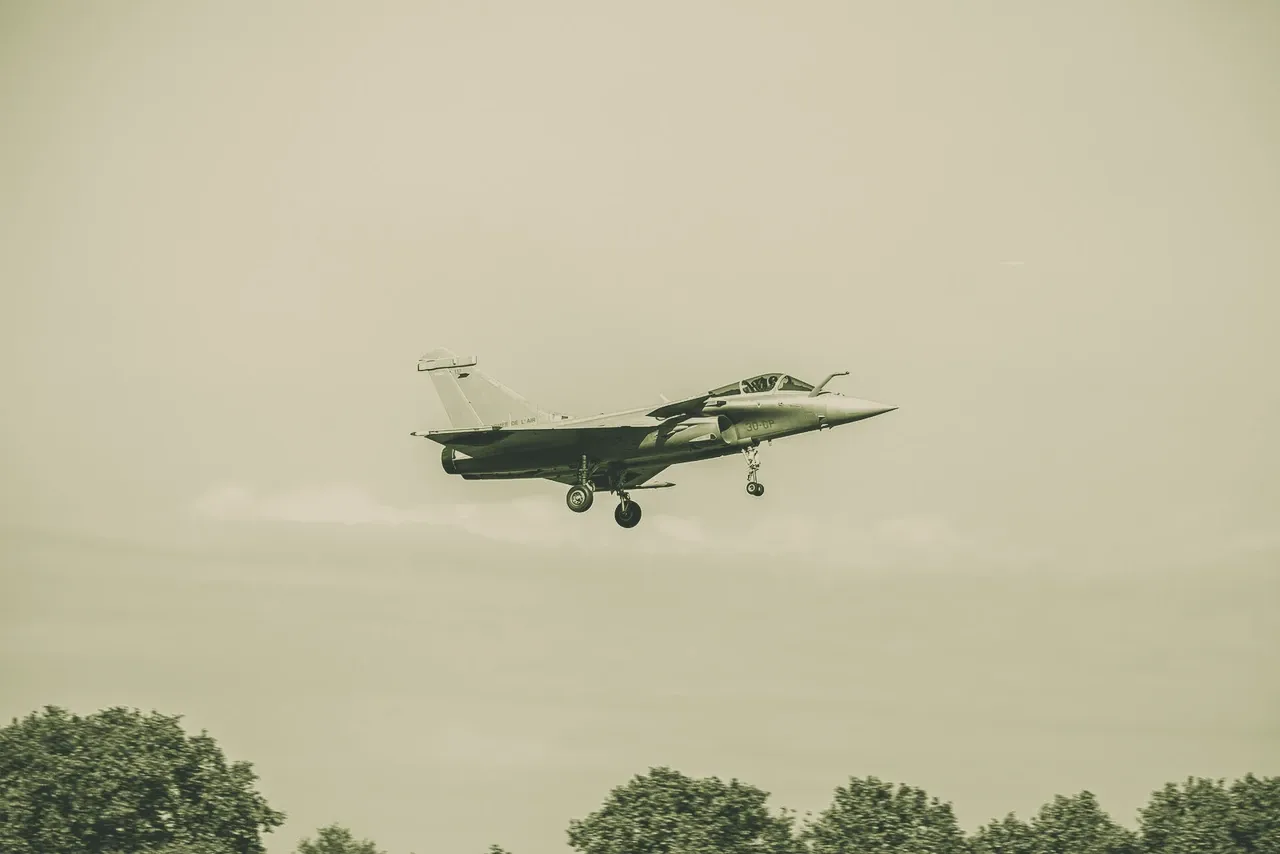
France's omnirole 4.5-generation twin-engine canard-delta fighter — operational from land bases and aircraft carriers, nuclear-capable, and a mainstay of both French and several export air forces.
Overview
The Dassault Rafale is a French twin-engine, canard-delta multirole fighter designed to perform air-superiority, strike, deep interdiction, reconnaissance, anti-ship, and nuclear-strike missions from a single airframe — a concept Dassault calls “omnirole.” It equips both the French Air and Space Force and the French Navy, operating from land runways and the carrier Charles de Gaulle. The type has achieved significant export success with orders from India, Egypt, Qatar, the UAE, Indonesia, Greece, Croatia, and Serbia, making it one of Europe’s most widely adopted current-generation fighters.
Development
The Rafale programme originated in the early 1980s as a replacement for a wide range of French combat aircraft. A technology demonstrator, the Rafale A, first flew on 4 July 1986, powered by two General Electric F404 engines, validating the basic canard-delta layout Wikipedia. The production-standard Rafale C (single-seat) prototype followed in May 1991. The navalised Rafale M made its first flight in December 1991, and the two-seat Rafale B flew in April 1993. The French Navy declared the Rafale M operational in 2004, and the French Air Force received its first squadron in 2006 Dassault Aviation.
Design & capabilities
The Rafale is built around a close-coupled canard delta planform, extensive use of composites and radar-absorbent materials, and a fly-by-wire digital flight-control system. Its twin Safran M88-2 afterburning turbofans provide a combined wet thrust of ~150 kN and enable supercruise — sustained supersonic flight without afterburners — at Mach 1.4 when carrying six air-to-air missiles Wikipedia. The primary sensor is the Thales RBE2-AA active electronically scanned array (AESA) radar, complemented by the OSF (Optronique Secteur Frontal) infrared search and track system and the SPECTRA integrated electronic-warfare suite Dassault Aviation. With 14 hardpoints (13 on the naval M variant) and a maximum external payload of 9,500 kg, the Rafale can carry MBDA Meteor and MICA air-to-air missiles, SCALP-EG/Storm Shadow cruise missiles, AASM Hammer precision-guided bombs, the AM39 Exocet anti-ship missile, and the ASMP-A nuclear stand-off missile, which makes it the airborne component of France’s strategic deterrent.
Variants
- Rafale B: Two-seat land-based variant for the French Air and Space Force.
- Rafale C: Single-seat land-based variant.
- Rafale M: Single-seat carrier-capable variant with strengthened landing gear, arrester hook, and tail-hook, operated by the French Navy.
- F-series standards: The Rafale has evolved through progressive software and hardware blocks — F1, F2, F3, and the current F4 standard — which introduce new weapons (Meteor, Talios targeting pod, etc.), improved network-centric capabilities, and expanded multi-mission flexibility.
Combat record / operational use
The Rafale saw its first combat deployments in 2007 over Afghanistan, followed by the opening strikes of the 2011 NATO campaign in Libya, where French Navy Rafale Ms struck ground targets within hours of the UN resolution The Aviationist. The type later participated in Operations Serval and Barkhane in the Sahel, and it flew extensive anti-ISIS sorties over Iraq and Syria, culminating in the April 2018 SCALP-EG strike on Syrian chemical-weapons facilities. In May 2025, during the India–Pakistan border clash, Indian Air Force Rafales saw air-to-air combat against Pakistani J-10CE fighters. Reports citing Pakistani claims, and subsequently covered by international media, assert that at least one Indian Rafale was shot down by a PL-15E beyond-visual-range missile launched from a Pakistani J-10CE Aerospace Global News. India acknowledged aircraft losses in the engagement but has not publicly confirmed the type.
Advantages
- True omnirole capability: a single airframe performs air defence, deep strike, reconnaissance, anti-ship, and nuclear-deterrence missions.
- Carrier compatibility and compact footprint allow operation from the French Navy’s Charles de Gaulle.
- Integrated AESA radar, OSF IRST, and SPECTRA EW suite provide strong sensor fusion and survivability.
- Supercruise ability (Mach 1.4 with a practical air-to-air load) reduces fuel consumption and infra-red signature during intercepts.
- Meteor-armed Rafales possess a very long BVR engagement envelope with ramjet-powered high-energy kinematics.
- Export success reflects proven combat performance and independence from US ITAR-related restrictions.
Drawbacks / limitations
- High unit cost (~€80-100M flyaway) and even higher package-deal figures limit fleet size for all but the largest buyers.
- The M88-2 engines, while sufficient, deliver less thrust than the powerplants in the Eurofighter Typhoon or F-35, which can affect kinematic performance in high-drag configurations.
- Dependence on French-specific weapons integration can slow adoption of new non-French ordnance.
- The Rafale’s low-observable features are not on a par with true 5th-generation stealth designs, leaving it more detectable by advanced air-defence radars.
Counterparts
- Su-57 Felon (Russia)
- J-20 Mighty Dragon (China)
Other contemporary rivals include the Eurofighter Typhoon, the F/A-18E/F Super Hornet, and the F-35 Lightning II.
Outlook
The Rafale remains in serial production with a deep export backlog, including 80 aircraft for the UAE, 42 for Indonesia, and follow-on orders from existing customers. The F4 standard and planned upgrades will continue to improve the aircraft’s sensor, networking, and weapon capabilities. While the engagement over the subcontinent in 2025 brought the type into air-to-air combat against a newer Chinese-origin stealth-like opponent, the lessons learned are likely to shape both Rafale upgrade paths and operator tactics. The Rafale’s position as a capable, independent, and combat-proven 4.5-generation fighter appears secure well into the next decade.
Key specifications
| Spec | Value |
|---|---|
| Crew | 1 (C/M) / 2 (B) |
| Length / wingspan | 15.27–15.30 m / 10.90 m |
| Max speed | Mach 1.8 (~1,912 km/h); supercruise Mach 1.4 with 6 missiles |
| Service ceiling | ~15,240 m |
| Combat radius / range | Combat radius ~1,850 km (penetration/strike with tanks); ferry ~3,700 km |
| Payload | ~9,500 kg |
| Hardpoints | 14 (Air Force) / 13 (Navy) |
| Radar / sensors | Thales RBE2-AA AESA radar; OSF IRST; SPECTRA integrated EW suite |
| Powerplant | 2 × Safran M88-2 afterburning turbofans, ~75 kN each (wet) |
| Armament | 30 mm Nexter 30M791 cannon; MBDA Meteor, MICA IR/EM, Magic II AAMs; SCALP-EG/Storm Shadow cruise missile; AASM Hammer guided bombs; AM39 Exocet anti-ship missile; ASMP-A nuclear stand-off missile |
Sources
- Dassault Aviation — Rafale specifications and performance data. https://www.dassault-aviation.com/en/defense/rafale/specifications-and-performance-data/
- Dassault Aviation — Operational aircraft: Rafale. https://www.dassault-aviation.com/en/defense/customer-support/operational-aircraft/rafale/
- Wikipedia — Dassault Rafale. https://en.wikipedia.org/wiki/Dassault_Rafale
- The Aviationist — Dassault Rafale (specs & combat record). https://theaviationist.com/2024/11/28/dassault-rafale/
- Aerospace Global News — India Dassault Rafale shootdown: Pakistani missile underestimated. https://aerospaceglobalnews.com/news/india-dassault-rafale-shootdown-pakistan-missile/