EuropePro
MICA
MICA is MBDA France's short-to-medium-range air-to-air missile family for Rafale and Mirage 2000, combining radar and infrared seeker versions with a surface-launched derivative.
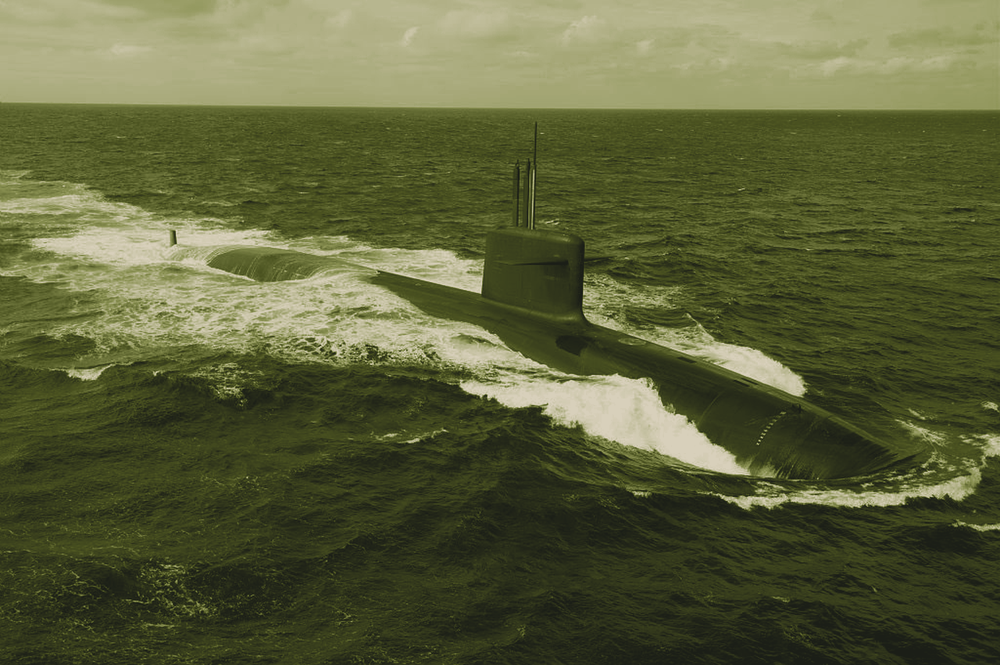
M51.3 is the third version of France's submarine-launched strategic ballistic missile, combining the TNO-2 nuclear warhead with improvements in range, accuracy and penetration.
MICA is MBDA France's short-to-medium-range air-to-air missile family for Rafale and Mirage 2000, combining radar and infrared seeker versions with a surface-launched derivative.
The Saab 340 ASC 890 combines the PS-890 Erieye radar with onboard combat-control stations. Sweden donated its two aircraft to Ukraine, which confirmed combat operations beginning in March 2026.
Freya is a Ukrainian-led European ballistic-missile defence project combining Fire Point's FP-7.x interceptor with European sensors and command systems. It remains in development, without a demonstrated ballistic interception.
Stone Cloak is a British drone-mounted electronic-warfare device, described by the UK government as a jammer, supplied to Ukraine to hinder Russian air-defence tracking and targeting, with intellectual property shared for Ukrainian production.
Sky Fortress is a Ukrainian passive acoustic surveillance network that detects low-flying drones and missiles and supplies tracks to air-defense units.
Harmattan AI says IRIFI is designed to fly 2,000 kilometers without satellite navigation and finish a mission with no human control; Morocco signed on before payload, speed or price were disclosed.
Dealroom forecasts a record $10.5B for European defence startups in 2026, but mega-rounds are over 85% of it and US investors supply 47%. Russia's jet drones set the test.
Berlin is paying Quantum Systems to scale interceptor production inside Ukraine before any interceptor drone has shown it can reliably kill Russia's jet-powered Gerans.
DEUTZ built the first GEREON ground robots for ARX Robotics at its Ulm plant, 12 weeks after the pair announced production. The batch is bound for Ukraine's Defense Forces. Neither firm disclosed volume or contract value.
The G7 will release up to 100 million barrels as Ukraine's drones keep hitting Russian refineries. Putin put the campaign's cost at 1% of GDP and said a strike pause would not return Russian diesel while sanctions stand.
By owning the AI architecture itself, France aims to swap suppliers and push new mission software to its fighters and combat drones as fast as threats change.
Ukraine's first announced FP-7 combat launch gives Kyiv a domestic ballistic strike weapon. Fire Point's faster FP-7.x interceptor faces a harder test, and both depend on production Ukraine has not yet shown.
The Trump administration's hand-picked NATO working group leaves out Europe's two nuclear powers and the three allies that spend the largest share of GDP on defense.
Aeon says it will license-build Destinus' Hornet Block 2 interceptor in Texas from 2027, and the pair's joint proposal is a Topic 1 finalist in the Army's xTech|Apex Intercept competition.
Helsing is pitching software-flown combat jets to a Europe without a joint fighter program, but its evidence so far is a simulator result, two prototypes under construction and no announced order.
Occam's software keeps mass-produced FPVs tracking a target after jamming cuts the operator link, and the new money is meant to carry it from 12 Ukrainian units into European and NATO markets.
Israeli loitering-munition maker UVision will integrate Estonian startup Lendurai's Neocortex autonomy stack for a NATO customer, aimed at strikes that hold up when GPS and the datalink fail.
STARK unveiled its Vanta-12 drone boat with four MBDA Sea Venom missiles, which MBDA is adapting for surface launch. Integration is early, and no navy has ordered the boat.
Fire Point’s FP-7 tests and delayed Danish propellant plant show how technology access, procurement and factory output condition Kyiv’s negotiating leverage.
Origin Robotics and Anduril will test the BLAZE drone interceptor on Anduril's Lattice software in Latvia. The work is self-funded, and no date is set. Latvia already buys BLAZE under a multi-year framework.
The likely PAC-2 route avoids PAC-3's seeker constraint, but offers weaker ballistic defense from a European production base Germany hosts and Poland wants.
France and Italy deny receiving the warning. Russia has already demonstrated the aircraft, ship launch and disruption model that make the scenario credible.
The first competition under the UK-Ukraine AI Partnership gives British developers a scarce training asset while the underlying data stays inside Ukraine's secure perimeter.
Russian drones knocked out Kyiv data centers serving 100,000 households, and the same night a fire disabled a Starlink ground station in Poland that Warsaw says was set to cut the Ukrainian army's internet.
Fire Point can now damage Moscow's oil economy, but Russia brings more weapons, industrial capacity and societal slack to a winter campaign that is already spilling into NATO airspace.
The Finnish counter-drone maker is asking investors to price its market as durable European defense spending, not a war trade, at up to €1.3 billion.
Saab and Diehl's next RBS15 missile is designed for air, ship and coastal launch, but Mk4 service must be separated from the older fielded variants.
MBDA's compact UK air-launched cruise missile is in early manufacture but has not yet entered British operational service.
Finland has signed and a US framework is ready. The Iran war showed why Ukrainian interceptors have to travel with Ukrainian components, software and operators.
The $2.68 billion proposal lists S-300 Clone and GAM-67 missiles, but the State Department gives no quantities or delivery schedule.
The Portuguese-founded drone maker is now valued at $6.4 billion, roughly five times its 2025 mark, and plans to spend part of the round buying rivals.
Swarmer Platform is Ukrainian-developed software for coordinating groups of drones through onboard autonomy and a ground control interface.
The AUKUS trial moved undersea autonomy into weapons carriage, but it proved the interfaces rather than an operational strike capability.
Keen Venture Partners says personal liability inside BAAINBw, an unpublished requirements matrix and a 1,000-unit delivery bar still steer German defense contracts toward established suppliers.
ARX Robotics gains a British Army platform and a Welsh production route through General Dynamics Land Systems-UK. The concept is uncosted and carries no Ministry of Defence funding.
CORVUS replaces Watchkeeper's 54-aircraft buy with up to 24 AR5s, a contract built for service-life updates and a Swindon line. Another 1,025 small drones hedge the question of whether the larger aircraft can survive.
NATO's first drone shootdown over Lithuania came from Baltic Air Policing fighters, five months after Lithuania bought 48 interceptors priced near $15,000 a shot for exactly this job.
Mistral is a French infrared-guided very-short-range air-defense missile family used from tripod, vehicle, naval and helicopter launchers against aircraft, helicopters, drones and cruise missiles.
The Queen Elizabeth class comprises the Royal Navy's two conventionally powered STOVL aircraft carriers, built around the F-35B Lightning and intended to sustain UK carrier strike through alternating ship availability.
A compact US-German ship-defense missile that combines passive radio-frequency and infrared homing to intercept anti-ship missiles and other close-range threats.
The Carl-Gustaf M4 is Saab's fourth-generation 84 mm reusable recoilless rifle, combining a lighter launcher with a broad family of anti-armour, anti-structure, anti-personnel, smoke and illumination ammunition.
The Exocet is a French family of high-subsonic, sea-skimming anti-ship missiles fielded in ship-, air-, submarine- and coast-launched forms, with the latest MM40 Block 3c adding land-attack capability and a new electronic-warfare-resilient seeker.
Europe's four-engine military transport aircraft, combining strategic payload-range performance with tactical access to short or unprepared runways and optional tanker, aeromedical and special-mission roles.
Paveway is a US-origin family of guidance kits that converts general-purpose and penetrator bombs into laser-guided or dual-mode laser/GPS precision weapons.
The AGM-65 Maverick is a modular US air-to-surface missile family combining television, imaging-infrared or laser guidance with anti-armour and penetrating warheads.
The PT-91 Twardy is a Polish main battle tank derived from the T-72M1, combining a 125 mm autoloading gun with ERAWA reactive armour, Polish fire control and an uprated diesel engine.
The UGM-133A Trident II D5 is the submarine-launched ballistic missile at the core of the United States and United Kingdom sea-based nuclear deterrents.
GCAP, informally known as Tempest, is the UK-Italian-Japanese program developing a sixth-generation stealth fighter to replace the Typhoon and Mitsubishi F-2 from 2035.
FCAS / SCAF was the Franco-German-Spanish sixth-generation air-combat project built around a crewed fighter, remote carriers and a combat cloud; its joint fighter collapsed in 2026, while parts of the wider system continue.
The C-130J Super Hercules is the current-production version of the long-running Hercules family, combining four turboprop engines, short-field tactical airlift performance and a global support base.
The Boeing P-8 Poseidon is a 737-derived maritime patrol aircraft combining anti-submarine warfare, anti-surface strike and long-range intelligence collection for the US Navy and allied fleets.
Starstreak is a British very-short-range air-defense missile that accelerates beyond Mach 3 and releases three laser beam-riding darts against aircraft, helicopters and drones.
Arkeus and Tanglewood Group will build and sustain the Warden hyperspectral sensor in Malvern, England. The Melbourne startup already sells to the Australian Army and the US Department of War, and flew Warden in Europe last November. It still has no British customer.
Anthem pairs a heavy payload with commercial parts, four-deep supplier lines and three factories, a manufacturing answer to thin Western missile stocks.
Ukraine's Bars strike drone is now more than 74% domestically made, and the one part it still buys abroad is the turbojet. A Ukrainian engine has passed final tests. The engine, not the airframe, is what caps output on both sides of the drone war.
Facing a $27 billion defence funding shortfall, Ukraine has stopped asking Europe only for weapons and started asking for production lines. The deals moving Ukrainian designs into European plants are inverting who supplies whom.
The conversion would shift Volkswagen's smallest German plant from cabriolets to launchers, military vehicles and other air-defense hardware.
Kyiv wants several billion euros of the EU's 90 billion euro support loan spent on US-built PAC-3 interceptors, a purchase the loan's own origin rule was written to discourage.
European financing and Ukrainian arms production constrain Washington’s ability to impose a bargain, while US weapons, intelligence and commercial services preserve US leverage.
The EU has built funds, loans and readiness plans, but not a system that turns shared priorities into national contracts. Ukraine’s request for US-made Patriot interceptors exposes the cost.
Germany's planned next-generation air-defence frigate, designed to replace the Sachsen class and provide a mobile sea-based layer for NATO air and ballistic-missile defence.
Saab's A3-001 is a proposed stealthy, supersonic collaborative combat aircraft intended to accompany the Gripen E/F, with a first demonstrator flight planned for 2027.
Tiberius Invictus is an experimental ramjet-powered precision-strike family intended to deliver missile-like range from existing artillery and other launch domains, with the Invictus-200 claimed to reach 200 km at up to Mach 3.
Brimstone is a British precision attack missile with radar and laser guidance, designed for moving targets and adapted by Ukraine for ground launch against Russian armour.
The XM30 is the US Army's competition for a hybrid-electric, heavily armed successor to the M2 Bradley, contested by American Rheinmetall's Lynx XM30 and General Dynamics Land Systems' Wolf.
The MAC OWL Sova is a Ukrainian mine-resistant armored vehicle combining STANAG Level 4 mine protection with an integrated ten-module electronic-warfare dome intended to defeat FPV drones.
The FNSS U-MAV, designated İ-ZAHA in Turkish, is an uncrewed amphibious vehicle intended to lead high-risk landing waves alongside Türkiye's crewed Marine Assault Vehicles.
Thales RapidRanger is a lightweight, vehicle-mounted short-range air-defense system combining autonomous surveillance with LMM/Martlet or Starstreak missiles.
Phalanx CIWS is a self-contained, radar-guided 20 mm naval gun system designed to provide warships with a final defensive layer against missiles, aircraft, drones and surface threats.
EU HYDEF is a European technology-maturation programme developing an endo-atmospheric interceptor against hypersonic threats, led by Spain's SMS Defensa and managed by OCCAR.
The RIM-162 Evolved Sea Sparrow Missile is a medium-range naval air-defence weapon whose four-round Mk 41 cell packing gives Western warships substantial self-defence magazine depth.
CAMM is a British modular surface-to-air missile family fielded at sea as Sea Ceptor and on land through Sky Sabre, combining active guidance with a soft vertical launch system.
Ukraine's 59th Brigade says roughly four in five HX-2 launches end in successful strikes. Its complaints concern propellers, catapults and warhead size, which is an industrial problem for a company built around software.
Helsing's first combat drone — a plywood-framed, AI-guided loitering munition co-produced in Ukraine. It launched badly enough that Kyiv stopped ordering, then improved enough to hit better than half its targets around Pokrovsk.
Britain took ASRAAM missiles awaiting disposal, bolted them to launch rails cut from retired Tornado, Hawk and Jaguar jets, and welded the result to a Supacat truck. The improvisation has claimed over 400 aerial targets in Ukraine.
A British air-defence system inside a shipping container that fires Ukraine's own Soviet-era R-73 air-to-air missiles from salvaged fighter launch rails — built because Ukraine had missiles it could not launch and targets it could not reach.
Quantum Systems' co-CEO says In-Q-Tel's Washington connections, not its capital, built the $8 billion German drone maker's first US government business.
Denmark removed more than 20 legislative barriers so Fire Point could cast solid rocket propellant at Vojens, beyond the strikes hunting its Ukrainian plants. The site now carries a 150 million euro budget, nearly triple the original, and slips to the end of 2027.
Greece and Sweden committed €7.3 billion to new air defense on Monday, one day before EU ministers meet to ask Athens for the Patriot interceptors it already owns.
Greece is buying Israel's complete layered air-defense architecture, marking the first full-array export in Israel's history.
Tencore and Insta signed a Joint Statement of Intent in Kyiv on Aug. 23 to build TerMIT 2.0 ground robots in Finland. The first target is 320 units for Ukraine's Defense Forces. No contract value, no sites and no schedule have been named.
Three British startups have pilots under the new UK-Ukraine AI defense pact, but the first application will protect a UK military site rather than strike targets.
The attempted attack on the airfield that loads ammunition onto Ukraine's Antonov freighters was larger than one drone with a broken detonator.
The delay pushes back Germany's mobile counter-drone defense while other European buyers commit to the same Rheinmetall system.
MARLIN shifts a dangerous shallow-water mission from crewed warships to autonomy software carried by a modular unmanned hull.
The Nigerian drone maker raised $52 million on a pitch about defense sovereignty, then aimed its expansion at Western capital and procurement institutions.
Heaviside's $60 million Series B came with a warhead-supply agreement from Nammo, the Norwegian maker with 27 production sites. The startup still has no named program and no delivery date.
Japan's Ground Self-Defense Force is field-testing a German loitering munition already flying in Ukraine, and Helsing reached the procurement system through a retail conglomerate rather than a defense prime.
Callen-Lenz has moved from a rapid UK procurement award to supplying a mass-produced deep-strike drone for the war in Ukraine.
Ukrainian operators dismantled a US armored brigade in a German exercise. The Army's FY2027 answer shifts drone selection toward soldiers and tests whether industry can keep pace.
The alliance wants machines to compress the sensor-to-shooter timeline while humans retain control over lethal engagements.
Rafael's laser remains short of operational service while Elbit carries a record $32 billion backlog and Greece advances a $4 billion missile-defense package.
A Vilnius startup measured Moscow's crisis-communication clock for NATO and turned counter-disinformation into a tempo problem the Alliance cannot yet meet. Europe is buying that sensing layer at seed-round prices.
Investors bet $3.4 billion on Monday that cheap interceptor missiles win the counter-drone war. The same week, the Pentagon capped what it will pay for them and funded two rival ways of killing drones.
The transmissions exposed a component-level gap in the supply-chain label Western governments use to screen military electronics.
Ukraine is containing Russia's cheap drones but failing against ballistic missiles, so Kyiv is attacking the ground network that generates strike mass while it races to build a domestic interceptor.
An explosive-laden drone came within metres of Ukraine's heavy airlift fleet at Leipzig/Halle Airport, exposing a counter-drone gap over a NATO logistics hub.
Fire Point has closed agreements with 13 European partners, but national licensing rules now threaten a mid-2027 interceptor that Ukraine needs before Patriot supplies recover.
Tokyo is prioritizing speed and U.S. interoperability while European governments pay a sovereignty premium for domestic command software.