The Wire · live GRID-REF 37°47′N 122°25′W
DISPATCH 03/26 · 4 Sep 2026
BattlePolicy
Startup to front line. Strategy to consequence.
Lexicon · Ukraine

Raven

Britain took ASRAAM missiles awaiting disposal, bolted them to launch rails cut from retired Tornado, Hawk and Jaguar jets, and welded the result to a Supacat truck. The improvisation has claimed over 400 aerial targets in Ukraine.
Raven
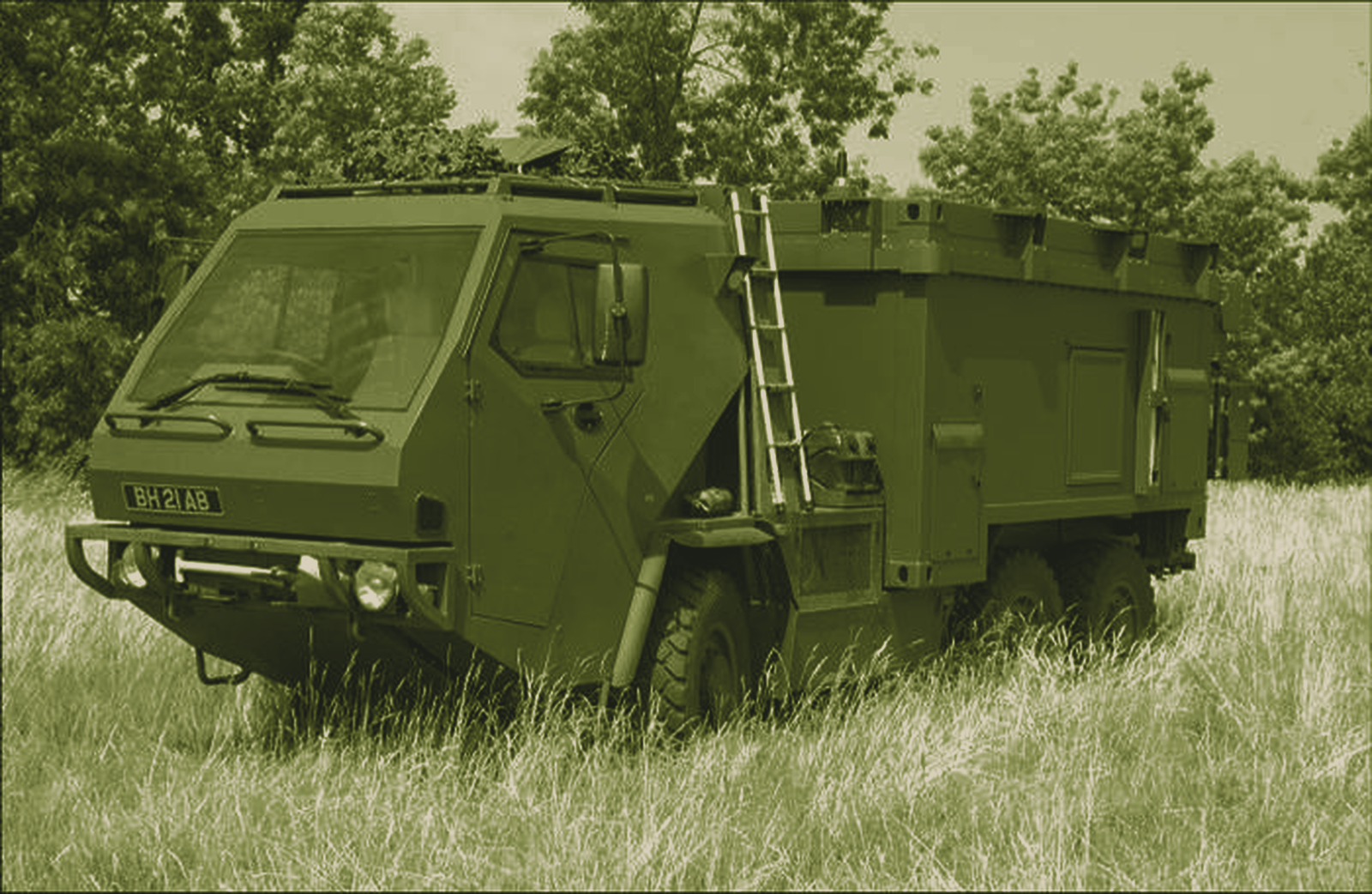
FIG.01 · Ukraine Image - A Supacat HMT 600, the chassis of the Raven air-defence system. Photo by http://supacat.com/products/hmt/hmt600/, CC BY-SA 4.0, via Wikimedia Commons.
Britain took AIM-132 ASRAAM missiles that were sitting in storage awaiting disposal, bolted them to launch rails cut from retired Tornado, Hawk and Jaguar aircraft, and welded the assembly to a Supacat truck. The improvisation has been credited with more than 400 aerial targets over Ukraine.

Overview

Raven is a mobile short-range air-defence system developed by the UK Ministry of Defence with MBDA UK and the RAF's Air and Space Warfare Centre, built around the AIM-132 ASRAAM air-to-air missile adapted for ground launch and mounted on a Supacat HMT 600 6×6 high-mobility vehicle. It was created in 2022 as an urgent-requirement answer to Ukraine's air-defence shortfall, using two resources Britain had in surplus: ASRAAM rounds approaching disposal, and launch rails from long-retired combat aircraft.

The system has become the most operationally successful of the improvised air-defence designs sent to Ukraine — British reporting calls the category "FrankenSAM" — with 13 systems delivered and a claimed record of over 400 aerial targets destroyed by mid-2026 at a reported success rate around 70–75%. It is now in its fifth iteration in four years of service, and MBDA has begun turning the lessons into a deliberate low-cost SAM product line.

Development

The origin is a disposal problem turned into a capability. In 2022 Britain held stocks of AIM-132 ASRAAM missiles nearing the end of their service life, and separately held launch rails from Tornado, Hawk and Jaguar aircraft long since withdrawn. The engineering insight — the same one behind Gravehawk — was that reusing the aircraft's original launch rail preserves the missile's electrical and mechanical interface, so the integration problem shrinks from designing a new launcher to mounting an existing one on a truck.

The UK MoD developed the system with MBDA UK, which builds ASRAAM, and the RAF's Air and Space Warfare Centre, which supplied the operational analysis. The chassis is the Supacat HMT 600, a six-wheel high-mobility vehicle already in British service. First deliveries reached Ukraine in 2022, and the system has been iterated continuously since; Army Technology described it in mid-2026 as being in its fifth iteration in just four years of service, an unusually fast refresh cycle driven by direct feedback from Ukrainian crews.

Deliveries were completed in stages. By January 2026 the UK confirmed via written parliamentary answer that all 13 Raven systems had been provided, alongside two Gravehawk prototypes. In 2026 the UK additionally pledged 350 more ASRAAM missiles to sustain the systems already in the field — the constraint on an improvised SAM being ammunition rather than launchers.

Design & capabilities

Raven is a straightforward integration executed well.

  • Chassis: Supacat HMT 600 6×6, powered by a Cummins 6.7-litre six-cylinder diesel rated at 185 hp with an Allison 2500 five-speed automatic transmission, 202-litre fuel capacity, roughly 800 km road range and 120 km/h top speed. The vehicle's cross-country mobility is what allows shoot-and-scoot displacement away from a firing position.
  • Armament: two AIM-132 ASRAAM rounds on the original Raven's fixed launch rail, salvaged from retired RAF aircraft. The rail can only be raised to firing position or stowed.
  • Missile: ASRAAM weighs 88 kg, is 2.9 m long and 166 mm in diameter, reaches Mach 3-plus, and carries roughly a 10 kg blast-fragmentation warhead with a laser proximity fuze.
  • Seeker: imaging infrared homing — passive, fire-and-forget, and emitting nothing for an anti-radiation weapon to home on.
  • Engagement range: approximately 15 km in the ground-launched role.
  • Sensors: published photographs indicate a Chess Dynamics Hawkeye electro-optical sensor system for detection, identification and tracking, giving the crew an organic passive targeting capability rather than reliance on an external radar picture.
  • Target set: drones, helicopters, aircraft and cruise missiles near the front line and over defended infrastructure.

The ASRAAM's speed is the system's distinguishing quality. At Mach 3-plus it engages targets that slower interceptors cannot reach, and its imaging infrared seeker retains lock against small, low-signature drone targets that challenge radar-guided systems.

Variants

  • Raven (baseline): Two SL-ASRAAM on a fixed rail aboard a Supacat HMT 600. The configuration delivered to Ukraine from 2022 and the basis of the 13-system fleet.
  • Raven 5: Revealed by Supacat in April 2026 and discussed at Farnborough in July 2026. It carries four SL-ASRAAM on a Moog Flexible Mission Platform trainable launcher in place of the older two-round fixed rail — doubling magazine depth and allowing the launcher to be slewed onto a bearing rather than requiring the whole vehicle to be oriented. Built on various Supacat HMT chassis versions.
  • MBDA CMI: Not a Raven variant, but the commercial successor concept — a lower-cost surface-to-air missile revealed at Farnborough 2026 as Raven's lessons move from improvisation into a deliberate product.

Combat record / operational use

Raven is the improvised air-defence success story of the war, and unusually for such systems its record is publicised in detail.

By mid-2026 Ukrainian sources credited Raven with over 400 aerial targets destroyed, with a reported success rate of roughly 70–75% — figures cited alongside a count of over 400 ASRAAM launches against Shahed-type targets. Ukraine's Air Command West credited a single Raven launcher with four Russian cruise missiles — three Kh-59 and one Kh-101 — and 24 strike and reconnaissance drones, a record that demonstrates the system engages genuine cruise-missile targets and not only slow drones.

Operationally, Raven's value is its mobility and passivity. It works near the front line and over defended infrastructure, moves between firing positions on a high-mobility chassis, and — because both its seeker and its Hawkeye sensor are passive — does not advertise itself to Russian anti-radiation targeting the way a radar-cued battery does. Ukrainian crews interviewed by British media have described it in the context of a broader mixed defence in which cheap interceptor drones, gun systems and missile launchers each cover a different band.

The system's limits show against the current threat. Two ready rounds and a 15 km reach are a poor match for 150-drone nights, and the jet Geran-4 and Geran-5 now making up half or more of some strike packages fly faster and higher than the profile Raven was optimised against — though ASRAAM's Mach 3-plus speed means the interceptor itself is not outclassed, only the sensor-to-shooter timeline.

Advantages

  • Proven kill record — over 400 aerial targets including confirmed Kh-59 and Kh-101 cruise-missile intercepts, at a reported 70–75% success rate.
  • Very fast interceptor — ASRAAM at Mach 3-plus engages targets slower SHORAD interceptors cannot catch.
  • Fully passive engagement — imaging infrared seeker plus electro-optical sensor means no emissions to detect or home on.
  • High mobility — a Supacat HMT 600 with 800 km range and 120 km/h road speed supports genuine shoot-and-scoot operation.
  • Built from surplus — missiles awaiting disposal and rails from retired aircraft, consuming almost no new production.
  • Fast iteration — five configurations in four years, with Raven 5 doubling the ready magazine on a trainable launcher.
  • Sustainment committed — the UK pledged 350 further ASRAAM in 2026, addressing the ammunition constraint directly.

Drawbacks / limitations

  • Two ready rounds — magazine depth is the fundamental limit against saturation attacks; Raven 5's four rounds mitigate but do not solve it.
  • Short range — about 15 km makes Raven a point-defence system, not an area-defence asset.
  • Finite missile stock — ASRAAM surplus is not unlimited, and every round fired in Ukraine is one not available to the RAF.
  • Infrared limits — passive IR homing degrades in cloud, fog and heavy countermeasure environments and offers no all-weather guarantee.
  • Small fleet — 13 systems cannot cover a country under nightly attack across multiple axes.
  • Optimised against an earlier threat — designed against subsonic drones and cruise missiles, it faces a harder engagement problem as jet Gerans raise speed and altitude.
  • Claimed figures are Ukrainian — the 400-plus tally and 70–75% success rate come from operator sources rather than independent assessment.

Counterparts

  • Gravehawk (UK/Denmark) — the sibling improvisation, containerised and firing Ukraine's own R-73; far fewer delivered and no public kill record.
  • NASAMS (Norway/USA) — the mature, industrialised version of the same idea, ground-launching AMRAAM at greater range and cost.
  • Gepard and Skynex (Germany) — gun-based counter-drone systems with vastly deeper magazines and lower cost per engagement.
  • Iris-T SLM (Germany) — the purpose-built modern SHORAD Raven improvises toward.
  • Piorun (Poland) — shoulder-launched infrared interception at shorter range.
  • Pantsir-S1 (Russia) — the opposing gun-missile SHORAD system in the same tactical band.

Outlook

Raven has already made its main point: surplus air-to-air missiles, salvaged rails and a truck can produce a genuinely effective air-defence system in months rather than years, and it will destroy cruise missiles as well as drones. Four hundred claimed engagements is not a demonstration programme, it is an operational record, and it is the strongest available evidence for converting Europe's ageing air-to-air inventory into ground-based counter-drone capacity.

The commercially interesting development is that the improvisation is graduating. Raven 5's Moog trainable launcher with four rounds is a step from lash-up toward product, and MBDA's disclosure of a lower-cost SAM concept at Farnborough 2026 indicates a prime now sees a market in what began as an aid workaround. That is the pattern to watch: the Ukraine war's improvised solutions becoming European product lines, with the associated procurement volumes.

The constraint is arithmetic. Thirteen launchers with two rounds each, against packages of 120–300 drones a night, is a rounding error in the overall air-defence problem no matter how good the hit rate. Raven's future significance depends on whether the concept scales — more launchers, deeper magazines, and a sustainable missile supply — or whether it remains a small, excellent, ammunition-limited fleet.

Key specifications

Spec Value
Type Mobile short-range air-defence system (ground-launched air-to-air missile)
Range ~15 km engagement range
Speed (Mach / km·s⁻¹) ASRAAM interceptor Mach 3+
Warhead (type & weight) ~10 kg blast-fragmentation with laser proximity fuze
Guidance Imaging infrared homing (passive, fire-and-forget); Chess Dynamics Hawkeye EOSS for detection and tracking
Accuracy (CEP) Not applicable — proximity-fuzed interceptor
Launch platform(s) Supacat HMT 600 6×6; 2 rounds on fixed rail (Raven), 4 on Moog Flexible Mission Platform (Raven 5)
Propulsion ASRAAM solid-fuel rocket motor
Missile dimensions 88 kg / 2.9 m length / 166 mm diameter
Vehicle Cummins 6.7 L diesel 185 hp; Allison 2500 5-speed auto; 800 km range; 120 km/h
Delivered 13 systems to Ukraine as of January 2026; 350 further ASRAAM pledged 2026
Claimed record 400+ aerial targets by mid-2026; ~70–75% success rate (Ukrainian sources)

Sources

  1. Wikipedia — "Raven (air defence)." https://en.wikipedia.org/wiki/Raven_(air_defence)
  2. Defense Express — "Raven Air Defense System Has Downed Over 400 russian Targets in Ukraine; New Raven 5 Variant Spotted for the First Time." https://en.defence-ua.com/weapon_and_tech/raven_air_defense_system_has_downed_over_400_russian_targets_in_ukraine_new_raven_5_variant_spotted_for_the_first_time-18267.html
  3. Army Recognition — "UK Raven Air Defense System Proves Its Frontline Role After Downing Russian Missiles in Ukraine." https://www.armyrecognition.com/news/aerospace-news/2025/uk-raven-air-defense-system-proves-its-frontline-role-after-downing-russian-missiles-in-ukraine
  4. Janes — "Farnborough 2026: MBDA reveals CMI lower-cost SAM as Raven evolves further." https://www.janes.com/defence-intelligence-insights/defence-news/weapons/farnborough-2026-mbda-reveals-cmi-lower-cost-sam-as-raven-evolves-further
  5. Forces News — "Rare access inside Ukraine to UK's Raven air defence system dubbed 'FrankenSAM'." https://www.forcesnews.com/ukraine/rare-access-inside-ukraine-uks-raven-air-defence-system-dubbed-frankensam
  6. Army Recognition — "UK to deliver 350 ASRAAM missiles to strengthen Ukrainian air defense capability." https://www.armyrecognition.com/archives/archives-land-defense/defense-news-army-2025/uk-to-deliver-350-asraam-missiles-to-strengthen-ukrainian-air-defense-capability
  7. UK Defence Journal — "UK confirms Raven and Gravehawk air defence to Ukraine." https://ukdefencejournal.org.uk/uk-confirms-raven-and-gravehawk-air-defence-to-ukraine/
  8. Defense Express — "Ukraine Receives All Promised Raven Air Defense Systems." https://en.defence-ua.com/news/ukraine_receives_all_promised_raven_air_defense_systems_signs_point_to_more_deliveries-17085.html
  9. Armourer's Bench — "Raven: Ukraine's ASRAAM-Launching Air Defence System." https://armourersbench.com/2025/05/11/raven-ukraines-asraam-launching-air-defence-system/
🔒 The Analyst Section on Raven is for BattlePolicy Pro members. Below the line: procurement and contract history, the suppliers and companies behind the system, our head-to-head analyst view of the systems it actually competes with, and the BattlePolicy assessment note. Unlock the full file with BattlePolicy Pro →

Below this point

  • Analyst Section
  • Procurement & contracts
  • Suppliers & related companies
  • Comparable systems — analyst view
  • Analyst note
Related
Russia · Ukraine · air defensePro

Igla-S

A shoulder-fired infrared missile that Russia now launches from helicopters to hunt Ukrainian drones — and bolts to Shahed airframes so the drone can shoot back at the aircraft sent to intercept it.

Russia · Ukraine · air defensePro

Strela-10

A 1976 Soviet missile system built to shoot down low-flying jets, now hunting Lancets and Hornets. Its infrared seeker was never designed to find something the size of a quadcopter — which is why Ukraine bolted an electro-optical sight to nine of them.