Trump Hands Kyiv the Patriot License. Then He Offers to Buy Ukraine's Drones.
Trump granted Ukraine a license to build Patriot interceptors and said the US would buy Ukrainian drones, while Germany signed to produce Kyiv's Bars missile-drone. In one Ankara afternoon, the four-year one-way arms pipeline became two-way trade.
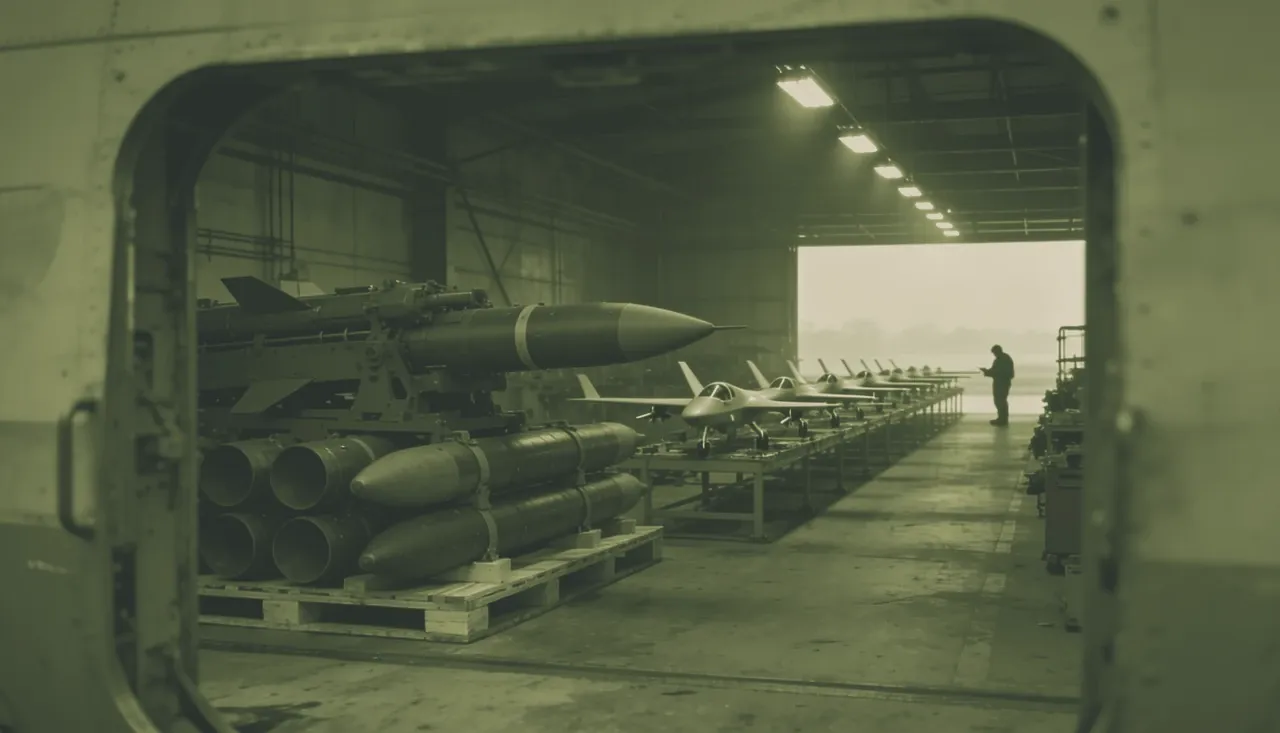
Washington will license Ukraine to build the West's scarcest interceptor, the US president wants to purchase Ukrainian drones, and Germany signed to manufacture a Ukrainian missile-drone. One Ankara afternoon turned a four-year, one-way arms pipeline into trade.
The United States has spent four years arming Ukraine. On July 8, in the space of one afternoon in Ankara, it agreed to start trading with it instead. President Donald Trump told Volodymyr Zelensky that Washington will license Ukraine to produce Patriot interceptors, the munition Kyiv needs most and the West makes slowest. At the same press conference he said the US would buy Ukrainian combat drones, a product he dismissed four months ago. And across the same summit, Germany signed to put a Ukrainian deep-strike missile-drone into German production. Each agreement moves hardware, or the right to build it, in a direction it has never traveled in this war.
A license announced before the manufacturers knew
"We are gonna give a license to you to make Patriots... This way you can't complain that we are not giving you enough," Trump said at the NATO summit, the Kyiv Independent reported. "Make them yourself." Earlier, sitting beside Zelensky, he had framed the disclosure as gossip: "A little birdie told me this, about the fact that we'll give them the right to make Patriots," per CBS News. "We'll show them how to do it, it's very complex actually. But you'll figure out the complexity quickly."
The announcement ran ahead of its own paperwork. Trump conceded he had not told Lockheed Martin, which builds the PAC-3 interceptor, or RTX, the Patriot system's prime contractor. "We haven't informed the company of that yet, but that'll work out all right," he said, per Politico. "Sure, they'll be thrilled." Nor did he specify whether the license covers the PAC-3 interceptor that stops ballistic missiles or the broader system of radars and launchers, or whether the line would stand in Ukraine or elsewhere in Europe. Zelensky has asked for both, Politico reported.
Kyiv has lobbied for this for more than half a year, per Euronews. "I asked previous administration, I am asking today's administration, give Ukraine licenses," Zelensky said on CBS's Face the Nation in May. "We will increase the production of Patriot missiles." What he did not get in Ankara is more American interceptors now. "We have Patriots, but we don't have that many," Trump said. "We need them for ourselves too."
What a repair shop became in 24 hours
The license reverses the summit's own fine print at speed. The Ankara industrial forum's planning documents, obtained by Politico, gave the PAC-3 exactly one concession: a European maintenance facility signed by Germany, the Netherlands, Poland, Sweden and the US. A repair shop, not a production line. US Undersecretary of Defense Michael Duffey would say only that Washington was "open to eventually" manufacturing PAC-3 abroad. Twenty-four hours later, the president skipped past "eventually" on live television.
The arithmetic the license cannot touch is the near term. Lockheed builds roughly 600 PAC-3 interceptors a year, about 60 to 65 a month, by Zelensky's own count, per Euronews. Ukrainian officials say Russia manufactures around 120 ballistic missiles a month and recently put about 30 into a single night. Each interceptor costs about $3 million, and even at recently raised production rates the US is not expected to refill its own stockpile before 2028, The Guardian reported. George Beebe, a former CIA Russia analyst now at the Quincy Institute, told the paper the license "will do little to fix Ukraine's urgent air defence problems": Russia fires close to 100 ballistic missiles at Ukraine each month while the US makes about 50 Patriots a month for itself and every ally combined. A Ukrainian plant would take many months to build, Beebe argued, Russia would strike it "as soon as the first cornerstone is laid," and the transfer risks exposing Patriot technology to Russian intelligence collection.
The skeptics have the 2026 math. The license matters on a different clock. Licensed Patriot production already exists in Japan, where the request took the form of an allied industrial policy; Ukraine sought the same status for over six months and was refused until July 8. What changed is not the interceptor count. It is that Washington now treats Kyiv as a manufacturing partner qualified to hold its most sensitive air-defense work, a status upgrade with a longer half-life than any single delivery.
The drones Trump would not touch in March
The other half of the reversal is the direction no one predicted in 2022. In March, after Zelensky offered to share drone expertise as Iranian attacks spread across the Middle East, Trump waved it away: "The last person we need help from is Zelensky," per the Kyiv Independent. In Ankara he completed the U-turn. "We would buy their drones... And you know, if we made that deal, we'd have great protection. I love the protection," he told reporters. Ukraine has "an ability to make a lot of them," he said, calling it amazing that they manage it in wartime, even "in basements," per Ukrinform. Senator Jeanne Shaheen, the Democrats' lead on foreign affairs, pushed to lock it in: "it's high time the United States seal this deal."
The product had demonstrated itself 48 hours earlier. On July 6, Ukraine's Special Operations Forces hit the Omsk refinery, Russia's largest at about 21 million tons of crude a year, some 2,700 km from Ukrainian-held territory in western Siberia, the deepest strike of the war. Fire Point said its upgraded FP-1 drones flew the mission, and chief designer Denys Shtilierman put the newest variant's reach at 2,110 miles, per Business Insider. The wider campaign is why Trump's word "protection" undersells what he is shopping for: Kyiv counts more than 50 strikes on Russian oil infrastructure since March, its General Staff claims damage to about 42 percent of Russian refining capacity, more than half of Russia's 83 regions now ration fuel, and on July 8 Moscow banned diesel exports outright, per the Kyiv Independent.
A Ukrainian missile-drone on German lines
The third strand got the least attention and may be the cleanest proof of the flow reversing. Foreign Minister Andrii Sybiha and German Defense Minister Boris Pistorius signed an implementation agreement on joint production of the Bars, a turbojet-powered strike drone Ukrainian officials describe as capable of hitting targets deep inside Russia, Interfax-Ukraine reported. Under the Build with Ukraine framework, Germany finances the first stage and every unit goes to Ukraine's Defense Forces. Until now Berlin had only paid for Bars production inside Ukraine; the agreement moves manufacture onto German soil for the first time, per the German defense outlet hartpunkt.
How little is public about the system measures how much combat record now outweighs paperwork. Interfax puts the Bars at 700 to 800 km of range with a 50 to 100-plus kg warhead; hartpunkt cites media reports of roughly 1,000 km, launch weights of 135 to 220 kg and warhead variants of 22, 60 and 105 kg, none officially confirmed. Even the manufacturer is not officially named. Germany is standing up production of a weapon its own ministry would only call a "deep strike drone."
Kyiv's order book
Ukraine is building exactly this business on purpose. A senior official told the Guardian that Kyiv hopes to sign major defense deals with at least seven NATO countries by year-end, positioning itself as a provider as well as a recipient of military hardware. Drone agreements with Estonia and the Netherlands landed on July 7 in Ankara, on top of deals with Denmark and others in recent months. On July 3 the European Commission proposed a continent-wide drone development program and penciled Ukraine into a leading role. The customer list now potentially includes the Pentagon.
For Lockheed Martin and RTX, the week cuts both ways: a president volunteering their crown-jewel license on television, and a reminder that the fastest-iterating strike-drone industry in the world sits in a country they do not operate in. The one-way pipeline was also a moat.
What to watch
- The license paperwork. Which component (PAC-3 MSE or the full system), which country hosts the line, and whether Lockheed, RTX and State Department export approvals follow the podium words. The Lockheed-Rheinmetall ATACMS venture announced July 7 still needs the same US tech-transfer consent.
- The first US drone purchase order. Platform, volume and contracting route will show whether "we would buy their drones" is a program or a compliment.
- Bars industrial partners. No German company has been named. Whoever takes the work becomes the first NATO-country producer of a Ukrainian deep-strike weapon.
- Russian targeting. Beebe's warning is a schedule: any announced Patriot facility in Ukraine becomes a first-order target, so watch how Kyiv balances construction secrecy against deterrence value.
Frequently Asked Questions
What exactly did Trump promise Ukraine on Patriot missiles?
Speaking beside Zelensky at the NATO summit in Ankara on July 8, Trump said the US will grant Ukraine a license to produce Patriot missiles: "Make them yourself," per the Kyiv Independent. He did not specify whether it covers the PAC-3 interceptor or the full system, or where production would sit, and said Lockheed Martin and RTX had not yet been informed, per Politico.
Will the license fix Ukraine's air-defense shortage?
Not soon. Lockheed builds roughly 600 PAC-3 interceptors a year while Russia produces around 120 ballistic missiles a month, per Euronews. Quincy Institute analyst George Beebe told the Guardian a Ukrainian plant would take many months to build and would be attacked "as soon as the first cornerstone is laid."
What did Trump say about buying Ukrainian drones?
"We would buy their drones... if we made that deal, we'd have great protection," he said in Ankara, per the Kyiv Independent, reversing his March position that "the last person we need help from is Zelensky." He praised Ukraine's ability to mass-produce drones even "in basements," per Ukrinform.
What is the Bars and what did Germany agree to?
The Bars is a Ukrainian turbojet-powered strike drone; reported range figures run from 700 to roughly 1,000 km, per Interfax-Ukraine and hartpunkt. On July 8 Germany's Boris Pistorius and Ukraine's Andrii Sybiha signed an agreement to produce it in Germany under the Build with Ukraine initiative, with Berlin financing the first stage and all output going to Ukraine's forces.
Why does the Omsk refinery strike matter to these deals?
The July 6 strike on Russia's largest refinery, about 2,700 km away in Siberia, was Ukraine's deepest of the war, flown by Fire Point's upgraded FP-1 drones, per Business Insider. It demonstrated the long-range strike capability that makes Ukrainian drones a product Washington now says it wants to buy.
AI-generated summary, reviewed by an editor. More on our AI guidelines.

Marcus Schuler
Marcus Schuler edits BattlePolicy, a daily defense-technology brief connecting the companies and capabilities behind modern war to the contest among Europe, the US, Russia, and China.