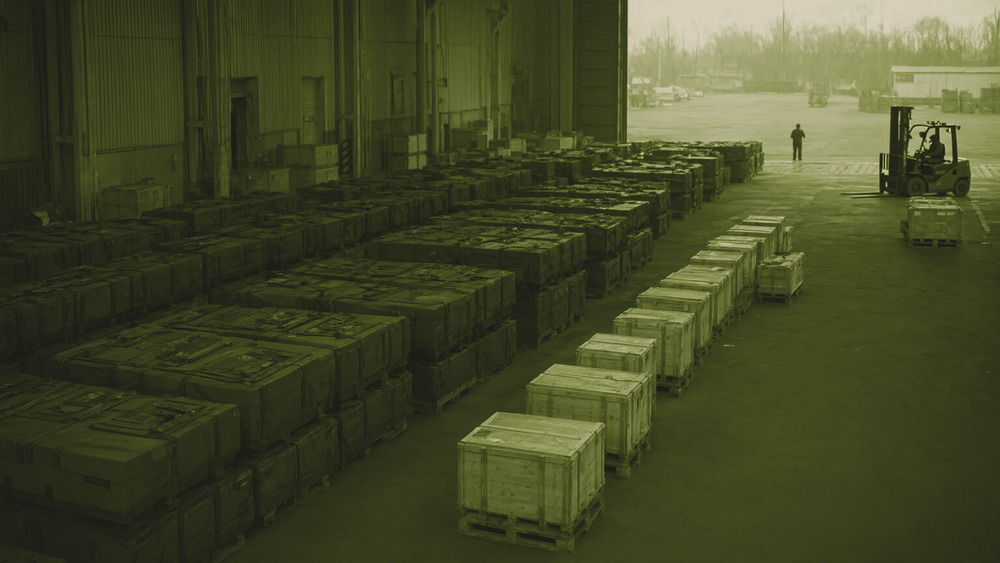
Ukraine's new NSPA partnership gives its defence manufacturers a standing route to allied tenders. It does not settle Patriot supply, and Kyiv's own export costs still stand between eligibility and sales.
Ukraine's main defense against Russian ballistic missiles now waits on a Pentagon signature, with interceptors its allies already paid for held up in Washington.
Kyiv says money, not factory space, caps its drone output, and EU loan money already pays for Ukrainian drones. The extra €70 billion it wants for 2027 has no source yet.
On Newsmax, Trump said the U.S. is keeping its new munitions and will let allies buy again once it is "really stocked." Kyiv, out of Patriot interceptors, cannot wait that long.
A reported Patriot run-out, missing launch warnings and a 160 km/h cap on drone links arrived in the same week. The refinery campaign Kyiv resumed depends on none of them.
Riyadh is investigating why its air defenses failed after Houthi missiles killed at least 13 at King Khalid airport. Officials say the kingdom is short of interceptors, and the American stocks that would resupply it are depleted.
Lockheed showed a Patriot successor due in 2031 on the day Poland said its own PAC-3 deliveries will slip. Ukraine's ballistic defense this winter rests on missiles allies already hold.
A glide bomb killed 33 people at a Kramatorsk bus stop. Drones hit Kyiv's bridges seven times in four days. Putin's target is civilian life, and the defense comes down to interceptor engines.
Ukraine's first announced FP-7 combat launch gives Kyiv a domestic ballistic strike weapon. Fire Point's faster FP-7.x interceptor faces a harder test, and both depend on production Ukraine has not yet shown.
Aeon says it will license-build Destinus' Hornet Block 2 interceptor in Texas from 2027, and the pair's joint proposal is a Topic 1 finalist in the Army's xTech|Apex Intercept competition.
The likely PAC-2 route avoids PAC-3's seeker constraint, but offers weaker ballistic defense from a European production base Germany hosts and Poland wants.
Russia fired Zircons, ballistic missiles and 282 drones at Ukraine overnight. Kyiv stopped 60% of the ballistic missiles, and Zelensky says some nights this year the rate was zero.
Russia hit Kyiv with jet-powered drones hours after Zelensky met Trump, as the Patriot interceptors he asked for remain unpromised and he warns a larger strike is coming.
The first Geran-5 kills show that Ukrainian interceptors can catch Russia's fastest attack drones. The next six months turn on factories, financing and a Patriot stopgap.
Russia and Ukraine struck energy and industrial targets hours before Zelensky meets Trump, putting air defense and Kyiv's refinery campaign at the center of the talks.
A repurposed air-defense training missile made up more than half of Russia's confirmed ballistic strikes on Ukraine this summer, drawing on scarce Patriot interceptors while Moscow holds its Iskanders for winter.
The Pentagon inspector general made the munitions shortfall official and named industrial bottlenecks as the constraint. Ukraine's winter air defense now rests on allied stock swaps and its own cheap interceptors.
Ukraine's Bars strike drone is now more than 74% domestically made, and the one part it still buys abroad is the turbojet. A Ukrainian engine has passed final tests. The engine, not the airframe, is what caps output on both sides of the drone war.
Kyiv wants several billion euros of the EU's 90 billion euro support loan spent on US-built PAC-3 interceptors, a purchase the loan's own origin rule was written to discourage.
European financing and Ukrainian arms production constrain Washington’s ability to impose a bargain, while US weapons, intelligence and commercial services preserve US leverage.
More than 200 drones and decoys pressed Ukraine's air defenses as ballistic missiles reached a transit node on Kyiv's left bank, six years into a war Russia is escalating with the country's Patriot stocks thin.
Greece and Sweden committed €7.3 billion to new air defense on Monday, one day before EU ministers meet to ask Athens for the Patriot interceptors it already owns.
Kyiv wants to strike the launchers behind Russia's ballistic attacks, but SpaceX controls whether its drones can cross the border with satellite guidance.
The Aug. 20 barrage on Kyiv killed at least 16 and exposed the gap between Russia's ballistic missile salvos and the Patriot interceptor production needed to stop them.
Ukraine is containing Russia's cheap drones but failing against ballistic missiles, so Kyiv is attacking the ground network that generates strike mass while it races to build a domestic interceptor.
Fire Point has closed agreements with 13 European partners, but national licensing rules now threaten a mid-2027 interceptor that Ukraine needs before Patriot supplies recover.
Trump promised Kyiv a licence to build Patriot missiles, then took it back. The reason sits in a depleted US arsenal and a single Alabama factory, not in the president's mood.
Ukraine's $2,000 interceptor drones stop nine in ten Shaheds. Its ballistic defense depends on a Lockheed line building 52 interceptors a month, and Trump has withdrawn the licence that was Kyiv's way around it.
Ukraine's mobile fire units are engaging cruise missiles for lack of Patriot interceptors. Hours later, the US Army locked in a seven-year PAC-3 buy worth up to $58.6 billion.
Two Russian ballistic missiles hit a defense-industry expo near Kyiv, killing at least 10, a day after Zelensky and Raytheon agreed to co-produce Patriot interceptors. The strike is the risk statement for Ukraine's air-defense industrial plan.
Iran answered a second night of US strikes by firing on bases in four countries, aiming, by its own account, at a Patriot battery in Kuwait and an early-warning radar in Qatar.
Trump granted Ukraine a license to build Patriot interceptors and said the US would buy Ukrainian drones, while Germany signed to produce Kyiv's Bars missile-drone. In one Ankara afternoon, the four-year one-way arms pipeline became two-way trade.
Lockheed and Rheinmetall will build ATACMS at Unterlüß, the first production line outside the US. The same summit gave the Patriot interceptors Kyiv is dying without only a repair shop.
On NATO summit day, Ukraine flew drones 3,000 km to hit Russia's largest refinery and stopped none of 29 ballistic missiles over Kyiv. The split is the war's next phase.
Kyiv's defenses stopped 90 percent of the cruise missiles and drones in Russia's 11-hour barrage. The ballistic missiles that got through are a delivery problem: interceptors Ukraine already bought have not arrived.
Russia's June 15 barrage put 681 weapons over Ukraine and set the Kyiv Pechersk Lavra ablaze. Ukraine stopped almost every drone and cruise missile, and barely half the ballistics.
Britain, France and Germany agreed to back an anti-ballistic system built around Ukraine's FP-7.x interceptor, a $700,000 missile that just hit 25 km in testing, while German industry showed its own cheap-intercept hardware at ILA Berlin.
Beijing fielded the HQ-16F, a Patriot-class mobile air-defense missile, opposite Taiwan in the same weeks the US burned through the interceptors it would need to defend the island. The contest is magazine depth, not exquisite platforms.
Ukraine's foreign minister told partners to "act, not only condemn" after a 729-weapon overnight strike, naming a specific funding route to buy more Patriots.
Russia's June 2 barrage on Kyiv and Dnipro confirmed an air war split into two tiers with opposite economics, and Russia is firing into the one Ukraine cannot defend.