China is building air-defense mass opposite Taiwan while America spends its own
Beijing fielded the HQ-16F, a Patriot-class mobile air-defense missile, opposite Taiwan in the same weeks the US burned through the interceptors it would need to defend the island. The contest is magazine depth, not exquisite platforms.
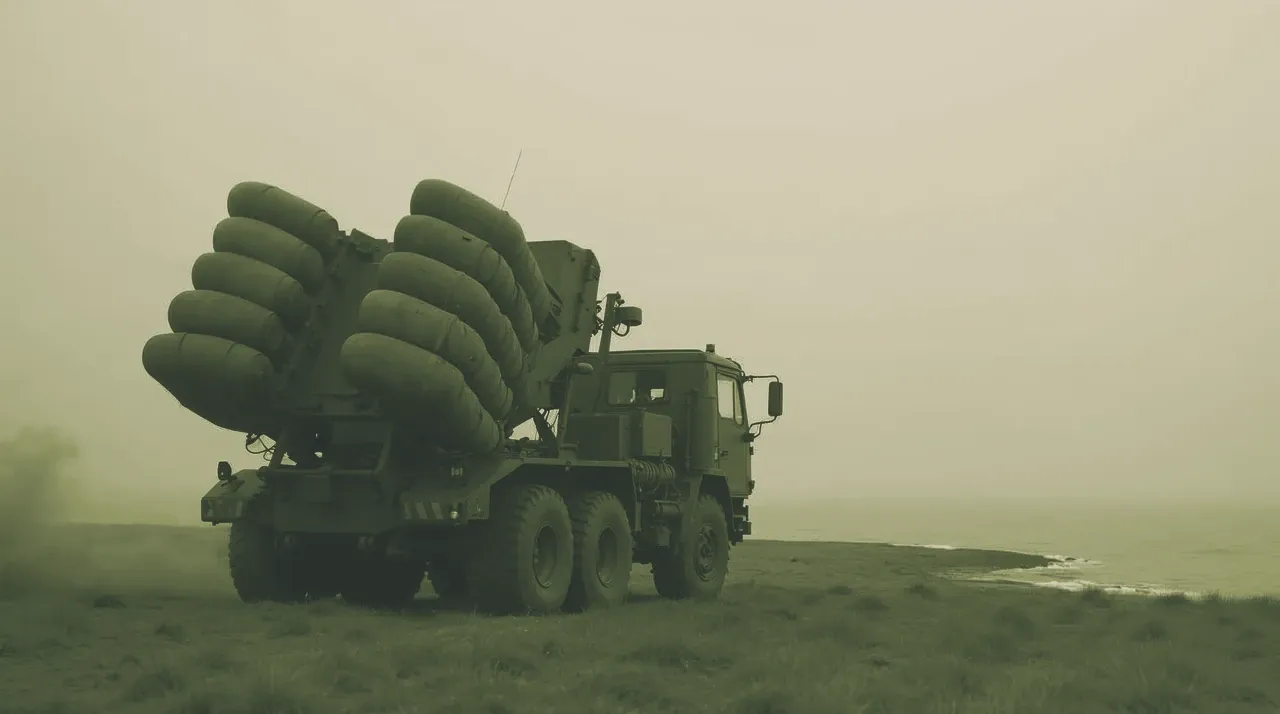
Beijing fielded the HQ-16F, a Patriot-class mobile air-defense missile, opposite Taiwan on June 6, in the same weeks US PAC-3, THAAD and SM-3 stocks drained against Iran. The Taiwan fight turns on who can build and hold interceptors.
China has handed the army unit that would lead any assault on Taiwan a new air-defense missile rated against the American Patriot, and it did so in the same weeks the United States kept firing the interceptors it would need to keep Taiwan supplied in a war. On its own the system changes little. Read against the state of the American magazine, it points to where the cross-strait contest is actually being decided.
On June 6, Chinese state broadcaster CCTV aired what it called the first operational live-fire test of the HQ-16F, footage that the South China Morning Post and others used to identify the system. The shooter was the 73rd Group Army, the Eastern Theatre Command force based in Fujian province directly across the strait from Taiwan, which traveled more than 1,200 miles to the Gobi Desert to take delivery and fire. CCTV said a missile launched from a mobile launcher hit a target 50 kilometers out, and the missile shown was wingless, steering on four tail fins.
A medium-range layer built to be numerous, not exquisite
The significance of the HQ-16F lies in quantity rather than sophistication. Chinese state media did not release performance data, but Interesting Engineering, citing published specifications, reported the missile can engage aircraft out to roughly 100 miles, a fourfold jump over the original HQ-16, down to targets as low as 50 feet and as high as about 17 miles. Test footage showed vertical-launch cells, meaning the same missile family works on land and on ships. Analysts rate its reach against the Patriot PAC-2 and its sensors and missile-defense functions closer to the PAC-3, though the American interceptor kills by direct impact rather than a warhead.
The reveal is better read as a production milestone than a technology breakthrough. The HQ-16F slots a mass-producible medium-range tier into an air-defense network the PLA already layers from low altitude to near space, and it puts that tier with the units closest to Taiwan. Rather than chase a single best interceptor, the PLA is adding numbers, the factor that tends to decide a protracted air campaign. That logic fits the scenario analysts increasingly expect: foreign-policy writer Eyck Freymann, cited by Interesting Engineering, argues Beijing's likeliest path is a prolonged blockade rather than a head-on invasion, in which dense, road-mobile air defense opposite the strait is what keeps allied aircraft and missiles at arm's length while the pressure does its work.
The American magazine is going the other way
The missiles the United States would spend defending Taiwan and striking Chinese ships are the same ones it has been burning against Iran, and that magazine is draining faster than its factories can refill it. A National Security Journal analysis by Harry Kazianis, a former Heritage Foundation and CSIS fellow, laid out the drawdown in detail: in the opening four days of the air campaign against Iran the US fired 5,197 munitions across 35 types, a stretch whose replacement bill ran between $10 billion and $16 billion. It entered the war with about 3,100 Tomahawks and fired more than 1,000 of them, roughly a third of the stockpile it would lean on to hit Chinese warships, and CSIS estimates at least three years to rebuild that inventory alone. Four categories were drawn down past half their pre-war levels: the Tomahawk, the THAAD interceptor, the Patriot missile, and the ship-launched SM-3 and SM-6.
THAAD is the sharpest worry. By CSIS analyst Mark Cancian's account, the US may have fired close to half its entire THAAD inventory across the past year of Middle East combat, and no new THAAD interceptors had reached US stocks since July 2023, with the next batch not due until around April 2027. Cancian's CSIS colleague Tom Karako had already told the New York Times in April that the US and Israel began the Iran war with a "big hole" in their interceptor stocks, and that the hole "got a lot bigger" as the firing continued. The SM-3 and SM-6 matter most for the Pacific specifically, because they are the ship-launched rounds the US Navy would fire to defend carriers and bases from Chinese missiles. A Heritage Foundation assessment cited in the same analysis warned that high-end interceptors, the SM-3, SM-6, PAC-3 and THAAD, could run dry within days of a high-intensity Pacific fight, some emptied after only two or three major PLA salvoes, with aggregate US vertical-launch inventories short of even a single full reload of the fleet.
The battlefield and the startup story — free in your inbox every week. No paywall.
Subscribe Free →Ukraine has been teaching the magazine lesson for two years
The Patriot squeeze is no forecast; it is already shaping a live war. As the Guardian reported, the US-Israeli campaign against Iran has depleted close to a third of Patriot interceptor stocks, with Gulf states alone firing more than 1,100, even as Lockheed Martin builds the interceptors at about 600 a year at roughly $3 million each. Cancian put the global supply at around 68 percent of need and called it a "window of vulnerability," the interval in which the inventory is spent and time is the only way to rebuild it.
Russia is firing into that window. After a raid of 73 missiles and nearly 700 drones, Ukrainian President Volodymyr Zelenskyy again asked Washington for interceptors, and on June 3 he said monthly PAC-3 deliveries had been "cut several times over," not for lack of money but because of the war in the Middle East. Ukraine's lesson, learned the hard way since 2022, is the one the Pacific now has to absorb: against sustained missile and drone pressure, survival is a function of stockpile and replenishment, not of any single battery's hit rate.
The contest is becoming a price-per-interception race
The market is already moving toward that conclusion. A PAC-3 MSE interceptor now runs about $5.3 million each in the Army's proposed fiscal 2027 budget, up from a historical average near $4 million, and a single ballistic target can take two or three of them. Those economics collapse under a saturation campaign, which is why both the US Army and Ukraine are now hunting interceptors cheap enough to expend freely. As The War Zone reported, Ukraine's Fire Point is testing the FP-7.X as a step toward its Freyja system, an indigenous anti-ballistic missile it wants to field for under $1 million a round and fire at a ballistic target by the end of 2027. The US Army is pressing contractors for a sub-$1 million Patriot interceptor of its own.
The Pentagon is spending against the shortfall. It has signed deals to quadruple annual THAAD interceptor output, from 96 to 400, and to more than triple PAC-3 production, while Lockheed says it will more than treble its Patriot interceptor lines. Funding is no longer the binding constraint. As CSIS framed it, the scarce resource now is time, since high-end interceptor lines take years to move from contract to delivered round, with some stocks not projected to recover until 2029.
Taiwan and Japan are not waiting
Allies are reading the same depletion figures and acting on them. Taiwan is moving to mass-produce its own air-defense and anti-ship missiles rather than count on resupply from an American arsenal already stretched across Ukraine and the Gulf, a buildup BattlePolicy detailed this week. Japan has unveiled standoff and counterstrike weapons, including a Type-25 hyper-velocity gliding projectile aimed at China's layered carrier defenses. Asia Times put Taipei's drive plainly: it is racing to arm itself as US reliability wanes, the hedge of a partner that has watched delivery schedules slip.
The HQ-16F is not a wonder weapon, and it does not change the strait on its own. What it marks is that two magazines are moving in opposite directions. China is fielding mass-producible air defense to the units that would fight first. The system meant to defend Taiwan is being spent, battery by battery, on a war in the Gulf that has no settlement in sight. Deterrence rests on what exists now, not on interceptors scheduled for 2029, and an adversary studying the same public numbers has reason to prefer the window to whatever follows it.
What to watch
- Delivery dates against 2027. Whether THAAD and PAC-3 deliveries actually arrive on the ramped schedule, or slip past the years analysts treat as the danger window.
- Sub-$1 million interceptors. Whether Ukraine's Freyja or a US low-cost Patriot round reaches the field, the first real test of whether the price-per-interception math can be fixed.
- The Iran ceasefire. Every additional salvo against Iran is one fewer interceptor for the Pacific. A renewed campaign deepens the hole; a durable truce starts to close it.
- Indigenous timelines in Taipei and Tokyo. How fast allied missile mass actually comes online, the clearest sign of how much faith the region still places in American resupply.
FAQ
What is the HQ-16F?
The HQ-16F is the newest land-based member of China's Hong Qi-16 medium-range air-defense family. State broadcaster CCTV aired its first operational live-fire test on June 6, fired by the Fujian-based 73rd Group Army. Per specifications cited by Interesting Engineering, it can engage aircraft out to roughly 100 miles, a fourfold increase over the original HQ-16, and footage showed vertical-launch cells usable on land and at sea.
How does it compare to the US Patriot?
Analysts rate the HQ-16F's reach against the Patriot PAC-2 and its sensors and missile-defense functions closer to the PAC-3, according to the South China Morning Post and Interesting Engineering. The key difference is method: the PAC-3 destroys targets by direct hit-to-kill impact, while the HQ-16 family uses a conventional warhead.
Why does the Iran war affect a possible Taiwan conflict?
They draw on the same magazine. A National Security Journal analysis, citing CSIS, found the US fired more than 1,000 of about 3,100 Tomahawks against Iran and drew the Tomahawk, THAAD, Patriot and SM-3/SM-6 down past half their pre-war stocks. A Heritage Foundation assessment warned those high-end interceptors could run dry within days of a major Pacific fight, with US vertical-launch stocks short of one full fleet reload.
How depleted are US Patriot stocks?
The Guardian, citing CSIS analyst Mark Cancian, reported the Iran war has depleted close to a third of Patriot interceptor stocks, with Gulf states alone firing more than 1,100. Lockheed Martin builds the interceptors at about 600 a year at roughly $3 million each and has said it will more than treble that line. Cancian put global supply at about 68 percent of need and called it a "window of vulnerability."
What is being done about interceptor cost and supply?
A PAC-3 MSE now costs about $5.3 million per round, and a ballistic target can require two or three. The US Army is seeking a sub-$1 million Patriot interceptor, and Ukraine's Fire Point is developing the Freyja anti-ballistic missile for under $1 million a round, per The War Zone. The Pentagon has moved to quadruple THAAD output, from 96 to 400 a year, and more than triple PAC-3 production, but CSIS says some stocks may not recover until 2029.
How are Taiwan and Japan responding?
Both are building indigenous missile mass rather than relying on American resupply. Taiwan is moving to mass-produce its own air-defense and anti-ship missiles, and Japan has unveiled standoff weapons including a Type-25 hyper-velocity gliding projectile. Asia Times described Taipei's effort as racing to arm itself as US reliability wanes.

Marcus Schuler
Marcus Schuler edits BattlePolicy, a daily defense-technology brief connecting the companies and capabilities behind modern war to the contest among Europe, the US, Russia, and China.