GRID-REF 37°47′N 122°25′W
DISPATCH 02/26 · 17 Jun 2026
BATTLEPOLICY
Startup to front line. Strategy to consequence.
Lexicon · USA

SM-6

The US Navy's multi-role interceptor — Standard Missile 6 combines long-range air defense, terminal ballistic-missile defense, and anti-ship strike into one round, and became the first US weapon to down an anti-ship ballistic missile in combat.
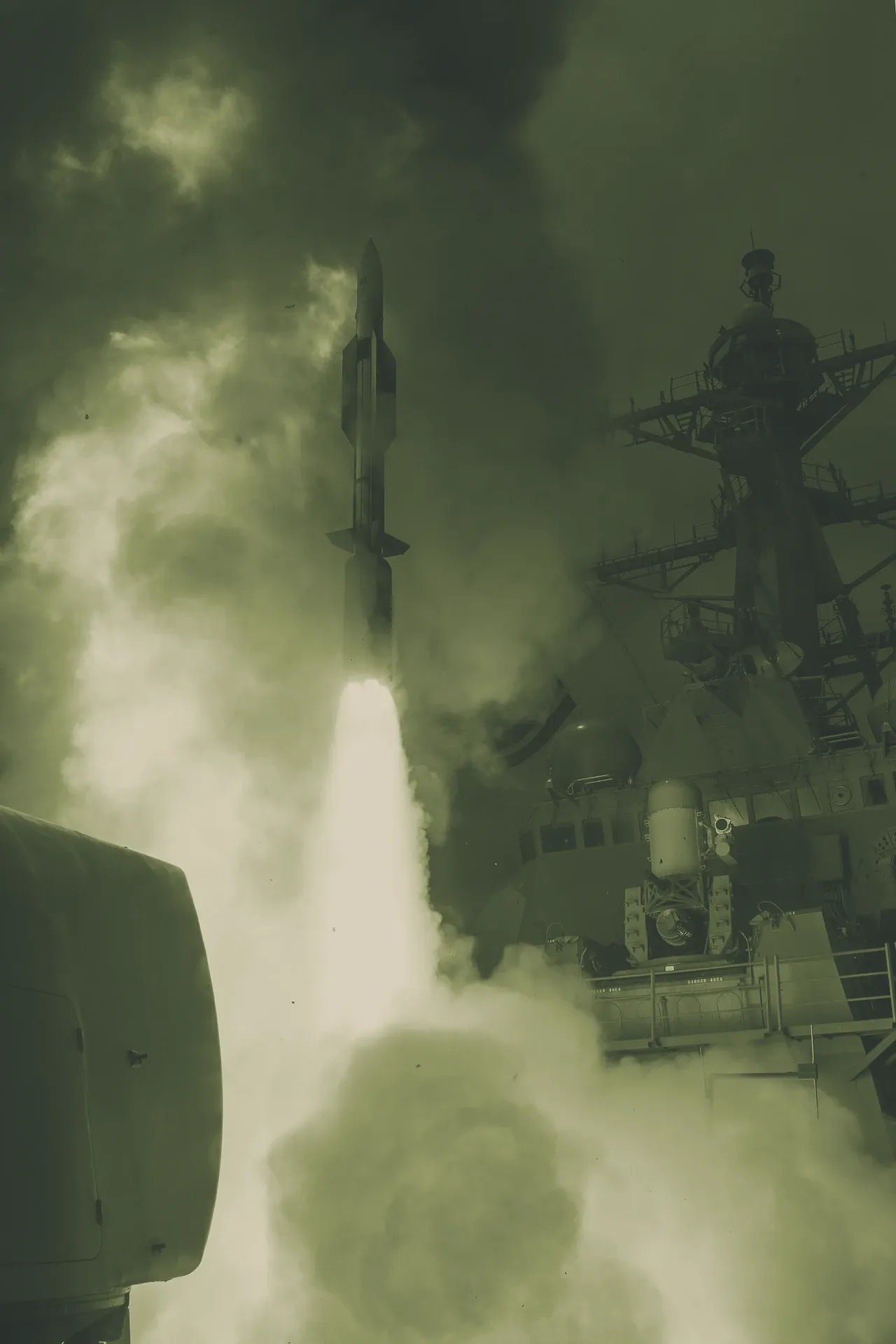
SM-6
FIG.01 · USA Image - USS John Paul Jones launching an SM-6 missile. Photo by U.S. Navy photo, Public domain, via Wikimedia Commons_launches_RIM-174_June_2014.JPG).
The Standard Missile 6 — a multi-role ship/ground/air-launched interceptor that fuses long-range air defense, terminal ballistic-missile defense, and anti-surface strike into a single round, and the first US weapon to engage an anti-ship ballistic missile in combat.

Overview

The SM-6, formally the RIM-174 Standard Extended Range Active Missile (ERAM), is a Raytheon-built interceptor that arms the US Navy’s Aegis fleet, the Army’s Typhon ground launchers, and — in its air-launched AIM-174B guise — carrier-borne Super Hornets. By merging the airframe of the SM-2, the booster stack of the SM-3, and an AMRAAM-derived active radar seeker, the weapon delivers layered anti-air warfare, sea-based terminal ballistic-missile defense, and offensive anti-ship/land-attack capability in a single magazine round, according to the CSIS Missile Threat profile. It is the only US fleet weapon that covers all three mission sets, a fact Raytheon and the Navy have used to streamline shipboard magazines across the surface force.

Development

The Extended Range Active Missile program was approved in 2004 and aimed to replace the SM-2 Block IV with a weapon that could engage over the horizon without relying on shipboard illuminators. Raytheon married the SM-2’s airframe to the dual-thrust motor stack of the SM-3 family and outfitted the round with an enlarged active seeker derived from the AIM-120 AMRAAM, as detailed by CSIS. The first guided test launch occurred in June 2008 at White Sands, and production began the following year. After a rocky initial operational test phase — including fuze and seeker-debris failures in 2010-11 — the SM-6 reached full-rate production in FY 2013 and deployed operationally aboard USS Kidd (DDG-100) in November 2013, Wikipedia notes. The terminal BMD role (Dual I software increment) was proven in 2015, and the anti-surface warfare capability was publicly acknowledged by Defense Secretary Carter in February 2016, following a secret SINKEX that January.

Design & capabilities

The SM-6 is a 6.55-m, 1,500 kg missile that flies a boosted trajectory and homes with an active X-band seeker in the terminal phase. Because the seeker does not require target illumination from the launching ship, the Aegis combat system can engage more tracks simultaneously — once cued by off-board sensors through Cooperative Engagement Capability and Naval Integrated Fire Control-Counter Air (NIFC-CA), described by CSIS. The surface-launched weapon’s engagement range is approximately 370 km, though the air-launched AIM-174B benefits from much greater kinematic reach. The missile’s software-defined architecture supports anti-air, terminal BMD (Dual I/II), and anti-surface strike modes, making it what RTX’s product page calls “the only missile that is a multi-mission solution.” The Army’s Typhon battery packages SM-6 rounds into a road-mobile four-round launcher and battery operations center, while a containerized Mk 70 launcher has been demonstrated from the littoral combat ship USS Savannah, extending the weapon’s footprint to unmanned platforms.

Variants

  • Block I / IA: Baseline and product-improved models; IA completed operational testing from 2017.
  • Dual I / Dual II software increments: Added terminal BMD and refined anti-surface capabilities.
  • Block IB: Features a 53 cm (21-inch) second-stage motor for greater range and hypersonic-speed goals; in final-stage development, with production expected to begin late FY 2024 per Wikipedia.
  • AIM-174B “Gunslinger”: Air-launched variant carried by F/A-18E/F Super Hornets, first seen during RIMPAC in July 2024, as reported by The War Zone.

Combat record / operational use

The SM-6 made its combat debut in the Red Sea, where USS Laboon (DDG-58) shot down three Houthi anti-ship ballistic missiles (ASBMs) on 26 December 2023 — the missile’s first ballistic intercepts in anger, The War Zone reports. On 30 January 2024 USS Carney (DDG-64) downed an ASBM over the Gulf of Aden, the first Pentagon-acknowledged SM-6 combat intercept. Over roughly a year of Red Sea operations, US destroyers expended approximately 200 SM-2 and SM-6 rounds, according to a CSIS inventory analysis. During the April and October 2024 Iranian ballistic-missile attacks and the subsequent 12-day Israel-Iran war of June 2025, SM-6s were again fired in defense of Israel alongside SM-3s and THAADs; Responsible Statecraft estimates that about 150 SM-6s were used in June 2025 alone, bringing the combined Middle East expenditure from October 2023 through June 2025 to roughly 280 SM-6 rounds. Beyond the fleet, the Army’s 3rd Multi-Domain Task Force fired an SM-6 from a Typhon launcher during exercise Talisman Sabre in Australia on 16 July 2025, hitting a maritime target in the system’s first overseas live-fire, as USNI News detailed. The air-launched AIM-174B broke cover at RIMPAC in July 2024 and has since entered limited operational service, as The War Zone noted.

Advantages

  • Only US weapon that integrates anti-air warfare, terminal BMD and anti-surface strike in one round, simplifying magazine planning across the surface fleet, per RTX and CSIS.
  • Active X-band seeker and NIFC-CA networking enable over-the-horizon intercepts beyond the launching ship’s own radar horizon; a 2016 test set a record range for a surface-to-air engagement.
  • Combat-proven against the hardest sub-strategic threat class: world’s first intercepts of anti-ship ballistic missiles (USS Laboon, Dec 2023; USS Carney, Jan 2024), according to The War Zone and CSIS.
  • Platform breadth continues to grow — Army Typhon, containerized Mk 70, and air-launched AIM-174B, as described by USNI News and The War Zone.
  • Multi-year procurement (125/yr 2017-2023) built a relatively healthy production base, and the February 2026 RTX framework aims to lift output above 500 missiles per year, per RTX and USNI News.

Drawbacks / limitations

  • The 64 kg blast-fragmentation warhead yields mission-kill effects against large warships but is unlikely to sink them, a limitation acknowledged by CSIS.
  • High unit cost (~$4.3 M per Wikipedia and The War Zone) against low-cost Houthi drones and ASBMs creates an unfavorable exchange ratio, widely flagged during the Red Sea campaign.
  • Heavy combat expenditure — an estimated ~280 SM-6s used across the Red Sea and Israel defense through June 2025, per Responsible Statecraft — outpaced production of ~187 new rounds in the same window, according to the same estimate.
  • Each SM-6 requires over 36 months to build, so a surge in demand cannot quickly refill magazines, analysts note in CSIS’s depletion analysis.
  • Terminal-phase-only BMD: SM-6 engages ballistic missiles in the last seconds of flight and cannot substitute for the exo-atmospheric SM-3, which faces its own inventory squeeze.

Counterparts

Outlook

The Pentagon is purchasing SM-6 faster than it can make them. The Navy’s FY 2027 request seeks $4.3 billion for 540 rounds, a dramatic leap from 166 in FY 2026, as Defence Industry Europe reports. The February 2026 RTX-Department of War framework commits to sustained annual production above 500 missiles through investments at Tucson, Huntsville and Andover, according to RTX. With the Block IB adding reach and speed, the AIM-174B folding into carrier air wings, Typhon batteries spreading from the Philippines toward Europe, and modular Mk 70 launchers planned for unmanned vessels, the SM-6 is set to remain the US military’s most flexible high-end interceptor — provided solid-rocket-motor bottlenecks being addressed through partnerships with Anduril, Northrop, Avio USA and Nammo do not choke the ramp.

Key specifications

Spec Value
Type Ship/ground/air-launched multi-mission interceptor
Engagement range ~370 km (surface-launched SM-6)
Engagement altitude not publicly established (endo-atmospheric; terminal-phase BMD)
Target set aircraft, UAS, cruise missiles, ballistic missiles in terminal phase, hypersonic threats, surface ships, land targets
Interceptor(s) SM-6 Block I/IA, Block IB (in development), AIM-174B
Radar / fire control Aegis Combat System (SPY-series radars), active X-band AMRAAM-derived terminal seeker, CEC/NIFC-CA remote sensor cueing
Reaction time not publicly established
Simultaneous engagements not publicly established (active seeker removes illuminator limit)
Mobility Mk 41 VLS (shipboard), Typhon road-mobile battery, containerized Mk 70, underwing on F/A-18E/F

Sources

  1. CSIS Missile Threat — Standard Missile-6 (SM-6) — https://missilethreat.csis.org/defsys/sm-6/
  2. RTX (Raytheon) — SM-6 missile product page — https://www.rtx.com/raytheon/what-we-do/sea/sm-6-missile
  3. The War Zone — Navy’s SM-6 Missile Used In Combat: Report — https://www.twz.com/sea/navys-sm-6-missile-used-in-combat-report
  4. The War Zone — AIM-174 Super Hornet-Launched Variant Of SM-6 Missile Breaks Cover In Hawaii — https://www.twz.com/air/aim-174-super-hornet-launched-variant-of-sm-6-missile-breaks-cover-in-hawaii
  5. USNI News — Army Bullseyes Maritime Target with SM-6 Fired From Portable Launcher — https://news.usni.org/2025/07/17/army-bullseyes-maritime-target-with-sm-6-fired-from-portable-launcher
  6. CSIS — The Depleting Missile Defense Interceptor Inventory — https://www.csis.org/analysis/depleting-missile-defense-interceptor-inventory
  7. Responsible Statecraft — US missile depletion from Houthi, Israel conflicts may shock you — https://responsiblestatecraft.org/missile-depletion-us-navy/
  8. RTX — RTX’s Raytheon partners with Department of War on five landmark agreements to expand critical munition production — https://www.rtx.com/news/news-center/2026/02/04/rtxs-raytheon-partners-with-department-of-war-on-five-landmark-agreements-to-exp
  9. USNI News — Raytheon to Bolster Tomahawk and SM-6 Production in Critical Munition Deal — https://news.usni.org/2026/02/04/raytheon-to-bolster-tomahawk-and-sm-6-production-in-critical-munition-deal
  10. Defence Industry Europe — United States Navy plans multi-billion-dollar procurement of Tomahawk cruise missiles and SM-6 interceptors — https://defence-industry.eu/united-states-navy-plans-multi-billion-dollar-procurement-of-tomahawk-cruise-missiles-and-sm-6-interceptors/
  11. Wikipedia — RIM-174 Standard ERAM — https://en.wikipedia.org/wiki/RIM-174_Standard_ERAM
FIELD DISPATCH · WEEKLY

BattlePolicy Weekly — free.

Defense tech, startups, and security — weekly. No paywall.

Related
USA · Autonomy · Palladyne AI · SwarmOS · Gremlin-X · NGC2

Palladyne runs an AI drone swarm inside the Army's command network at Ivy Mass

A single operator flew a mixed swarm of surveillance drones and a strike drone through the Army's prototype command system, in jammed comms with no cloud link, the company said.

USA · Autonomy · Palladyne AI · SwarmOS · Gremlin-X · NGC2
USA · Policy · autonomous weapons · DoD Directive 3000.09 · Ruben Gallego

A senator wants answers before the Pentagon rewrites its autonomous-weapons rule

Trump's new AI memo gives the Pentagon 90 days to rewrite its autonomous-weapons rule. Sen. Gallego says that is too fast and wants to know which safeguards survive.

USA · Policy · autonomous weapons · DoD Directive 3000.09 · Ruben Gallego
USA · Funding · Anduril · Shield AI · Saronic

Defense-tech funding already beat all of 2025, in five months

Venture funding for defense-tech startups hit $14.6 billion in five months of 2026, beating all of last year, with Anduril, Shield AI and Saronic taking most of it.

USA · Funding · Anduril · Shield AI · Saronic