USAPro
GBU-53/B StormBreaker (SDB II)
The GBU-53/B StormBreaker is a US precision glide bomb combining radar, infrared and laser guidance with in-flight updates to attack moving targets in poor weather.
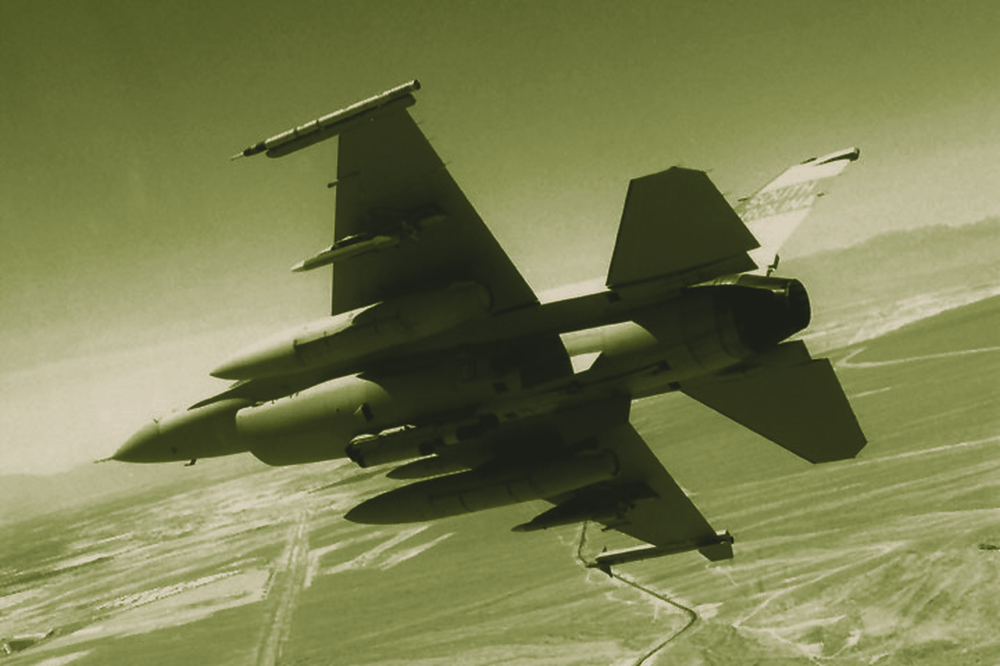
The ADM-160 MALD is an expendable air-launched decoy that imitates aircraft radar signatures. The MALD-J variant adds radar jamming; Ukraine uses the baseline decoy alongside strike weapons.
The GBU-53/B StormBreaker is a US precision glide bomb combining radar, infrared and laser guidance with in-flight updates to attack moving targets in poor weather.
The award backs interceptor replenishment after combat use against Iran, but the missile count is undisclosed and industry warns funding gaps could delay investment.
The five-year order backs a production target above 500 SM-6s a year, but the Pentagon has not said how many missiles it buys and Congress has not yet funded it.
The likely PAC-2 route avoids PAC-3's seeker constraint, but offers weaker ballistic defense from a European production base Germany hosts and Poland wants.
A compact US-German ship-defense missile that combines passive radio-frequency and infrared homing to intercept anti-ship missiles and other close-range threats.
The BGM-71 TOW is a long-serving American heavy anti-tank guided missile family, launched from tripods, vehicles and helicopters and fielded in wire-guided and radio-frequency variants.
Paveway is a US-origin family of guidance kits that converts general-purpose and penetrator bombs into laser-guided or dual-mode laser/GPS precision weapons.
The AGM-65 Maverick is a modular US air-to-surface missile family combining television, imaging-infrared or laser guidance with anti-armour and penetrating warheads.
The AGM-88 HARM is a U.S. supersonic anti-radiation missile designed to suppress or destroy radar-guided air defenses, with later AARGM variants adding multi-mode guidance against emitters that shut down.
The AIM-9X Sidewinder is a current-generation infrared-guided short-range missile used by combat aircraft and, through NASAMS, as a surface-launched interceptor against airborne threats.
The AIM-424 Malice is a Raytheon-built US Navy very-long-range air-to-air missile intended to engage aircraft beyond 463 km while fitting inside the F-35C's weapons bay.
The M982 Excalibur is a GPS- and inertially guided 155 mm artillery projectile that gives compatible howitzers precision-strike capability at extended range, but its performance in Ukraine has exposed the vulnerability of satellite-guided ammunition to electronic warfare.
Phalanx CIWS is a self-contained, radar-guided 20 mm naval gun system designed to provide warships with a final defensive layer against missiles, aircraft, drones and surface threats.
The RIM-162 Evolved Sea Sparrow Missile is a medium-range naval air-defence weapon whose four-round Mk 41 cell packing gives Western warships substantial self-defence magazine depth.
The Navy's $22.9 billion, seven-year Tomahawk award gives Raytheon the certainty to build toward 1,000 missiles a year. It does not buy back the 1,000-plus fired at Iran: rocket-motor lead times set the clock, while Ukraine's Fire Point builds 100 cheaper cruise missiles a month.
Trump promised Kyiv a licence to build Patriot missiles, then took it back. The reason sits in a depleted US arsenal and a single Alabama factory, not in the president's mood.
Two Russian ballistic missiles hit a defense-industry expo near Kyiv, killing at least 10, a day after Zelensky and Raytheon agreed to co-produce Patriot interceptors. The strike is the risk statement for Ukraine's air-defense industrial plan.
The UK's 15-year collective-training award puts a US prime and Germany's Rheinmetall inside the British Army's training pipeline; Rheinmetall's share alone is just under 1 billion euros.
An Iran war that burned through American missile-defense stockpiles is reshaping Pentagon procurement, starting with a contract to quadruple THAAD interceptor production.
Divergent says a fleet of in-house metal printers can turn out tens of thousands of missile airframes a year, and Breaking Defense reports it is already a second source for the Tomahawk. Whether that reaches the fleet depends on numbers the company has not shown.
The U.S. Army’s primary expendable jet-powered interceptor for drone defense — operated within the LIDS architecture, paired with KuRFS radar, and now arming Navy destroyers.
The US Navy's multi-role interceptor — Standard Missile 6 combines long-range air defense, terminal ballistic-missile defense, and anti-ship strike into one round, and became the first US weapon to down an anti-ship ballistic missile in combat.
Israel's mid-tier mobile air and missile defense system — a hit-to-kill interceptor designed to defeat short-range ballistic missiles, large rockets, cruise missiles and aircraft, sitting between Iron Dome and the Arrow family and increasingly central to Israel's layered shield.
The FIM-92 Stinger is a combat-proven shoulder-fired infrared-homing air-defense missile that has evolved from a Cold War MANPADS into a modern counter-drone weapon, now being refurbished, rebuilt and replaced through a multi-track programme to keep it operational into the 2030s.
To reach the Pentagon's $1.1 billion Drone Dominance program, Ukraine's combat-shaped drone firms must stand up US legal entities, hand signing authority to US citizens, build on American soil, and open their technical files. The capability crosses the Atlantic; the ownership and the IP stay behind.
The AIM-120 AMRAAM is the West's standard active-radar beyond-visual-range air-to-air missile, fielded on 14 fighter types and 42 nations, with a combat record stretching from 1992 to the ongoing war in Ukraine.
The Terminal High Altitude Area Defense — a wheeled, hit-to-kill interceptor system that destroys short- and medium-range ballistic missiles in their terminal phase, both inside and just above the atmosphere.
The NASAMS is a medium-range, distributed, networked air-defense system jointly developed by Norway and the United States, built around the ground-launched AMRAAM and proven in combat in Ukraine.