GRID-REF 37°47′N 122°25′W
DISPATCH 02/26 · 9 Jun 2026
BATTLEPOLICY
Startup to front line. Strategy to consequence.
Lexicon · USA

NASAMS

The NASAMS is a medium-range, distributed, networked air-defense system jointly developed by Norway and the United States, built around the ground-launched AMRAAM and proven in combat in Ukraine.
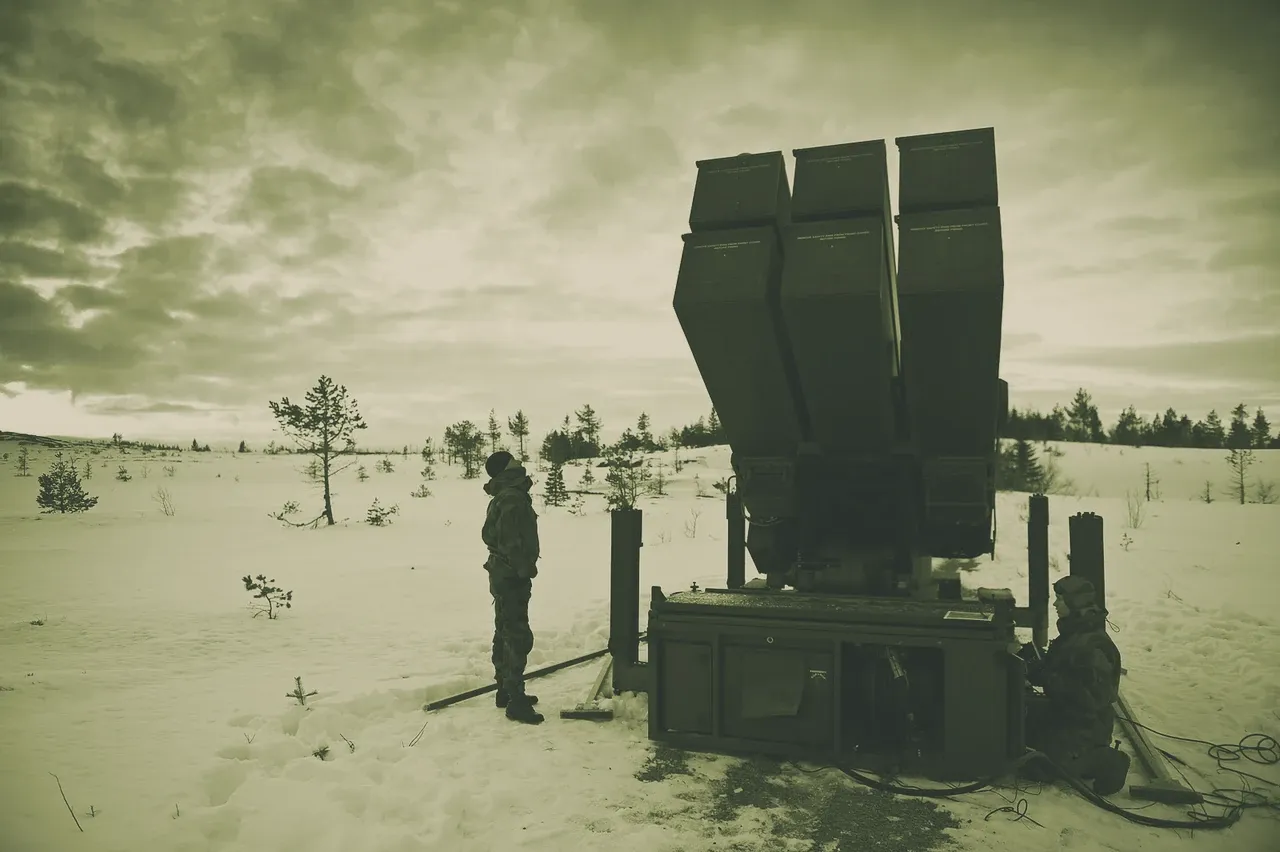
NASAMS
FIG.01 · USA Image - NASAMS. Photo by Soldatnytt from Oslo, Norway, CC BY 2.0, via Wikimedia Commons.
A networked, medium-range air-defense system co-developed by Norway’s Kongsberg Defence & Aerospace and the U.S.’s Raytheon, built around the AIM-120 AMRAAM — dispersible, highly active in Ukraine, and the most widely exported NATO SAM of its class.

Overview

The National Advanced Surface-to-Air Missile System (NASAMS) is a medium-range air-defense system fielded by Norway and the United States, and exported to over a dozen operators. Unlike traditional centralized SAM batteries, NASAMS distributes its networked launchers and radars over tens of kilometers, enabling survivable, overlapping coverage against aircraft, cruise missiles and unmanned aerial systems. The system relies on the combat-proven AIM-120 AMRAAM — a beyond-visual-range air-to-air missile adapted for ground launch — and its extended-range AMRAAM-ER variant. Egypt’s 2025 order, notified via a $4.67 billion DSCA package, underscores the system’s sustained international demand.

Development

NASAMS was first deployed by the Royal Norwegian Air Force in 1998, marrying a Kongsberg fire-distribution center with Raytheon’s AN/MPQ-64 Sentinel radar and a six-round canister launcher for the AMRAAM. The system upgraded to NASAMS 2 around 2007, introducing the Sentinel AN/MPQ-64F1 radar, enhanced networking and the ability to integrate additional sensors and effectors. The current configuration, NASAMS 3, brings the AMRAAM-ER and a fully open-architecture command-and-control suite.

Design & capabilities

NASAMS’ signature feature is its distributed architecture: each launcher can be placed up to 25 km from the fire-distribution center, creating a survivable, non-contiguous engagement zone. The AN/MPQ-64F1 Sentinel 3D radar tracks targets out to roughly 120 km and feeds data to the command post, which assigns targets to the most favorably positioned launcher. Engagement ranges vary by interceptor: the AIM-120 AMRAAM provides about 25–40 km, while the AMRAAM-ER extends coverage to 50–60 km; the short-range AIM-9X can be used for close-in defense. All variants carry an active radar seeker, enabling multiple simultaneous fire-and-forget engagements without the need for continuous radar illumination. The system lacks a dedicated anti-ballistic-missile capability, focusing instead on aircraft, helicopters, cruise missiles and drones up to roughly 15 km altitude, or up to 35 km with NASAMS 3 and the ER missile.

Combat record / operational use

NASAMS has been operational in Ukraine since 2022, defending cities and critical infrastructure. U.S. and Ukrainian officials have repeatedly cited very high hit rates against Russian cruise missiles and one-way attack drones, making it one of the combat-validated pillars of Ukraine’s ground-based air defense. The system’s performance has spurred additional donations, including launchers and interceptors from multiple NATO members, and reinforced its reputation as a reliable, modular air-defense solution.

Variants

NASAMS 2 introduced the AN/MPQ-64F1 radar, improved networking and a common interface that allows third-party sensors and weapons to be integrated. NASAMS 3 added the AMRAAM-ER interceptor, an extended-range fire-distribution capability and a fully open software architecture. Launcher variants include the standard six-round canister launcher and a high-mobility version mounted on protected vehicles.

Advantages

  • Distributed, survivable architecture with launchers placed up to 25 km from the command post.
  • Fire-and-forget active-radar AMRAAM seeker allows multiple simultaneous engagements.
  • Proven combat record in Ukraine against cruise missiles and drones.
  • Open-architecture design enables integration of diverse radars, effectors and battle-management systems.
  • Wheeled canister launchers permit rapid road movement and air transport by tactical lifters.

Drawbacks / limitations

  • No inherent capability against tactical ballistic missiles; pure air-and-cruise defense.
  • Engagement range with baseline AMRAAM (≈25–40 km) limits coverage area compared to long-range SAMs.
  • System effectiveness depends on networked sensors, introducing a single-point-of-failure risk at the fire-distribution center if counter-C2 attacks succeed.
  • The AMRAAM interceptor unit cost (≈$1 million) makes sustained, large-volume engagements against low-cost drone swarms economically demanding.

Counterparts

Outlook

NASAMS remains in active production with a growing order book. Additional AMRAAM-ER rounds will stretch the engagement envelope, while the open-architecture backbone continues to attract new sensor and effector integrations. Ukraine’s combat record has validated the system and drives further demand, both from European NATO members looking to fill medium-range gaps and from non-traditional customers seeking proven, modular air defense.

Key specifications

Spec Value
Type Medium-range, distributed surface-to-air missile system
Engagement range AIM-9X ~few km; AIM-120 AMRAAM ~25–40 km; AMRAAM-ER ~50–60 km
Engagement altitude ~15 km (AMRAAM); up to ~35 km (NASAMS 3 / AMRAAM-ER)
Target set aircraft, helicopters, cruise missiles, UAS
Interceptor(s) AIM-9X, AIM-120 AMRAAM, AMRAAM-ER
Radar / fire control AN/MPQ-64F1 Sentinel 3D (track ~120 km) + Fire Distribution Center
Reaction time not publicly established
Simultaneous engagements multiple (active-radar AMRAAM, fire-and-forget)
Mobility wheeled canister launchers (6 missiles each), rapidly relocatable

Sources

  1. Deagel — NASAMS specifications. https://www.deagel.com/Armies/NASAMS/a000380
  2. Wikipedia — NASAMS. https://en.wikipedia.org/wiki/NASAMS
  3. Kongsberg — NASAMS brochure 2026. https://www.kongsberg.com/globalassets/kongsberg/1.-what-we-do/1.-defence-and-security/intergrated-air-and-missile-defence/nasams-air-defence-system/nasams_brochure_2026.pdf
  4. US DSCA — Egypt – National Advanced Surface-to-Air Missile System. https://www.dsca.mil/Press-Media/Major-Arms-Sales/Article-Display/Article/4254503/egypt-national-advanced-surface-to-air-missile-system
FIELD DISPATCH · WEEKLY

BattlePolicy Weekly — free.

Defense tech, startups, and security — weekly. No paywall.

Related
Ukraine · USA · Funding · Swarmer · drones · defense tech · venture capital · Pentagon

Ukraine turned its drone war into an industry. Now Wall Street is pricing it.

Swarmer's Nasdaq debut, a wave of Western venture money and a Pentagon FPV contract show Ukrainian defense tech crossing from battlefield to balance sheet, at a valuation that has outrun the revenue.

Ukraine · USA · Funding · Swarmer · drones · defense tech · venture capital · Pentagon
USA · Autonomy · Shifters · Ace Capital Partners

Shifters raises $10.2M to put robots first into tunnels and rubble

The US-Israeli startup raised a $10.2 million seed led by Ace Capital Partners to scale ground robots that enter tunnels and rubble before troops.

USA · Autonomy · Shifters · Ace Capital Partners
USA · Policy · AI · Anthropic · autonomous weapons · Pentagon

Trump orders faster military AI and bars vendors from switching off fielded models

A new national security memo tells the Pentagon to onboard frontier commercial AI at speed, strips vendors of the power to shut it down mid-mission, and resets the rules for autonomous weapons within 90 days.

USA · Policy · AI · Anthropic · autonomous weapons · Pentagon