GRID-REF 37°47′N 122°25′W
DISPATCH 02/26 · 14 Jun 2026
BATTLEPOLICY
Startup to front line. Strategy to consequence.
Lexicon · USA

Coyote

The U.S. Army’s primary expendable jet-powered interceptor for drone defense — operated within the LIDS architecture, paired with KuRFS radar, and now arming Navy destroyers.
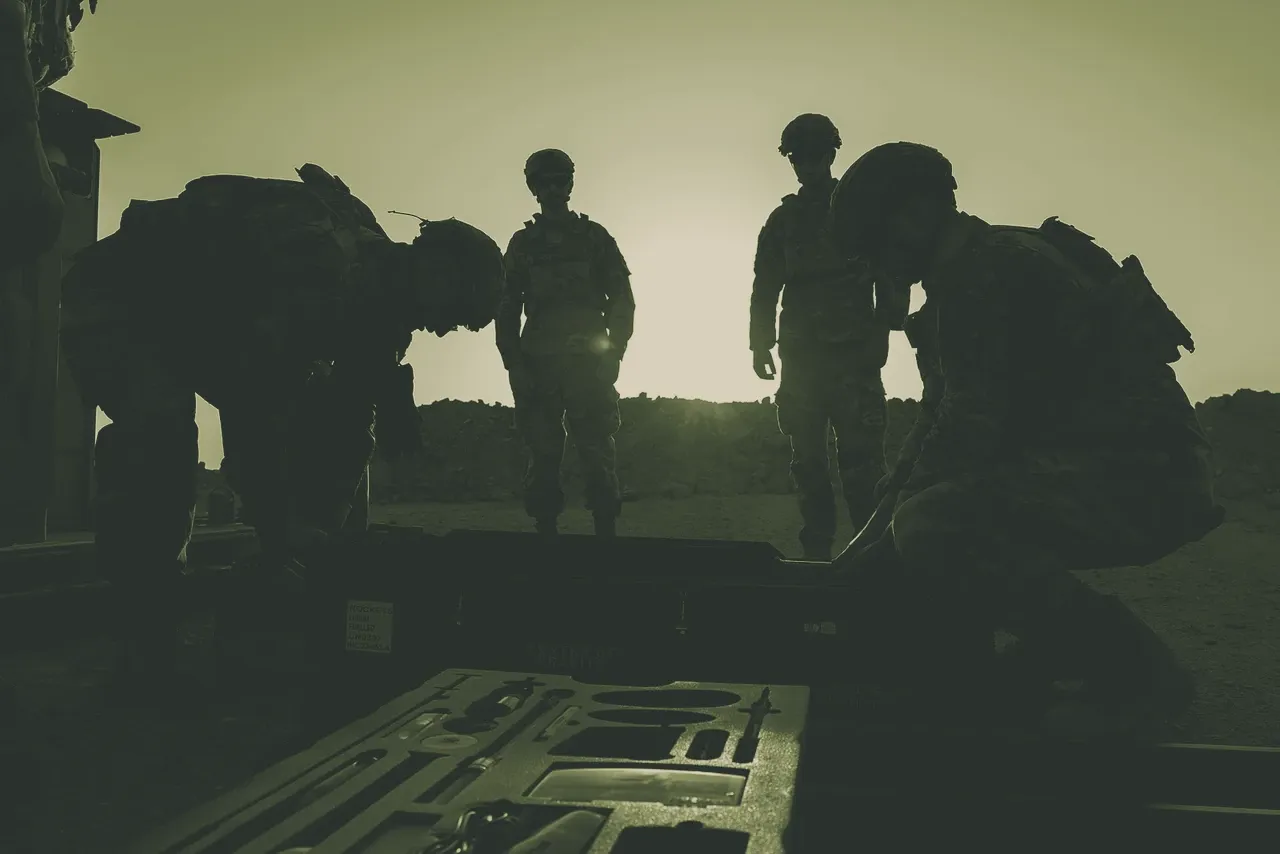
The U.S. Army’s primary expendable kinetic counter-drone interceptor — jet-turbine powered, paired with KuRFS radar, and now deploying aboard Navy destroyers.

Overview

The Raytheon Coyote is an expendable, tube-launched interceptor purpose-built to destroy Group I and II unmanned aircraft systems at ranges of 10–15 km. It forms the kinetic layer of the Low, Slow, Small-Unmanned Aircraft Integrated Defeat System (LIDS), fusing a Ku-band radar, the Forward Area Air Defense Command and Control (FAAD C2) network, and a two- or four-round launcher into a mobile or palletized air-defense point. The interceptor itself is a rocket-boosted, turbine-sustained airframe with an RF seeker and a compact fragmentation warhead, optimizing a cost-exchange ratio that the Army sought after watching cheap Shahed-class drones overwhelm legacy SAMs. The Coyote has been the Army’s go-to counter-drone weapon in CENTCOM since 2019 and has now migrated to the U.S. Navy’s Arleigh Burke-class destroyers, while Qatar and the UAE have ordered the system.

Development

The Coyote’s roots trace to Advanced Ceramic Research (ACR) in Tucson, Arizona, which flew the base airframe in 2007 under Office of Naval Research small-business contracts. NOAA later adopted the platform for hurricane reconnaissance, deploying it operationally in September 2014. After ACR passed through BAE Systems and Sensintel, Raytheon acquired Sensintel in 2015 and folded the Coyote into its missile-and-defense portfolio, according to Wikipedia and Designation-Systems. The Army’s counter-drone requirement then accelerated the design: the propeller-driven Block 1B, paired with a Raytheon KuRFS radar and called “Howler,” achieved an initial operational capability in June 2019, barely 17 months after development started. The jet-turbine Block 2 followed to extend speed and range against larger Group II threats and was cleared for international sales in March 2020.

The surge of drone attacks on U.S. forces in the Middle East after October 2023 precipitated a series of urgent production buys. The Army obligated $75 million for 600 Block 2C interceptors in January 2024 and added a $197 million follow-on contract in September 2024, DefenseScoop and Stars and Stripes reported. That episodic buying was institutionalized in September 2025, when the Pentagon awarded Raytheon a single $5.04 billion umbrella contract for Coyote (kinetic and non-kinetic variants) and KuRFS radars through September 2033, anchoring the architecture for a decade, as detailed by Army Recognition.

Design & capabilities

The current-production Block 2C fits a 0.91 m airframe with a 1.5 m wingspan and weighs roughly 5.9 kg. It launches from a pneumatic canister, shedding a rocket booster before a miniature turbine sustainment engine accelerates it to about 345–370 mph (555–595 km/h). An RF seeker provides terminal homing, and a tungsten fragmentation warhead of ~1.8 kg detonates by proximity or impact. If the first pass misses, the interceptor can loiter for up to about four minutes and re-engage, according to Designation-Systems. Engagement range is cited at 10–15 km, limited primarily by the KuRFS radar’s detection envelope; KuRFS scans 360° in Ku-band and can pick up a Group I drone out to roughly 16 km, while also tracking rocket, artillery, and mortar fire. The FAAD C2 system sequences targets, enabling a single battery to handle multiple threats sequentially, though the exact simultaneous-engagement count remains unpublished.

The Block 3 / Coyote Launched Effect Short Range (LE SR) variant diverges from the expendable model. It uses an electric motor, is recoverable, and can carry non-kinetic payloads—electronic warfare, ISR, or communications relay—and has been test-fired from a Bradley’s TOW launcher and a Bell 407 helicopter in March 2025. The Navy’s August 2025 deployment of launchers on USS Bainbridge and USS Winston S. Churchill, followed by an upgraded 8-cell container aboard USS Carl M. Levin in April 2026, marks the Coyote’s move to shipboard counter-drone defense, The War Zone noted.

Variants

  • Block 1B – original propeller-driven C-UAS version (~81 mph), RF seeker, paired with KuRFS for the Howler configuration; now legacy.
  • Block 2 / 2C – jet-turbine kinetic standard with 345–370 mph speed and 10–15 km range; current production baseline.
  • Block 2+ – Block 2 upgrade with a forward-firing warhead for the M-LIDS configuration.
  • Block 3 / Coyote LE SR – recoverable, electrically driven launcher effect; non-kinetic payloads; tested from Bradley TOW and helicopters; also fielded by NOAA in an ISR role.
  • NOAA ISR variant – baseline unarmed airframe used for weather reconnaissance since 2014.

Combat record / operational use

Coyote interceptors have been the U.S. Army’s principal kinetic defense against Houthi and Iranian-proxy drones in the CENTCOM theater since at least 2019, with intense use documented during the drone and missile campaign that erupted after October 2023. Army acquisition chief Doug Bush publicly stated in March 2024 that LIDS was “fielded a lot--primarily to CENTCOM” and called the Coyote “one of the most effective ones we have right now,” DefenseScoop reported. Specific engagement counts and success rates remain classified. The Navy’s adoption from August 2025 extended the system to shipboard drone defense in the Red Sea and the Pacific, with launchers visible on deployed destroyers. Qatar secured a $1 billion FMS package of 10 fixed-site LIDS and 200 Block 2 Coyotes in November 2022, and in March 2026 the State Department notified Congress of a comparable FS-LIDS sale to the United Arab Emirates, both tracked by Army Recognition and The War Zone.

Advantages

  • Cost-exchange ratio – a ~$100,000–125,000 expendable interceptor that kills a $20,000–50,000 drone offers a far better economic equation than a Patriot PAC-3 at ~$4 million per shot, a rationale the Army repeatedly cites.
  • Combat-proven – extensive, sustained use in CENTCOM since 2019, with senior officials confirming high effectiveness.
  • Multi-platform – launches from pneumatic canisters, tube-style launchers on M-ATV vehicles, palletized fixed sites, and containerized modules aboard destroyers, and Block 3 adds Bradley and helicopter compatibility.
  • Stable production – the $5.04 billion umbrella contract through 2033 eliminates stop-start urgent buys and secures predictable delivery.
  • Re-attack capability – loiter time of ~4 minutes and an RF seeker allow a second pass if the first misses, a performance edge over many one-shot C-UAS systems.

Drawbacks / limitations

  • Swarm saturation – at $100,000+ per shot, a 1,000-drone attack would consume more than $100 million in interceptors, an order-of-magnitude worse than the cost of the threat; Army planners openly acknowledge this is unresolved, as cited by Army Recognition.
  • Target ceiling – the Block 2 RF seeker and small warhead are optimized for Group I–II UAS; large aircraft, cruise missiles, and ballistic threats are outside the design envelope.
  • Opaque combat data – public confirmation of engagement totals, intercept rates, and failure modes is absent, meaning effectiveness claims rest on official statements rather than independently verifiable operational records.
  • Supply-chain fragility – the program moved to a long-term umbrella contract precisely because repeated short-term orders could not sustain a reliable production cadence.
  • Block 3 is immature – the reusable, non-kinetic variant remains in development and has not been validated in a contested electromagnetic environment.

Counterparts

Outlook

The Coyote has become the U.S. Army’s foundational kinetic counter-drone layer in less than a decade, and the 10-year umbrella contract cements its place at least through 2033. The fundamental question is whether an expendable interceptor that costs ~100 times more than the drone it kills can survive an adversary’s mass production: Army planning documents and senior officials already flag swarm economics as the program’s critical vulnerability. The Block 3 reusable variant, with an EW payload that can be recovered and re-flown, is the near-term technological answer, but its performance in GPS-denied or jammed environments is unproven. The Navy’s entry, and the Gulf allies’ procurement of the same architecture, expand the addressable demand for RTX and will stress-test the idea that a single, relatively cheap interceptor can scale from land-based point defense to the open ocean.

Key specifications

Spec Value
Type expendable kinetic counter-UAS interceptor (Block 2)
Engagement range 10–15 km
Engagement altitude not publicly established; up to 30,000 ft (9,100 m) MSL in ISR configuration
Target set Group I–II unmanned aircraft systems, small loitering munitions
Interceptor(s) Block 2C: 0.91 m length, 1.5 m wingspan, ~5.9 kg, rocket-boosted turbine, RF seeker, ~1.8 kg fragmentation warhead
Radar / fire control KuRFS Ku-band radar (360°, Group I detection ~16 km) + FAAD C2
Reaction time not publicly established
Simultaneous engagements not publicly established
Mobility M-LIDS (two M-ATV, one with 2-round launcher), FS-LIDS (palletized 4-round launcher), Navy 4- or 8-cell containerized launcher

Sources

  1. Wikipedia — Raytheon Coyote — https://en.wikipedia.org/wiki/Raytheon_Coyote
  2. Army Recognition — Pentagon Awards Raytheon $5.04B Army Contract for Coyote Counter-UAS and KuRFS radars — https://www.armyrecognition.com/news/army-news/2025/pentagon-awards-raytheon-5-04b-army-contract-for-coyote-counter-uas-and-kurfs-radars
  3. Designation-Systems.Net — Raytheon Coyote — https://www.designation-systems.net/dusrm/app4/coyote.html
  4. The War Zone — Coyote Loitering Drone Interceptors Have Arrived On U.S. Navy Destroyers — https://www.twz.com/sea/coyote-loitering-drone-interceptors-have-arrived-on-us-navy-destroyers
  5. DefenseScoop — Army awards contract to Raytheon for Coyote counter-drone interceptors $197M — https://defensescoop.com/2024/09/27/army-awards-contract-coyote-interceptors-raytheon-counter-drone-197m/
  6. Army Recognition — U.S. Army to Secure Coyote Interceptors in First Long-Term Deal as Drone Swarms Surge — https://www.armyrecognition.com/news/army-news/2026/u-s-army-to-secure-coyote-interceptors-in-first-long-term-deal-as-drone-swarms-surge
  7. DefenseScoop — Army buys 600 additional Coyote counter-drone weapons amid attacks on US troops — https://defensescoop.com/2024/02/09/army-600-coyote-counter-drone-rtx/
  8. The Defense Post — US Army Awards Raytheon $5 Billion Deal for Coyote Missile System — https://thedefensepost.com/2025/09/30/us-army-raytheon-coyote/
  9. Calibre Defence — $5 billion contract to Raytheon for Coyote interceptor — https://www.calibredefence.co.uk/5-billion-contract-to-raytheon-for-coyote-interceptor/
  10. Stars and Stripes — Army awards $75 million contract for drone interceptors amid uptick in unmanned attacks — https://www.stripes.com/branches/army/2024-02-12/army-coyote-drone-interceptors-12977363.html
FIELD DISPATCH · WEEKLY

BattlePolicy Weekly — free.

Defense tech, startups, and security — weekly. No paywall.

Related
China · USA · Policy · 1260H · Alibaba · BYD · Autel · Unitree · military-civil fusion

The Pentagon's China military list now reaches drones, robots, and memory chips

The Pentagon's expanded 1260H roster reaches past Alibaba and BYD to the dual-use suppliers, drone maker Autel and robot maker Unitree among them, that feed China's defense base.

China · USA · Policy · 1260H · Alibaba · BYD · Autel · Unitree · military-civil fusion
USA · Autonomy · analysisPro

The Drone War Gets a Command

In one week the Senate moved to create a four-star drone command, the Pentagon cleared its first force-wide counter-drone system, and a Ukraine-tested startup won a $500 million counter-drone deal.

USA · Autonomy · analysis
USA · Air Defense · SkyValor · CACI · JIATF-401 · counter-drone · Perennial Autonomy

Pentagon clears SkyValor, an autonomous counter-drone system that nets and jams, for force-wide use

A southern-border test validated CACI's net-and-jam system for the entire US military, the latest move in a counter-drone scramble shaped by the drone war in Ukraine and by hostile drones now killing American troops.

USA · Air Defense · SkyValor · CACI · JIATF-401 · counter-drone · Perennial Autonomy