Trump Didn't Change His Mind on Patriots. America Ran Out.
Trump promised Kyiv a licence to build Patriot missiles, then took it back. The reason sits in a depleted US arsenal and a single Alabama factory, not in the president's mood.
Trump promised Kyiv a licence to build Patriot missiles, then took it back. The reason sits in a depleted US arsenal and a single Alabama factory, not in the president's mood.
Boeing and Camp David
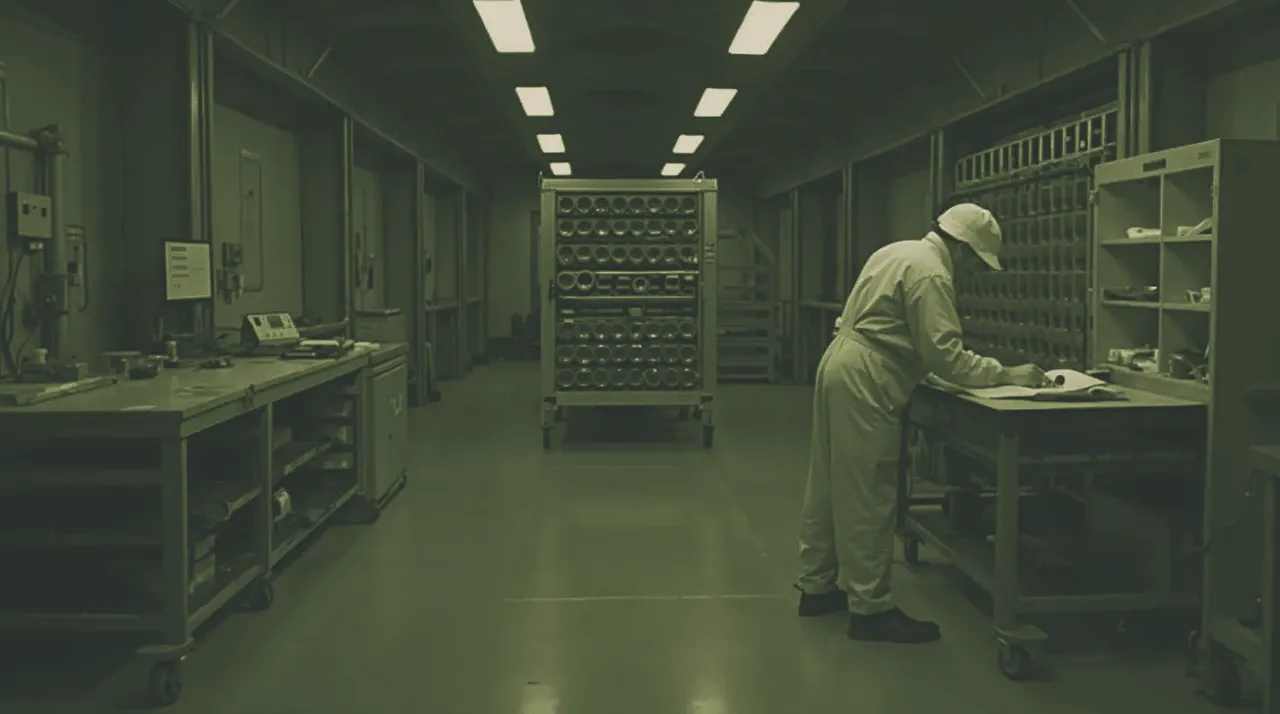
Boeing's single seeker plant in Huntsville turns Donald Trump's Patriot reversal from caprice into industrial arithmetic. The facility builds the active radar seeker for every PAC-3 MSE and delivered only about 650 to 700 of them in 2025, the Foreign Policy Research Institute found. The Ka-band active electronically scanned array seeker is also the component Boeing has refused to license Ukraine to produce, Die Welt's Christoph Wanner reported. The licence was never Trump's alone to give.
At a Cabinet meeting at Camp David on July 31, Trump said, "We have not agreed to that. We're talking about it. But it's a hard thing to give away that kind of technology." He added that Washington had to be "very careful about letting somebody build them" because a recipient could "someday turn on you."
The sequence sharpened the contradiction. Zelensky said Trump had agreed to provide the licence during their July 28 White House meeting. Trump then told the Financial Times he was "not sure" and that Washington was "looking at it." After speaking with Vice President JD Vance on July 31, Zelensky said the issue "remains a top priority." Washington had moved from promise to review.
759 to 827 Patriots
The US arsenal makes "no" the honest near-term answer. CSIS estimates that American Patriot holdings fell from about 2,330 interceptors before the Iran war to between 759 and 827, while THAAD inventory dropped from 452 to between 234 and 278. The think tank calculated that US forces may have fired as much as 67% of the Patriot inventory and 48% of THAAD stocks.
US forces fired between 1,060 and 1,430 Patriots over the campaign, each costing roughly $3.9 million, and about 1,300 PAC-3 rounds during the 39-day Operation Epic Fury, which ceased on April 8. At the 2025 production rate of 620 missiles a year, restoring the stock to last year's level would take about 2.5 years, even if every new interceptor went to the United States and none were fired.
Those estimates are not Pentagon inventory figures, and the Pentagon has not publicly confirmed them. But the direction is consistent across the assessments, and the substitution options are narrow. "There are no good alternatives to Patriot and THAAD for ballistic missile defense," CSIS analysts Mark Cancian and Chris Park concluded.
A president asked to release Patriot technology is therefore being asked to spend an asset already overdrawn. The technology transfer would not remove a missile from storage, but it would commit scarce components, engineers and supplier capacity that Washington now needs for its own replenishment. The distinction between intellectual property and industrial capacity collapses when both depend on the same production line.
Huntsville and the 30-month motor
The binding constraint sits below Lockheed Martin. FPRI found that the primary PAC-3 bottleneck "sits one level below the prime contractor," and put lead times at 24 months for missile assembly and 30 months for solid rocket motor curing.
Two suppliers define the ceiling. Boeing produces the seeker in Huntsville, while L3Harris Aerojet Rocketdyne supplies the solid rocket motor, FPRI identified. The Pentagon signed a framework with Boeing in April 2026 to triple seeker production. That expansion addresses the component that caps final assembly regardless of how much space or labor Lockheed adds.
The Pentagon widened the intervention on August 3. The Defense Department signed framework agreements worth more than $3 billion with Lockheed Martin and Northrop Grumman to triple PAC-3 capacity and quadruple THAAD component output. The initiative establishes a second source for PAC-3 solid rocket motors and supports a long-term Pentagon objective to procure nearly 14,000 interceptors.
That is what a licence cannot transfer. It grants a right to build. It does not create a qualified seeker supplier, cure a rocket motor or certify a new factory.
Michael Cadenazzi, the assistant secretary of defense for industrial policy, told Breaking Defense that the "hard part" of licensing PAC-3 production to Ukraine is qualifying and certifying an indigenous supply chain. "There's only so many engineers that know how to do this stuff. There's only so many qualified parts," he said. A cheaper and less capable variant could prove harder to certify because engineers must establish the same reliability while introducing different parts and suppliers, Cadenazzi added.
Washington could authorize Ukrainian final assembly and still leave Kyiv dependent on American seekers and motors. Boeing's refusal closes the route to a genuinely indigenous MSE line, while the existing US component stream is already committed to rebuilding American stocks. A licence without a certified supply chain would formalize permission, not production.
$58.62 billion and the queue
The money confirms that Washington is buying time measured in years. On July 29, the Army awarded Lockheed a multiyear PAC-3 MSE agreement worth up to $58.62 billion, converting an earlier one-year, $4.7 billion action into a seven-year plan covering fiscal 2026 through 2032.
Lockheed says the plan will triple PAC-3 MSE capacity by the end of 2030. The company expects to increase employment at Camden, Arkansas, from about 1,200 to 1,850 and invest another $8 billion to $9 billion through 2030 across more than 20 US facilities. Production rose from roughly 500 interceptors in 2024 to 620 in 2025, about 52 a month, per Army Recognition's production analysis. The new target is about 2,000 a year, which would lift the rate to roughly 167 a month.
Even that expansion does not clear the queue. "It takes several years to produce a missile. If you put money into the system today, you wouldn't get a missile for three or four years. Sometimes even five," Cancian told the BBC. "What we're getting now are missiles that were funded in 2023."
The Army is also reopening an older supply channel. It awarded Raytheon a $441.6 million modification for new-production PAC-2 GEM-T interceptors, the first domestic PAC-2 order in more than three decades. RTX booked more than $5 billion in GEM-T orders during the second quarter of 2026, driven by international customers and including that US order, chief executive Chris Calio said.
The market signal is demand that the primes cannot serve simultaneously. Lockheed must rebuild the US PAC-3 inventory while filling allied requirements. Raytheon has more than $5 billion in GEM-T orders while the Army returns as a domestic customer after three decades. Ukraine enters a queue in which the United States can redirect output toward itself.
A chip that costs no interceptors
The licence retains political value precisely because it costs the arsenal nothing today. FPRI's 24-month assembly timeline, the 30-month motor process and Cadenazzi's certification warning mean that approval would not put Ukrainian-built interceptors into service soon. Washington can offer the prospect of future production without transferring one of the estimated 759 to 827 Patriots remaining now.
That makes the licence useful as a bargaining instrument, although the industrial evidence does not establish Trump's intent. At Camp David, Trump said he had told Zelensky, "You got to get this war over." He also said Zelensky and Vladimir Putin "are both going to have to make some concessions." Their July 28 meeting covered both Patriot production and efforts to revive talks with Russia.
The assessment is narrower than a claim of a planned quid pro quo. Scarcity makes immediate interceptor transfers expensive and licensed production remote. The word "licence" survives between those constraints because Washington can grant, delay or condition it without drawing down the stockpile today.
ACE and Freyja
PAC-3 ACE is the first indicator that the Huntsville constraint may loosen. Lockheed unveiled the Adapted Capability Effector at Farnborough on July 20 at less than half the MSE unit cost, and expects the first test in early 2028.
More important, Lockheed intends to produce the ACE seeker overseas. Tim Cahill, Lockheed's president for missiles and fire control, told Breaking Defense that the company had issued a request for information to European radio-frequency and seeker specialists, naming Saab and Diehl as examples of firms with the required expertise. If Lockheed qualifies a European seeker, Huntsville stops dictating the cheaper branch of Patriot production, although ACE does not replace MSE across its full mission.
Freyja takes the industrial argument further. Ukraine formally launched the Integrated Anti-Ballistic Missile Coalition in Paris on July 13 alongside nine other countries, among them Denmark, France, Germany, Italy, the Netherlands, Norway, Spain, Sweden and the United Kingdom. The Ukrainian-designed system centers on an interceptor priced at about $700,000, roughly one-fifth of a PAC-3 round. Zelensky called it "an analogue of Patriot, but a system for more mass production and a cheaper system."
Kyiv's answer to a Patriot licence it cannot secure now is to build around that licence. Lockheed is moving toward a cheaper interceptor with a European seeker; Ukraine and nine partners are pursuing a separate system at one-fifth the price. If either route produces qualified seekers and motors outside the existing US bottlenecks, Washington's refusal will become less decisive, because the industrial dependence that gives the licence its value will have begun to disappear.
Frequently Asked Questions
What did Trump actually say about the Patriot licence?
At a Cabinet meeting at Camp David on July 31 he said "we have not agreed to that. We're talking about it. But it's a hard thing to give away that kind of technology," and warned that a recipient could "someday turn on you." Zelensky had said after their July 28 White House meeting that Trump agreed to provide the licence.
Why can't a licence alone let Ukraine build Patriots?
A licence grants a right to build, not a supply chain. Boeing makes the seeker for every PAC-3 MSE at one plant in Huntsville, Alabama, and has refused to license Ukraine to produce it, Die Welt reported. FPRI puts assembly lead time at 24 months and solid rocket motor curing at 30 months.
How depleted is the US Patriot stockpile?
CSIS estimates holdings fell from about 2,330 interceptors before the Iran war to between 759 and 827, with THAAD down from 452 to between 234 and 278. The Pentagon has not publicly confirmed those figures.
What is the US doing to rebuild production?
The Army awarded Lockheed Martin a multiyear PAC-3 MSE deal worth up to $58.62 billion on July 29, covering fiscal 2026 through 2032. On August 3 the Defense Department signed more than $3 billion in framework agreements with Lockheed and Northrop Grumman to triple PAC-3 and quadruple THAAD component output.
How long until new money becomes missiles?
"If you put money into the system today, you wouldn't get a missile for three or four years. Sometimes even five," CSIS analyst Mark Cancian told the BBC. Current deliveries, he said, come from missiles funded in 2023.
What are Ukraine's alternatives to the Patriot?
Kyiv launched the Integrated Anti-Ballistic Missile Coalition in Paris on July 13 with nine other countries to field Freyja, a Ukrainian-designed system whose interceptor targets about $700,000, roughly one-fifth of a PAC-3 round. Lockheed's cheaper PAC-3 ACE, unveiled July 20, is expected to fly first in early 2028.
AI-generated summary, reviewed by an editor. More on our AI guidelines.

Marcus Schuler
Marcus Schuler edits BattlePolicy, a daily defense-technology brief connecting the companies and capabilities behind modern war to the contest among Europe, the US, Russia, and China.