GRID-REF 37°47′N 122°25′W
DISPATCH 02/26 · 9 Jun 2026
BATTLEPOLICY
Startup to front line. Strategy to consequence.
Lexicon · China

HQ-9B

China's indigenous long-range air-defense system, a Sinicized S-300 evolution with a claimed 260 km reach, limited anti-ballistic capability, and a growing operator list, though its combat effectiveness remains largely unproven.
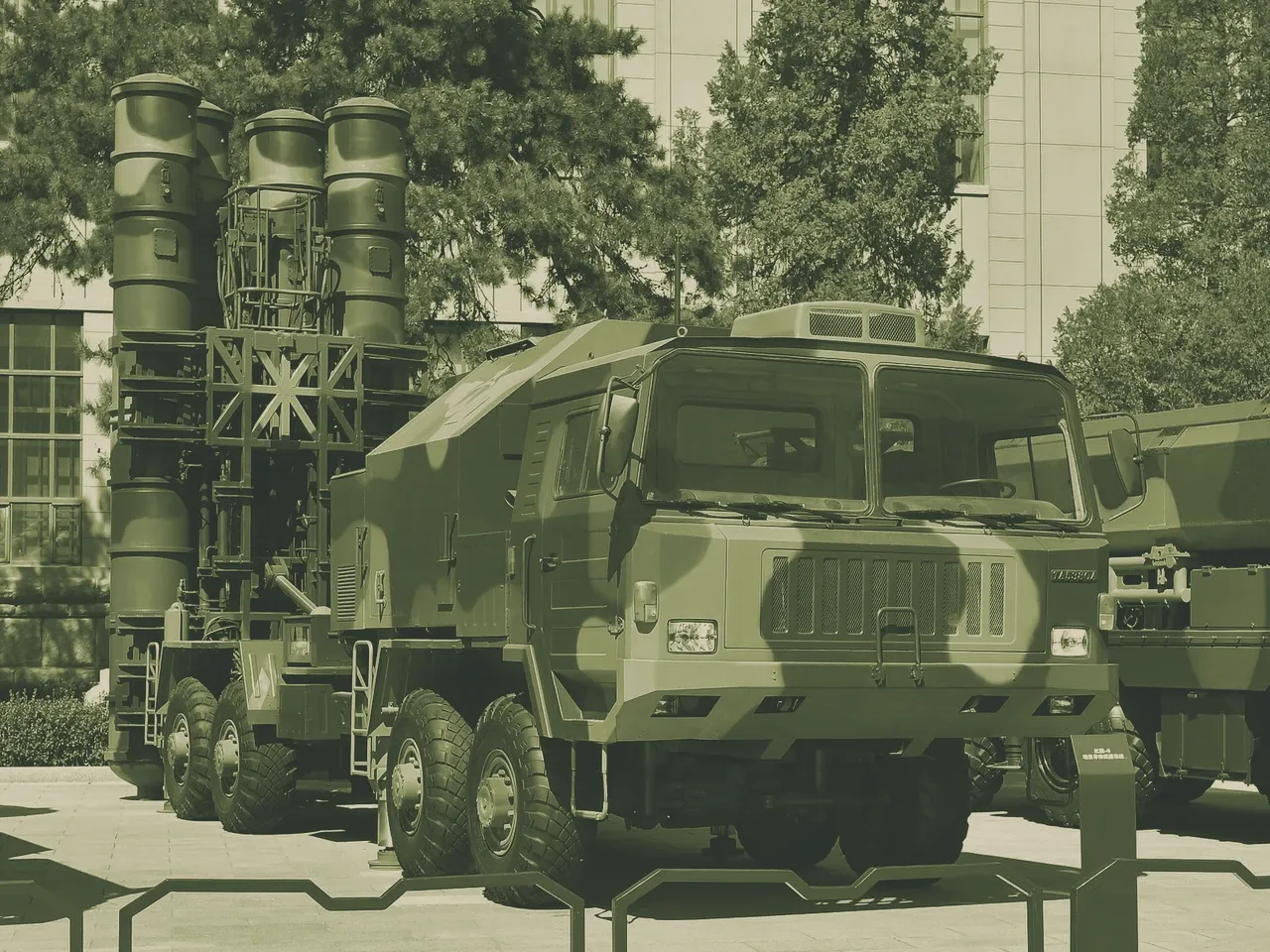
HQ-9B
FIG.01 · China Image - A Chinese HQ-9 surface-to-air missile system. Photo by Tyg728, CC BY-SA 4.0, via Wikimedia Commons.
China’s homegrown long-range surface-to-air missile system, a road-mobile layer that fills the same tier as the S-400 and Patriot, and Beijing’s leading air-defense export — though its combat record is both limited and contested.

Overview

The HQ-9B (Hongqi-9B) is the most advanced member of the HQ-9 family of long-range, road-mobile surface-to-air missile systems manufactured by the China Aerospace Science and Industry Corporation (CASIC) and exported via CPMIEC. Though the system bears a clear technical debt to the Russian S-300P, it has been developed as a fundamentally indigenous weapon, entering Chinese service in the 1990s and undergoing successive upgrades that have pushed its envelope further with each generation. The HQ-9B, fielded in the 2010s, adds a dual-mode seeker and extended range that, according to PLA-affiliated sources, stretches to approximately 260 km against aerodynamic targets. It forms the upper tier of the People’s Liberation Army Air Force’s integrated air-defense network and has been sold to a small but growing roster of foreign operators, most notably Pakistan and Azerbaijan. Its combat exposure is, to date, confined to Pakistan’s disputed employment during the May 2025 India–Pakistan clashes, an episode that has yet to yield a clear, independent assessment of its battlefield worth.

Development

The baseline HQ-9 originated in the 1980s as a project to replace the obsolescent HQ-2 (a local SA-2 derivative) with a system roughly equivalent to the Soviet S-300P, which China had begun to receive in limited numbers. Initial operational capability is estimated at about 1997, according to open-source tracking by Wikipedia. The improved HQ-9A followed around 2001, and the HQ-9B appeared in the 2010s with substantially revised guidance and an enlarged engagement footprint, as detailed by Quwa. In parallel, CASIC created the export-oriented FD-2000, which briefly attracted Turkey in a 2013 competition before Ankara cancelled the deal under Western pressure. Pakistan became the first major foreign operator, formally inducting a tailored variant, the HQ-9P, in 2023, according to TURDEF. Azerbaijan’s receipt of the HQ-9BE was subsequently confirmed by leaked video footage in November 2025, reported by Defence Security Asia, marking the system’s first confirmed delivery outside China’s traditional circle of clients.

Design & capabilities

The HQ-9 family employs a cold-launch vertical-launch concept; the two-stage missile weighs approximately 2,000 kg and carries a 180 kg high-explosive fragmentation warhead, achieving speeds in excess of Mach 4, according to Army Recognition. The baseline and HQ-9A rely on semi-active radar homing (SARH) with track-via-missile mid-course updates, while the HQ-9B introduces a passive infrared seeker alongside the active radar terminal sensor, conferring dual-mode terminal guidance that improves resistance to jamming and offers a limited ability to engage low-observable targets.

The fire-control chain integrates the HT-233 PESA engagement radar with a separate acquisition radar suite. Export-configuration batteries typically pair the Type 120 low-altitude radar with the longer-range Type 305A AESA search radar, an arrangement described by Army Recognition. Manufacturer-issued literature claims an engagement range of up to ~260 km against aircraft and ~50–100 km against tactical ballistic missiles for the HQ-9B; earlier models are capped around 120–125 km. The system’s maximum altitude for the HQ-9B is estimated at roughly 50 km, and it is advertised as capable against aircraft, cruise missiles, unmanned aerial systems, and limited TBMs. Missiles are carried on eight-round wheeled 8×8 transporter-erector-launchers, making the battery road-mobile and capable of displacing after a short emplacement to complicate counter-fire.

Variants

  • HQ-9 (baseline): First-generation TVM / SARH guidance, IOC ~1997, range ~120 km.
  • HQ-9A: Improved electronics, IOC ~2001.
  • HQ-9B: Current generation, dual-mode IR + SARH seeker, range envelope extended to ~260 km (claimed), low-level engagement improved.
  • HQ-9BE: Export derivative of the B; confirmed in Azerbaijani service.
  • HQ-9P: Pakistan-specific variant, first inducted in 2023; reported range ~125 km vs aircraft.
  • HHQ-9: Naval variant deployed on the Type 052C and Type 052D destroyers, using a 48-cell vertical launch system.
  • FD-2000: Downgraded export baseline, offered to Turkey and other customers.

Combat record / operational use

No branch of the People’s Liberation Army has employed the HQ-9 in combat. The sole reported hostile use occurred during the May 2025 India–Pakistan border escalation, where Pakistani HQ-9/P batteries were activated alongside shorter-range HQ-16 units. According to a post-conflict analysis by the Belfer Center, the system “showed vulnerabilities,” with Indian stand-off munitions penetrating the layered defenses. A separate GIS Reports study noted that the episode dented the export reputation of the HQ-9 family. No independent battle-damage assessment or verified kill claim has been made public, and the real-world effectiveness of the HQ-9B remains subject to intense debate.

Advantages

  • Dual-mode seeker (IR + SARH) on the HQ-9B provides resilience against electronic attack and some capability against low-observable targets.
  • Road-mobile 8×8 TELs allow rapid relocation and complicate targeting.
  • Claimed engagement envelope that, if real, places it in the same reach-class as the S-400, at a significantly lower unit cost.
  • Integrated into China’s growing, networked ground-based IADS, serving as the upper-tier interceptor above HQ-16 and HQ-17 systems.
  • Expanding export footprint, now reaching Central Asia, North Africa, and the Caucasus, giving Beijing a strategic air-defense sales channel that directly competes with Russian and Western offerings.

Drawbacks / limitations

  • Combat effectiveness is unproven and the sole operational test (Pakistan 2025) was viewed as a net negative for the system’s reputation.
  • All range and capability figures are manufacturer or official Chinese claims, unverified by independent testing in open sources.
  • The system’s radar emitters, being large and relatively mature, present a significant electronic signature and are likely vulnerable to modern anti-radiation missiles and electronic warfare.
  • Export variants are understood to be degraded relative to the self-defense version fielded by the PLA; the actual performance gap is not publicly established.
  • The claimed anti-ballistic-missile capability has not been demonstrated outside of scripts; intercepting a maneuvering TBM at even 50–100 km remains a high-barrier engagement.

Counterparts

Outlook

The HQ-9B will remain the backbone of China’s long-range ground-based air defense for the foreseeable future, with continued production and iterative upgrades likely. At the same time, the PLA is fielding the exo-atmospheric HQ-19 to address the ballistic-missile tier above it, while export customers incrementally integrate the HQ-9 family alongside older Russian systems. Whether the HQ-9B ever earns a combat reputation comparable to its Russian or Western peers will depend on its future employment — and on transparent, independent data that remains entirely absent today.

Key specifications

Spec Value
Type Mobile long-range SAM system
Engagement range up to ~260 km vs aircraft (manufacturer claim) / ~50–100 km vs TBM (claimed)
Engagement altitude ~500 m – 27 km (baseline); HQ-9B ceiling ~50 km (est.)
Target set aircraft, cruise missiles, UAS; limited tactical ballistic missiles
Interceptor(s) HQ-9 family (~2,000 kg missile, 180 kg warhead, >Mach 4)
Radar / fire control HT-233 PESA engagement; Type 120 + Type 305A AESA (export suite)
Reaction time ~12–15 s (FD-2000, est.)
Simultaneous engagements not publicly established
Mobility wheeled 8×8 TEL, road-mobile

Sources

  1. Army Technology — Hong Qi 9 (HQ-9) Air Defence Missile System. https://www.army-technology.com/projects/hong-qi-9-hq-9-air-defence-missile-system/
  2. Wikipedia — HQ-9. https://en.wikipedia.org/wiki/HQ-9
  3. Quwa — HQ-9 Long-Range Air Defence System. https://quwa.org/pakistan/air-defence-pk/hq-9-long-range-air-defence-system/
  4. Army Recognition — HQ-9B technical data. https://armyrecognition.com/military-products/army/air-defense-systems/air-defense-vehicles/hq-9b
  5. Defence Security Asia — Leaked Footage Confirms Azerbaijan’s HQ-9BE. https://defencesecurityasia.com/en/azerbaijan-china-hq9be-air-defence-system-leaked-footage/
  6. TURDEF — Pakistan Inducts New Air Defence System HQ-9. https://turdef.com/article/pakistan-inducts-new-air-defence-system-hq-9
  7. Belfer Center — China’s Role in the May 2025 India-Pakistan Conflict. https://www.belfercenter.org/research-analysis/chinas-role-may-2025-india-pakistan-conflict-strategic-and-global-implications
  8. GIS Reports — How the India-Pakistan conflict boosted China’s military exports. https://www.gisreportsonline.com/r/china-military-exports/
  9. US DoD — Military and Security Developments Involving the PRC 2024. https://media.defense.gov/2024/Dec/18/2003615520/-1/-1/0/MILITARY-AND-SECURITY-DEVELOPMENTS-INVOLVING-THE-PEOPLES-REPUBLIC-OF-CHINA-2024.PDF
FIELD DISPATCH · WEEKLY

BattlePolicy Weekly — free.

Defense tech, startups, and security — weekly. No paywall.

Related
China · Air Defense · taiwan · interceptors · patriot

China is building air-defense mass opposite Taiwan while America spends its own

Beijing fielded the HQ-16F, a Patriot-class mobile air-defense missile, opposite Taiwan in the same weeks the US burned through the interceptors it would need to defend the island. The contest is magazine depth, not exquisite platforms.

China · Air Defense · taiwan · interceptors · patriot
China · Land · grenade-launcher · precision · sniper · 35mm · 40mm · norinco

QLU-11

China's semi-automatic precision grenade launcher, fielded in 35mm for the PLA and 40mm for export — delivering airburst rounds through a window at 600 m.

China · Land · grenade-launcher · precision · sniper · 35mm · 40mm · norinco