Type 003 Fujian
China's first indigenously designed CATOBAR carrier, the Type 003 Fujian, is conventionally powered yet launches aircraft via electromagnetic catapults—a first for any non-US navy.
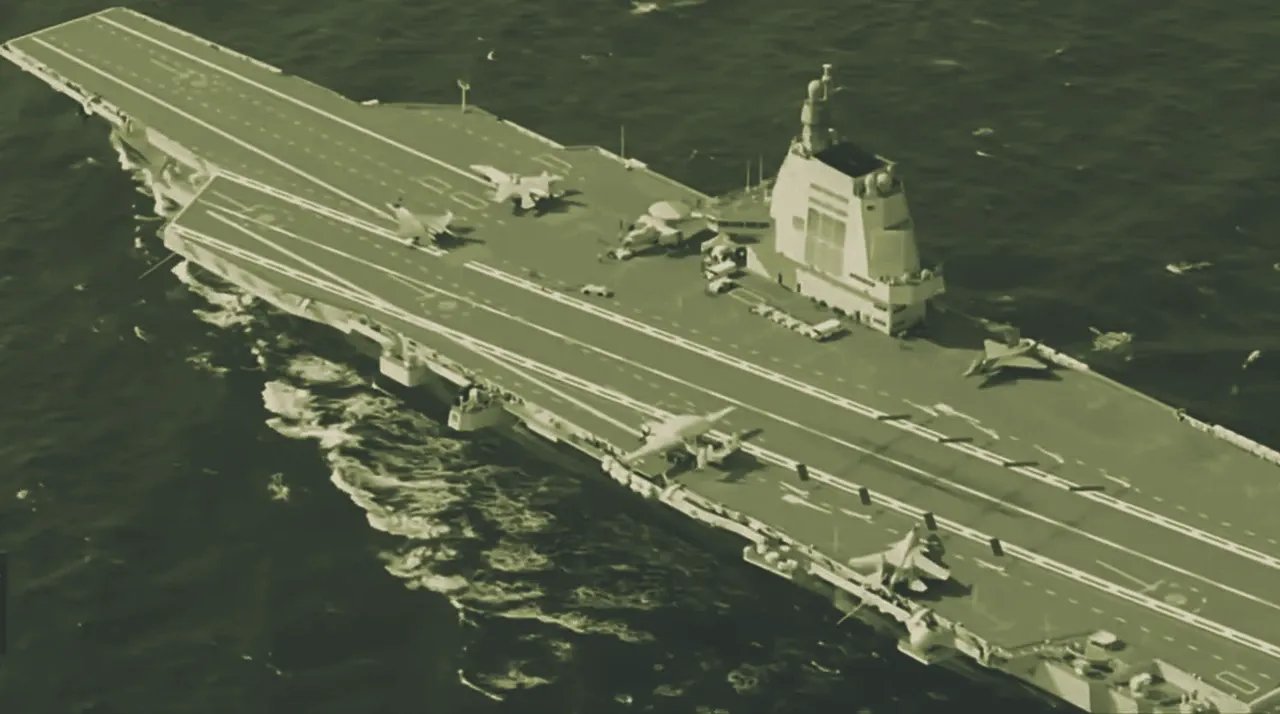
China's first indigenously designed CATOBAR aircraft carrier — conventionally powered but launching fighters and AEW&C aircraft via electromagnetic catapults, marking the PLAN's transition from ski-jump experimentation to blue-water power projection.
Overview
The Type 003 Fujian (pennant number 18) is the People's Liberation Army Navy's third aircraft carrier and the first to employ a catapult-assisted take-off but arrested recovery (CATOBAR) configuration. Built at Shanghai's Jiangnan Shipyard, the ship was commissioned on 5 November 2025 Naval News. Its defining technological leap is the installation of an electromagnetic catapult system (EMALS-type), making it the first non-United States carrier to field this capability. The Fujian represents China's progression from the Soviet-derived ski-jump carriers Liaoning and Shandong to a full-deck, catapult-equipped fleet carrier capable of launching heavier, higher-payload aircraft.
Development
Construction began with a keel-laying at Jiangnan Shipyard in 2016, following years of research and development into electromagnetic launch technology CSIS. The hull was launched on 17 June 2022 and spent over three years in fitting out and sea trials. A critical milestone occurred in September 2025 when the Fujian conducted the first catapult launches of its future air wing components, the J-35 stealth fighter and the KJ-600 airborne early warning aircraft USNI News. The carrier was formally commissioned into active service with the PLAN's South Sea Fleet at Hainan, a move signaling its primary orientation toward the South China Sea and the first island chain Asian Military Review.
Design & capabilities
The Fujian employs a conventional propulsion system—an integrated/turbo-electric powerplant generating sufficient energy for its three electromagnetic catapults—in contrast to the nuclear-powered US Ford-class Wikipedia. With a full-load displacement estimated at roughly 80,000 tonnes, it is the largest warship ever built in Asia. The flight deck is a straight-through, angled-deck configuration measuring approximately 316 to 320 meters long, lacking the bow ski-jump of its predecessors.
The carrier’s primary sensor suite includes large dual-band active electronically scanned array (AESA) panels integrated into the island structure. Defensive armament consists of close-in weapon systems and HQ-10-class point-defense missile launchers. The true combat power of the Fujian, however, lies in its air wing. Freed from the weight restrictions of a ski-jump, the ship can operate a full complement of fixed-wing aircraft reported to be between 40 and over 60 jets MilitaryFactory. Projected types include the J-15T/J-15B catapult-capable fighter, the next-generation J-35 stealth multirole fighter, and the KJ-600 carrier-borne AEW&C platform, a force multiplier absent from previous Chinese carriers.
Combat record / operational use
The Type 003 Fujian has no combat record, having been commissioned in late 2025. Following its formal entry into service, the ship began a working-up period designed to integrate its air wing and prove its complex catapult and recovery systems. The initial September 2025 catapult tests with the J-35 and KJ-600 served as the most significant public demonstration of its operational potential Armada International. The working-up process is expected to be arduous, as the PLAN transitions a generation of naval aviators trained on short-takeoff procedures to the high-tempo CATOBAR environment.
Advantages
- Electromagnetic catapults (EMALS): Enables launch of heavier aircraft (KJ-600 AEW&C, J-35 stealth fighter) with higher payloads and sortie rates than the ski-jump carriers Liaoning and Shandong.
- Large displacement: Offers significantly greater aviation fuel, ordnance, and hangar capacity compared to preceding Chinese carriers.
- CATOBAR versatility: Standardizes China’s carrier-launched aviation with its land-based counterparts and US/adversary practices, broadening tactical options.
- Indigenous design: Represents a fully domestic Chinese carrier design, moving away from the modified Soviet designs of earlier hulls.
- Force generation: A deck and layout built for sustained operations signals the maturing ambition for a globally credible Chinese naval air power.
Drawbacks / limitations
- Conventional propulsion: Lacking nuclear power, the ship must devote internal volume to fuel for its turbines and is tethered to the logistics of a fleet oiler for sustained blue-water operations, unlike nuclear supercarriers.
- Unproven technology integration: The combination of a domestic EMALS system with a new class of stealth fighters and AEW&C aircraft on a first-in-class hull presents a high-risk, multi-decade proving process.
- Sortie generation question: Even the US Ford-class experienced significant delays debugging its EMALS; a first-time effort by China via an integrated electric plant will likely face similar teething issues.
- Large target: Its immense size and strategic value make it a priority target in any high-end conflict, requiring a significant defensive escort to protect.
Counterparts
- Gerald R. Ford-class (USA)
- Admiral Kuznetsov (Russia)
Outlook
The Fujian is the keystone of China's naval modernization, bridging the gap between limited ski-jump carriers and any future nuclear-powered supercarriers. Its commissioning secures China’s position as the world's second-operational CATOBAR navy. The primary challenge for the PLAN in the coming decade will be evolving from operating a single high-end carrier to being able to deploy a multi-carrier CATOBAR task force. The success or failure of the Fujian's working-up period will directly inform the design and timetable of China's next-generation carrier, the Type 004.
Key specifications
| Spec | Value |
|---|---|
| Type | Conventionally powered CATOBAR supercarrier |
| Full-load displacement | ~80,000 t (est.) |
| Length / beam / draft | ~316–320 m / ~76–78 m / not publicly established |
| Propulsion | Conventional (integrated/turbo-electric) |
| Max speed (kts) | ~30 kt (est.) |
| Range / endurance | Not publicly established |
| Complement | ~3,000–4,000 (est., ship + air wing) |
| Armament | CIWS, HQ-10-class point-defense missiles |
| Sensors / combat system | Dual-band AESA panels on island; integrated combat system |
| Aviation facilities | 3 × electromagnetic catapults (EMALS); conventional arresting gear; air wing ~40 to >60 aircraft (J-15T, J-35, KJ-600) |
Sources
- ChinaPower (CSIS) — How Advanced Is China's Third Aircraft Carrier? https://chinapower.csis.org/china-type-003-fujian-aircraft-carrier/
- Naval News — Chinese Navy Takes Aircraft Carrier Fujian Into Active Service in Hainan https://www.navalnews.com/naval-news/2025/11/chinese-navy-takes-aircraft-carrier-fujian-into-active-service-in-hainan/
- USNI News — Chinese Aircraft Carrier Fujian Launches Stealth Jet, Early Warning Aircraft in Catapult Tests https://news.usni.org/2025/09/22/chinese-aircraft-carrier-fujian-launches-stealth-jet-early-warning-aircraft-in-catapult-tests
- Asian Military Review — China commissions its third aircraft carrier, Fujian https://www.asianmilitaryreview.com/2025/11/china-commissions-its-third-aircraft-carrier-fujian-foc/
- Armada International — China's third aircraft carrier commissioned https://www.armadainternational.com/2025/11/chinas-third-aircraft-carrier-commissioned-foc/
- MilitaryFactory — CNS Fujian (Type-003) Aircraft Carrier https://www.militaryfactory.com/ships/detail.php?ship_id=cns-fujian-type003-aircraft-carrier-china
- Wikipedia — Chinese aircraft carrier Fujian https://en.wikipedia.org/wiki/Chinese_aircraft_carrier_Fujian