Tomahawk
The BGM-109 Tomahawk is the US Navy’s primary subsonic land-attack cruise missile — a precision stand-off weapon launched from ships and submarines and used in every major US conflict since 1991.
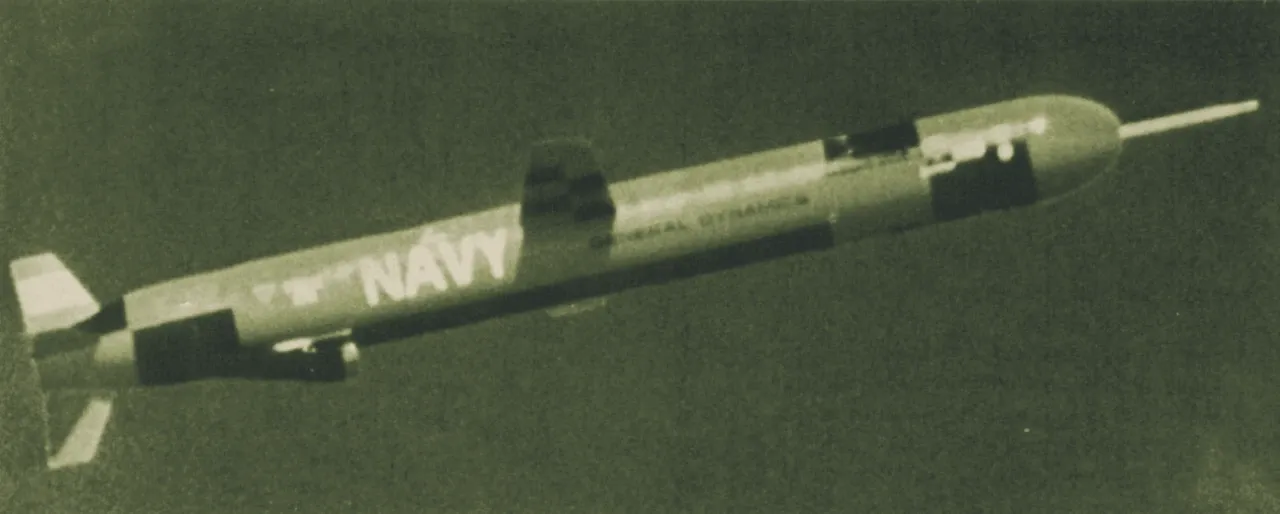
The US Navy’s primary long-range, subsonic land-attack cruise missile, launched from ships and submarines, in service since 1983 and used across the world’s hot spots.
Overview
The BGM-109 Tomahawk — widely known by its acronym TLAM (Tomahawk Land-Attack Missile) — is a turbofan-powered, subsonic cruise missile that forms the backbone of US naval deep-strike capability. Fired from surface combatants and submarines, it delivers a 1,000-lb-class unitary warhead against high-value, heavily defended fixed targets at ranges commonly cited as ~1,600 km (Block IV) to ~2,400 km for earlier variants. The missile has been in continuous production since 1983, with over 9,000 produced, and is operated by the US, United Kingdom, Australia, Japan, and the Netherlands. CSIS
Development
Development began in the early 1970s as a joint Navy/USAF project before the Air Force withdrew; the first flight took place in 1976, and the BGM-109A (nuclear-tipped TLAM-N) reached initial operating capability in 1983. Wikipedia The conventional Block II followed in 1986, introducing the WDU-36 unitary warhead. Through the 1990s and 2000s, incremental blocks added GPS, digital scene-matching (DSMAC), and an anti-jam GPS receiver. The Block IV “Tactical Tomahawk,” fielded from 2004, added a two-way datalink, loiter, and in-flight retargeting; the latest Block V recertification programme, supported by US and allied funding, extends service life and adds a maritime strike (Block Va) and a Joint Multi-Effects Warhead System (Block Vb). Naval Technology The nuclear-armed TLAM-N was retired from the fleet in the 2010s.
Design & capabilities
Tomahawk is a modular, 6.25-m (with booster), 0.52-m-diameter missile weighing roughly 1,470–1,600 kg at launch. A solid-propellant booster accelerates the missile to cruise speed, after which a Williams turbofan sustainer powers it at about Mach 0.74 (~245 m/s). RTX Mid-course guidance fuses inertial navigation (INS), terrain-contour matching (TERCOM), DSMAC, and GPS; Block IV/V missiles can loiter and be retargeted in flight via a two-way UHF datalink, while an onboard electro-optical/infrared sensor provides battle-damage assessment imagery. The 1,000-lb-class (~450 kg) WDU-36 unitary warhead is the standard fit; submunition dispenser variants existed, and the historical W80 nuclear warhead was carried by the TLAM-N. Accuracy is not officially published, though unofficial estimates place the circular error probable at 5–10 m. CSIS Launch platforms include the Mk 41 vertical launch system on cruisers and destroyers, submarine torpedo tubes and VLS, and, more recently, ground-based Typhon / Mid-Range Capability (MRC) launchers.
Variants
- Block II/III: Conventional unitary and submunition warheads; GPS added with Block III.
- Block IV (RGM-109E/UGM-109E “Tactical Tomahawk”): Two-way datalink, loiter, in-flight re-tasking. L3Harris
- Block V: Recertification and modernisation programme (service-life extension, improved navigation and communication). Sub-variants include Block Va (Maritime Strike Tomahawk, anti-ship seeker) and Block Vb (Joint Multi-Effects Warhead System).
- TLAM-N (retired): Nuclear-armed variant, W80 warhead, withdrawn in the 2010s.
- Ground-launched Tomahawk: Relaunched under the US Army’s Typhon / MRC programme as a land-based intermediate-range strike asset.
Combat record / operational use
Tomahawk made its combat debut during the opening salvos of Operation Desert Storm in January 1991, when hundreds were fired at Iraqi air defence and command nodes. Britannica It was subsequently used in strikes against targets in Yugoslavia (1995, 1999), Afghanistan (1998, 2001), Iraq (1993, 1996, 1998, 2003), Libya (2011), Syria (2014, 2017, 2018, 2019), and against Houthi targets in Yemen (2016, 2024). Since 2015, coalition navies — including the UK, Australia, and Japan — have employed the missile in expeditionary operations. CSIS The type remains the go-to weapon for “opening night” deep-strike missions where aircraft cannot be risked.
Advantages
- Very long stand-off range (~1,600–2,400 km) keeps the launch platform safe from most defences.
- Proven high accuracy (estimated 5–10 m CEP) against fixed targets.
- Two-way datalink on Block IV/V enables in-flight re-targeting and battle-damage assessment.
- Launched from widely deployed Mk 41 VLS-equipped ships and submarines, ensuring a large strike inventory afloat.
- Loiter capability allows time-sensitive targeting.
Drawbacks / limitations
- Subsonic speed makes the missile vulnerable to modern integrated air-defence systems and fighter interception.
- Relatively high unit cost (Block V ~$2.0–3.64 M) compared to some short-range alternatives.
- Dependence on GPS is a single-point-of-failure if jammed, though TERCOM/DSMAC provide fallbacks.
- The nuclear-armed variant has been retired, removing the strategic land-attack role.
- Export remains limited under MTCR constraints, restricting the number of allied operators.
Counterparts
Outlook
The US Navy is funding Block V recertification and modernisation to keep the Tomahawk in the fleet through at least the 2030s. Continued international interest — including from Australia and Japan — is extending the missile’s run, while the Army’s ground-launched Typhon programme gives the system a new land-based dimension. Work on a next-generation land-attack weapon (the Offensive Anti-Surface Warfare Increment 2) suggests a follow-on may begin to emerge in the 2030s, but for now Tomahawk remains the indispensable naval cruise missile.
Key specifications
| Spec | Value |
|---|---|
| Type | Turbofan subsonic cruise missile |
| Range | ~1,600 km (Block IV) to ~2,400 km (commonly cited for earlier variants) |
| Speed (Mach / km·s⁻) | ~0.74 (~245 m/s at altitude) |
| Warhead (type & weight) | 1,000-lb-class (~450 kg) unitary (WDU-36); submunition variant available; nuclear W80 historical (retired) |
| Guidance | INS + TERCOM + DSMAC + GPS; Block IV/V add two-way datalink, loiter, in-flight re-targeting |
| Accuracy (CEP) | not publicly established (~5–10 m unofficial estimate) |
| Launch platform(s) | surface ships (Mk 41 VLS), submarines, ground launchers (Typhon/MRC) |
| Propulsion | Williams turbofan sustainer + solid-propellant booster |
| Length / diameter / launch weight | 6.25 m (with booster) / 0.52 m / ~1,470–1,600 kg |
Sources
- CSIS Missile Threat — Tomahawk — https://missilethreat.csis.org/missile/tomahawk/
- Wikipedia — Tomahawk missile — https://en.wikipedia.org/wiki/Tomahawk_missile
- Britannica — Tomahawk cruise missile — https://www.britannica.com/technology/Tomahawk-cruise-missile
- RTX (Raytheon) — Tomahawk cruise missile — https://www.rtx.com/raytheon/what-we-do/sea/tomahawk-cruise-missile
- Naval Technology — US and allies commit more funding to Tomahawk Block V — https://www.naval-technology.com/news/us-and-allies-commit-more-funding-to-tomahawk-block-v-programme/
- L3Harris — Tactical Tomahawk — https://www.l3harris.com/all-capabilities/tactical-tomahawk