GRID-REF 37°47′N 122°25′W
DISPATCH 02/26 · 9 Jun 2026
BATTLEPOLICY
Startup to front line. Strategy to consequence.
Lexicon · China

HQ-16

China's medium-range SAM family — vertical-launch HQ-16A/B, export LY-80, and naval HHQ-16 — bridging the gap between long-range HQ-9 and SHORAD.
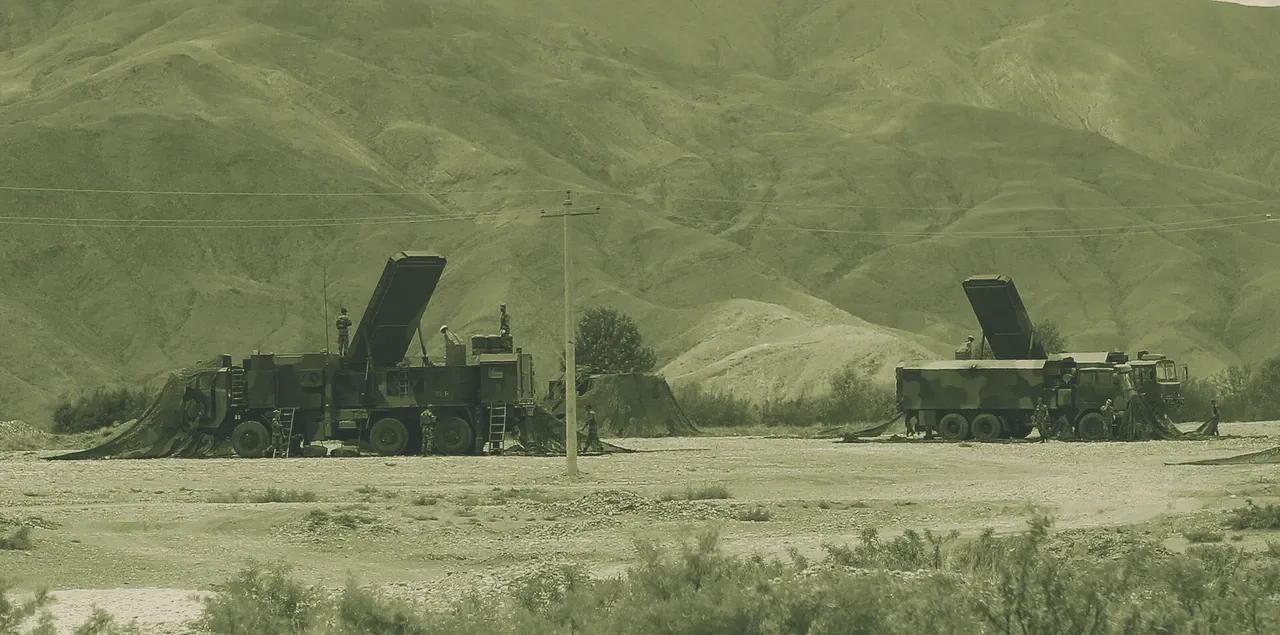
HQ-16
FIG.01 · China Image - HQ-16. Photo by Pdxgs1208, CC0, via Wikimedia Commons.
China's medium-range surface-to-air missile system — a vertical-launch, semi-active radar-guided SAM that fills the layer between the long-range HQ-9 and short-range SHORAD, with land-based and naval variants and an export version (LY-80) fielded by Pakistan.

Overview

The HQ-16 (Hongqi-16) is a medium-range, vertical-launch surface-to-air missile system produced by the China Aerospace Science and Technology Corporation (CASC) through its Shanghai Academy of Spaceflight Technology (SAST). It entered People's Liberation Army (PLA) service in 2011 and has since spawned a family of variants — including the improved HQ-16B and the extended-range HQ-16FE — as well as the naval HHQ-16 and the export LY-80/LY-80N. The system is widely regarded as a Chinese indigenous development influenced by the Russian Buk concept, though the exact technical lineage remains disputed. In PLA ground forces it operates between the long-range HQ-9 and short-range HQ-17/HQ-7, and Pakistan became its first export customer, receiving LY-80 batteries from 2017. Wikipedia

Development

SAST/CASC began work on the HQ-16 in the early 2000s, aiming to field a domestic medium-range SAM that could replace legacy systems and operate in a networked air-defense umbrella. The type achieved initial operational capability with the PLA in 2011, and a follow-on variant, the HQ-16B, emerged before the end of that year. The HQ-16B incorporated a longer-range interceptor and other refinements; its export equivalent, the LY-80, was marketed internationally by the China Precision Machinery Import-Export Corporation (CPMIEC). At the Zhuhai Airshow in 2022, CASC unveiled the HQ-16FE, a further-evolved version claiming an engagement range of 160 km — a notable jump from the original 40 km. Missilery.info Military Factory

Design & capabilities

The HQ-16 family employs cold-launched, vertical-launch missiles with semi-active radar homing (SARH) guidance. Standard HQ-16 and HQ-16A missiles have a published range of about 40 km and an engagement altitude envelope of 15 meters to 18 kilometers. The HQ-16B extends that range to approximately 70–75 km, while the export HQ-16FE claims up to 160 km and a maximum altitude of 27 km — figures that remain manufacturer/export-brochure claims. Each interceptor is credited with speeds around Mach 4.

A typical export LY-80 fire unit integrates the IBIS-150 S-band search radar (detection range ~140 km, capable of tracking up to 48 targets) and an L-band engagement radar that can guide up to eight missiles simultaneously. Missile Defense Advocacy Project The system is road-mobile, mounted on wheeled 6×6 transporter-erector-launchers (TELs). A standard battalion includes a command post, multiple search and engagement radars, and 12–18 TELs, each carrying six ready-to-fire missiles. Quwa

The naval HHQ-16 share the same missile technology but are adapted for vertical-launch cells on PLA Navy Type 054A frigates.

Variants

  • HQ-16 / HQ-16A – baseline medium-range SAM, ~40 km range.
  • HQ-16B – extended range to ~70–75 km; introduced late 2011.
  • HQ-16FE – export-oriented extreme-range variant claimed to reach 160 km and 27 km ceiling, with a stated anti-tactical-ballistic-missile (TBM) capability (brochure claim).
  • HHQ-16 – navalized variant deployed on Type 054A frigates.
  • LY-80 / LY-80N – export designations for land-based and naval variants respectively; LY-80 is the variant supplied to Pakistan.

Combat record / operational use

The HQ-16 has no confirmed PLA combat use. Pakistan’s LY-80 batteries, fielded from 2017, are integrated beneath the HQ-9P in a layered air-defense architecture. During the May 2025 India–Pakistan border clashes, the LY-80 was reportedly deployed and engaged, though independent assessments of its combat effectiveness are unavailable. The Belfer Center’s analysis of the conflict notes that Pakistan’s Chinese-supplied air defenses, including the HQ-16, “showed vulnerabilities,” while an industry analysis by GIS Reports describes the LY-80 as having been “engaged” during the crisis — cautioning that there is no open-source evidence of successful intercepts. Belfer Center GIS Reports

Advantages

  • Bridges the medium-altitude gap between the HQ-9 long-range SAM and short-range SHORAD systems.
  • Vertical-launch, multi-radar architecture provides 360° capability and simultaneous multi-target guidance.
  • The HQ-16FE’s claimed 160 km reach, if realized, would make the system competitive with upper-tier medium-range SAMs.
  • Mobile 6×6 wheeled TELs enable rapid relocation and road-mobility.
  • Existing export customer base (Pakistan) and demonstrated integration into a layered IADS.

Drawbacks / limitations

  • Semi-active radar guidance, unlike active-radar missiles, requires continuous target illumination, limiting engagement geometry and saturation resistance.
  • Combat record is neither deep nor independently verified; the May 2025 employment remains unconfirmed by open-source intercept evidence.
  • Extreme-range figures (HQ-16FE’s 160 km) are manufacturer claims with no publicly available test data.
  • The fire unit’s high reliance on dedicated engagement radars restricts engagement flexibility compared to more distributed, active-radar alternatives.

Counterparts

Outlook

The HQ-16 family is in serial production and remains central to China’s medium-range air-defense layer, with continued evolution toward the HQ-16FE’s long-range claims and a potential active-radar seeker. Its export footprint may widen, especially if the FE variant’s brochure numbers can be substantiated, but the system’s lack of proven combat performance in high-intensity environments will likely keep current operators cautious and future buyers reliant on manufacturer demonstrations.

Key specifications

Spec Value
Type Medium-range, vertical-launch surface-to-air missile system
Engagement range HQ-16/16A ~40 km; HQ-16B ~70–75 km; HQ-16FE up to 160 km (export claim)
Engagement altitude HQ-16/16A ~15 m – 18 km; HQ-16FE ~15 m – 27 km (claim)
Target set aircraft, helicopters, cruise missiles, UAS; TBM (claimed for HQ-16FE)
Interceptor(s) HQ-16 family (~Mach 4)
Radar / fire control LY-80: IBIS-150 S-band search (~140 km) + L-band engagement; guides up to 8 missiles simultaneously
Reaction time not publicly established
Simultaneous engagements up to 8 missiles guided by an engagement radar
Mobility wheeled 6×6 TEL (6 missiles per launcher)

Sources

  1. Wikipedia — HQ-16 — https://en.wikipedia.org/wiki/HQ-16
  2. Missilery.info — Antiaircraft missile system HQ-16 (LY-80) — https://en.missilery.info/missile/hq16
  3. Mitchell Institute — HQ-16 — https://www.mitchellaerospacepower.org/weapons/hq-16/
  4. Quwa — LY-80 / HQ-16 Medium-Range Air Defence System — https://quwa.org/pakistan/air-defence-pk/ly-80-hq-16-medium-range-air-defence-system/
  5. Missile Defense Advocacy Project — HQ-16 — https://www.missiledefenseadvocacy.org/missile-threat-and-proliferation/todays-missile-threat/china/china-anti-access-area-denial/hq-16/
  6. Military Factory — HQ-16 Mobile SAM System — https://www.militaryfactory.com/armor/detail.php?armor_id=1235
  7. Belfer Center — China's Role in the May 2025 India-Pakistan Conflict — https://www.belfercenter.org/research-analysis/chinas-role-may-2025-india-pakistan-conflict-strategic-and-global-implications
  8. GIS Reports — How the India-Pakistan conflict boosted China's military exports — https://www.gisreportsonline.com/r/china-military-exports/
FIELD DISPATCH · WEEKLY

BattlePolicy Weekly — free.

Defense tech, startups, and security — weekly. No paywall.

Related
China · Air Defense · taiwan · interceptors · patriot

China is building air-defense mass opposite Taiwan while America spends its own

Beijing fielded the HQ-16F, a Patriot-class mobile air-defense missile, opposite Taiwan in the same weeks the US burned through the interceptors it would need to defend the island. The contest is magazine depth, not exquisite platforms.

China · Air Defense · taiwan · interceptors · patriot
China · Land · grenade-launcher · precision · sniper · 35mm · 40mm · norinco

QLU-11

China's semi-automatic precision grenade launcher, fielded in 35mm for the PLA and 40mm for export — delivering airburst rounds through a window at 600 m.

China · Land · grenade-launcher · precision · sniper · 35mm · 40mm · norinco