SM-3
The SM-3 is the US Navy's exoatmospheric hit-to-kill interceptor — the only Standard Missile built to destroy ballistic missiles in space. It made the first combat exoatmospheric intercepts in history defending Israel in April 2024, and its magazine is now the center of the US interceptor crisis.
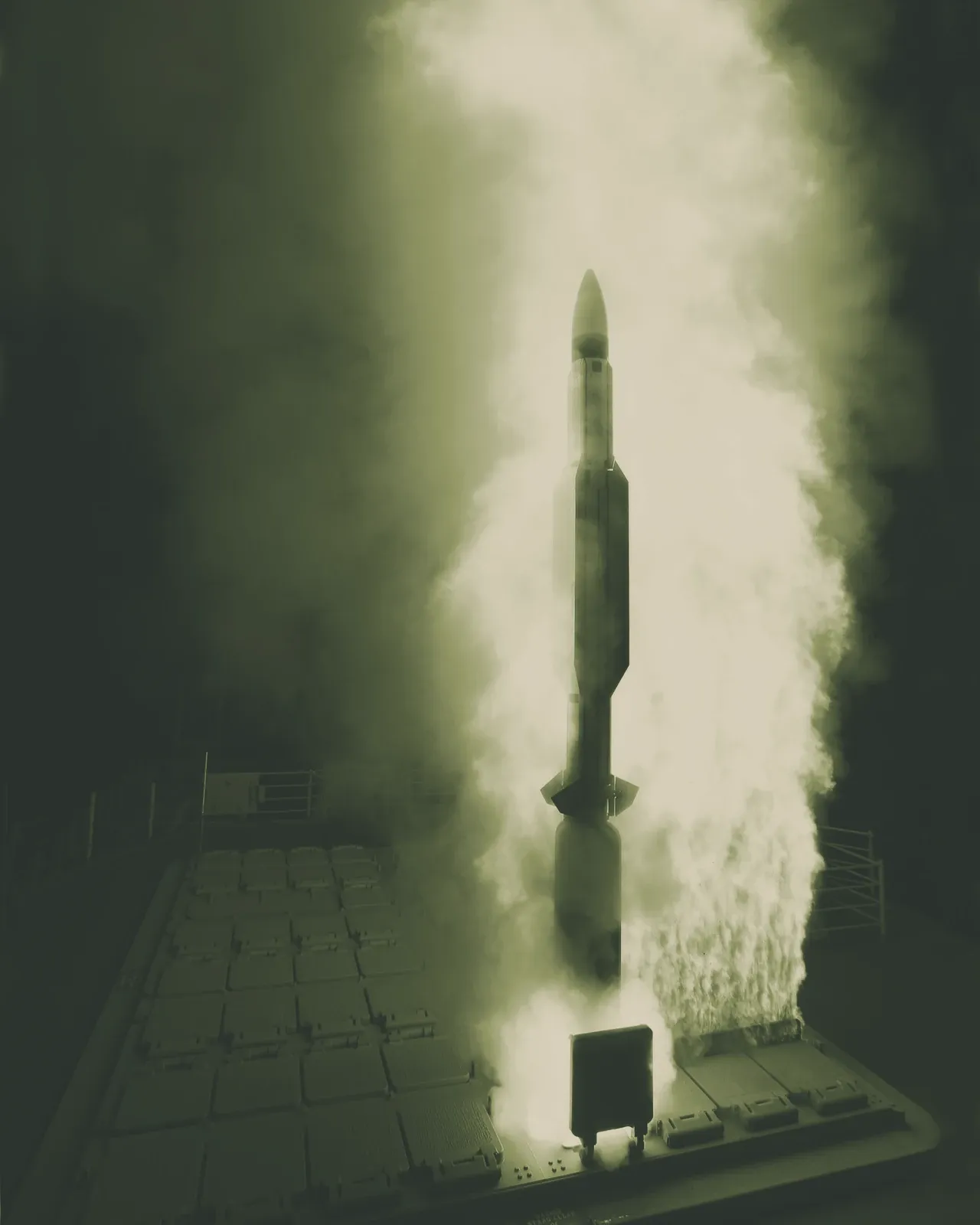

The interceptor that fights in space — the SM-3 is the US Navy's exoatmospheric hit-to-kill missile, the only Standard Missile designed to destroy ballistic warheads above the atmosphere, launched from Aegis destroyers and shore sites in Romania and Poland. On the night of 13–14 April 2024 it made the first combat exoatmospheric ballistic-missile intercepts in history, killing Iranian missiles bound for Israel. Two years and three Middle East wars later, the SM-3 is famous for a different reason: the Navy is firing it faster than Raytheon can build it, and its magazine has become the single sharpest symbol of America's interceptor crisis.
Overview
The SM-3 (RIM-161 Standard Missile 3) is the midcourse layer of the US ballistic-missile-defense system — a three-stage, ~$12–40 million interceptor that carries no warhead at all, killing its target by slamming a hit-to-kill kinetic warhead into it at closing speeds measured in kilometers per second, in the vacuum of space. Fired from Mk 41 vertical launch cells aboard Aegis BMD destroyers and cruisers (cued by the Arleigh Burke class's SPY radars) and from Aegis Ashore sites at Deveselu, Romania and Redzikowo, Poland, it comes in three fielded blocks: the legacy IA, the widely used Block IB, and the 21-inch Block IIA co-developed with Japan, whose reach against IRBM- and even ICBM-class targets makes it a pillar of the emerging Golden Dome architecture. For two decades the SM-3 was a test-range and treaty weapon — its one operational shot before 2024 was destroying a dead US satellite in 2008. Then Iran's ballistic barrages turned it into the most-fired strategic interceptor of the era: history's first combat exoatmospheric kills in April 2024, "about a dozen" that October, roughly 80 in the June 2025 Twelve-Day War, and a NATO-defending intercept over the Eastern Mediterranean in the 2026 Iran war. The result is a production line that could not keep up, a two-year replacement timeline, and a Washington debate — restart the cheaper Block IB, or bet everything on the exquisite IIA — that this weapon now embodies.
🔒 The full SM-3 file is for BattlePolicy Pro members. Below the line: development history, design and capabilities, variants, the combat record, advantages and limitations, comparable systems, outlook, the full specifications table, our sourcing, and the analyst assessment — procurement, suppliers and the BattlePolicy verdict. Unlock the full file with BattlePolicy Pro →
Below this point
- Development
- Design & capabilities
- Variants
- Combat record / operational use
- Advantages
- Drawbacks / limitations
- Counterparts
- Outlook
- Key specifications
- Sources
- Analyst Section
- Procurement & contracts
- Suppliers & related companies
- Comparable systems — analyst view
- Analyst note