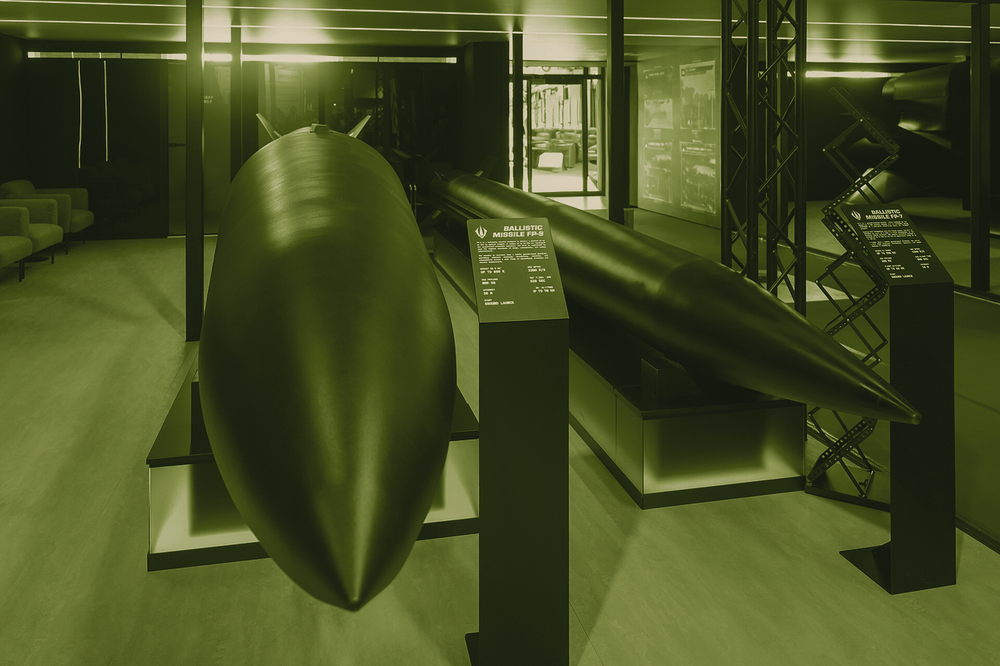
Freya is a Ukrainian-led European ballistic-missile defence project combining Fire Point's FP-7.x interceptor with European sensors and command systems. It remains in development, without a demonstrated ballistic interception.
The Yartura Dancer 4.5.0 is a Ukrainian fixed-wing interceptor drone that reaches 450 km/h and uses an AI homing system to re-attack a target drone until it is destroyed — built against the fast jet-powered variants of Russia's Shahed/Geran family.
Alta Ares is France's big-funded counter-drone startup — two years old, it raised a €50M Series A on AI guidance "combat-proven over Ukraine." It builds the anti-Shahed X-Lock and turbojet Black Bird interceptors; its Pixel Lock software is the claimed edge, though its record is self-reported.
BLAZE is the order-first entry in Europe's counter-drone wave — a radar-guided, NATO-codified interceptor drone from Latvia's Origin Robotics that flies a radar vector onto a Shahed, then finishes with AI vision. Built on a tiny ~€4M budget, it's fielded by four NATO states and picked by France.
Nordic Air Defence is the smallest, cheapest, most software-first bet in Europe's counter-drone wave — a Swedish startup whose one-pound Kreuger-100XR dart loiters, then rams or blasts a Shahed for a few thousand dollars. The least-proven name in the field: no combat record, pre-production.
The Frankenburg Mark 1 is Estonia's baguette-sized interceptor missile — a ~60 cm, ~$50,000 guided rocket built by a startup to shoot down Shahed drones for a tenth the cost of a legacy SAM. The missile-class answer, distinct from FPV interceptor drones, in Europe's counter-drone wave.
Merops is the Ukraine-proven interceptor drone the US Army bought ~13,000 of — an Eric Schmidt-funded, AI-guided fixed-wing drone that homes on Shaheds when jammed, rams them for ~$15,000 a shot, and recovers by parachute if it misses. The interceptor economy crossing the Atlantic.
General Cherry is Ukraine's scale-first interceptor maker — the for-profit rival to Wild Hornets, building a layered counter-drone catalog (AIR, Bullet, OPTIX) at a claimed 50,000+ drones a month, ranked #1 in kills, NATO-certified, and opening production lines in the US and Croatia.
The Octopus is Ukraine's state-designed interceptor drone — a ~$3,000 machine-vision quadcopter that homes autonomously onto Shahed drones. Ukraine ordered 8,000, and it became the first Ukrainian combat drone licensed for production inside a NATO country, built in Britain under Project OCTOPUS.
The Sting is Ukraine's flagship interceptor drone — a sub-$2,000 3D-printed FPV quadcopter from the non-profit Wild Hornets that hunts Shahed attack drones by the thousands, downed the first jet-powered Geran, and can be flown from 2,000 km away. Cheap-mass air defense answering cheap-mass attack.
Tytan is the German flagship of Europe's interceptor-drone wave — AI hit-to-kill drones (fixed-wing METIS, multicopter EOS) combat-used in Ukraine, under a Bundeswehr contract, with a NATO Innovation Fund-backed Series A and a factory scaling to 3,000 a month.
The SM-3 is the US Navy's exoatmospheric hit-to-kill interceptor — the only Standard Missile built to destroy ballistic missiles in space. It made the first combat exoatmospheric intercepts in history defending Israel in April 2024, and its magazine is now the center of the US interceptor crisis.
France's delta-wing, fly-by-wire multirole fighter — 601 built, flown by nine air forces, and now intercepting Russian cruise missiles and pounding frontline targets over Ukraine.
The MiG-31 Foxhound is Russia’s Mach 2.83 interceptor and sole airborne carrier of the Kh-47M2 Kinzhal ballistic missile — an irreplaceable Cold War asset that dominates high-altitude combat and triggers nationwide alerts with every sortie, yet cannot be built anew.