GRID-REF 37°47′N 122°25′W
DISPATCH 02/26 · 17 Jun 2026
BATTLEPOLICY
Startup to front line. Strategy to consequence.
Lexicon · Russia

MiG-31 Foxhound

The MiG-31 Foxhound is Russia’s Mach 2.83 interceptor and sole airborne carrier of the Kh-47M2 Kinzhal ballistic missile — an irreplaceable Cold War asset that dominates high-altitude combat and triggers nationwide alerts with every sortie, yet cannot be built anew.
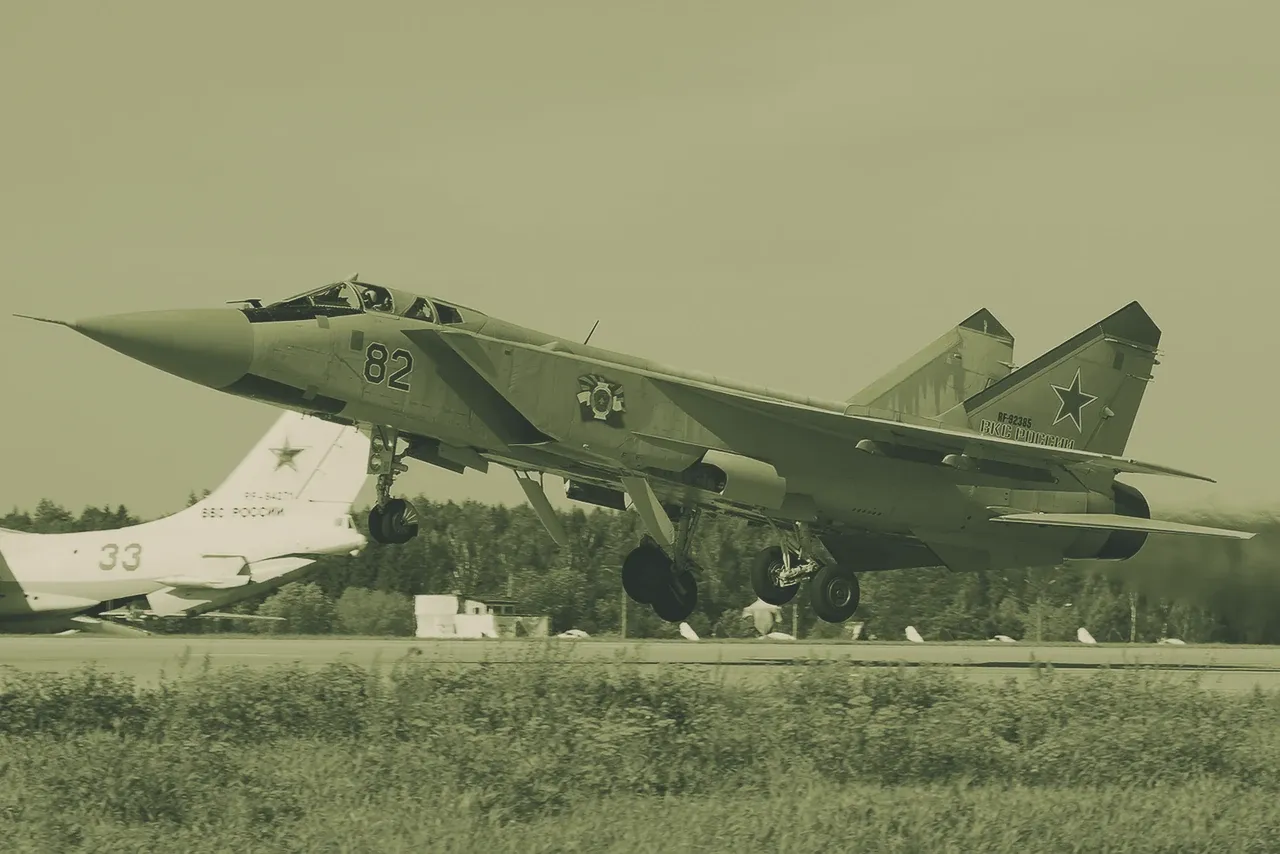
MiG-31 Foxhound
FIG.01 · Russia Image - MiG-31 interceptor. Photo by Alexander Kopitar, CC BY-SA 4.0, via Wikimedia Commons.
Soviet/Russian long-range supersonic interceptor and airborne carrier for the Kh-47M2 Kinzhal air-launched ballistic missile, combining Mach 2.83 speed with a powerful PESA radar and the R-37M beyond-visual-range missile to dominate high-altitude battlespace.

Overview

The MiG-31 Foxhound is the fastest operational combat aircraft in the world and one of the most critical — and irreplaceable — types in Russian Aerospace Forces service. Designed to protect the Soviet Union’s vast northern approaches against low-flying cruise missiles and bombers, today it performs dual missions: long-range interception with radar-guided missiles that no Ukrainian tactical aircraft can evade, and strategic strike as the sole launch platform for the Kh-47M2 Kinzhal air-launched ballistic missile. Its speed, ceiling, and firepower make it a unique threat, but production ended in 1994, turning every airframe loss into a permanent subtraction from a finite stock.

Development

Development began at the Mikoyan design bureau as a deep upgrade of the MiG-25 to carry a heavy phased-array radar and long-range missiles against the next generation of Western cruise missiles. The prototype first flew on 16 September 1975, and full-production machines were accepted into the Soviet Air Defence Forces on 6 May 1981, a timeline documented by Wikipedia. Between 1975 and 1994 the Sokol plant in Gorky (now Nizhny Novgorod) built about 519 airframes; the line then closed, and no new airframes have been manufactured since. The MiG-31 entered service with the Zaslon radar — the world’s first operational fighter passive electronically scanned array — paired with the R-33 (AA-9 Amos) long-range missile, which in a 1978 trial demonstrated simultaneous four-target engagement. A mid-life upgrade program launched in 2008 converted surviving interceptors to the MiG-31BM standard, introducing the Zaslon-AM radar and the R-37M (AA-13 Axehead) missile with a range of roughly 280–400 km; the first operational R-37M unit was stood up at Kansk in 2018, according to TASS. The Kinzhal carrier variant, the MiG-31K, was revealed in 2018 and added a stand-off strategic strike role, with the more autonomous MiG-31I “Ishim” following in the mid-2020s.

Design & capabilities

The Foxhound is a twin-engine, two-seat (pilot + weapons-system officer) interceptor built around the principle of a high-altitude sprint to a patrol zone, where a four-ship formation can cover an 800–1,000 km front using the RP-31 N007 Zaslon PESA radar and APD-518/RK-RLDN datalinks. The baseline Zaslon could detect fighter-size targets at ~200 km, track ten simultaneously, and engage four; the upgraded Zaslon-AM in the MiG-31BM is claimed by Russian state sources to detect at ~320 km and track up to 24 targets, though independent verification is unavailable. The radar data is shared with other interceptors and ground stations, making the Foxhound a flying wide-area command node. An infrared search-and-track (IRST) sensor is fitted in a retractable housing.

Power comes from two Soloviev D-30F6 afterburning turbofans delivering 152 kN each, enabling a top speed of 3,000 km/h (Mach 2.83) at 21,500 m and supersonic cruise of Mach 2.35. At lower altitudes maximum speed drops to 1,500 km/h (Mach 1.23). The ceiling is commonly cited as 20,600 m, though Airforce Technology notes figures up to 25,000 m+ depending on sources. Combat radius is 720 km at Mach 2.35 and stretches to 1,450 km at Mach 0.8; with four R-33 missiles and drop tanks the range reaches 3,000 km, extendable to 5,400 km with one aerial refueling. Internal fuel capacity and a heavy ordnance load of up to ~9,000 kg are carried on four semi-recessed fuselage stations and four underwing pylons.

The standard interceptor weapon is the GSh-6-23M 23 mm six-barrel cannon and four R-33 long-range missiles; the MiG-31BM replaces the R-33 with the R-37M, capable of engaging maneuvering fighter-size targets at a confirmed distance beyond 175 km, and adds R-77-1 and short-range R-73/R-60 missiles. The MiG-31K variant carries a single Kh-47M2 Kinzhal on the centerline station, while giving up all other heavy armament, converting the interceptor into a strategic missile truck.

Variants

  • MiG-31 (Foxhound-A): Original production interceptor with Zaslon radar and R-33 missile.
  • MiG-31B/BS: Minor upgrade begun in the late 1980s with improved avionics and compatibility with the R-33S missile.
  • MiG-31BM (Foxhound-C): The modernized interceptor standard introduced from 2008, featuring Zaslon-AM radar, new cockpit displays, and integration of the R-37M missile. About 100 airframes reportedly completed the upgrade by 2018.
  • MiG-31K: Kinzhal carrier, a modified MiG-31BM with the centerline station adapted for the Kh-47M2; roughly 12 converted by 2022, rising to an estimated 24 by 2024.
  • MiG-31I “Ishim”: A further evolution of the Kinzhal carrier with more autonomous navigation capabilities, reported operational from 2024–25.
  • MiG-31D/31S: Experimental anti-satellite and space-launch platforms, not used operationally.
  • MiG-31M: Cancelled advanced multi-role derivative.
  • MiG-31E: Export variant offered with downgraded systems; no sales were completed.

Combat record / operational use

The MiG-31’s combat debut came in the Russia–Ukraine war. Starting in 2022, MiG-31BM interceptors were forward-deployed to Belbek airfield in Crimea and other bases near Ukraine, from where they flew standing high-altitude patrols and launched R-37M missiles against Ukrainian tactical aircraft. A TWZ assessment described the patrols as “highly effective” and noted that the VKS was firing up to six R-37Ms per day by the autumn of 2022, with one kill recorded at more than 175 km range. The missile’s speed, range, and low-altitude seeker made it “especially problematic” for Ukrainian pilots who frequently lacked adequate radar-warning capability, according to Business Insider.

The MiG-31K Kinzhal force also had an outsized psychological and strategic effect: a single detected takeoff from Savasleyka air base would routinely trigger a nationwide air alert in Ukraine even when no missile was launched, as UNN reported during the alerts of October 2025. That made the fleet a priority target for Ukrainian long-range strikes.

On 1 October 2022 a MiG-31BM crashed on takeoff from Belbek, killing the pilot. The first confirmed combat losses occurred on 14–15 May 2024, when ATACMS cluster munitions struck Belbek and destroyed two MiG-31 interceptors, confirmed by satellite imagery and reported by Militarnyi and TWZ. Ukrainian long-range drones hit Savasleyka on 14 August 2024, with video showing at least one MiG-31 damaged in the open, according to Defence Express. The Kyiv Independent reported another strike on 9 June 2025 that damaged a MiG-31 and other aircraft at the same base, and on 18 December 2025 Ukraine’s SBU claimed drone damage to a MiG-31, an S-400 radar, and other assets at Belbek (Russia denied the damage). Through the conflict, the photo-confirmed loss tally tracked by Oryx stood at five MiG-31s, a mix of combat and non-combat incidents.

Advantages

  • The fastest operational combat aircraft (Mach 2.83 / 3,000 km/h) with a service ceiling beyond 20,000 m, placing it above the reach of most Ukrainian fighters and short-range SAMs.
  • The R-37M missile can strike fighter-class targets at extreme range — a kill at over 175 km has been confirmed, and the weapon has proved highly effective against aircraft with weak radar-warning receivers.
  • The Zaslon radar and datalinks allow a four-ship formation to cover an 800–1,000 km front, cueing other interceptors and surface-based defenses.
  • As a Kinzhal carrier, the MiG-31K forces a nationwide Ukrainian air alert with every takeoff, generating strategic coercion at a fraction of the cost of a missile launch.
  • Long unrefueled endurance for an interceptor — up to 5,400 km with one aerial refueling — suits Russia’s vast northern geography.

Drawbacks / limitations

  • Production ceased in 1994; every airframe lost or withdrawn from the finite mothballed reserve is permanently irreplaceable, as United24 Media notes.
  • The D-30F6 engines have short overhaul intervals (~300 flight hours) and finite spares; Russia has publicly discussed restarting engine production to keep the fleet flying.
  • Vulnerable on the ground to stand-off weapons — ATACMS and long-range drones have repeatedly struck Foxhounds at Belbek and Savasleyka, prompting the construction of hardened shelters.
  • Poor agility, limited to 5 g maneuvers, and an unrefueled patrol cycle of only about two hours; covering multiple patrol zones requires a high daily sortie rate.
  • High fuel burn, maintenance demands, and the loss of around 20% of the fleet in the underfunded 1990s mean the fleet remains fragile.

Counterparts

Outlook

The MiG-31 force is a wasting asset. With no new production since 1994, engine-overhaul bottlenecks, and a finite stock of mothballed airframes that must feed both conversion programs and attrition replacement, every loss accelerates the fleet’s decline. Moscow intends to keep the type flying until at least 2030, but the notional PAK DP (MiG-41) successor remains a paper project. The R-37M threat, once exclusive to the Foxhound, is transitioning onto the more numerous Su-35S and Su-30SM2 fleets, gradually reducing the MiG-31’s unique role. Meanwhile, Ukrainian targeting of Belbek and Savasleyka will continue, and the nationwide alerts triggered by Kinzhal-carrier sorties will remain a fixture of the war.

Key specifications

Spec Value
Crew 2 (pilot + weapons-system officer)
Length / wingspan 22.62 m / 13.46 m
Max speed 3,000 km/h (Mach 2.83) at high altitude; 1,500 km/h (Mach 1.23) at low altitude; Mach 2.35 supercruise
Service ceiling 20,600 m (AFT) to 25,000 m+ (Mikoyan data)
Combat radius / range 720 km at Mach 2.35 / 1,450 km at Mach 0.8; range 3,000 km with 4 R-33 and drop tanks, 5,400 km with one aerial refueling
Payload Up to ~9,000 kg of ordnance
Hardpoints 4 × semi-recessed fuselage + 4 × underwing pylons
Radar / sensors RP-31 N007 Zaslon PESA (Zaslon-AM on MiG-31BM); detection ~200–320 km; IRST; APD-518/RK-RLDN datalinks
Powerplant 2 × Soloviev D-30F6 afterburning turbofans, 152 kN each
Armament GSh-6-23M 23 mm cannon; 4 × R-33 or R-37M; R-77-1, R-73/60; MiG-31K: 1 × Kh-47M2 Kinzhal

Sources

  1. Wikipedia — Mikoyan MiG-31. https://en.wikipedia.org/wiki/Mikoyan_MiG-31
  2. Airforce Technology — MiG-31 Foxhound Interceptor Aircraft. https://www.airforce-technology.com/projects/mig-31/
  3. The War Zone — Russia’s MiG-31 Foxhounds Proving To Be A Threat To Ukrainian Aircraft. https://www.twz.com/russias-mig-31-foxhounds-proving-to-be-a-threat-to-ukrainian-aircraft
  4. The War Zone — MiG-31 Foxhound Among Russian Air Defense Assets Targeted In Crimean Drone Strike. https://www.twz.com/air/mig-31-foxhound-among-russian-air-defense-assets-targeted-in-crimean-drone-strike
  5. Militarnyi — Two MiG-31 interceptors were destroyed in Crimea. https://militarnyi.com/en/news/two-mig-31-interceptors-were-destroyed-in-crimea/
  6. Kyiv Independent — Ukraine says strike damaged Russian MiG-31, Su fighter jet at airfield used to launch Kinzhal missiles. https://kyivindependent.com/ukraine-says-strike-damaged-russian-mig-31-su-fighter-jet-at-airfield-used-to-launch-kinzhal-missiles/
  7. Defense Express — At Least One MiG-31K Damaged in Ukraine’s Attack on Savasleyka Air Base. https://en.defence-ua.com/news/at_least_one_mig_31k_damaged_in_ukraines_attack_on_savasleyka_air_base_video-11517.html
  8. United24 Media — Why Russia Can’t Produce New MiG-31K Jets, Making Every Loss Critical to Its Kinzhal Program. https://united24media.com/latest-news/why-russia-cant-produce-new-mig-31k-jets-making-every-loss-critical-to-its-kinzhal-program-8972
  9. TASS — Russia picks MiG-31 fighter as a carrier for cutting-edge hypersonic weapon. https://tass.com/defense/998221
  10. Business Insider — Armed with longer-range missiles, a top Russian fighter jet is posing a bigger threat, analyst says. https://www.businessinsider.com/russia-key-fighter-jet-missiles-threat-2026-2
  11. UNN — All of Ukraine is under missile threat: Russians have launched a MiG-31K, Kinzhal launches recorded. https://unn.ua/en/news/all-of-ukraine-is-under-missile-threat-russians-have-launched-a-mig-31k-kinzhal-launches-recorded
  12. Oryx — Attack On Europe: Documenting Russian Equipment Losses. https://www.oryxspioenkop.com/2022/02/attack-on-europe-documenting-equipment.html
FIELD DISPATCH · WEEKLY

BattlePolicy Weekly — free.

Defense tech, startups, and security — weekly. No paywall.

Related