Sting
The Sting is Ukraine's flagship interceptor drone — a sub-$2,000 3D-printed FPV quadcopter from the non-profit Wild Hornets that hunts Shahed attack drones by the thousands, downed the first jet-powered Geran, and can be flown from 2,000 km away. Cheap-mass air defense answering cheap-mass attack.
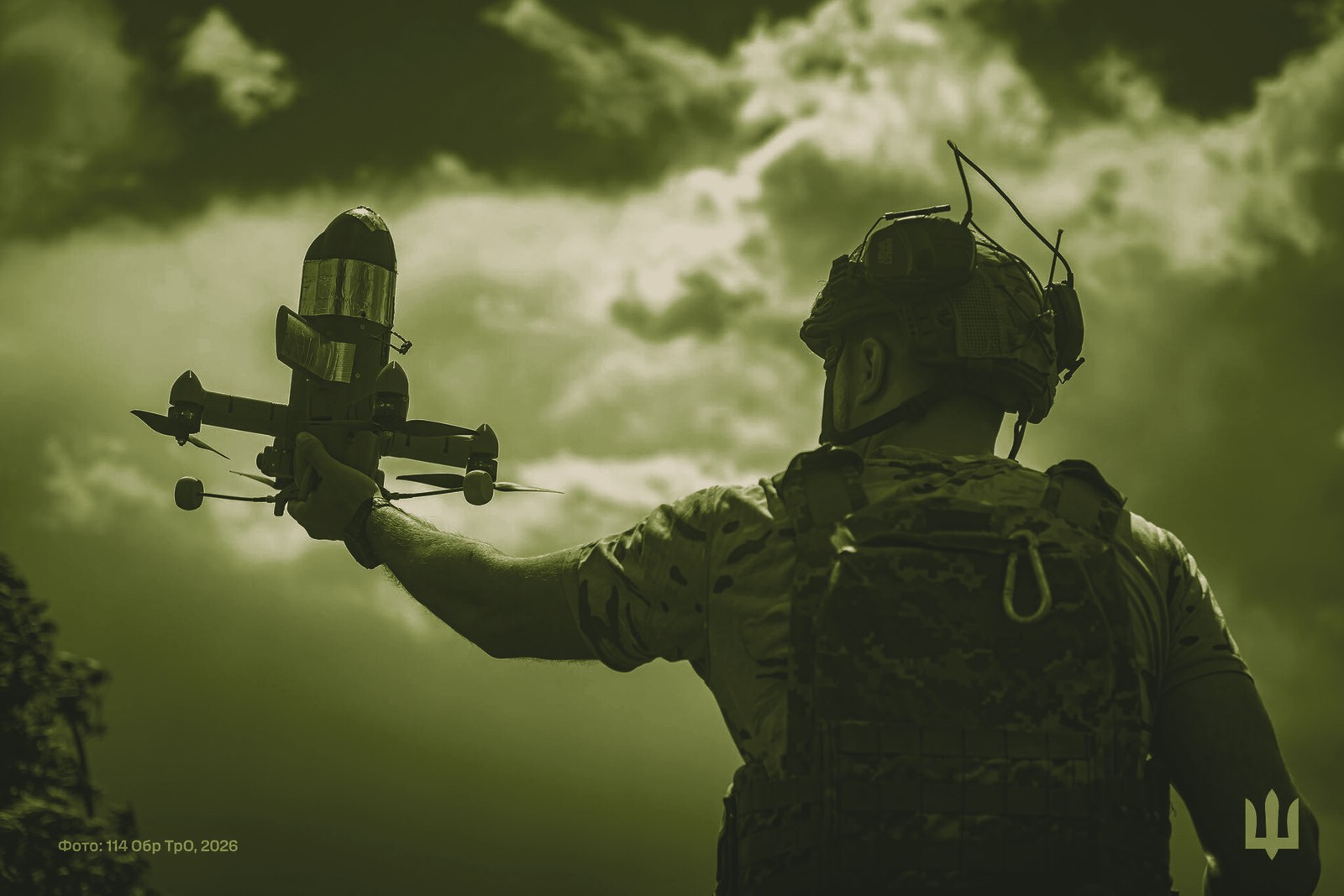

A $2,000 drone that kills $50,000 drones — the Sting is Ukraine's flagship interceptor: a 3D-printed FPV quadcopter from the non-profit Wild Hornets that flies up to Shahed attack drones and detonates against them, and it has become the single most-used weapon in the drone-on-drone air war. Fielded from spring 2025, it downed the first jet-powered Geran, set a record intercepting a Shahed 500 kilometers from its pilot, and by mid-2026 its makers claimed 7,000 kills. The Sting is the cheap-mass answer to cheap-mass attack — and the reason the interceptor economy finally tilts in the defender's favor.
Overview
The Sting is the anti-Shahed interceptor built by Wild Hornets (Dyki Shershni), a Ukrainian non-profit drone maker founded in 2023 and funded by private donations rather than the state. It is the sharp point of Ukraine's answer to Russia's nightly drone barrages: a 3D-printed, bullet-shaped FPV quadcopter, ~4 kg, sub-$2,000, with a small proximity-fused warhead, flown by a pilot in VR goggles up to the incoming Shahed-136 or Geran-3 and detonated within a couple of meters. The design brief is the inverse of every previous air defense: instead of a million-dollar missile against a $50,000 drone, a $2,000 drone against a $50,000 drone — the first time in the war the interceptor cost less than the target. From its first published Shahed kill in May 2025, the Sting scaled explosively: over a thousand kills by October 2025, the first-ever interceptor-drone kill of a jet-powered Geran-3 on 30 November 2025, the first documented Shahed-107 shootdown that December, and a maker-claimed 7,000 cumulative kills by May 2026 — roughly 70% of intercepted jet-Shaheds in April 2026 alone. Its enabling breakthrough is Hornet Vision Ctrl, a relay system that lets one elite pilot fly interceptors from up to 2,000 km away, serving many launch sites from safety — the technology that turns a good drone into a scalable air-defense layer. The Sting is NATO-codified, sought by the US and Gulf states after the 2026 Iran war, and, until Ukraine opened weapons exports in July 2026, blocked from sale by its own wartime export ban.
🔒 The full Sting file is for BattlePolicy Pro members. Below the line: development history, design and capabilities, variants, the combat record, advantages and limitations, comparable systems, outlook, the full specifications table, our sourcing, and the analyst assessment — procurement, suppliers and the BattlePolicy verdict. Unlock the full file with BattlePolicy Pro →
Below this point
- Development
- Design & capabilities
- Variants
- Combat record / operational use
- Advantages
- Drawbacks / limitations
- Counterparts
- Outlook
- Key specifications
- Sources
- Analyst Section
- Procurement & contracts
- Suppliers & related companies
- Comparable systems — analyst view
- Analyst note