GRID-REF 37°47′N 122°25′W
DISPATCH 02/26 · 9 Jun 2026
BATTLEPOLICY
Startup to front line. Strategy to consequence.
Lexicon · USA

Arleigh Burke

The backbone of the U.S. surface fleet — a 9,500-ton multirole Aegis destroyer with 96 vertical launch cells, evolving from the SPY-1 to the SPY-6 radar, and the platform that fought the heaviest air-defense battles since World War II in the Red Sea.
Arleigh Burke
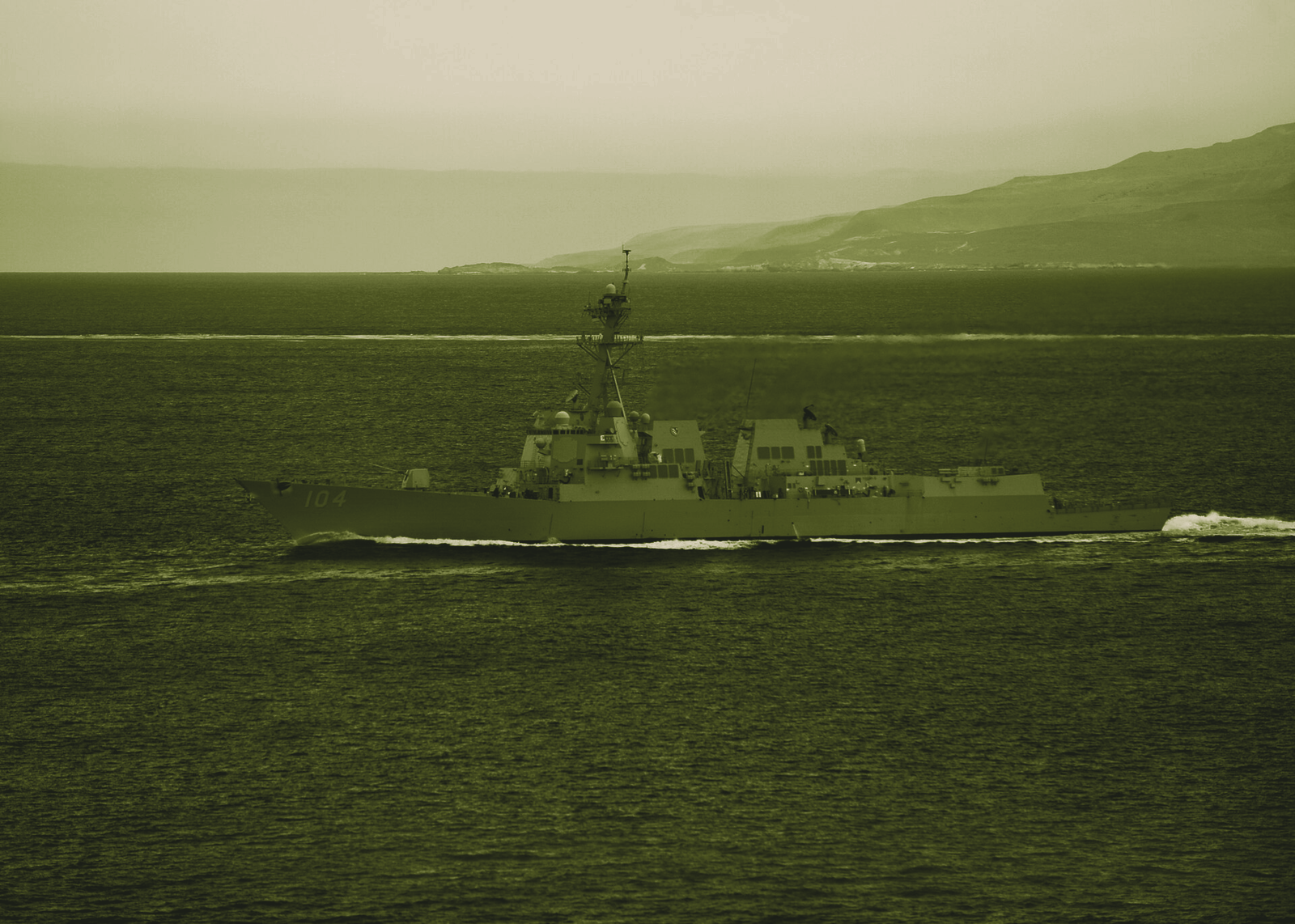
FIG.01 · USA Image - A US Navy Arleigh Burke-class destroyer underway. Photo by U.S. Navy photo by Mass Communication Specialist 3rd Class Jerine Lee, Public domain, via Wikimedia Commons_is_underway_conducting_a_composite_training_unit.jpg).
The backbone of the U.S. surface fleet — a 9,500-ton multirole Aegis destroyer with 96 vertical launch cells, evolving from the SPY-1 to the SPY-6 radar, and the platform that fought the heaviest air-defense battles since World War II in the Red Sea.

Overview

The Arleigh Burke-class (DDG-51) is the U.S. Navy's principal guided-missile destroyer, built to a multirole design that centers on area air defense, ballistic missile defense, land-attack, anti-submarine warfare, and anti-surface warfare. First commissioned in 1991, the class has been produced in successive flights — each adding capability — and remains in serial construction at two yards. As of March 2025, 74 hulls had been delivered, with a planned total approaching 90, according to Naval Technology. No other Western surface combatant has matched its combination of magazine depth, sensor integration, and sustained combat exposure.

Development

The class was designed in the 1980s as a lower-cost, highly capable replacement for the retiring Spruance-class destroyers. USS Arleigh Burke (DDG-51) entered service in 1991, and the hull proved so adaptable that production has continued for over three decades without a like-for-like successor. Incremental flights refined the design: Flight IIA (first unit delivered 2000) added a twin helicopter hangar for two MH-60R Seahawks, while the latest Flight III configuration — led by USS Jack H. Lucas (DDG-125), delivered in October 2023 — replaces the legacy SPY-1 passive phased-array radar with the active-electronically-scanned AN/SPY-6(V)1 Air and Missile Defense Radar, a generational sensor upgrade, as reported by USNI News.

Design & capabilities

The Arleigh Burke platform combines a steel hull with a combined gas-turbine and gas-turbine (COGAG) propulsion plant delivering over 100,000 shaft horsepower for sprint speeds in excess of 30 knots. The signature capability is the Aegis combat system, integrated with a 96-cell Mk 41 Vertical Launching System that can quad-pack Evolved Sea Sparrow Missiles (ESSM), carry SM-2, SM-6, and SM-3 interceptors, Tomahawk land-attack cruise missiles, and VL-ASROC anti-submarine rockets, according to the U.S. Navy's official fact file. A 127 mm Mk 45 gun and a Phalanx/SeaRAM close-in weapon system provide layered defense. The Flight III’s SPY-6 radar dramatically improves sensitivity against low-observable and ballistic threats, while the AN/SQQ-89 suite handles undersea warfare.

Variants

  • Flight I / II (DDG-51 through DDG-78): Original baseline; no helicopter hangar.
  • Flight IIA (DDG-79 onward): Twin helicopter hangar, extended hull, increased displacement.
  • Flight III (DDG-125 onward): AN/SPY-6 AMDR, larger crew, increased electrical capacity.
  • Future DDG(X): Planned successor program to supersede the class beyond the Flight III production run.

Combat record / operational use

Arleigh Burke-class destroyers have fired Tomahawks in every major U.S. campaign from Desert Storm onward. The class’s most intense combat exposure, however, came during the 2023-2024 Red Sea campaign. USS Carney (DDG-64) recorded 51 engagements and downed 65 Houthi drones and missiles — the heaviest surface air-defense work since World War II, documented by Stars and Stripes and The War Zone. On 13–14 April 2024 Carney and Arleigh Burke fired SM-3 interceptors against Iranian ballistic missiles aimed at Israel Stars and Stripes. Earlier, Burke destroyers had routinely executed Tomahawk strikes in Libya, Syria, and Yemen.

Advantages

  • 96-cell Mk 41 VLS provides deep magazine for offensive and defensive missiles.
  • Aegis combat system links the fleet, enabling cooperative engagement and BMD.
  • SPY-6 (Flight III) yields significantly greater sensitivity for counter-stealth and ballistic-missile defense.
  • Proven combat record in the Red Sea, demonstrating effective defense against saturation drone and missile attacks.
  • Multi-role flexibility: simultaneous area air defense, anti-surface strike, land-attack, and ASW.

Drawbacks / limitations

  • High crew complement (~329–359) drives operating costs.
  • Flight III’s power-generation margin is tight, and the hull is near its displacement limit.
  • The retiring Ticonderoga-class cruisers carry 122 VLS cells — no single Burke replacement matches that magazine size, creating a potential fleet-wide cell gap.
  • Limited stealth shaping compared with newer designs (e.g., Zumwalt).
  • Harpoon anti-ship missiles are being phased out in favor of the Naval Strike Missile, but integration timelines are protracted.

Counterparts

Outlook

The Arleigh Burke-class will form the surface combatant core well into the 2030s, with Flight III production continuing and modest upgrades to earlier hulls. The future DDG(X) design will eventually supersede the class, but the Burkes’ longevity, combat robustness, and Aegis integration ensure they remain the standard against which other destroyers are measured.

Key specifications

Spec Value
Type Guided-missile destroyer (Aegis)
Full-load displacement ~9,500 t (Flight IIA) / ~9,700 t (Flight III)
Length / beam / draft 155.3 m / ~20 m / ~9.4 m
Propulsion COGAG — 4 × GE LM2500 gas turbines, ~100,000 shp, 2 shafts
Max speed (kts) in excess of 30 kts
Range / endurance ~4,400 nm at 20 kts
Complement ~329 (IIA) / ~359 (III)
Armament 96 × Mk 41 VLS (SM-2, SM-6, SM-3, ESSM quad-pack, Tomahawk, VLA/ASROC); 1 × 127 mm Mk 45 gun; Phalanx + SeaRAM CIWS; Mk 32 torpedoes; Harpoon (transitioning to NSM)
Sensors / combat system Aegis — AN/SPY-1D(V) (Flight IIA) / AN/SPY-6 AMDR (Flight III); AN/SQQ-89 ASW suite
Aviation facilities 2 × MH-60R Seahawk

Sources

  1. U.S. Navy — Destroyers (DDG 51) Fact File. https://www.navy.mil/Resources/Fact-Files/Display-FactFiles/Article/2169871/destroyers-ddg-51/
  2. Naval Technology — Arleigh Burke-class (DDG 51) Destroyers. https://www.naval-technology.com/projects/burke/
  3. USNI News — Navy Takes Delivery of First Flight III Destroyer Jack H. Lucas. https://news.usni.org/2023/06/27/navy-takes-delivery-of-first-flight-iii-destroyer-jack-h-lucas
  4. Stars and Stripes — USS Carney is back following 7-month deployment, ‘51 engagements’ in Red Sea. https://www.stripes.com/branches/navy/2024-05-14/uss-carney-returns-home-norfolk-13853499.html
  5. The War Zone — USS Carney Destroyed 65 Houthi Targets During Its Cruise. https://www.twz.com/news-features/uss-carney-destroyed-65-houthi-targets-during-its-cruise
FIELD DISPATCH · WEEKLY

BattlePolicy Weekly — free.

Defense tech, startups, and security — weekly. No paywall.

Related
Ukraine · USA · Funding · Swarmer · drones · defense tech · venture capital · Pentagon

Ukraine turned its drone war into an industry. Now Wall Street is pricing it.

Swarmer's Nasdaq debut, a wave of Western venture money and a Pentagon FPV contract show Ukrainian defense tech crossing from battlefield to balance sheet, at a valuation that has outrun the revenue.

Ukraine · USA · Funding · Swarmer · drones · defense tech · venture capital · Pentagon
USA · Autonomy · Shifters · Ace Capital Partners

Shifters raises $10.2M to put robots first into tunnels and rubble

The US-Israeli startup raised a $10.2 million seed led by Ace Capital Partners to scale ground robots that enter tunnels and rubble before troops.

USA · Autonomy · Shifters · Ace Capital Partners
USA · Policy · AI · Anthropic · autonomous weapons · Pentagon

Trump orders faster military AI and bars vendors from switching off fielded models

A new national security memo tells the Pentagon to onboard frontier commercial AI at speed, strips vendors of the power to shut it down mid-mission, and resets the rules for autonomous weapons within 90 days.

USA · Policy · AI · Anthropic · autonomous weapons · Pentagon