ATACMS Goes German. The Missiles Kyiv Actually Needs Stay in Arkansas.
Lockheed and Rheinmetall will build ATACMS at Unterlüß, the first production line outside the US. The same summit gave the Patriot interceptors Kyiv is dying without only a repair shop.
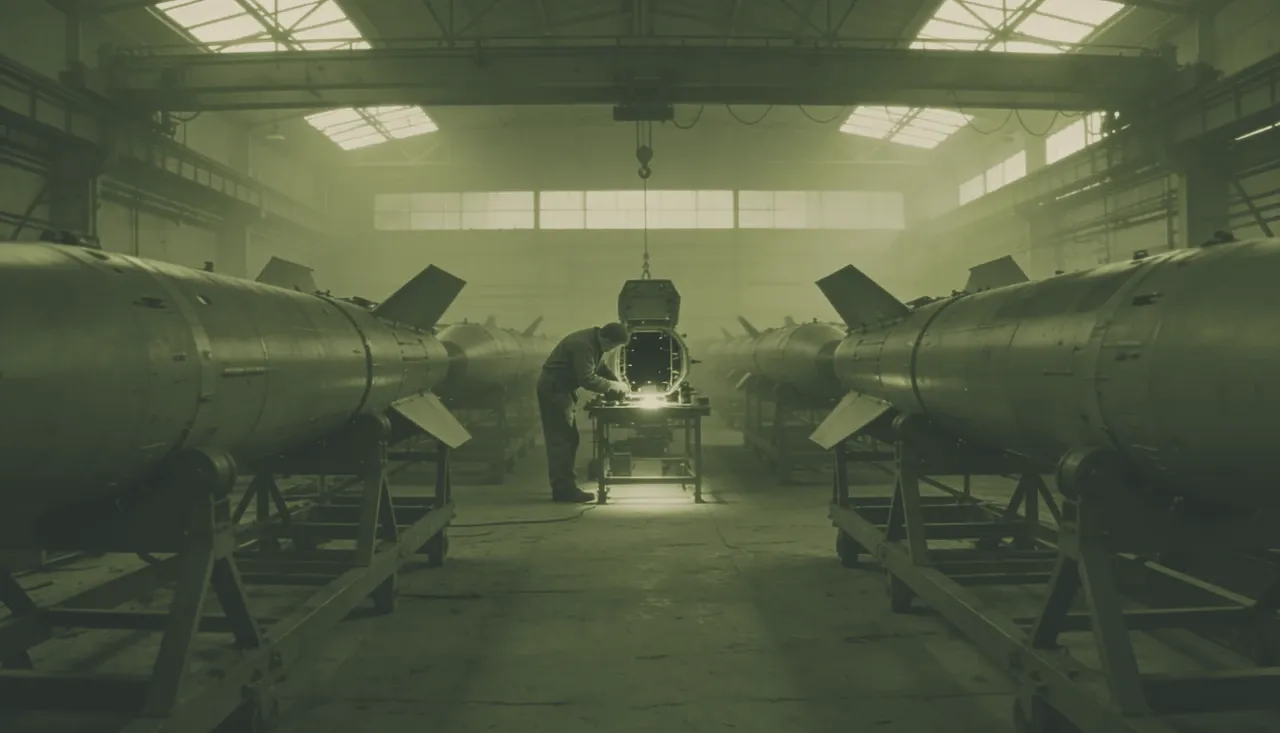
Lockheed Martin and Rheinmetall will build America's 300-kilometer ballistic missile at Unterlüß, the first ATACMS line outside the United States in 35 years. The interceptors Ukraine spent the weekend dying without got a repair shop.
The United States has never let anyone else build the Army Tactical Missile System. That ended on July 7, when Lockheed Martin and Rheinmetall signed a memorandum of understanding at the NATO summit in Ankara to produce ATACMS at Rheinmetall's Unterlüß plant in Lower Saxony, the first manufacturing site for the missile outside the United States, Defense News reported. The deal reads like the end of buy-American. The fine print of the whole Ankara package says something more precise: Washington is moving production of the strike missile its own Army is phasing out, while keeping at home the interceptors Europe and Ukraine want most.
A German production line for a 1991 American missile
The agreement, backed by both the US and German governments, is the step toward a joint venture the companies call the first European "centre of excellence" for manufacturing, integrating and distributing ATACMS to NATO and allied forces, per Lockheed's release. Unterlüß already employs about 4,000 people. The site opened a roughly $585 million artillery plant last August that is ramping toward 350,000 155mm shells a year by 2027, and its rocket-motor factory is nearing completion; motors and guided-missile components are scheduled to enter production there as early as 2027.
Rheinmetall CEO Armin Papperger said in May that full missile production would begin in 2027 and scale through 2028 and 2029 against what his company estimates as European and Ukrainian demand of 600 to 800 ATACMS a year, according to Defense News. When negotiations became public in May 2025, Calibre Defence reported that Rheinmetall expected a 60 percent stake in a venture covering ATACMS, PAC-3 and Hellfire, with target production timelines of 12 to 13 months for some missile types. Papperger's stated reason then: "Sometimes it takes ten years to receive missiles from the United States, and that's too long."
Lockheed says it will keep its Camden, Arkansas line running "until transition is complete," language Calibre Defence reads as the entire ATACMS line eventually moving to Europe. Two caveats sit under the announcement. The MOU names no output figure, no investment sum and no firm timeline, as Defence Blog noted. And the technology transfer still requires US government consent, the step where similar ambitions have stalled before.
The night that wrote the sales pitch
The demand case assembled itself the night before the signing. Russia fired 68 missiles and 351 drones at Ukraine overnight into July 6, most aimed at Kyiv, President Volodymyr Zelensky said. Ukraine's air force downed 326 of the 351 drones, 31 of 33 Kh-101 cruise missiles and all six Kalibrs, and none of the 23 Iskander ballistic missiles or six Zircons, The War Zone reported. At least 26 people died in and around the capital, per Euronews. Air force spokesman Yuriy Ignat's explanation was arithmetic, not tactics: "In order to shoot down ballistic missiles, you need to have something to shoot them down." Patriot systems are sufficient, he said on national television; the missing input is a constant supply of interceptors. On July 2, another barrage had gone 24 intercepts against 74 Iskanders.
The supply side cannot cover that consumption. A Center for Strategic and International Studies report puts current PAC-3 MSE production near its baseline of 650 interceptors a year, half of them reserved for the United States, The War Zone noted. The US war with Iran burned through almost a third of the global Patriot interceptor stockpile, with Gulf states firing more than 1,100 by some estimates, per Euronews. Ukrainian officials say Russia is building around 120 ballistic missiles a month. Set 650 interceptors a year against 1,440 ballistic missiles a year from one adversary alone and the shortage stops being a logistics story. It is the central fact of European air defense.
The unit economics explain why donations arrive in dribbles. Germany's June pledge of $200 million for PAC-3 rounds under the PURL and JUMPSTART funding mechanisms buys roughly 40 to 50 interceptors, The War Zone calculated, about one night's ballistic barrage at July's tempo. The US Army is now pressing contractors for a new Patriot interceptor near $1 million apiece, a fifth of what the current round costs by that math. Zelensky's reading of the allied warehouses was less diplomatic: as long as Patriot missiles sit in storage abroad, he wrote on July 6, Russia is encouraged to keep striking residential buildings.
The battlefield and the startup story — free in your inbox every week. No paywall.
Subscribe Free →What Rutte's list gives, and what it holds back
NATO Secretary General Mark Rutte framed the summit's industrial forum around a list: Anduril, Boeing, General Dynamics Land Systems, Lockheed Martin and Raytheon agreed cooperation with European players including Diehl, PGZ and Rheinmetall to "produce or sustain" the Abrams tank, AMRAAM, ATACMS, the Barracuda-500M, Small Diameter Bombs and Stingers in Europe, per UK Defence Journal. Planning documents obtained by Politico show how much weight each item actually carries. Stinger production goes to Germany and the Netherlands, but under foreign military sales rules that let Washington control final sales. AMRAAM gets a feasibility study, not a contract. And the PAC-3 interceptor, the one munition Kyiv measures in lives per night, gets a European maintenance facility signed by Germany, the Netherlands, Poland, Sweden and the US.
The rest of the forum's board ran to enablers. Saab will supply up to ten GlobalEye surveillance aircraft to a ten-nation consortium replacing NATO's roughly 50-year-old AWACS fleet, 15 nations moved on Airbus tankers and transports, and four will buy up to five Triton surveillance drones, per AP. Rutte had promised "tens of billions in new contracts"; AP noted no dollar figures were given on the day and some projects had long since been agreed.
A maintenance shop is not a production line. US Undersecretary of Defense Michael Duffey told Reuters, via Euronews, that Washington is "open to eventually" manufacturing PAC-3 outside the United States, with no host country chosen. Lockheed contracted with the Pentagon in January to lift Patriot interceptor output to 2,000 a year, and Congress last month ordered the Pentagon to explain how deliveries to Ukraine could rise, The War Zone reported. Until either moves, every European Patriot battery queues behind US replenishment. Politico's read of a parallel assessment is blunt about the motive: Washington is using the summit's procurement coalitions to hold position in Europe's rearmament market "in the shadow" of EU initiatives, as American firms worry about Buy European provisions locking them out.
Washington sells the missile it is leaving behind
ATACMS is a 1980s design, fielded in Desert Storm in 1991, with a 300-kilometer reach. The US Army has been replacing it since 2023 with the Precision Strike Missile, which fits two rounds in a launcher pod where ATACMS fits one and flies beyond 500 kilometers, per Defence Blog. Defense News reports Lockheed has been winding down Camden's output as PrSM takes priority. What Germany is buying into, in other words, is a dedicated supply channel for Europe and Ukraine, not a share of America's future arsenal.
The missile's combat record cuts both ways. Ukrainian military sources told Euractiv that ATACMS proved highly effective against command posts, depots and radars, constrained mainly by the number available, and US officials say it performed well in the operation against Iran that began February 28. But a RUSI study cited by Calibre Defence found Russian air defenses had adapted so far by 2025 that Ukraine needed up to ten ATACMS to put one through to a single radar. Diehl Defence CEO Helmut Rauch told Reuters the same day the MOU was signed that a longer-range IRIS-T variant could cut reliance on Patriot, and European ballistic-missile programs, from Thales's FLP-t 150 to MBDA's Thundart and Poland's Chunmoo co-production, kept moving through the summit week.
Calibre Defence raises one more issue in its comment on the deal: Unterlüß sits roughly 1,500 kilometers from St. Petersburg, inside Russian cruise-missile range, and now concentrates shells, rocket motors, gun barrels and soon ATACMS on one site. Ukraine's strikes on Russian defense plants have forced Russian air defenses to spread out, the same comment argues, and dispersing industrial capacity would be a rational step for Europe to take.
What to watch
- The joint venture paperwork. An MOU is a photo, not a factory. Watch for the formal venture, the US tech-transfer consent, and whether Rheinmetall's expected 60 percent stake holds.
- PAC-3 production in Europe. Duffey's "open to eventually" is the loose thread. Germany, the Netherlands, Poland and Sweden are already in the maintenance consortium; one of them will push for the line itself.
- Lockheed's 2,000-a-year ramp. The January Patriot contract is the number that decides whether Kyiv's ballistic nights keep ending at zero intercepts.
- Whether ATACMS demand survives PrSM. If the US Army's successor missile is offered for European co-production, the Unterlüß line's 600-to-800-a-year market gets contested from inside the alliance.
Frequently Asked Questions
What exactly did Lockheed Martin and Rheinmetall agree in Ankara?
A memorandum of understanding, signed July 7 at the NATO Summit Defense Industry Forum with US and German government backing, as a step toward a joint venture producing ATACMS at Rheinmetall's Unterlüß site, per Lockheed Martin's release. It names no output figure, investment sum or firm timeline, per Defence Blog.
When would German-built ATACMS actually appear?
Rocket motors and guided-missile components are scheduled to start at Unterlüß as early as 2027, per Lockheed's release. CEO Armin Papperger said in May that full production would scale through 2028 and 2029 toward an estimated European and Ukrainian demand of 600 to 800 missiles a year, per Defense News.
Why does the deal matter for Ukraine?
Ukrainian sources told Euractiv that ATACMS has been highly effective but supply-constrained. A separate European line would add capacity that does not compete with US factories. The missile Kyiv needs even more urgently, the Patriot PAC-3 interceptor, got only a European maintenance facility at the same summit, per Politico.
How short is Ukraine on air-defense interceptors?
Ukraine intercepted none of the 29 Russian ballistic and hypersonic missiles fired at Kyiv overnight into July 6, per The War Zone. CSIS puts PAC-3 MSE production near 650 a year, half reserved for the US, while Ukrainian officials say Russia builds around 120 ballistic missiles a month.
Is ATACMS still a state-of-the-art weapon?
No. It entered service in 1991, and the US Army has been replacing it with the longer-range Precision Strike Missile since 2023, per Defence Blog. A RUSI study cited by Calibre Defence found Ukraine needed up to ten ATACMS to get one past adapted Russian air defenses to a single radar by 2025.
AI-generated summary, reviewed by an editor. More on our AI guidelines.

Marcus Schuler
Marcus Schuler edits BattlePolicy, a daily defense-technology brief connecting the companies and capabilities behind modern war to the contest among Europe, the US, Russia, and China.