Europe's Patriot alternative runs on a $700,000 Ukrainian missile
Britain, France and Germany agreed to back an anti-ballistic system built around Ukraine's FP-7.x interceptor, a $700,000 missile that just hit 25 km in testing, while German industry showed its own cheap-intercept hardware at ILA Berlin.
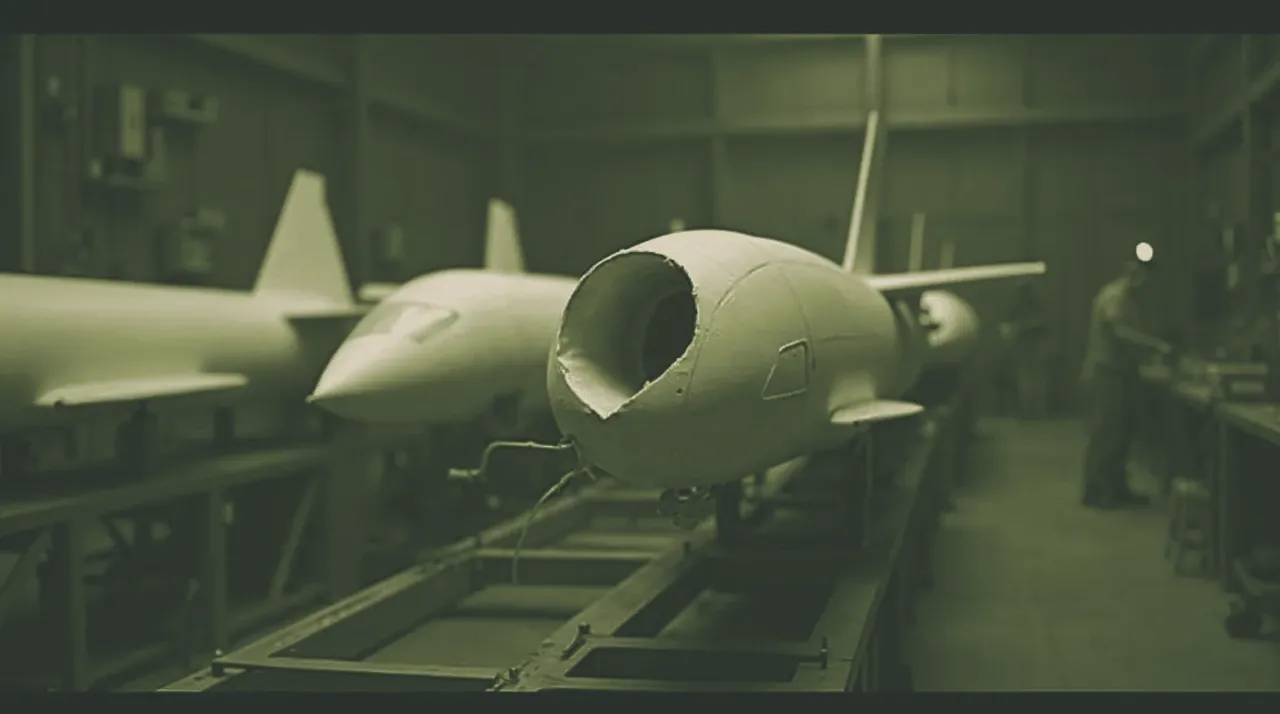
Britain, France and Germany agreed to back an anti-ballistic system built around Ukraine's FP-7.x interceptor, a $700,000 missile that just hit 25 km in testing, while German industry showed its own cheap-intercept hardware at ILA Berlin.
Europe's answer to the Patriot shortage now has a price, a factory and a delivery month, and all three are Ukrainian. Fire Point co-founder Denys Shtilierman told the Financial Times on June 10 that the company's FP-7.x interceptor reached 25 kilometers in its first flight test, the altitude band where the Patriot operates, that each round costs about $700,000 against roughly $3.8 million for a Patriot PAC-3, and that production could start in August at three missiles a day. One day earlier, The Telegraph described the plan that the missile slots into: Ukraine and its European partners are building a "European alternative" to the Patriot, with Ukrainian industry producing the interceptors and European companies supplying the radars, tracking and command systems.
June 7 at Downing Street: the E3 signs up
The political commitment preceded the test data. Volodymyr Zelenskyy said in an interview with The Guardian that Britain, France and Germany agreed to help Ukraine with anti-ballistic missile defense during June 7 talks at Downing Street with Keir Starmer, Friedrich Merz and Emmanuel Macron. A source familiar with the program described the goal to The Telegraph as "a European Patriot, but much cheaper," designed from the start for scaled production. Ukraine's side of the bargain is operational knowledge. "This is priceless information. There is a huge volume of it," Zelenskyy said of the drone-warfare data Kyiv has accumulated, adding that NATO is "very interested." The same leaders are expected to press the Patriot supply question with President Trump at the G7 summit on June 15 to 17, LIGA.net noted.
The shortage behind the diplomacy is concrete. Zelenskyy put the cost of a Patriot missile at $4 million each and said interceptor stockpiles have run dangerously low through 2026. The US war with Iran draws from the same inventory: the Center for Strategic and International Studies estimates that rebuilding Patriot stocks to pre-Iran-war levels will take at least three years and more funding than Congress has allocated, NDTV reported. The consumption side keeps climbing. One Russian attack in late May combined 656 drones and 73 missiles in a single night and killed at least 22 people. Europe's only fielded alternative with documented anti-ballistic capability, the Franco-Italian SAMP/T, is produced in quantities nowhere near Ukraine's burn rate, per Defence Blog.
From test video to a production schedule
When Fire Point published its first FP-7.x test footage in early June, the program was a controlled maneuvering flight and a target price. The new disclosures turn it into a schedule with named suppliers. Shtilierman called the flight test "pretty successful" and said the missile is built to reach the speeds ballistic intercepts demand; Militarnyi's published figures put the design at 1,500 to 2,000 meters per second, 7.25 meters long, with a 150-kilogram payload and a 250-second maximum flight time, Gwara Media noted. Guidance is radar for most of the flight, switching to an infrared seeker for the terminal run. The FT cautioned that infrared terminal guidance is generally rated less effective than radar guidance because it is easier to spoof.
The August date carries a dependency that cuts both ways: the infrared seeker Fire Point wants comes from Germany's Diehl Defence. "Finalizing this depends on the speed of our Western partners and when they start moving," Shtilierman said. From August the company says it can build about three missiles a day and store them until seekers arrive, with completed rounds ready by 2027. Around the missile sits the Freyja system, and the FT's sourcing fills in the European half of the Telegraph's formula: talks with Hensoldt and Thales on radars, Leonardo on detection and tracking, Kongsberg on command and control, with integration over NATO's Link 16 standard.
The battlefield and the startup story — free in your inbox every week. No paywall.
Subscribe Free →Two caveats belong in the ledger. Tom Karako of CSIS told the FT the FP-7.x can complement Ukraine's mix of Patriots, Hawks and IRIS-T batteries but is unlikely to replace the top tier: "Patriot is a very exquisite capability, so perhaps 'complementing' is a better term than 'substitute.'" And Fire Point operates under a cloud at home. The Kyiv Independent has reported the company drew scrutiny in the energy-sector corruption investigations over ties to Timur Mindich; Shtilierman said his questioning by anti-graft agencies was unrelated to that case, per Interfax-Ukraine.
The demand curve below the ballistic tier
The same cost arithmetic has already built an industry one layer down. Defense Minister Mykhailo Fedorov says Russia's Shahed launch volume is growing about 35 percent each month, and the share of Shaheds downed by interceptor drones doubled over the past four months, UNITED24 Media reported. The newest entrant shows where that curve points. MaXon Systems, a Brave1-backed Kyiv startup, fielded a fixed-wing interceptor that automates roughly 95 percent of the kill cycle, costs about $3,500 per unit, and logged its first confirmed combat interceptions on June 8 with the 12th Separate Special Purpose Center in Kharkiv Oblast, according to DroneXL. The target it kills costs Russia an estimated $40,000 to $80,000 per Shahed.
The cheap tier has a ceiling, and Russia is already probing it. MaXon's interceptor tops out near 300 km/h, enough for propeller-driven Gerans at about 185 km/h but short of the jet-powered Geran-3 and Geran-4 variants flying at 400 to 500 km/h, DroneXL noted. Nothing in the drone-on-drone economy stops an Iskander. That is the gap the FP-7.x exists to close, and why the anti-ballistic layer is the piece Zelenskyy took to Downing Street rather than to investors.
ILA Berlin: the supply side answers in hardware
German industry used ILA Berlin week to show its own versions of affordable intercept, most of them shaped by what combat in Ukraine has demanded. Diehl Defence revealed the Cobra 600, a jet-powered drone from startup Polaris Raumflugzeuge carrying an IRIS-T missile on a standard Eurofighter pylon. Tethered by datalink to a ground-based IRIS-T battery, it extends the missile's reach to roughly 250 miles, against about 25 miles for the ground-launched IRIS-T SLM, The War Zone reported; the aircraft has flown with a dummy missile and development is mostly company-funded with investment from at least one country. MBDA Deutschland showed a counter-drone package pairing its DefendAir missile, 24 rounds per system with a range up to 5 kilometers, with a high-energy laser, targeting initial readiness before the end of the decade; the Bundeswehr has already picked DefendAir as secondary armament for the Skyranger 30, with series production reportedly aimed at 2029, hartpunkt wrote. Rohde & Schwarz entered the laser race with Thoris, built around a Trumpf laser and due for formal launch toward the end of 2028, Aviation Week reported. Airbus Helicopters and Quantum Systems signed a June 10 agreement to put counter-drone interceptors on the H145M and the new uncrewed U145.
The week's largest air-defense offer came from Israel. Rafael CEO Yoav Tourgeman told Aviation Week that if Berlin buys Iron Dome, "we are going to produce it almost 100% in Germany," citing more than 10,000 intercepts since October 2023 at a probability above 90 percent. Rafael would prefer to work with partners like Rheinmetall and Diehl but would build the German capability alone if required, he said.
Set the timelines side by side and the structural point emerges: the German reveals mature in 2028 and 2029, Rafael's offer awaits a government decision, and the Ukrainian vendor is quoting August. Fire Point attributes the pace to a wartime economy with, in Shtilierman's words, "probably the least bureaucratic approach to producing anything in the aerospace industry."
What to watch
- June 15 to 17, G7 summit. Starmer, Merz and Macron are expected to raise Patriot missile supply with Trump, per LIGA.net.
- The Diehl seeker. Fire Point's August production claim, three missiles a day, holds only if the German infrared seeker is committed and delivered.
- A first intercept attempt. Shtilierman has said a first ballistic interception could come by the end of the year if every partner moves quickly, per hromadske.
- Berlin's Iron Dome decision. A government-to-government deal would put Rafael production inside Germany and reshuffle Diehl's and MBDA's home market.
- Jet-Shahed counters. Whether MaXon and its peers field interceptors fast enough for the 400-plus km/h Geran variants Russia is scaling.
Frequently Asked Questions
What is the "European alternative" to the Patriot?
A program reported by The Telegraph in which Ukraine's defense industry produces anti-ballistic interceptor missiles while European companies supply radars, tracking and command systems. A source described the goal as "a European Patriot, but much cheaper." Britain, France and Germany agreed to help during June 7 talks at Downing Street, Zelenskyy told The Guardian.
What did Fire Point's FP-7.x achieve in testing?
Co-founder Denys Shtilierman told the Financial Times the interceptor reached 25 kilometers of altitude in its first flight test, comparable to the Patriot's engagement band, and called the test "pretty successful." Published figures put its speed at 1,500 to 2,000 meters per second with a 150-kilogram payload.
How does the cost compare with the Patriot?
Shtilierman puts the FP-7.x at about $700,000 per missile, against roughly $3.8 million for a Patriot PAC-3 per US Army 2026 budget estimates cited by NDTV. Zelenskyy has cited $4 million per Patriot missile in The Guardian.
When could the system be operational?
Fire Point says missile production could begin in August at about three a day, contingent on infrared seekers from Germany's Diehl Defence, with completed missiles ready by 2027. CSIS analyst Tom Karako told the FT the system would complement rather than replace the Patriot.
What counter-drone systems did ILA Berlin reveal?
Diehl's Cobra 600 jet drone carrying an IRIS-T missile (The War Zone), MBDA's DefendAir missile paired with a high-energy laser (hartpunkt), Rohde & Schwarz's Thoris laser system due in 2028 (Aviation Week), and an Airbus Helicopters agreement with Quantum Systems to arm the H145M with counter-drone interceptors.
What is Rafael offering Germany?
CEO Yoav Tourgeman told Aviation Week that Rafael would produce Iron Dome "almost 100% in Germany" if Berlin buys the system, citing more than 10,000 intercepts since October 2023 with a success probability above 90 percent.
AI-generated summary, reviewed by an editor. More on our AI guidelines.

Marcus Schuler
Marcus Schuler edits BattlePolicy, a daily defense-technology brief connecting the companies and capabilities behind modern war to the contest among Europe, the US, Russia, and China.